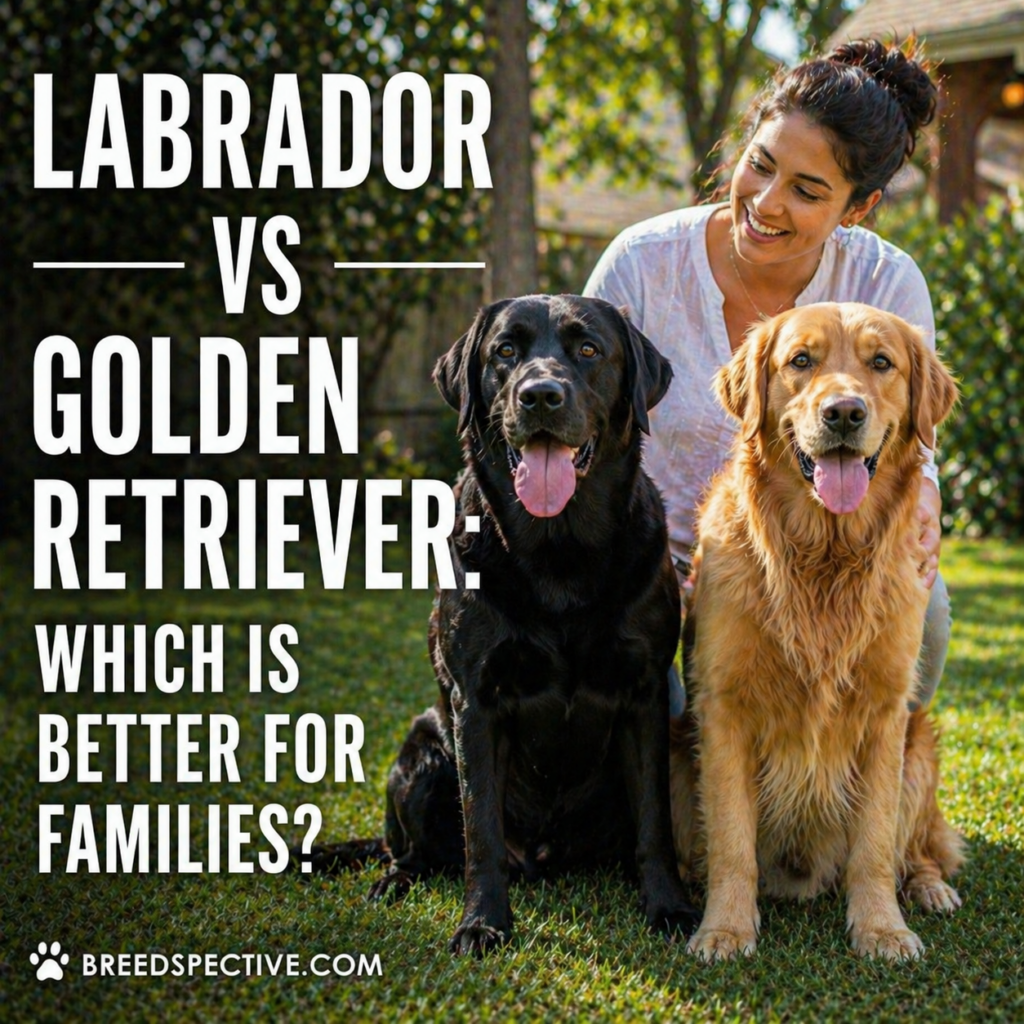
The Labrador Retriever and Golden Retriever are both friendly, trainable, active family dogs, but they differ most in coat care and some everyday behavior. Labs tend to be exuberant, energetic and physically robust, while Goldens are similarly active but are often more people-focused and have a longer coat that demands more grooming. Both breeds need far more exercise, training and household involvement than their easygoing reputations sometimes suggest. American Kennel Club
Labrador vs Golden Retriever at a Glance
| Trait | Labrador Retriever | Golden Retriever |
|---|---|---|
| Typical weight | 55–80 lb. | 55–75 lb. |
| Energy level | High | High |
| Trainability | Excellent | Excellent |
| Temperament | Outgoing, enthusiastic, social | Friendly, devoted, eager to please |
| Coat | Short, dense double coat | Medium-length, feathered double coat |
| Shedding | Heavy despite short coat | Moderate year-round; heavy seasonally |
| Grooming | Relatively straightforward | More brushing and coat maintenance |
| Children | Often an excellent fit; exuberance needs managing | Often an excellent fit; supervision still essential |
| Exercise | Substantial daily activity | Substantial daily activity |
| Best fit | Active families wanting a playful, robust companion | Active families comfortable with more grooming |
| Biggest trade-off | High energy and surprisingly heavy shedding | Coat maintenance and heavy seasonal shedding |
AKC describes both breeds as sociable, highly trainable retrievers with histories as hunting dogs. Their friendly reputations are well deserved, but both are athletic Sporting Group dogs rather than naturally sedentary house pets. American Kennel Club
Labrador and Golden Retriever Origins
Labs and Goldens were developed into recognizable retriever breeds in 19th-century Britain, but their histories followed different routes.
Labrador Retriever: Newfoundland Roots, British Development
Despite its name, the Labrador Retriever’s earliest roots are in Newfoundland, not Labrador.
AKC traces the breed to the St. John’s water dog, a working dog used around Newfoundland’s fishing communities. These dogs were valued for working in the water and retrieving, and specimens were eventually taken to England. British sporting families recognized their potential as gun dogs and established breeding programs that helped shape the modern Labrador Retriever. American Kennel Club
The Lab’s physical characteristics still reflect that working heritage. Its short, dense, weather-resistant coat offers protection around cold water, while retrieving and swimming remain characteristic activities for many Labs.
Golden Retriever: Developed in Scotland
The Golden Retriever has a more specifically documented Scottish origin.
AKC records identify Dudley Marjoribanks, the first Lord Tweedmouth, as central to the breed’s development at his Guisachan estate in the Scottish Highlands during the 19th century. His breeding records document the foundation of what became the Golden Retriever. American Kennel Club
The objective was a capable gun dog able to retrieve game in Scottish terrain and weather. Goldens consequently developed an athletic build and a protective double coat with feathering.
Both breeds therefore share a retrieving background. They were created to work alongside people, locate or collect game and return it to the handler. That history helps explain why modern Labs and Goldens tend to be trainable, active and strongly oriented toward human interaction. American Kennel Club
Both have also maintained remarkable popularity as companion dogs. AKC registration histories have consistently placed Labradors and Golden Retrievers among America’s most popular breeds over many years. American Kennel Club
Temperament: Similar Foundations, Different Flavor
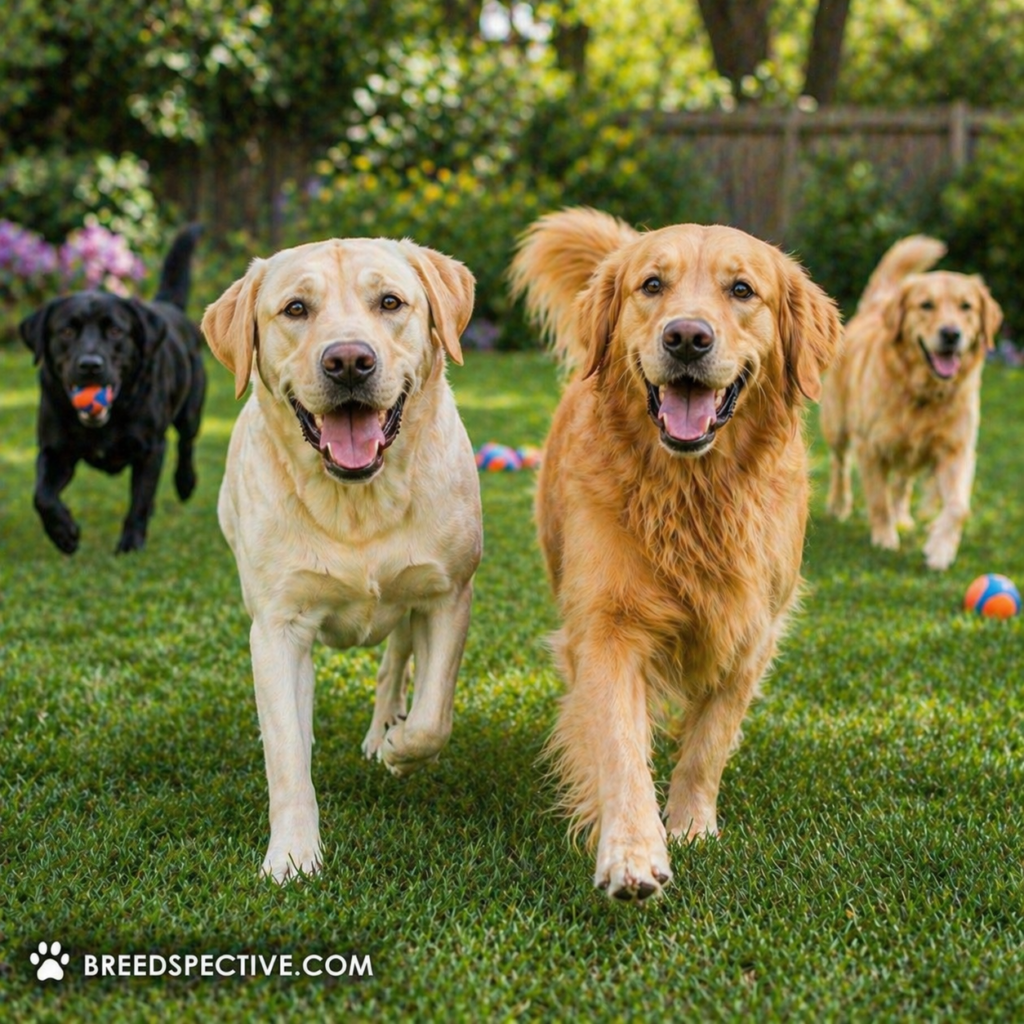
Comparing Labrador vs Golden Retriever temperament can be difficult because there is considerable overlap.
AKC describes Labs as friendly, outgoing and high-spirited. Goldens are described as outgoing, trustworthy and eager to please. Both are expected to have sociable temperaments, and aggression isn’t a characteristic breed trait for either. American Kennel Club
Individual temperament still varies with genetics, breeding, socialization, age and training.
Living With a Labrador
A typical Labrador brings enthusiasm to everyday life.
Labs were bred to retrieve, so carrying objects, fetching and exploring with their mouths can feature heavily in puppy and adolescent behavior. AKC’s comparison specifically cautions that owners who don’t want household objects picked up or potentially damaged need appropriate training and management. American Kennel Club
That exuberance can be entertaining, but an adolescent Lab is a substantial dog.
Jumping, pulling on a leash and racing around the house become much more consequential at 60 or 70 pounds than they are with a small breed. Families should expect to spend time teaching calm greetings, leash manners, recall and appropriate retrieving behavior.
For a deeper look at the breed, see our Labrador Retriever temperament, energy level and lifestyle fit guide.
Living With a Golden Retriever
Goldens also retain playful behavior well into adulthood.
AKC describes the Golden as eager to please, playful and energetic, with natural enthusiasm for outdoor activities such as swimming and retrieving. American Kennel Club
AKC’s direct comparison of the two breeds also notes subtle differences reported by experienced breeders and judges, including a tendency for Goldens to be more attached to their people and somewhat more sensitive in their responses. These are tendencies, not guarantees about an individual dog. American Kennel Club
Our Golden Retriever temperament, energy level and lifestyle fit guide covers those traits in greater depth.
Energy: Don’t Choose a Golden Because You Think It’s Low-Energy
One of the most persistent mistakes in this comparison is assuming that the Golden Retriever is the calm alternative to an energetic Labrador.
Both breeds are active gun dogs.
AKC describes the Labrador as very energetic and warns that insufficient exercise can contribute to hyperactive or destructive behavior. Retrieving, swimming, hunting, tracking, obedience, agility and dock diving can all provide outlets. American Kennel Club
Goldens are also energetic sporting dogs. AKC describes them as powerful gun dogs built to retrieve waterfowl and notes their enthusiasm for swimming, fetching and outdoor play. American Kennel Club
For either breed, a useful activity plan might combine:
- Brisk walks
- Retrieving games
- Swimming where safe and permitted
- Obedience practice
- Hiking
- Scent games
- Food puzzles
- Age-appropriate dog sports
- Interactive play with family members
A yard is convenient but doesn’t replace exercise and interaction.
Puppies also shouldn’t simply be pushed through adult-level repetitive exercise. Growing dogs need age-appropriate activity, rest and training rather than a program designed purely to exhaust them.
Trainability: Both Are Strong Choices
Trainability is one of the strongest similarities between Labs and Goldens.
Their historical work required cooperation with human handlers. AKC describes retrievers generally as intelligent, willing to learn, athletic and eager to cooperate. American Kennel Club
That heritage remains useful in a family setting.
Both breeds can learn household manners, recall, loose-leash walking and more advanced skills. Both also appear extensively in working roles and dog sports.
Labrador Training
Labs often bring tremendous enthusiasm to training.
That enthusiasm can work in your favor, but young Labs may also become distracted or overexcited. Short, consistent sessions and clear household rules are particularly useful during puppyhood and adolescence.
Retrieving can be turned into structured training rather than treated only as exercise. A dog can practice waiting, being released, retrieving and returning an object rather than repeatedly chasing a ball without rules.
Golden Retriever Training
AKC characterizes Goldens as eager to please and relatively easy to train. American Kennel Club
Consistency still matters. A friendly dog can develop jumping, pulling, counter-surfing or poor recall just as easily as another breed if those behaviors are repeatedly rewarded.
Neither breed arrives automatically trained because it has a good reputation.
This combination of sociability and trainability is one reason both frequently appear in discussions of the best dog breeds for first-time owners. First-time owners still need to be prepared for the exercise and training requirements of a large sporting dog.
Grooming: Labrador Is Easier, but Labs Shed Heavily
This is one of the clearest practical differences.
Labrador Coat Care
A Labrador has a short, dense, water-repellent double coat.
The short hair can make the breed look almost maintenance-free. It isn’t.
AKC’s grooming guidance states that Labs shed heavily and can lose undercoat “in handfuls” during major shedding periods. Daily combing can be useful when shedding is at its peak. American Kennel Club
Normal care includes:
- Regular brushing
- Occasional bathing
- Nail trimming
- Dental care
- Ear inspection and cleaning when appropriate
The coat shouldn’t normally be clipped or trimmed. American Kennel Club
Golden Retriever Coat Care
The Golden’s medium-length double coat requires more hands-on maintenance.
Its feathering around the legs, chest, tail and ears can collect debris and develop tangles. AKC recommends regular brushing, increasing to daily brushing during periods of heavy shedding. American Kennel Club
Expect more time spent brushing a Golden than a Lab.
That doesn’t mean a Lab will leave less hair around your house. AKC’s direct comparison emphasizes that both breeds shed throughout the year and heavily during seasonal shedding. American Kennel Club
The difference is primarily coat maintenance, not a choice between shedding and non-shedding.
If dog hair on furniture and clothing is unacceptable, neither breed is an ideal match.
Health: What Responsible Breeders Should Screen For
No breed is guaranteed to remain healthy. What prospective owners can do is choose breeders who follow appropriate health-screening recommendations and provide documentation.
Labrador Health Screening
AKC lists hip and elbow dysplasia, certain eye disorders, heart problems, hereditary myopathy and exercise-induced collapse among conditions relevant to Labrador breeding and health. American Kennel Club
The Labrador Retriever Club (LRC), the AKC parent club for the breed, provides breed-specific health guidance and screening recommendations.
Prospective puppy buyers should ask to see actual health results for both parents rather than relying on verbal assurances that they are healthy.
Golden Retriever Health Screening
For Goldens, AKC lists hip and elbow dysplasia, eye conditions and certain heart diseases among conditions responsible breeders screen for. The national breed club’s recommended evaluations include hips, elbows, cardiac examination and ophthalmologist evaluation. American Kennel Club
The Golden Retriever Club of America (GRCA), the breed’s AKC parent club, is another useful source for current health recommendations.
For either breed, ask:
- Were both parents screened according to the national breed club’s recommendations?
- Can the breeder show the results?
- What health problems have occurred among close relatives?
- How old are the parents?
- What is the breeder’s policy if a serious hereditary problem develops?
- How are puppies raised and socialized?
Screening reduces uncertainty but cannot guarantee that an individual dog will never develop disease.
Family Fit: What About Children?
Both breeds can be excellent family companions.
AKC’s comparison describes proper Labrador and Golden temperaments as tolerant, loving and gentle, while emphasizing that both need training, socialization, exercise and meaningful involvement with their families. American Kennel Club
That’s more useful than declaring one universally “better with kids.”
Labs With Children
A Labrador can be a strong match for an active household where children want to participate in games, training and outdoor activities.
The main practical issue is exuberance.
A large adolescent Lab running at full speed or enthusiastically greeting someone can easily knock over a small child without intending harm.
Teaching calm greetings and supervising interactions therefore matters.
Goldens With Children
Goldens also have a strong reputation as family dogs, supported by a breed standard emphasizing friendly and trustworthy temperament. American Kennel Club
Their people-oriented nature can make them highly involved family companions.
But a Golden is still a large, energetic retriever. Puppies chew, adolescents become excited, and poorly trained adults can jump or pull.
Families comparing these dogs with other options can use our guide to dog breeds for families with young children to consider size, energy and temperament together.
Supervision Still Matters
No breed reputation replaces supervision.
Young children shouldn’t be left unsupervised with a dog, and children should learn not to disturb a dog while eating or sleeping, climb on it, pull its ears or take objects directly from its mouth.
The dog also needs somewhere quiet to retreat.
Other Dogs and Household Life
Both breeds were developed to cooperate with people and work around other dogs.
AKC’s comparison describes sociability as a shared characteristic and notes that appropriate Labrador and Golden temperaments are generally compatible with other dogs. American Kennel Club
Individual history still matters.
Introducing another dog should be done thoughtfully, particularly when either animal is anxious, highly aroused or protective of resources.
Cats and smaller pets require an individual assessment as well. Being friendly doesn’t eliminate prey interest, chasing or overenthusiastic play.
Cost: Labrador vs Golden Retriever
There isn’t a trustworthy universal purchase price for either breed. Breeder reputation, health testing, location, pedigree and other factors can change puppy prices substantially.
Lifetime costs are more useful to consider.
| Expense | Labrador Retriever | Golden Retriever |
|---|---|---|
| Food | Significant large-dog expense | Significant large-dog expense |
| Routine veterinary care | Ongoing | Ongoing |
| Training | Strongly recommended | Strongly recommended |
| Grooming supplies | Moderate | Higher coat-maintenance needs |
| Professional grooming | Usually optional for routine coat care | May be useful, but routine brushing still falls to the owner |
| Toys/enrichment | Regular replacement likely | Regular replacement likely |
| Boarding/day care | Similar | Similar |
| Emergency care | Financial planning needed | Financial planning needed |
The Golden’s coat can increase grooming time and potentially professional grooming expenses.
The Lab’s simpler coat doesn’t make the breed inexpensive. Labs still require food for a large active dog, veterinary care, training, equipment and plenty of enrichment.
For either breed, an emergency fund or appropriate pet-insurance plan is worth considering before the dog comes home.
Which Is Easier for a First-Time Family?
Both can work for a prepared first-time dog owner.
The more important question is whether the family is prepared for a large, energetic retriever, not which breed has the friendlier reputation.
A first-time family needs to be comfortable with:
- Puppy biting and chewing
- House training
- Daily exercise
- Obedience training
- Large-dog leash manners
- Shedding
- Veterinary expenses
- Socialization
- Years of regular interaction and enrichment
The Labrador’s coat is easier to maintain, but its exuberance can be challenging.
The Golden requires more coat care, while its strong people orientation can be appealing to families looking for a highly involved companion.
Individual breeding lines matter too. A dog bred primarily for intensive field work may have a very different activity level from what a family expects after meeting mature companion dogs.
Breed is therefore only one layer of the decision.
Our guide to choosing the right dog breed for your lifestyle can help you compare your household schedule with a dog’s actual requirements.
Verdict: Choose a Labrador or Golden Retriever?
Choose a Labrador Retriever if your family wants an outgoing, enthusiastic dog for an active lifestyle and prefers a shorter, easier-care coat. Labs are particularly appealing to households interested in retrieving, swimming, hiking and other regular outdoor activities. Be prepared for substantial energy, enthusiastic adolescent behavior and much more shedding than the short coat suggests.
Choose a Golden Retriever if your family wants an affectionate, eager-to-please retriever and doesn’t mind spending more time brushing and maintaining a longer coat. Goldens remain active sporting dogs, so choosing one shouldn’t be viewed as a way to avoid the exercise requirements associated with a Labrador.
Neither is the right choice if your household wants a low-exercise, low-shedding or highly independent dog. Both were developed to work alongside people, both require training and exercise, and both are happiest when incorporated into family life. American Kennel Club
For families genuinely prepared for an active retriever, there isn’t a universal winner between the Labrador and Golden Retriever. The practical decision comes down to which trade-off fits better: the Lab’s exuberance and easier coat care, or the Golden’s longer, higher-maintenance coat and strongly people-oriented temperament.