
What to Expect in Your First 30 Days With a New Pet

A pet owner sitting with a new puppy in a living room, representing the first 30 days of adjusting to a new pet.
A new pet owner bonding with their puppy at home, highlighting the early adjustment period and routines. breedspective.com.

The first 30 days with a new pet are usually an adjustment period, not an instant preview of what life together will eventually look like. Your dog or cat is learning where to eat, sleep and go to the bathroom, who lives in the home, what the daily routine means and whether this unfamiliar environment is safe.

Expect the first few days to be quieter or more chaotic than normal, the next few weeks to reveal more of your pet’s behavior and personality, and your own schedule to change more than you may have anticipated. The goal of the first month is not a perfectly trained pet—it is a safe pet, a workable routine and steadily growing trust.

Continue reading “What to Expect in Your First 30 Days With a New Pet”


Biggest Mistakes New Pet Owners Make

A stressed pet owner sitting on a messy couch with a playful puppy that has made a mess, illustrating common mistakes new pet owners make.
A new pet owner dealing with a messy situation caused by a puppy, highlighting common mistakes and challenges beginners face. breedspective.com.

The biggest mistakes new pet owners make are choosing an animal that does not fit their lifestyle, underestimating long-term costs and housing restrictions, delaying training and socialization, and expecting behavior problems to resolve on their own. These mistakes can become expensive and difficult to reverse, and some contribute to pets eventually being rehomed or surrendered.

The good news is that most are preventable. Below, we have ranked the major first-time pet-owner mistakes roughly from the ones most likely to create serious long-term consequences to the ones that are easier to correct.

Continue reading “Biggest Mistakes New Pet Owners Make”

The Hidden Costs of Owning a Dog or Cat

A woman reviewing pet expenses with a dog beside her, showing the hidden costs of owning a dog or cat.
A pet owner reviewing expenses with her dog, highlighting the hidden financial responsibilities of pet ownership. breedspective.com.

The hidden costs of owning a dog or cat include emergency veterinary care, medications, dental work, grooming, training, boarding, pet sitting, insurance, housing fees and replacing damaged or worn supplies. Food and routine vet visits may be predictable, but one medical emergency or a recurring health problem can push the cost of pet ownership far beyond a basic monthly budget.

That does not mean pet ownership is unaffordable. It means prospective owners should budget for the animal they are actually bringing home—including its size, coat, health risks, age and lifestyle needs—rather than assuming every dog or cat costs roughly the same amount to maintain.

Continue reading “The Hidden Costs of Owning a Dog or Cat”

Why Cats Avoid the Litter Box and How to Fix It

Cat owners observing cats near a litter box, illustrating common reasons cats avoid the litter box.
Cat owners watching their cats near a litter box, highlighting common litter box avoidance issues. breedspective.com.

Cats usually avoid the litter box because of a medical problem, an unsuitable box or litter setup, stress, conflict with another pet, or a negative experience associated with the box. A sudden change in litter habits should start with a veterinary check—not punishment—because urinary, digestive, mobility and pain-related problems can all contribute to house-soiling.

The AAFP/ISFM Guidelines for Diagnosing and Solving House-Soiling Behavior in Cats specifically emphasize that house-soiling is not an act of spite or anger. The most effective approach is to identify the cause systematically, beginning with health and then examining the cat’s litter boxes, litter preferences, locations and home environment. (catvets.com)

Continue reading “Why Cats Avoid the Litter Box and How to Fix It”

Potty Training Timelines by Dog Breed

Puppies of different dog breeds practicing potty training indoors, illustrating how training timelines vary by breed.
Puppies learning potty training indoors, highlighting differences in training timelines by dog breed. breedspective.com.

There is no scientifically established potty-training timeline for each individual dog breed. Breed and especially adult size can influence the process, but age, bladder capacity, previous training, routine and owner consistency usually matter more than whether your puppy is a Labrador, Chihuahua or Dachshund.

As a practical expectation, house-training usually takes weeks to months, not days. Toy and small puppies often need more frequent bathroom trips because of their smaller size, while an individual puppy of any breed can take longer to become completely reliable.

Continue reading “Potty Training Timelines by Dog Breed”

Daily Care Routines for Cats at Every Life Stage

Cats at different life stages being cared for by people, showing feeding, grooming, and daily care routines.
Cats of various ages receiving daily care to illustrate feeding, grooming, and routine health support at every life stage. breedspective.com.

A good daily cat care routine covers six basics: appropriate feeding, fresh water, litter-box care, play and enrichment, grooming or coat checks, and attention to changes in health or behavior. What changes with age is the amount of supervision and the details—kittens need more frequent feeding and social development, adults need weight control and consistent enrichment, and senior cats need closer monitoring and easier access to everyday resources.

The 2021 AAHA/AAFP Feline Life Stage Guidelines divide cats into four age-related stages: kitten (birth to 1 year), young adult (1–6 years), mature adult (7–10 years), and senior (over 10 years). These ages are useful guides rather than rigid boundaries; individual health, body condition and behavior still matter.

Continue reading “Daily Care Routines for Cats at Every Life Stage”

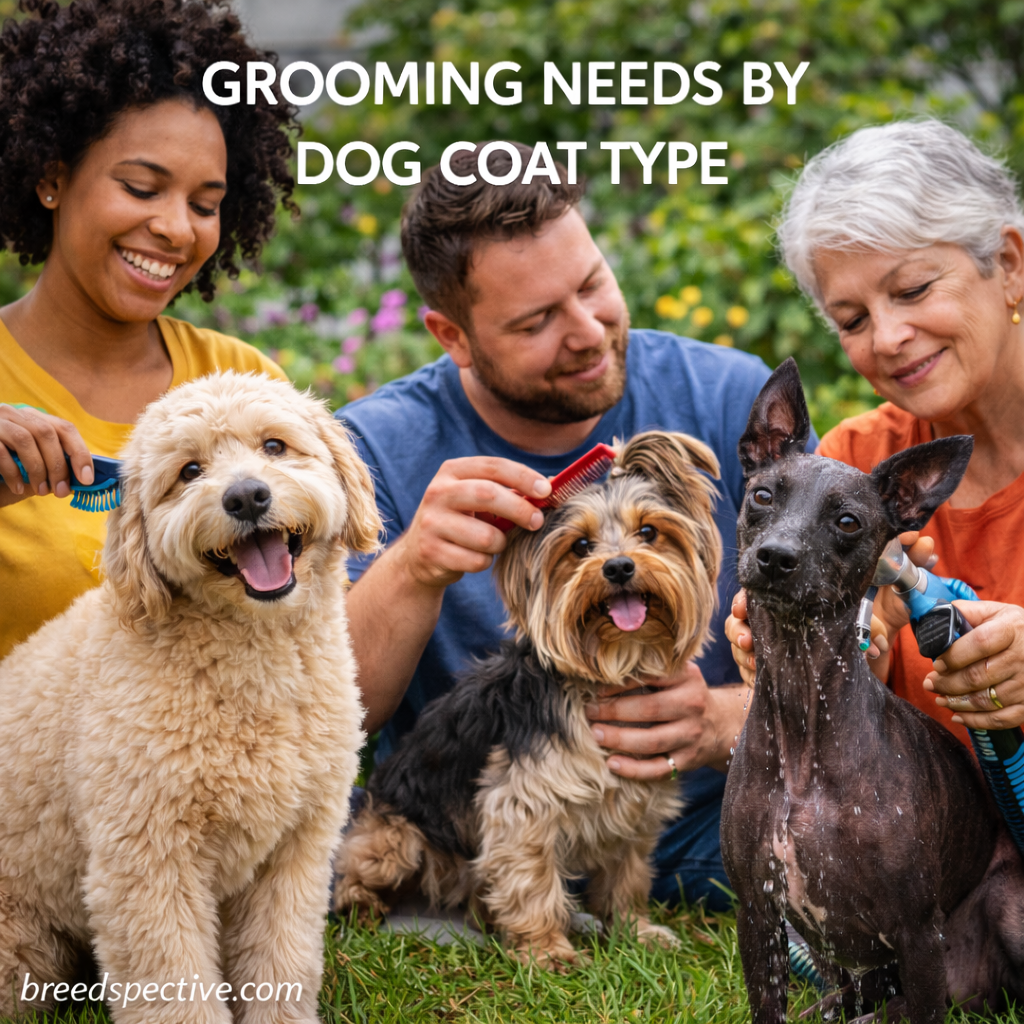
Grooming Needs by Dog Coat Type

People grooming dogs with different coat types, including curly, long-haired, and hairless coats, demonstrating coat-specific grooming needs.
Dogs with different coat types being groomed, illustrating how grooming needs vary by coat structure. breedspective.com.

Dog grooming should match the coat: short coats usually need simple brushing, double coats need thorough undercoat removal, long and curly coats need consistent detangling, and wire coats may require specialized hand-stripping. The wrong routine can leave mats behind, irritate the skin or, in the case of many double-coated breeds, unnecessarily alter the protective coat.

Coat type also determines the time and money involved. A short-coated dog may need mostly at-home maintenance, while a Poodle or other continuously growing coat can require brushing between regular professional grooming appointments.

Continue reading “Grooming Needs by Dog Coat Type”

Daily Care Routines for Dogs at Every Life Stage

Three people caring for dogs of different ages outdoors, including a puppy, an adult dog, and a senior dog, illustrating daily care routines at every life stage.
Dogs at different life stages receiving daily care and attention, highlighting age-appropriate routines for lifelong health. breedspective.com.

A good daily dog care routine covers feeding, fresh water, bathroom breaks, exercise, mental stimulation, social interaction and basic health monitoring. The routine should change as your dog ages: puppies need frequent supervision and training, adults need consistent exercise and preventive care, and senior dogs often need gentler activity, easier access to resources and closer health monitoring.

Breed, size, coat, health and energy level matter just as much as age. A young Border Collie and a young Bulldog, for example, should not automatically receive identical exercise routines simply because both are adults.

Continue reading “Daily Care Routines for Dogs at Every Life Stage”