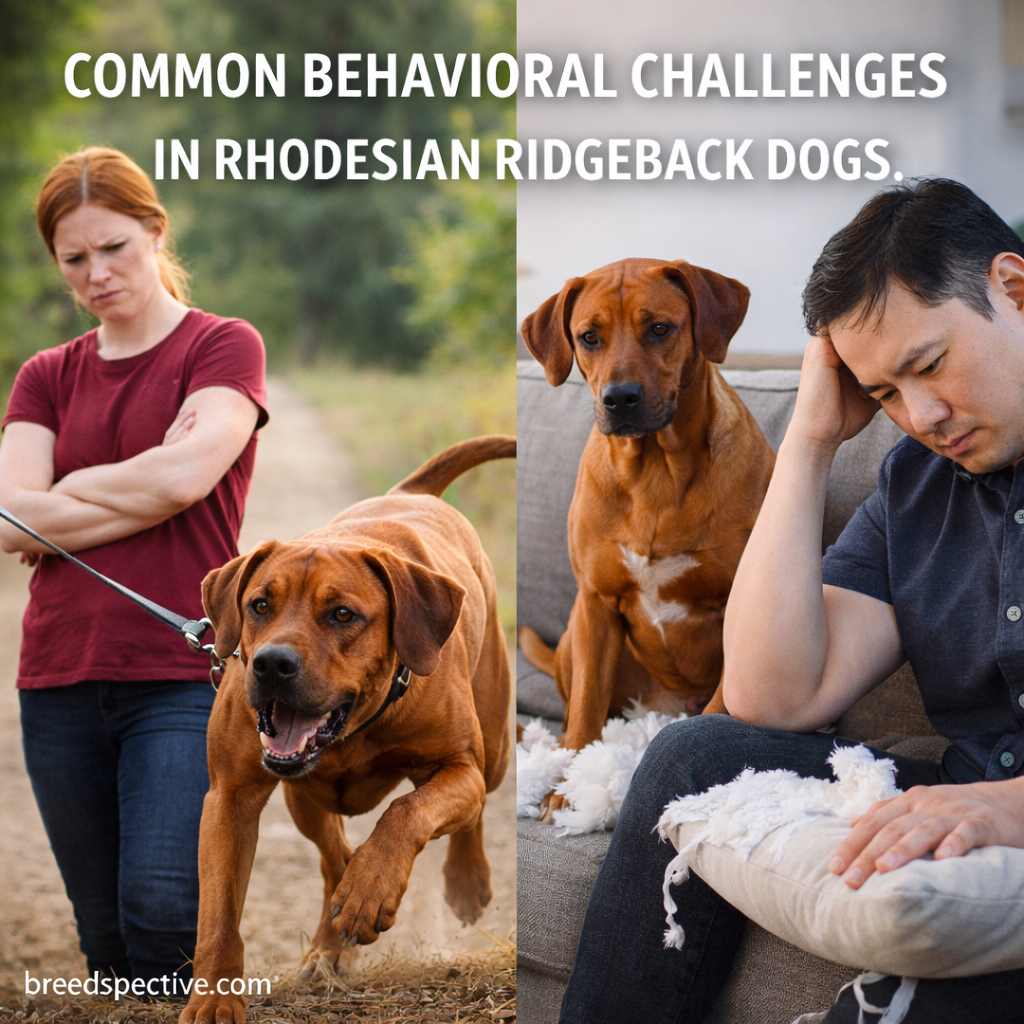
Common Behavioral Challenges in Rhodesian Ridgeback Dogs

Rhodesian Ridgeback dogs with owners illustrating common behavioral challenges such as leash pulling and destructive behavior.
Rhodesian Ridgeback dogs with owners highlighting common behavioral challenges and training difficulties. breedspective.com

Rhodesian Ridgeback behavior problems most often involve strong prey drive, leash pulling, selective obedience, territorial watchfulness, destructive behavior when bored, and an independent streak that can make inconsistent training ineffective. These tendencies make more sense when you understand the breed’s original work: Ridgebacks were powerful hunting dogs expected to pursue game, make decisions independently, and help hold dangerous animals such as lions at bay rather than wait for constant direction from a handler.

A well-bred, well-trained Ridgeback should not be indiscriminately aggressive. The bigger challenge is managing a large, fast, physically powerful hound that may see wildlife, question repetitive commands, and reserve its enthusiasm for people it knows.

Continue reading “Common Behavioral Challenges in Rhodesian Ridgeback Dogs”
Cavapoo Temperament and Family Compatibility

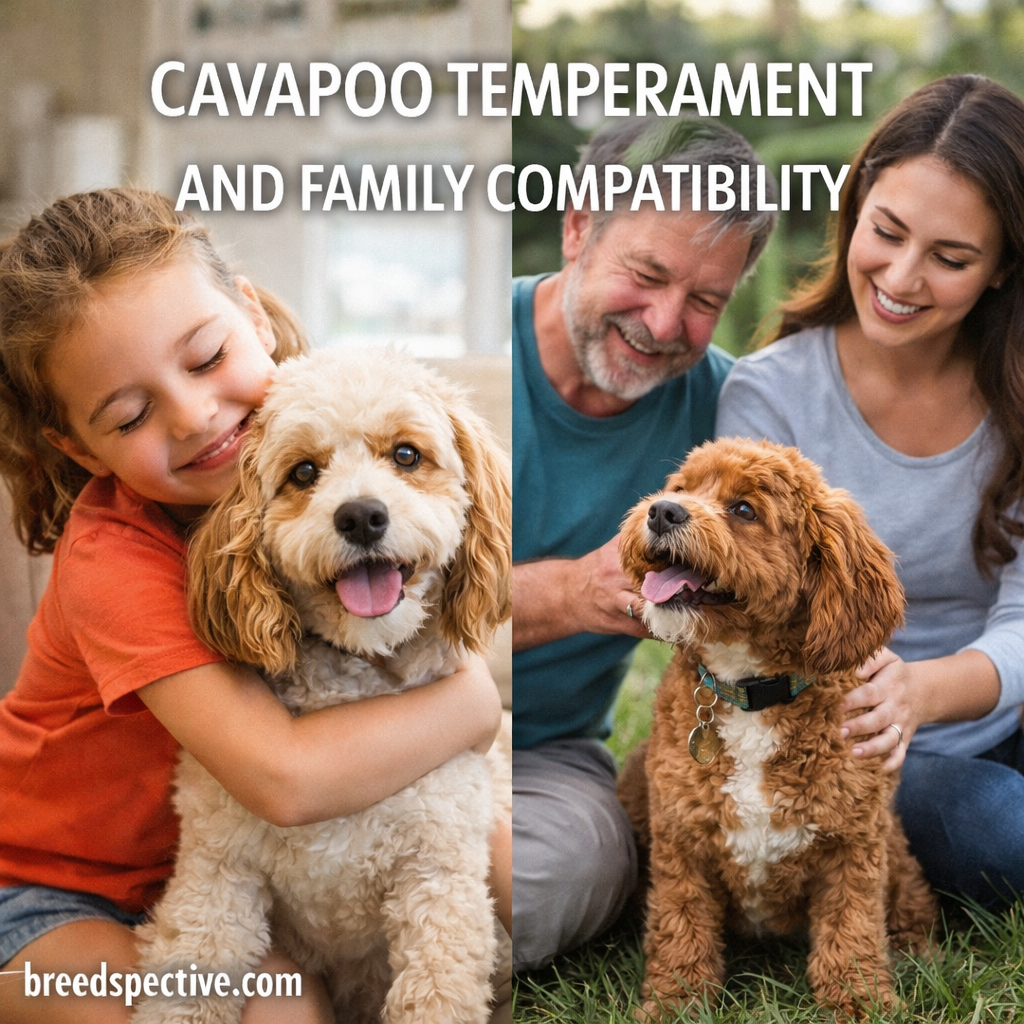
Cavapoo interacting with family members, showing affectionate temperament and family-friendly compatibility.
A Cavapoo enjoying affectionate interaction with family members, highlighting the breed’s gentle temperament and strong family compatibility. breedspective.com.

Cavapoo temperament is typically affectionate, social, playful, intelligent, and strongly people-oriented, although no mixed-breed puppy can be guaranteed to inherit a particular personality. Crossing a Cavalier King Charles Spaniel with a Toy or Miniature Poodle often produces a small companion dog that enjoys family life and training, but prospective owners should be prepared for grooming, possible separation difficulties, and inherited health risks from both parent breeds.

Cavapoos are typically among the smaller popular Poodle crosses, making them appealing to families, apartment dwellers and older adults. Their manageable size should not be mistaken for zero-maintenance ownership: coat care can be substantial, and responsible breeding requires considerably more than producing two attractive parent dogs.

Continue reading “Cavapoo Temperament and Family Compatibility”

Chihuahua Temperament, Energy Level, and Lifestyle Fit

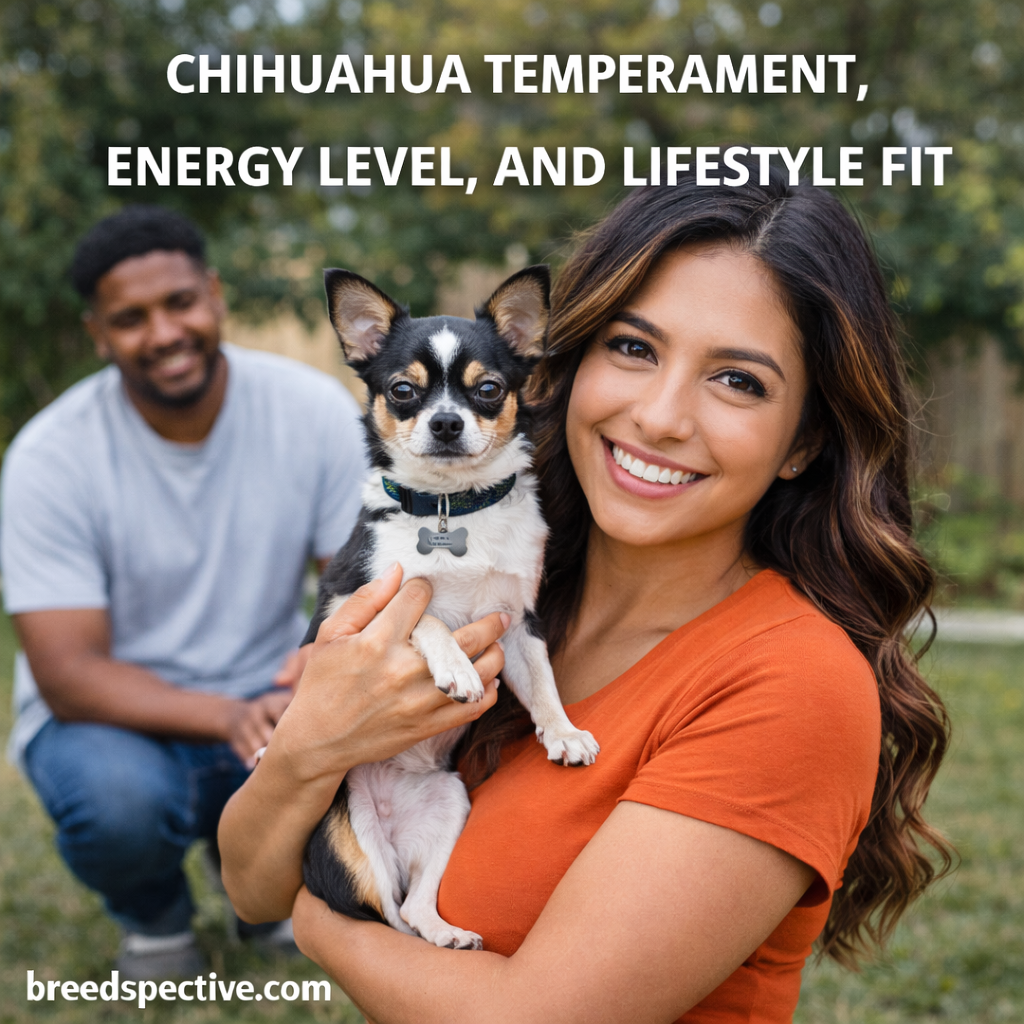
Chihuahua being held by its owner outdoors, illustrating the breed’s confident temperament, moderate energy level, and close companion lifestyle.
A Chihuahua with its owner, highlighting the breed’s bold personality, strong human bonding, and adaptable lifestyle fit. breedspective.com.

Chihuahua temperament is typically alert, confident, affectionate, lively, and strongly attached to familiar people. Despite weighing no more than 6 pounds under the AKC breed standard, a Chihuahua should not be treated as a fragile accessory: this is an intelligent, expressive little dog that needs training, socialization, exercise, and the same behavioral boundaries given to much larger breeds.

Chihuahuas can be excellent apartment companions and devoted household dogs, but their small size creates its own challenges. Barking, stranger reactivity, resource guarding, difficult house-training, and confrontational behavior toward larger dogs can become serious problems when owners excuse behavior they would never accept from a 70-pound dog.

Continue reading “Chihuahua Temperament, Energy Level, and Lifestyle Fit”

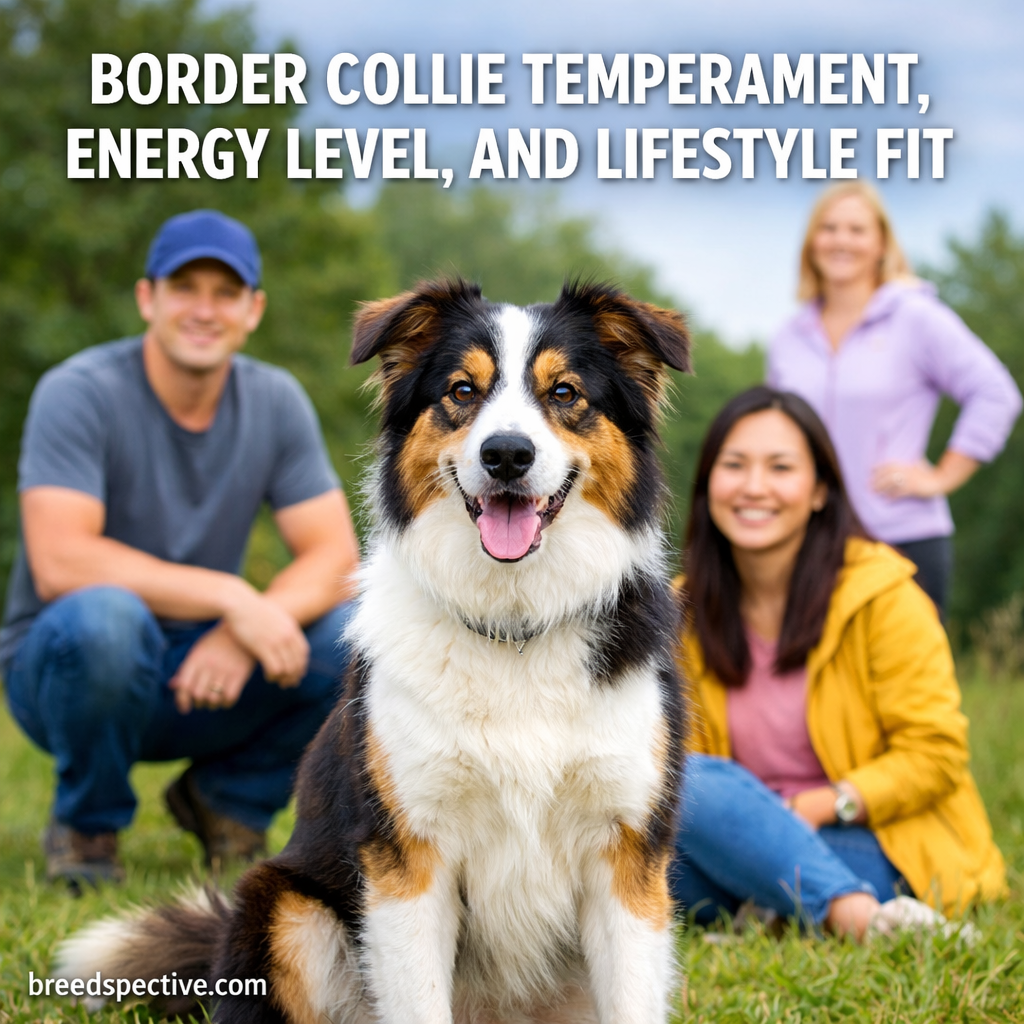
Border Collie Temperament, Energy Level, and Lifestyle Fit

Border Collie sitting outdoors with people, representing temperament, energy level, and lifestyle fit.
A Border Collie showcasing the breed’s intelligence, energy, and ideal lifestyle compatibility. breedspective.com.

Border Collie temperament is typically intensely intelligent, energetic, responsive, observant, and strongly driven to work. These dogs can form close bonds with their families and learn extraordinarily quickly, but their herding instincts, sensitivity to movement, and need for structured activity make them one of the more demanding breeds to live with.

A Border Collie does not simply need “lots of exercise.” It needs opportunities to think, respond to cues, solve problems, control movement, and work cooperatively with a person. Without those outlets, the same traits that make the breed exceptional on a sheep field can turn into chasing, barking, fixation, pacing, or compulsive attempts to control everything that moves.

Continue reading “Border Collie Temperament, Energy Level, and Lifestyle Fit”

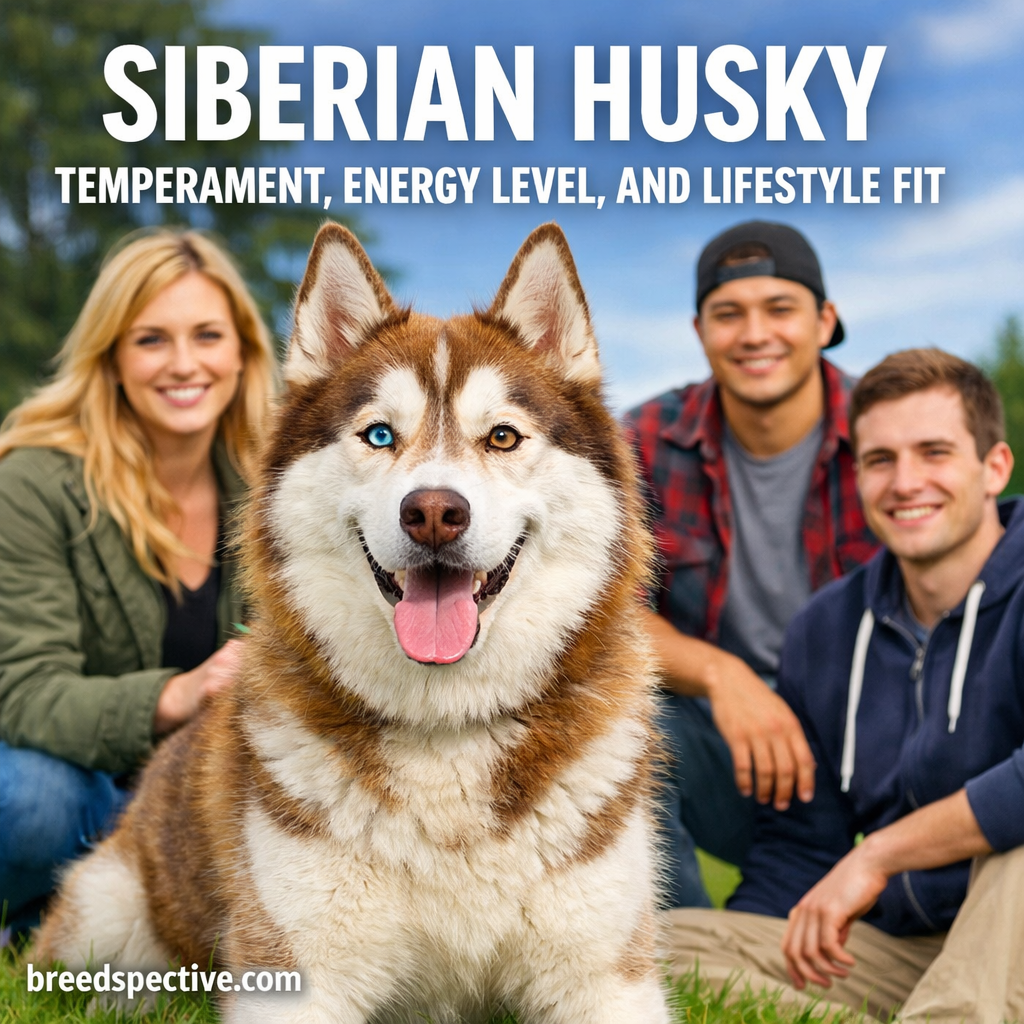
Siberian Husky Temperament, Energy Level, and Lifestyle Fit

Siberian Husky with owners illustrating temperament, high energy level, and active lifestyle fit.
A Siberian Husky shown with people, highlighting the breed’s energetic temperament and active lifestyle fit. breedspective.com.

Siberian Husky temperament is typically friendly, energetic, outgoing, independent, and mischievous rather than naturally protective. Huskies usually enjoy people and other dogs, but their enormous drive to run, strong prey instinct, independent decision-making, and need for substantial exercise can make them far more difficult to manage than their appearance suggests.

This is an endurance sled dog designed to move efficiently for miles, not a decorative northern companion. A Husky can be affectionate and entertaining at home, but owners need secure containment, realistic expectations about recall, considerable tolerance for shedding, and a daily routine that gives an athletic working dog something productive to do.

Continue reading “Siberian Husky Temperament, Energy Level, and Lifestyle Fit”

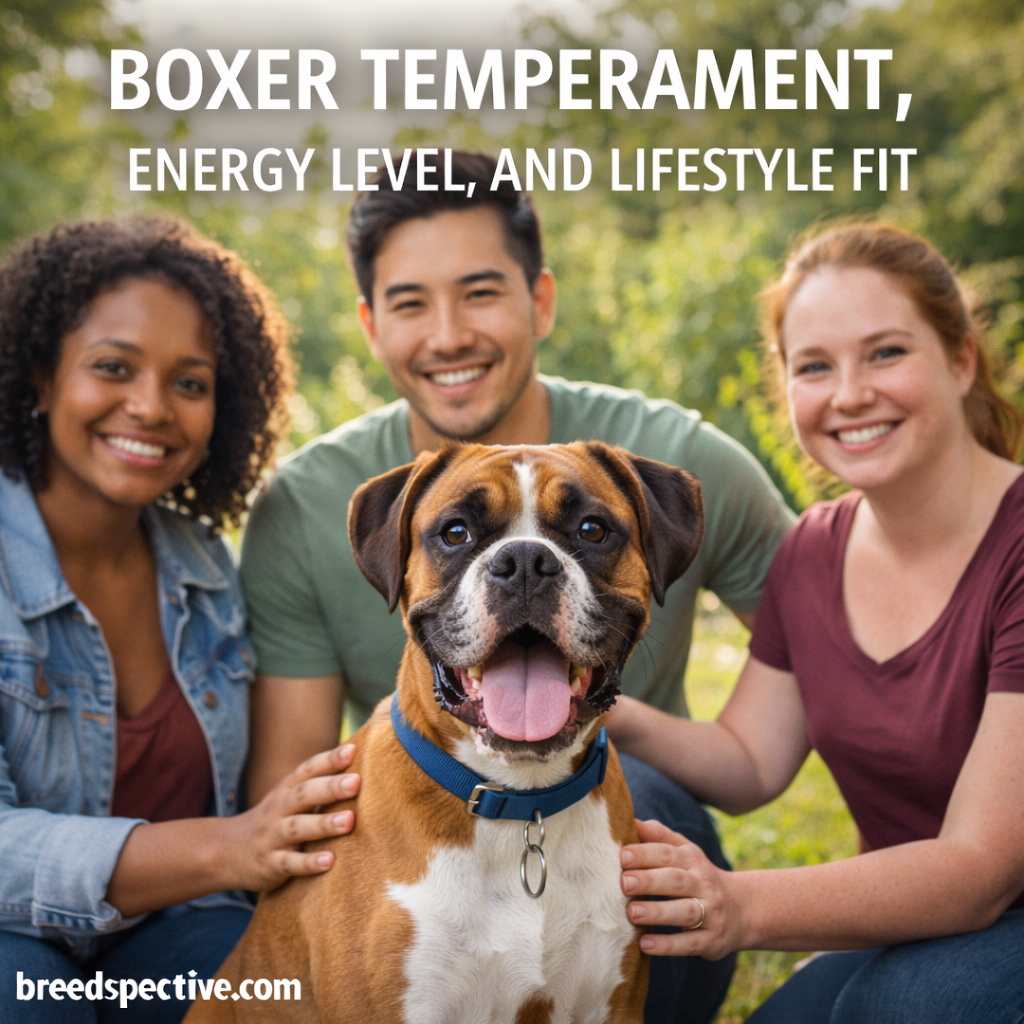
Boxer Temperament, Energy Level, and Lifestyle Fit

Boxer dog sitting outdoors with three adults, showing friendly temperament, high energy, and strong social connection with people.
A Boxer displaying its playful energy and people-focused temperament while interacting with owners outdoors. breedspective.com.

Boxer temperament is typically playful, affectionate, alert, confident, and intensely people-oriented. A well-bred Boxer combines the enthusiasm of an athletic working dog with strong attachment to its family, but that energy can become jumping, rough play, destructiveness, or frustration without enough exercise and training.

The Boxer is not a low-effort companion. This is a powerful dog that needs daily activity, early socialization, consistent boundaries, and plenty of involvement in family life.

Continue reading “Boxer Temperament, Energy Level, and Lifestyle Fit”

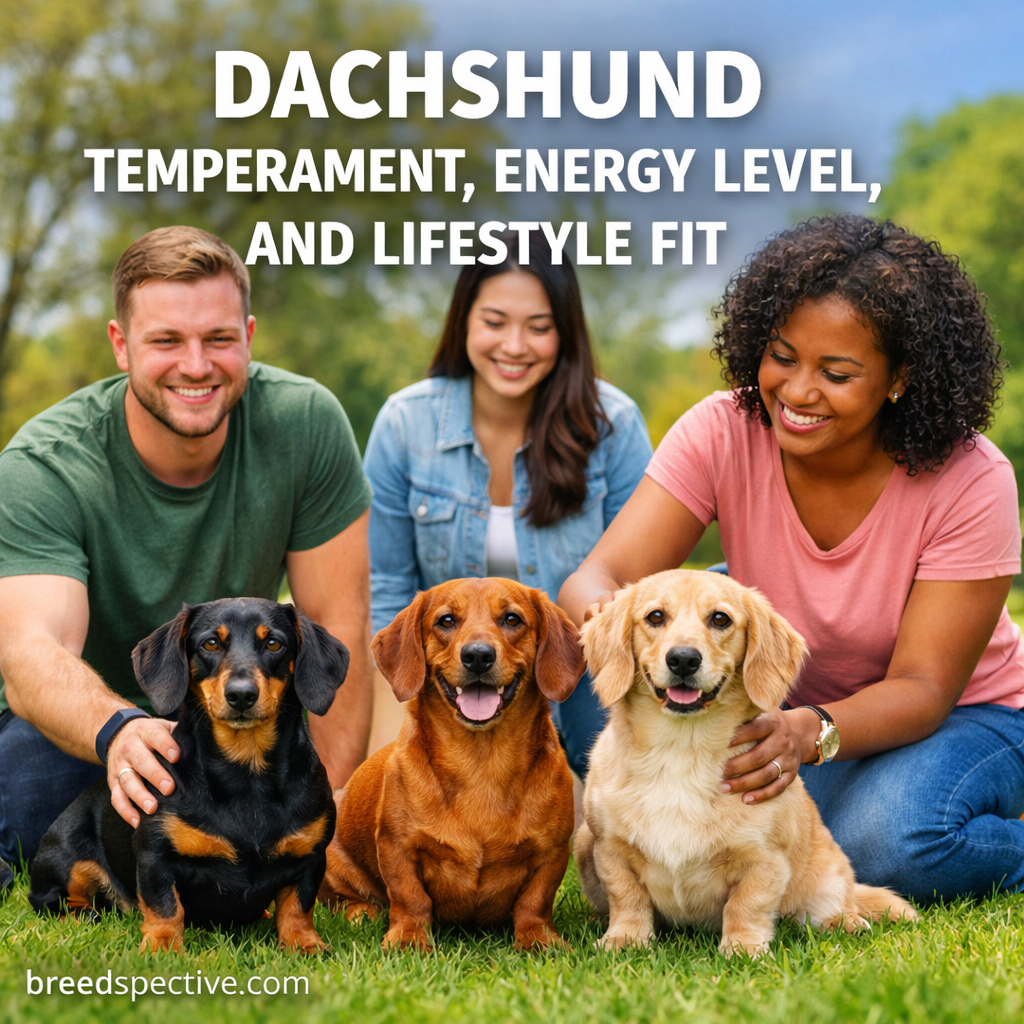
Dachshund Temperament, Energy Level, and Lifestyle Fit

Dachshund temperament, energy level, and lifestyle fit shown with diverse owners enjoying time outdoors.
Dachshunds are confident, energetic companions that thrive in engaged, lifestyle-matched homes. breedspective.com.

Dachshund temperament is typically bold, clever, alert, affectionate, and surprisingly independent for such a small dog. Bred to pursue dangerous quarry underground, Dachshunds often behave more like determined working hounds than passive lap dogs, which helps explain their barking, digging, persistence, and occasional resistance to training.

Their compact size makes them practical for many homes, but small does not mean effortless. A Dachshund needs daily exercise, consistent training, careful weight management, and lifelong attention to back health.

Continue reading “Dachshund Temperament, Energy Level, and Lifestyle Fit”

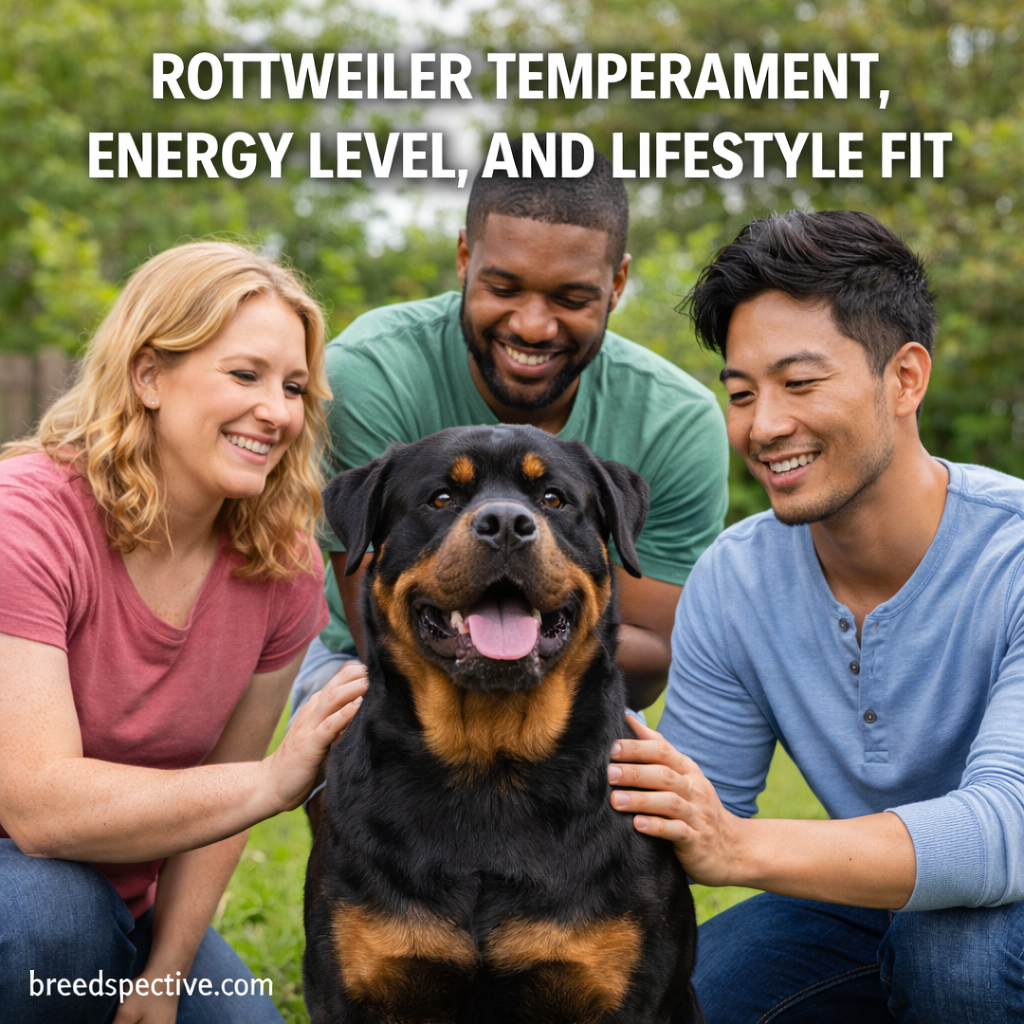
Rottweiler Temperament, Energy Level, and Lifestyle Fit

Rottweiler sitting with a diverse group of people illustrating the breed’s calm temperament, loyalty, and family compatibility.
A Rottweiler interacting calmly with a diverse group of people, highlighting the breed’s balanced temperament and lifestyle fit. breedspective.com.

Rottweiler temperament should be confident, calm, alert, devoted, and naturally watchful rather than indiscriminately aggressive. A well-bred Rottweiler can be affectionate and playful with family while remaining reserved with strangers, but its size, strength, territorial instincts, and guarding heritage make early socialization and consistent training essential.

The American Kennel Club describes a properly raised Rottweiler as calm, confident, courageous, and not unduly aggressive. The breed’s self-assured reserve toward strangers is part of its character, not something owners should try to turn into indiscriminate friendliness—or deliberately intensify into suspicion.

Continue reading “Rottweiler Temperament, Energy Level, and Lifestyle Fit”

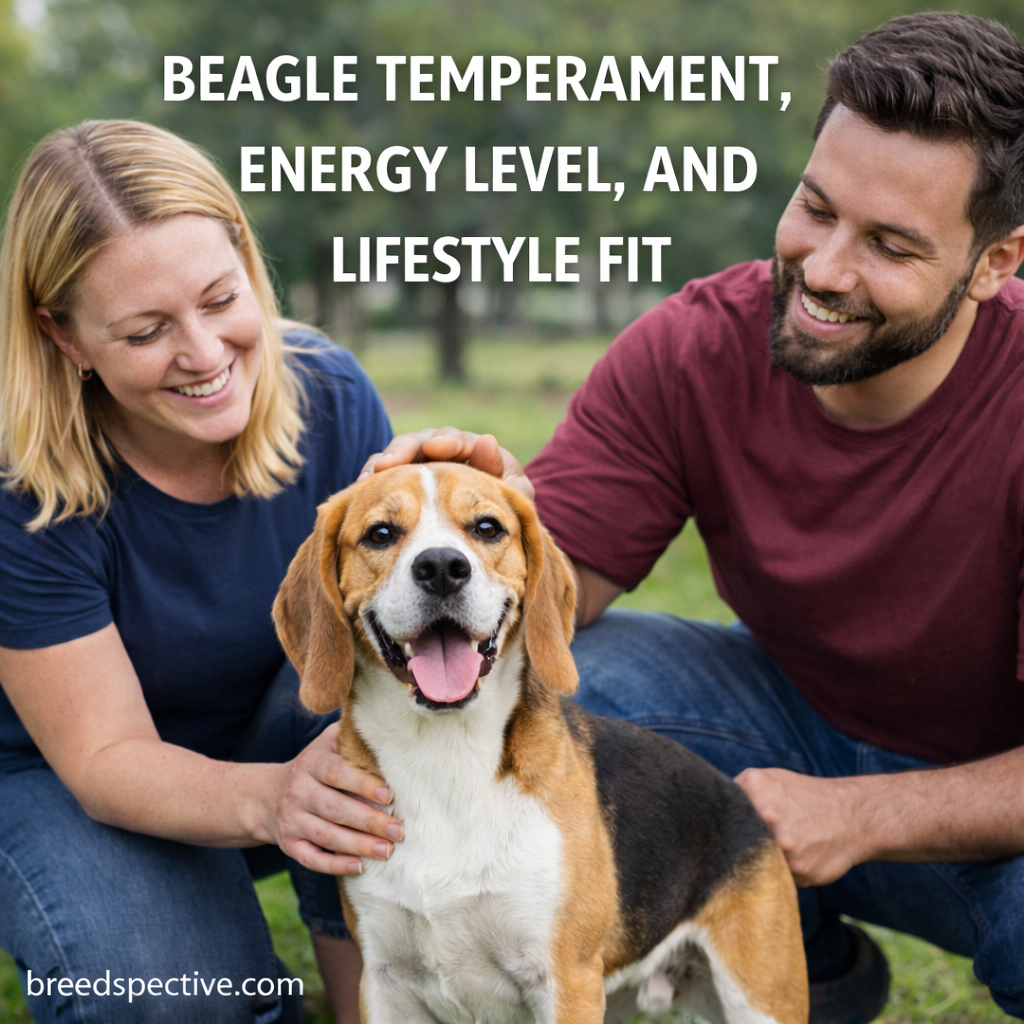
Beagle Temperament, Energy Level, and Lifestyle Fit

Beagle dog with owners outdoors, showing the breed’s friendly temperament and active lifestyle needs.
A Beagle interacting with owners outdoors, highlighting the breed’s social temperament and energetic nature. breedspective.com.

Beagle temperament is typically friendly, curious, social, energetic, and strongly influenced by scent. These compact hounds can be excellent family companions, but their independence, loud baying, appetite, and tendency to follow their noses make them more demanding than their cheerful appearance suggests.

A Beagle is usually happiest with people or other dogs nearby, regular opportunities to sniff and explore, and an owner willing to manage the breed’s hunting instincts rather than expecting perfect off-leash obedience.

Continue reading “Beagle Temperament, Energy Level, and Lifestyle Fit”

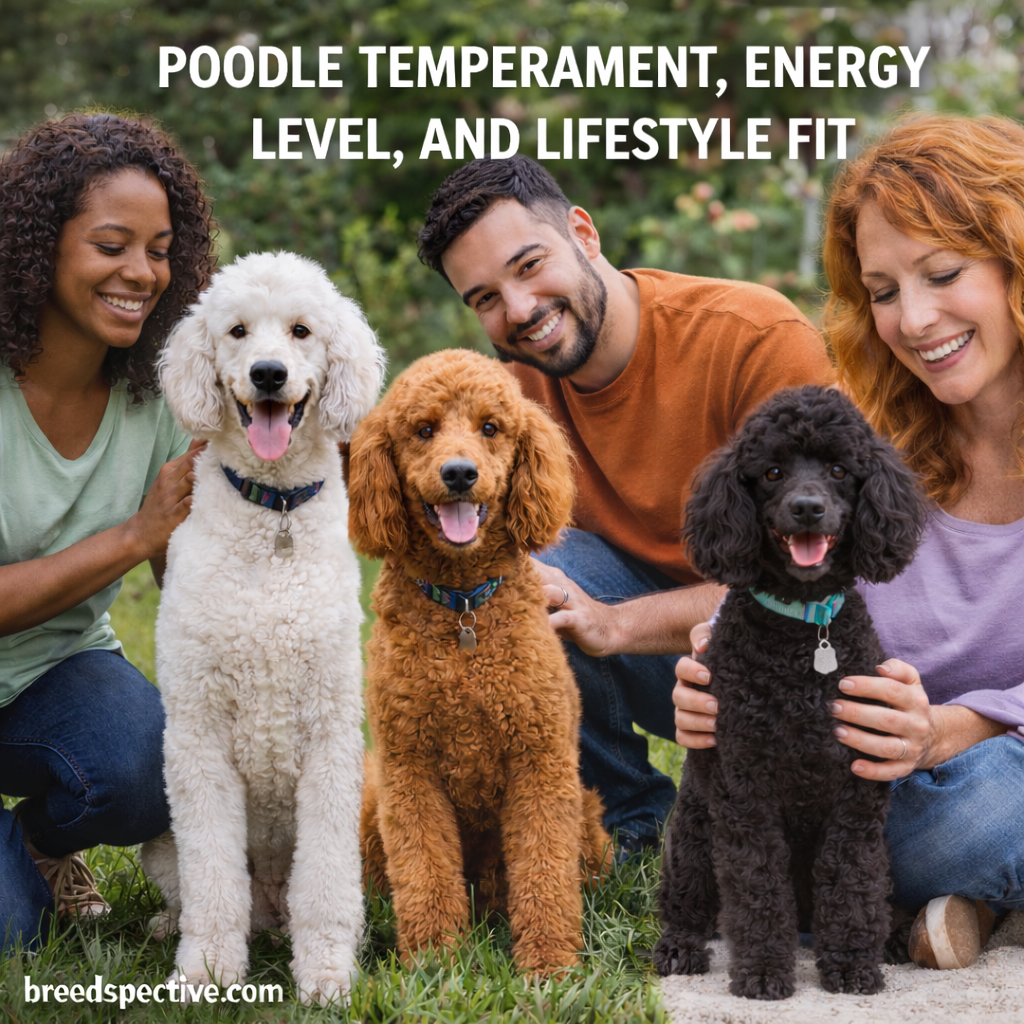
Poodle Temperament, Energy Level, and Lifestyle Fit

Poodles of different sizes sitting with their owners outdoors, illustrating the breed’s friendly temperament, intelligence, and adaptable energy levels.
Poodles are intelligent, energetic, and people-focused dogs that adapt well to many lifestyles when their exercise and mental needs are met. breedspective.com.

Poodle temperament is typically intelligent, active, alert, people-oriented, and highly responsive to training. Standard, Miniature, and Toy Poodles share the same basic breed character, but size changes what daily exercise, handling, family life, and some health considerations look like.

The polished show coat can disguise what is fundamentally an athletic working breed. The official Poodle Club of America breed standard describes the Poodle as a “very active, intelligent” dog, and those traits matter much more in everyday ownership than its glamorous appearance.

Continue reading “Poodle Temperament, Energy Level, and Lifestyle Fit”