
The biggest mistakes new pet owners make are choosing an animal that does not fit their lifestyle, underestimating long-term costs and housing restrictions, delaying training and socialization, and expecting behavior problems to resolve on their own. These mistakes can become expensive and difficult to reverse, and some contribute to pets eventually being rehomed or surrendered.
The good news is that most are preventable. Below, we have ranked the major first-time pet-owner mistakes roughly from the ones most likely to create serious long-term consequences to the ones that are easier to correct.
New Pet Owner Mistakes at a Glance

| Rank | Mistake | Why It Can Become Costly | Concrete Fix |
|---|---|---|---|
| 1 | Choosing the wrong pet | Years of lifestyle mismatch | Choose for temperament and needs, not appearance |
| 2 | Ignoring housing restrictions | Can force rehoming | Verify pet rules before adoption |
| 3 | Underestimating costs | Care may become unaffordable | Build routine and emergency budgets |
| 4 | Missing early socialization | Fear can become harder to address | Start safe, positive exposure early |
| 5 | Using punishment-based training | Can increase fear and behavior problems | Use reward-based methods |
| 6 | Waiting to train | Unwanted habits become established | Start simple routines immediately |
| 7 | Underestimating exercise and enrichment | Restlessness and destructive behavior | Match activity to the individual pet |
| 8 | Expecting instant adjustment | Creates frustration and inconsistent handling | Allow time and establish routine |
| 9 | Neglecting preventive care and grooming | Small problems can become larger ones | Establish veterinary and grooming routines |
| 10 | Failing to plan for life changes | Creates crises later | Make backup-care and long-term plans |
These problems overlap. Choosing a high-energy dog for a low-activity household, for example, can lead to insufficient exercise, frustration, behavior problems, housing complaints, and ultimately rehoming.
That is why the decision made before the pet comes home is often the most important one.
1. Choosing a Pet Based on Appearance Instead of Lifestyle
This is the most consequential breed-selection mistake because you may live with the consequences for well over a decade.
A person sees a Siberian Husky’s appearance but does not want the exercise, shedding, independence, or vocal behavior that can accompany the breed. Someone chooses a Border Collie for intelligence without considering what living with a highly driven herding dog requires. Another household wants a Persian cat’s appearance but dislikes regular coat care.
None of these animals is doing anything wrong.
The match is wrong.
Before choosing a dog, consider:
- Adult size
- Typical activity level
- Trainability
- Independence
- Vocal tendencies
- Grooming
- Shedding
- Prey drive
- Social needs
- Health considerations
- Expected care costs
Our guide to choosing the right dog breed for your lifestyle provides a broader framework for making that decision.
Cat owners should do the same analysis. Activity, sociability, vocal behavior, grooming, and tolerance of other pets vary among cats, which is why choosing the right cat breed for your home should involve more than appearance.
The fix
Write down what your household can realistically provide before researching breeds.
If you have 45 minutes available for dog walking most weekdays, choose around that reality. Do not acquire a dog requiring substantially more activity because you hope pet ownership will completely change your routine.
Select for the life you actually live.
2. Getting a Pet Before Checking Housing Rules
This mistake can have consequences no amount of training can solve.
A renter adopts a dog and discovers afterward that the lease has a 25-pound weight limit. Another moves into a property that prohibits multiple pets. Someone assumes “pet friendly” means every dog is accepted, only to discover breed restrictions.
The ASPCA identifies housing as a major barrier to keeping people and pets together. Its research has found that renters who rehome pets are particularly likely to report housing-related reasons, while pet restrictions can include breed and weight limits, no-pet policies, pet deposits, and additional monthly rent.
Behavior problems are another recurring issue the ASPCA identifies as contributing to pets entering shelters, which makes planning for both housing and behavior essential.
The fix
Before bringing home a pet, verify:
- Pets are permitted
- Species restrictions
- Number-of-pet limits
- Adult weight limits
- Breed restrictions
- Pet deposits
- Monthly pet rent
- Insurance restrictions
- HOA rules, if applicable
- Local licensing requirements
Get permission in writing where appropriate.
Also think one move ahead. If you rent and expect to relocate within a few years, consider how easily you could find another property accepting the same animal.
3. Underestimating the True Cost of Pet Ownership
The adoption fee or purchase price is not the cost of owning a pet.
It is the entry cost.
A realistic budget needs to account for routine expenses as well as unpredictable ones.
For a dog or cat, that can include:
- Food
- Veterinary examinations
- Vaccinations and preventive care
- Spay or neuter costs where applicable
- Parasite prevention
- Medication
- Dental care
- Grooming
- Training
- Toys and enrichment
- Bedding
- Collars, harnesses, carriers, or crates
- Pet sitting or boarding
- Licensing
- Pet deposits or rent
- Emergency veterinary treatment
Costs also change over the animal’s lifetime.
A healthy young animal may have relatively predictable expenses. An older pet may eventually require medication, diagnostic testing, dental procedures, special diets, or more frequent veterinary attention.
The fix
Create three categories before adopting:
Monthly: food, routine supplies, grooming, preventive medications, pet rent.
Annual: examinations, vaccinations, licensing, routine testing and other predictable veterinary costs.
Unexpected: illness, injury, emergency boarding, behavioral help, or sudden changes in housing.
Decide how you would pay an unexpected veterinary bill before one happens. Depending on your circumstances, that may involve savings, pet insurance, or another realistic financial plan.
4. Missing the Early Socialization Window
This mistake is particularly important for puppies because developmental timing matters.
The American Veterinary Society of Animal Behavior (AVSAB) identifies the first three months of a puppy’s life as the primary and most important socialization period. The commonly described sensitive period runs approximately from 3 to 14 weeks, although the exact boundaries should not be treated as a rigid deadline.
During this stage, puppies should have safe, positive exposure to the kinds of people, animals, environments, sounds, surfaces, and experiences they will encounter later.
AVSAB warns that incomplete or inappropriate socialization during this period can increase the risk of later fear, avoidance, and aggression.
Socialization does not mean forcing a frightened puppy to interact.
It also does not mean taking an incompletely vaccinated puppy into every dog park and allowing contact with unknown animals.
AVSAB supports carefully managed socialization before the vaccination series is complete and states that puppy classes can generally begin as early as 7–8 weeks under appropriate health and vaccination precautions.
The fix
Use controlled, positive experiences.
Depending on veterinary guidance and the puppy’s comfort, that might include:
- Different types of people
- Household noises
- Car rides
- Safe handling of paws, ears, and mouth
- Different walking surfaces
- Calm, appropriate dogs
- Veterinary environments
- Grooming equipment
- Traffic sounds
- People wearing hats or carrying objects
Keep experiences manageable. If the puppy is frightened, create more distance and reduce the intensity rather than forcing contact.
Cats benefit from thoughtful early experiences too, although the developmental timeline and appropriate socialization plan are not identical to those for puppies.
5. Using Punishment to Stop Unwanted Behavior
A frustrated new dog owner may yell, jerk the leash, intimidate the dog, or use painful equipment because the unwanted behavior appears to stop in the moment.
Stopping behavior temporarily is not the same as teaching the dog what to do instead.
AVSAB’s current Humane Dog Training Position Statement recommends reward-based methods for dog training and behavior modification. Its review of the scientific evidence concludes that aversive training methods create welfare risks and are not necessary for effective training.
AVSAB also cites risks associated with aversive methods including increased fear, anxiety, stress, and aggression.
The fix
Teach the behavior you actually want.
Instead of focusing only on:
“Don’t jump.”
teach:
“Keep four paws on the floor when greeting.”
Instead of repeatedly punishing pulling, reinforce walking with a loose leash.
Instead of scolding a puppy after finding an indoor accident, improve supervision and take the puppy outside on an appropriate schedule.
If behavior is severe, dangerous, or suddenly changes, seek qualified professional help rather than escalating punishment.
For people worried that some dogs are simply impossible for beginners to teach, our guide to the easiest dog breeds to train and why explains how breed tendencies influence training without determining the outcome.
6. Waiting Until Problems Appear to Start Training
Training begins whether you deliberately participate or not.
Every time a pet interacts with its environment, behavior can be reinforced.
A puppy that receives attention whenever it jumps may learn that jumping works. A dog that pulls and successfully reaches every interesting smell may learn that pulling moves it forward. A cat repeatedly allowed to scratch one particular sofa may establish a strong preference for that surface.
New owners sometimes wait for the pet to “settle in” before establishing any rules.
A settling period is reasonable.
A month without structure is not necessary.
The fix
Start with simple household skills from the beginning.
For a dog, priorities may include:
- Name response
- House-training routine
- Recall foundations
- Loose-leash skills
- Calm greetings
- Comfortable handling
- Settling on a bed or mat
- Being alone for appropriate periods
- Waiting at doors
Puppies also need realistic bathroom expectations. Our guide to potty-training timelines by dog breed explains why progress should be judged by age and individual development rather than expecting immediate reliability.
Cats need household learning too. Litter-box placement, scratching surfaces, carriers, handling, feeding routines, and appropriate play all benefit from thoughtful setup.
7. Underestimating Exercise and Mental Stimulation
A backyard does not exercise a dog automatically.
Neither does buying a basket of toys and leaving them on the floor.
Dogs need activity appropriate to their breed tendencies, age, health, and individual temperament. Cats need opportunities for play, exploration, scratching, climbing, hunting-like behavior, and rest.
When those needs are poorly matched, owners may see:
- Destructive chewing
- Restlessness
- Persistent attention-seeking
- Excessive vocalization
- Digging
- Difficulty settling
- Rough play
- Other unwanted behavior
These signs can have multiple causes, including medical and behavioral problems, so they should not automatically be blamed on “too much energy.”
Still, lifestyle mismatch is a common ownership problem.
The fix
Choose the pet’s energy level before choosing its appearance.
For dogs, use our guide to matching a dog’s energy level to your daily routine to compare low-, moderate-, and high-energy lifestyles realistically.
Then combine physical and mental activity.
A dog’s day might include a neighborhood walk, sniffing, a short training session, food enrichment, play, and rest rather than one exhausting session of repetitive exercise.
Cats can benefit from short interactive play sessions, climbing opportunities, scratching surfaces, hiding places, puzzle feeding, and access to safe observation points.
8. Expecting the Pet to Adjust Immediately
The first night does not tell you what the next ten years will look like.
A newly adopted animal has experienced a major environmental change. New people, smells, routines, sounds, food, sleeping arrangements, and expectations all arrive at once.
Some animals explore immediately.
Others become quiet or cautious. Some may eat differently, hide, vocalize, struggle with sleep, or show behaviors that change as they become more comfortable.
Owners can create problems when they expect immediate affection or perfect behavior.
The fix
Make the first few weeks predictable.
Start with:
- Consistent feeding times
- A designated resting area
- Regular toilet opportunities
- Manageable introductions
- Quiet time
- Short training sessions
- Gradual access to the home
Do not overwhelm a new pet with a stream of visitors simply because everyone wants to meet it.
Our guide to what to expect during your first 30 days with a new pet provides a more detailed adjustment framework.
Bonding is not a deadline.
9. Treating Grooming and Preventive Care as Optional
A pet can look healthy while routine care is being missed.
First-time owners sometimes think grooming is mainly cosmetic or that veterinary care is only necessary when something is obviously wrong.
Routine care is broader than that.
Depending on the animal, it can include:
- Coat brushing
- Nail care
- Dental care
- Ear monitoring
- Parasite prevention
- Vaccination
- Weight monitoring
- Routine veterinary examinations
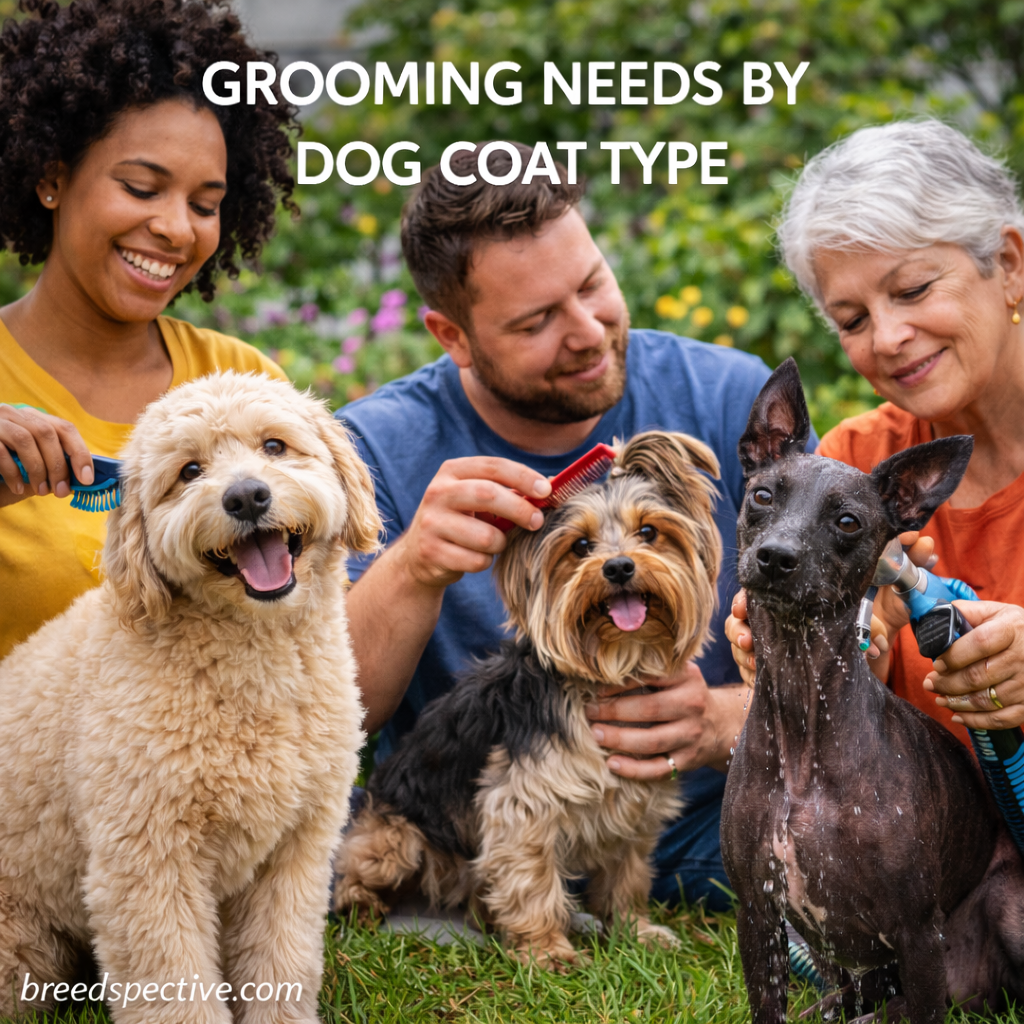
Different coat types create very different workloads.
A short-coated dog may require little brushing, while a curly low-shedding coat can mat without frequent maintenance. Long-haired cats may also require more coat care than short-haired cats.
The fix
Before bringing the pet home, write down its recurring care tasks and put them on a calendar.
Establish a veterinarian early rather than waiting for an emergency.
Ask what preventive schedule is appropriate for the animal’s age, health, lifestyle, and geographic area.
10. Failing to Plan for Vacations, Illness, Moves, and Emergencies
Pet ownership works differently when life stops going according to plan.
Who cares for the dog if you are hospitalized?
Who feeds the cat if your flight home is canceled?
What happens if your new job requires travel?
Can your parents actually take the dog if your housing changes, or have you simply assumed they will?
The ASPCA notes that people may lose pets from their homes because of circumstances including illness, financial difficulty, lack of accessible veterinary care, emergencies, and shortages of pet-friendly housing.
The fix
Create a basic backup-care plan.
It should include:
- At least one reliable emergency caregiver
- Veterinarian contact information
- Feeding instructions
- Medication information
- Microchip details
- Boarding or pet-sitting options
- Access instructions for your home
- An emergency veterinary payment plan
- A longer-term caregiver if you become unable to keep the pet
If you are planning to move, investigate pet policies before signing a lease rather than after.
Preparation protects both you and the animal.
Breed Selection Mistakes First-Time Owners Often Make
Several breed-selection shortcuts repeatedly cause problems.
“Small dogs are easier.”
Sometimes.
A small dog requires less physical space and is easier to lift, but it may still be energetic, vocal, difficult to house-train, grooming-intensive, or highly independent.
“Smart dogs are easy dogs.”
Not necessarily.
Intelligence can make training easier, but an intelligent working dog may also need much more mental stimulation and structured activity than a first-time owner expects.
“A low-energy dog needs almost no exercise.”
Low energy is relative.
Dogs still need movement, enrichment, toilet opportunities, social interaction, and appropriate physical activity.
“Cats basically take care of themselves.”
Cats do not need outdoor walks to use the bathroom, but they still need daily care, enrichment, veterinary attention, litter-box maintenance, appropriate feeding, play, and social interaction.
“I’ll figure out the breed after I get it.”
Research is most useful before commitment.
Once the pet is home, breed traits do not disappear because they conflict with the owner’s routine.
When a Behavior Problem Needs Professional Help
Not every issue should be handled through trial and error.
Seek professional guidance for behaviors such as:
- Biting
- Serious aggression
- Severe fear
- Resource guarding
- Extreme separation distress
- Repeated escape behavior
- Sudden major personality changes
- Behavior that puts people or animals at risk
Medical problems can also cause behavior changes, so a veterinarian is an appropriate starting point when behavior changes suddenly or appears alongside physical symptoms.
For training help, AVSAB recommends looking for professionals who use reward-based approaches and cautions against trainers who rely on fear, pain, physical force, or “alpha” and dominance-based methods.
Getting qualified help early can be much easier than waiting until the behavior has disrupted the household for months.
A Better First-Month Checklist
You do not need to become an animal-behavior expert before adopting.
You do need a workable plan.
Before or immediately after bringing the pet home:
- Confirm housing permission.
- Register with a veterinarian.
- Create a realistic pet budget.
- Pet-proof the home.
- Establish feeding and toilet routines.
- Start reward-based training where appropriate.
- Begin safe socialization for young animals.
- Provide age-appropriate exercise and enrichment.
- Schedule necessary grooming and preventive care.
- Identify an emergency caregiver.
- Learn the pet’s normal eating, sleeping, toilet, and activity patterns.
- Give the animal time to adjust without demanding instant perfection.
The goal is not a flawless first month.
It is preventing avoidable problems from becoming established ones.
Verdict: Who Is Ready for a First Pet?
A first-time pet owner is ready when they can choose an animal based on lifestyle compatibility rather than appearance, provide stable housing, budget for routine and unexpected care, and make time for training, enrichment, grooming, veterinary care, and daily interaction.
For puppies, early positive socialization and reward-based training deserve particular attention. AVSAB’s guidance makes clear that the early developmental period matters and that aversive training carries behavioral and welfare risks. For all pets, the ASPCA’s work on housing, behavior, and relinquishment shows why practical issues such as rental rules and access to care belong in the decision from the beginning.
Pet ownership is not a good fit right now if keeping the animal depends on your schedule, housing, finances, or interest remaining perfect every day. Waiting until those basics are more stable is a better decision than acquiring an animal first and hoping the difficult parts work themselves out.
The strongest start is not about being an experienced owner. It is about knowing what you are committing to, building realistic routines, and getting help before manageable problems become serious ones.