
What to Expect in Your First 30 Days With a New Pet

A pet owner sitting with a new puppy in a living room, representing the first 30 days of adjusting to a new pet.
A new pet owner bonding with their puppy at home, highlighting the early adjustment period and routines. breedspective.com.

The first 30 days with a new pet are usually an adjustment period, not an instant preview of what life together will eventually look like. Your dog or cat is learning where to eat, sleep and go to the bathroom, who lives in the home, what the daily routine means and whether this unfamiliar environment is safe.

Expect the first few days to be quieter or more chaotic than normal, the next few weeks to reveal more of your pet’s behavior and personality, and your own schedule to change more than you may have anticipated. The goal of the first month is not a perfectly trained pet—it is a safe pet, a workable routine and steadily growing trust.

Continue reading “What to Expect in Your First 30 Days With a New Pet”


Biggest Mistakes New Pet Owners Make

A stressed pet owner sitting on a messy couch with a playful puppy that has made a mess, illustrating common mistakes new pet owners make.
A new pet owner dealing with a messy situation caused by a puppy, highlighting common mistakes and challenges beginners face. breedspective.com.

The biggest mistakes new pet owners make are choosing an animal that does not fit their lifestyle, underestimating long-term costs and housing restrictions, delaying training and socialization, and expecting behavior problems to resolve on their own. These mistakes can become expensive and difficult to reverse, and some contribute to pets eventually being rehomed or surrendered.

The good news is that most are preventable. Below, we have ranked the major first-time pet-owner mistakes roughly from the ones most likely to create serious long-term consequences to the ones that are easier to correct.

Continue reading “Biggest Mistakes New Pet Owners Make”

The Hidden Costs of Owning a Dog or Cat

A woman reviewing pet expenses with a dog beside her, showing the hidden costs of owning a dog or cat.
A pet owner reviewing expenses with her dog, highlighting the hidden financial responsibilities of pet ownership. breedspective.com.

The hidden costs of owning a dog or cat include emergency veterinary care, medications, dental work, grooming, training, boarding, pet sitting, insurance, housing fees and replacing damaged or worn supplies. Food and routine vet visits may be predictable, but one medical emergency or a recurring health problem can push the cost of pet ownership far beyond a basic monthly budget.

That does not mean pet ownership is unaffordable. It means prospective owners should budget for the animal they are actually bringing home—including its size, coat, health risks, age and lifestyle needs—rather than assuming every dog or cat costs roughly the same amount to maintain.

Continue reading “The Hidden Costs of Owning a Dog or Cat”

Maine Coon vs Ragdoll: Which Cat Fits Your Home Better?

A Maine Coon and Ragdoll cat sitting with their owner on a couch, comparing which breed fits your home better.
A Maine Coon and Ragdoll relaxing with their owner indoors, highlighting differences in temperament and home compatibility. breedspective.com.

The Maine Coon and Ragdoll are both large, affectionate cats, but the Maine Coon is generally the more active, rugged and independently curious of the two, while the Ragdoll is known for a calmer, gentle and people-oriented temperament. Both can make excellent family companions, but their grooming, activity, health considerations and preferred interaction styles make them better suited to different households. The Cat Fanciers’ Association

Continue reading “Maine Coon vs Ragdoll: Which Cat Fits Your Home Better?”

Border Collie vs Australian Shepherd: Which Is More Demanding?

A Border Collie and Australian Shepherd sitting with their owner outdoors, comparing which breed is more demanding.
A Border Collie and Australian Shepherd sitting side by side with their owner, highlighting differences in energy and daily demands. breedspective.com.

The Border Collie and Australian Shepherd are both intelligent, high-energy herding breeds that need substantial exercise, training and mental stimulation. The Border Collie generally places more emphasis on sustained work and mental engagement, while the Australian Shepherd is also demanding but tends to bring a somewhat different combination of herding drive, exuberance and family companionship. The American Kennel Club (AKC) describes both breeds as active working dogs that do best when given meaningful things to do. American Kennel Club

Neither should be treated as an ordinary “couple of walks a day” breed. The more useful question is which type of demanding dog better matches your routine.

Continue reading “Border Collie vs Australian Shepherd: Which Is More Demanding?”

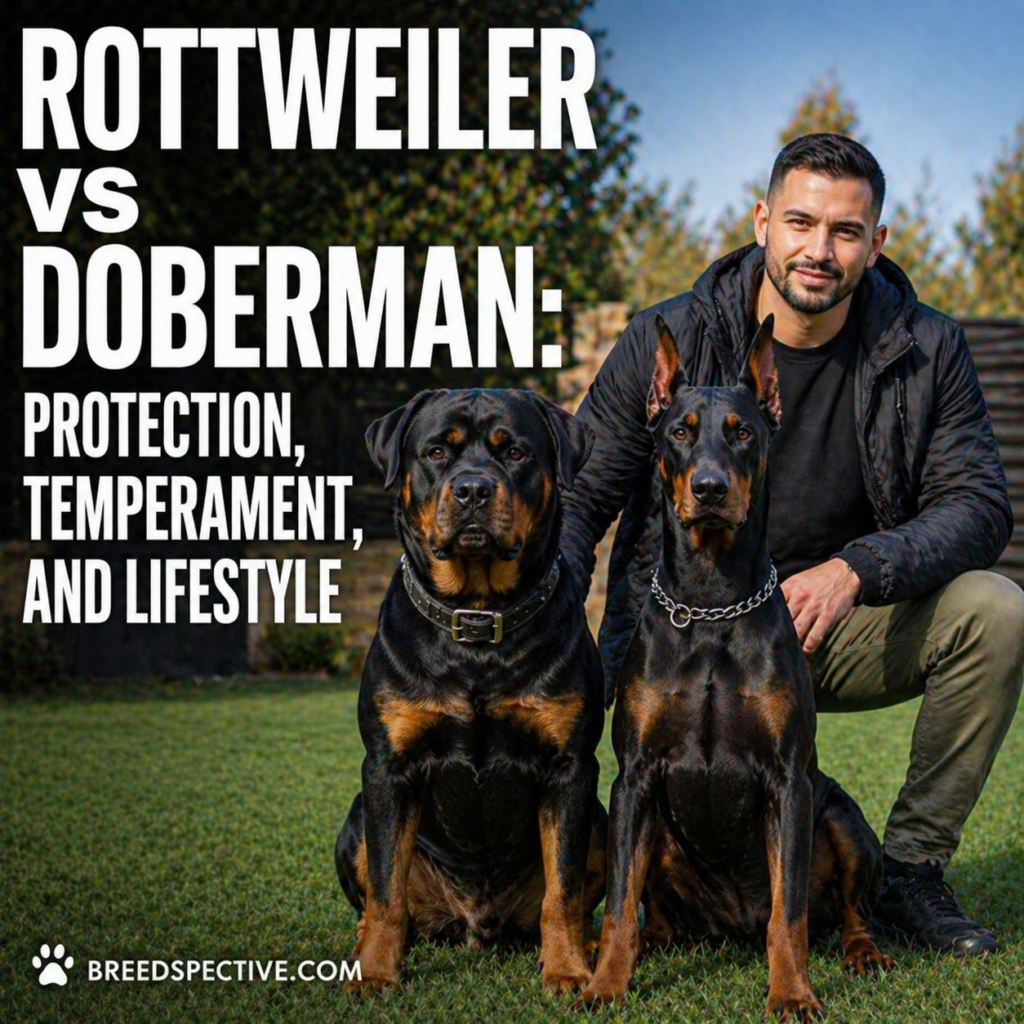
Rottweiler vs Doberman: Protection, Temperament, and Lifestyle

A Rottweiler and Doberman sitting with their owner outdoors, comparing protection, temperament, and lifestyle differences.
A Rottweiler and Doberman sitting side by side with their owner, highlighting key differences in protection style and temperament. breedspective.com.

The Rottweiler and Doberman are powerful German working breeds with natural protective instincts, but they offer noticeably different ownership experiences. Rottweilers are heavier, more substantial dogs typically characterized by confidence and watchfulness, while Dobermans are leaner, faster and notably energetic, alert and closely involved with their people. Both require early socialization, consistent training and owners prepared to manage a large protective dog responsibly. American Kennel Club

Continue reading “Rottweiler vs Doberman: Protection, Temperament, and Lifestyle”

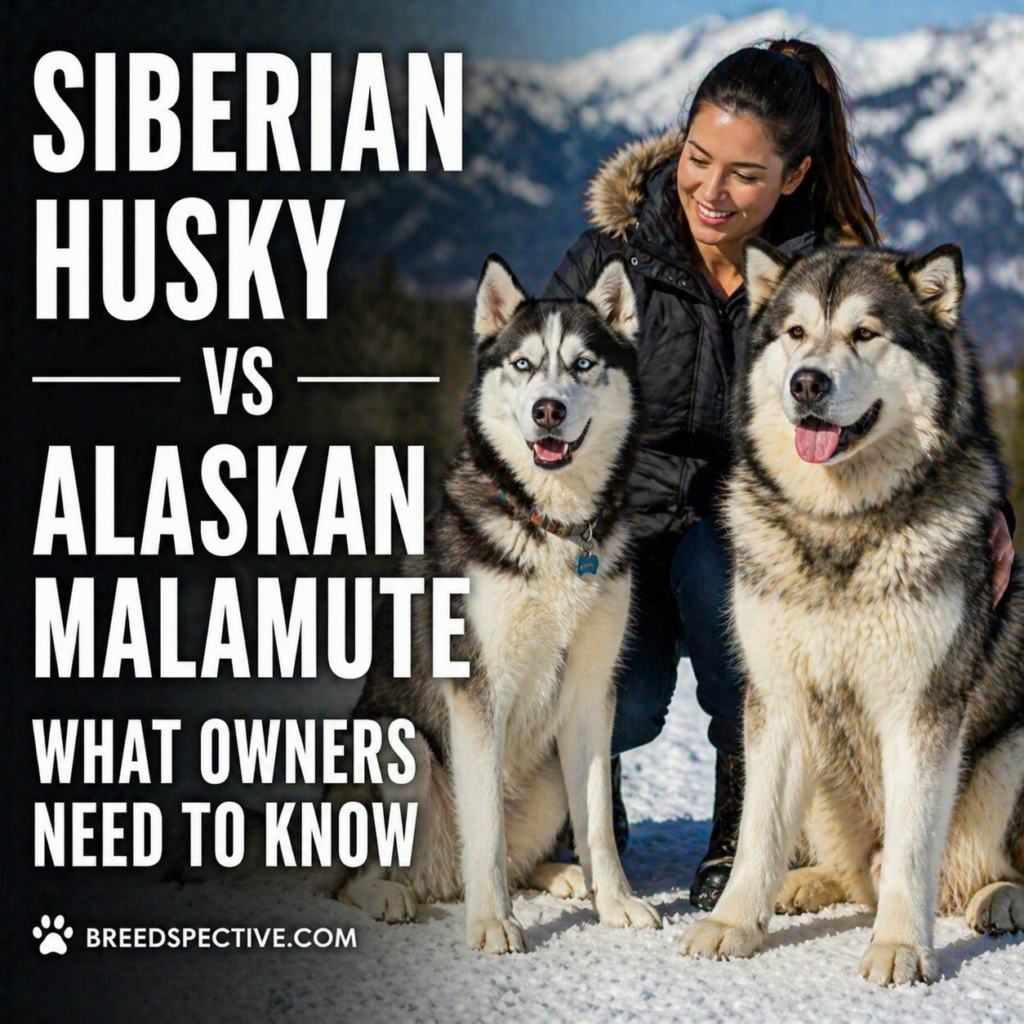
Siberian Husky vs Alaskan Malamute: What Owners Need to Know

A Siberian Husky and Alaskan Malamute sitting with their owner in a snowy mountain setting, comparing the two breeds.
A Siberian Husky and Alaskan Malamute in a snowy environment with their owner, highlighting a side-by-side breed comparison. breedspective.com.

The Siberian Husky and Alaskan Malamute are Arctic sled dogs, but the Husky is smaller and lighter, developed for speed and endurance while pulling relatively light loads, whereas the Malamute is substantially larger and was developed to haul heavy freight. Both are intelligent, independent, athletic dogs with thick double coats and demanding exercise needs, but the Malamute adds considerably more size and physical power to the ownership equation. Siberian Husky Club of America, Inc

Continue reading “Siberian Husky vs Alaskan Malamute: What Owners Need to Know”

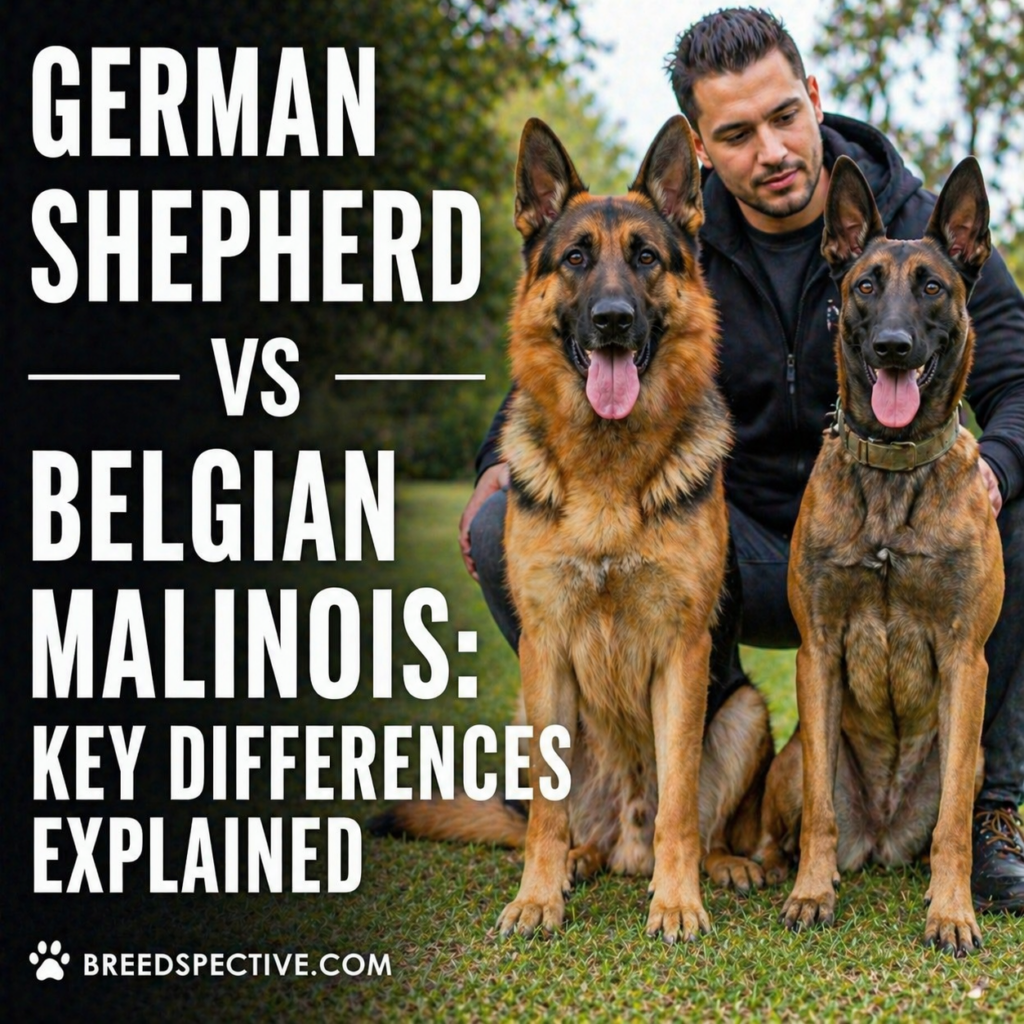
German Shepherd vs Belgian Malinois: Key Differences Explained

A German Shepherd and Belgian Malinois sitting side by side with their owner outdoors, comparing key differences between the two breeds.
A German Shepherd and Belgian Malinois sitting together with their owner, highlighting a comparison of their temperament and lifestyle differences. breedspective.com.

The German Shepherd and Belgian Malinois are intelligent, athletic working breeds, but the Malinois is generally lighter, more intensely work-driven and more demanding of sustained physical and mental activity. German Shepherds are also high-energy dogs that need serious training and exercise, but their larger build and all-purpose working heritage create a somewhat different ownership experience. The American Kennel Club (AKC) emphasizes that both breeds need substantial exercise, training and purposeful activity. American Kennel Club

Neither should be chosen simply because you want a protective-looking dog. These are capable herding breeds whose intelligence and working instincts require daily management.

Continue reading “German Shepherd vs Belgian Malinois: Key Differences Explained”

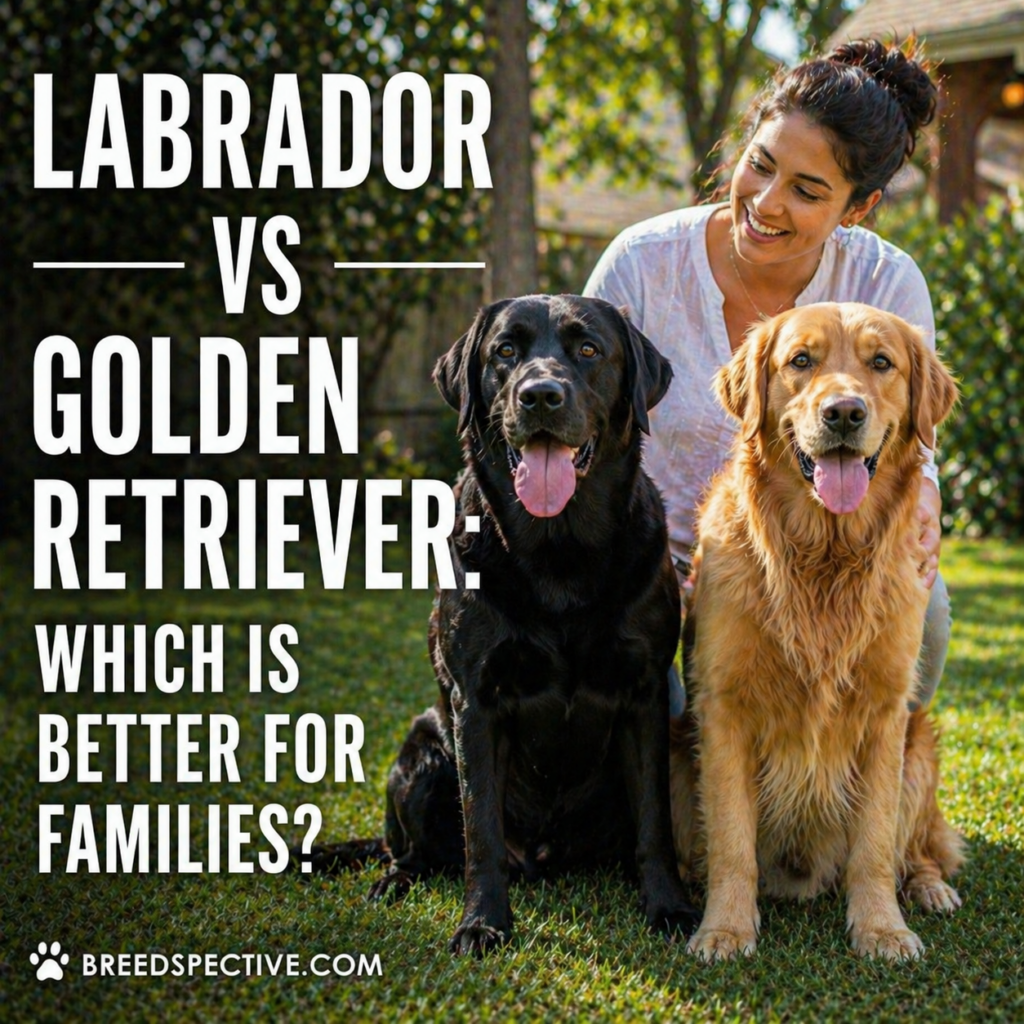
Labrador vs Golden Retriever: Which Is Better for Families?

A woman sitting outdoors with a Labrador Retriever and a Golden Retriever, comparing which breed is better for families.
A Labrador and Golden Retriever sitting with their owner outdoors, highlighting a side-by-side comparison for family-friendly dog breeds. breedspective.com.

The Labrador Retriever and Golden Retriever are both friendly, trainable, active family dogs, but they differ most in coat care and some everyday behavior. Labs tend to be exuberant, energetic and physically robust, while Goldens are similarly active but are often more people-focused and have a longer coat that demands more grooming. Both breeds need far more exercise, training and household involvement than their easygoing reputations sometimes suggest. American Kennel Club

Continue reading “Labrador vs Golden Retriever: Which Is Better for Families?”

How to Match a Dog’s Energy Level to Your Daily Routine

A woman jogging with a high-energy dog on a trail, illustrating how to match a dog’s energy level to an active daily routine.
An active owner jogging with her dog outdoors, highlighting the importance of matching a dog’s energy level to your lifestyle. breedspective.com.

To match a dog’s energy level to your lifestyle, compare the dog’s adult exercise and mental-stimulation needs with the routine you can maintain on an ordinary weekday. A high-energy dog can be a great match if you genuinely want daily exercise, training, and interactive activities, while a lower-energy dog is usually more realistic when your schedule leaves limited time for dog-focused activity.

The biggest mistake is choosing for your ideal lifestyle instead of your actual one. If your normal evening involves a short neighborhood walk, a breed developed to work for hours is unlikely to become satisfied with that routine simply because you have a backyard.

Continue reading “How to Match a Dog’s Energy Level to Your Daily Routine”