
To match a dog’s energy level to your lifestyle, compare the dog’s adult exercise and mental-stimulation needs with the routine you can maintain on an ordinary weekday. A high-energy dog can be a great match if you genuinely want daily exercise, training, and interactive activities, while a lower-energy dog is usually more realistic when your schedule leaves limited time for dog-focused activity.
The biggest mistake is choosing for your ideal lifestyle instead of your actual one. If your normal evening involves a short neighborhood walk, a breed developed to work for hours is unlikely to become satisfied with that routine simply because you have a backyard.
What Does “Energy Level” Actually Mean in a Dog?
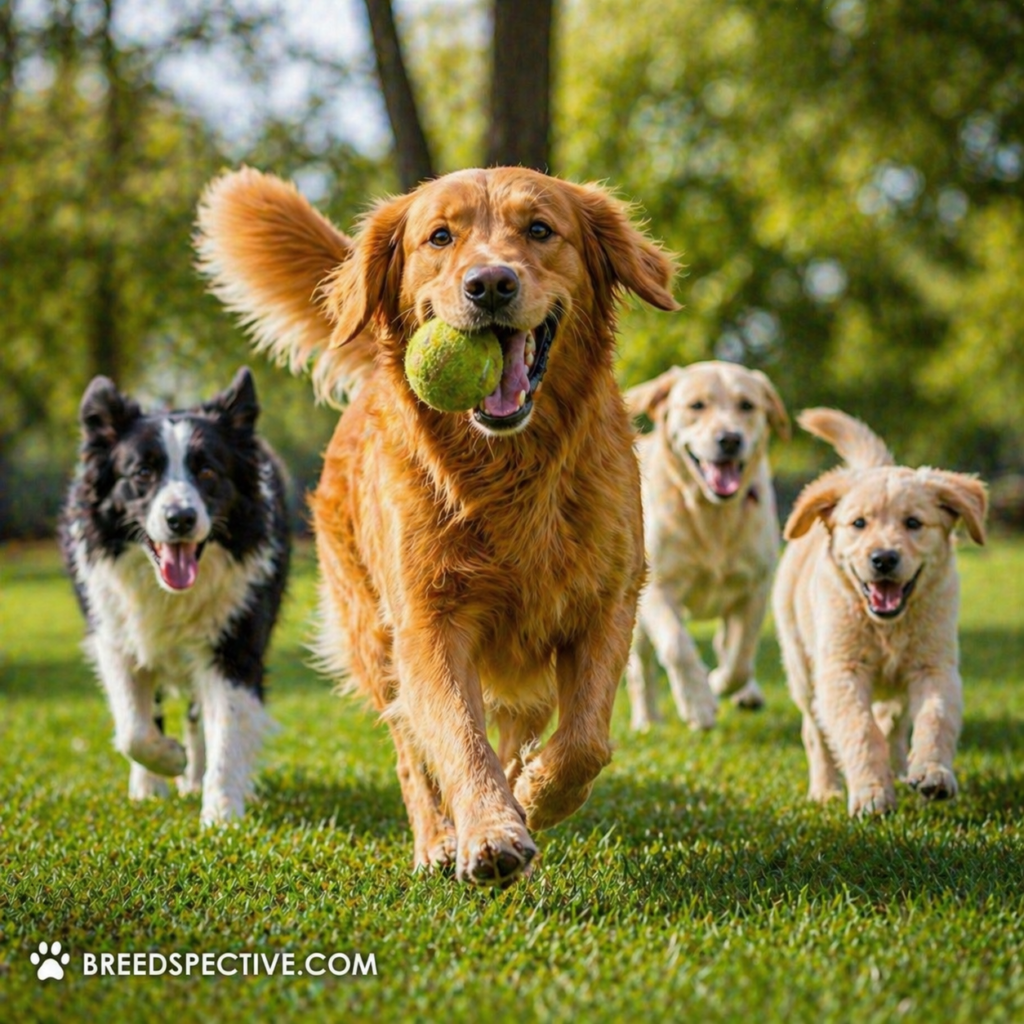
Energy level is more complicated than how fast a dog runs.
When evaluating a breed, consider several separate characteristics:
- Physical exercise needs: How much movement and activity does the dog seek?
- Mental stimulation: How much training, problem-solving, sniffing, or other purposeful activity does the dog need?
- Endurance: Does the dog tire after a moderate outing or remain ready for more?
- Drive: How strongly does the dog pursue breed-related activities such as herding, retrieving, tracking, or pulling?
- Ability to settle: After its needs are met, can the dog relax comfortably at home?
Breed heritage provides useful clues.
The American Kennel Club (AKC) notes that herding breeds such as Border Collies and Australian Shepherds are intelligent, extremely active dogs requiring daily physical exercise and mental stimulation. Herding breeds were developed to work hard for extended periods, so appropriate outlets for those instincts remain important even when the dog lives as a family pet.
Working breeds present similar considerations. The AKC notes that many were developed for physically or mentally demanding jobs and retain strong working instincts even when those historical jobs are no longer part of their lives.
Before focusing only on energy, use our broader guide to choosing the right dog breed for your lifestyle to account for size, grooming, training, household, and budget as well.
Low, Moderate, or High Energy: Where Does Your Routine Fit?
There is no universal number of minutes that makes a dog “low,” “moderate,” or “high” energy. Age, breed, health, conditioning, weather, and the individual dog all matter.
A more useful approach is comparing the kind of routine each dog needs.
| Energy Match | Typical Weekday | Typical Weekend | Owner Profile |
|---|---|---|---|
| Lower energy | Shorter walks, toileting trips, play and enrichment at home | Leisurely walk, play, family time | Prefers a quieter routine |
| Moderate energy | Morning walk, evening walk or active play, short training/enrichment | Longer outing, park trip, hike or extended play | Active but does not want dog exercise to dominate the day |
| High energy | Purposeful exercise plus training, play or enrichment before/after work | Longer physical activity plus mental work | Wants dog activities to be a major daily commitment |
| Very high drive | Structured physical and mental outlets throughout the week | Training, dog sports, long outings or breed-appropriate activities | Enthusiast who actively wants a working-style dog |
The goal is not to provide the maximum possible exercise.
It is to choose a dog whose needs fit a routine you can sustain for years.
Step 1: Audit an Ordinary Weekday
Think about yesterday rather than your last vacation.
Write down when you leave home, when you return, how much free time you normally have before work, and what you realistically want to do after work.
Then ask:
- Would I enjoy walking before work?
- Can I provide another meaningful activity after work?
- Do I enjoy dog training?
- How often do I currently exercise outdoors?
- Do I have time for interactive play?
- What happens on a 10-hour workday?
- Who handles exercise when I am sick?
- What will I do during bad weather?
- Am I willing to pay for a dog walker or other help if necessary?
If you repeatedly answer “I could probably make it work,” consider moving one energy category lower.
A dog becomes part of your routine every day, not just when your schedule cooperates.
Step 2: Look at What the Breed Was Developed to Do
Original function often explains why two dogs of similar size can have completely different activity requirements.
A Border Collie was developed to control livestock while working closely with a handler. A Siberian Husky was developed for pulling and endurance. A Boxer comes from a different working background again.
Those histories still matter.
The Border Collie’s temperament, energy level, and lifestyle fit illustrates why a highly intelligent dog may require substantial mental work in addition to physical activity.
The Siberian Husky’s energy level and lifestyle requirements demonstrate why endurance and working heritage deserve consideration before choosing a breed for appearance.
A Boxer’s temperament and energy profile offers another example: an energetic, playful dog whose daily routine needs to accommodate both activity and training.
Breed purpose does not dictate exactly how an individual dog will behave, but it gives you a much better starting point than size or appearance alone.
Why a 20-Minute Walk May Not Be Enough
For an active working, herding, or sporting dog, a short neighborhood walk can be useful without being sufficient.
Consider what happens during those 20 minutes.
If the dog walks slowly beside you on the same route every day, the activity may provide relatively little vigorous movement or novelty. An energetic dog can arrive home physically ready to continue.
That does not mean every high-energy dog should simply be exercised harder.
The AKC emphasizes combining physical exercise with mental stimulation and activities appropriate to the dog’s instincts. Training, games, scent activities, food-dispensing toys, and dog sports can all contribute to a more complete routine.
For breeds developed to work for long periods, think in terms of physical activity + mental activity + opportunities to settle, rather than searching for a single magic number of walking minutes.
Mental Exercise Counts Too
An energetic dog does not necessarily need to spend every available hour running.
Its brain needs work too.
Useful activities can include:
- Short obedience or trick-training sessions
- Scent-searching games
- Food puzzle toys
- Hide-and-seek
- Retrieving games
- Learning new cues
- Structured tug
- Breed-appropriate dog sports
- Sniffing and exploration during walks
AKC Scent Work, for example, asks dogs to locate hidden odors using their noses and communicate the find to their handlers. The AKC notes that scent training can also be practiced at home and in the community.
The American Veterinary Society of Animal Behavior (AVSAB) also describes food puzzle toys as a useful form of enrichment that allows dogs to work for food and remain engaged.
Mental work should complement appropriate physical exercise rather than become an excuse to eliminate it.
For a high-drive dog, ten minutes of focused scent work followed by a suitable walk can create a more complete activity period than simply adding another repetitive lap around the block.
What Living With a High-Energy Dog Actually Looks Like
“Active” sounds appealing when pictured as weekend hikes and trips to the beach.
The ordinary weekday is what matters.
Living with a high-energy dog can mean getting up earlier because the dog needs activity before you start work. It can mean planning an evening training session when you would rather watch television. Rain may change the activity, but it does not make the dog’s needs disappear.
Your schedule might involve a morning walk with training incorporated into it, a food puzzle at breakfast, an evening activity, and short periods of training or play throughout the day.
Weekends may involve longer outings, classes, hiking, scent work, retrieving, agility, or another appropriate activity.
The AKC notes that active herding breeds need both exercise and mental stimulation, while bored working dogs may redirect unused energy into behaviors owners do not appreciate, including barking, digging, chewing, or attempts to escape.
That does not mean every unwanted behavior is caused by insufficient exercise. Behavior problems can have many causes, and simply exhausting a dog is not a universal treatment.
But if you choose a high-drive breed, providing appropriate outlets becomes part of everyday ownership.
You also have to teach an active dog to settle
More exercise is not always the answer.
Constantly increasing physical activity can create a routine in which the dog’s day revolves around being stimulated. Calm behavior and downtime matter too.
Rewarding a dog for relaxing on a mat, practicing self-control around exciting activities, and maintaining predictable periods of rest can be part of a balanced routine. The AKC recommends self-control training for adolescent dogs alongside appropriate physical and mental activity.
The objective is a dog whose needs are fulfilled, not one that must be exhausted into sleeping.
High Energy vs. High Drive
These terms are related but not identical.
A high-energy dog wants considerable activity.
A high-drive dog may also have an intense motivation to perform particular behaviors.
A herding dog may become highly focused on movement. A retriever may strongly value carrying and retrieving objects. A sled dog may have substantial endurance and enthusiasm for running.
This distinction explains why generic exercise does not always fully satisfy a working breed.
Activities that use the dog’s natural abilities can add purpose.
The AKC recommends considering sports and activities that channel breed-related instincts, from herding and scent work to retrieving, tracking, rally, and agility.
If you are choosing between two demanding herding breeds, our Border Collie vs. Australian Shepherd comparison examines how those demands can differ.
Age Can Change the Energy Equation
Do not evaluate a breed based only on a calm adult you met.
Age changes activity and behavior.
Puppies require physical activity appropriate to their stage of development as well as mental stimulation, training, and socialization. The AKC cautions against overdoing physical workouts while puppies’ bones are still developing and recommends discussing appropriate activity with a veterinarian or knowledgeable breeder.
Adolescence can be particularly demanding.
For Golden Retrievers, for example, the AKC describes roughly 6 to 18 months as a teenage phase in which exercise needs can increase and continued training becomes especially important. More broadly, the AKC emphasizes additional mental and physical outlets for energetic adolescent dogs.
The exact timing varies by breed and individual, so 6–18 months is a useful rough planning range rather than a universal biological deadline for every dog.
An adult dog’s routine may look different again, and senior dogs often require adjustments as their mobility, health, and stamina change.
Our guide to daily care routines for dogs at every life stage covers those changes in more detail.
Does Apartment Living Require a Low-Energy Dog?
Not necessarily.
Square footage is only one part of the environment.
An owner in an apartment who walks, trains, and engages a compatible dog consistently may provide a better activity match than someone with a large yard who rarely interacts with the dog.
Still, apartments introduce practical constraints.
You need to consider:
- How quickly you can get outside
- Neighbor sensitivity to noise
- Indoor settling ability
- Elevator or stair access
- Space for enrichment
- Access to safe walking routes
- The dog’s size and exercise needs
If your lifestyle and living space both favor a calmer companion, our guide to low-energy dog breeds for apartment living can help narrow the options.
How to Tell if Your Current Routine Needs Adjusting
Do not diagnose a dog’s exercise needs from one behavior.
Chewing, barking, pacing, jumping, difficulty settling, or destructive behavior can have multiple explanations, including training, environment, fear, stress, developmental stage, and medical problems.
Instead, look at the whole routine.
Ask whether the dog receives:
- Appropriate physical activity
- Opportunities to sniff and explore
- Short periods of training
- Interactive play
- Appropriate enrichment
- Adequate rest
- Predictable daily routines
If a dog’s behavior changes suddenly, particularly when accompanied by changes in appetite, movement, sleep, toileting, or general demeanor, consult a veterinarian rather than assuming the dog simply needs more exercise.
What If You Already Have More Dog Than Your Routine Can Handle?
A mismatch does not automatically mean the situation is hopeless.
Start by restructuring the activity you already provide.
Instead of relying only on longer walks, you might combine a walk with sniffing, short training sessions, food enrichment, retrieving, or scent games.
Look for sustainable changes.
A weekday routine might include:
Morning: purposeful walk plus several minutes of training.
Breakfast: part of the dog’s food delivered through an appropriate puzzle feeder.
Evening: another walk, play session, training activity, or breed-appropriate outlet.
Before bed: brief toileting trip and calm settling routine.
If work prevents you from meeting the dog’s needs consistently, a dog walker or other appropriate care arrangement may help.
For persistent behavioral problems, seek qualified professional guidance rather than attempting to solve every issue by increasing exercise.
The Most Common Energy-Matching Mistakes
Choosing for weekends. A two-hour Saturday hike does not erase five under-stimulating weekdays.
Assuming a backyard exercises the dog. Space creates opportunities, but many dogs still need interaction and structured activities.
Choosing by appearance. The Husky’s coat tells you very little about whether its working heritage fits your schedule.
Confusing intelligence with easy ownership. A Border Collie may learn rapidly while requiring more daily engagement than a less trainable breed.
Ignoring mental needs. Physical exercise is only part of the routine for many working dogs.
Overestimating yourself. Choose according to what you already do consistently rather than what you hope a dog will motivate you to start doing.
Ignoring age. A manageable puppy can become a much more energetic adolescent before maturing into its adult routine.
A Quick Energy-Match Test
Before choosing a dog, select the statement that best describes your normal week.
Mostly quiet
You prefer shorter walks, spend substantial time at home, and do not want exercise or dog training to become a major hobby.
Start your research with lower-energy adult dogs and breeds known for more moderate activity requirements.
Moderately active
You already walk regularly and can comfortably build daily exercise, play, and some training into your schedule.
You have the broadest range of potential matches, but should still be cautious about intense working breeds.
Highly active
Exercise is already part of your daily routine. You enjoy longer outdoor activities and actively want to spend time training and engaging a dog.
Higher-energy sporting and working breeds may fit, depending on their other characteristics.
Dog activities will be a hobby
You specifically want obedience, scent work, agility, running, hiking, herding, or another structured activity to occupy a meaningful part of your free time.
A high-energy or high-drive dog may be appropriate — provided its temperament, size, grooming, health, and other requirements also fit.
Verdict: Which Energy Level Fits Your Lifestyle?
A lower-energy dog is the better match if you want companionship without making substantial daily exercise and training a central part of your schedule. Lower energy still means daily care, appropriate exercise, enrichment, and interaction.
A moderate-energy dog fits many households that can provide regular walks, play, training, and longer activities on some days without wanting dog exercise to dominate their free time.
A high-energy dog is right for someone who already enjoys an active routine and genuinely wants daily exercise and mental work to become part of dog ownership. Herding, sporting, sledding, and other working backgrounds deserve particular attention because these dogs were developed for considerably more than a short neighborhood walk.
High-energy and high-drive breeds are not the best fit for someone hoping the dog will create an active lifestyle that does not currently exist.
Choose based on your least exciting weekday rather than your most adventurous weekend. If the dog’s needs still fit comfortably into that day, you are much closer to an energy match that can work for the long term.