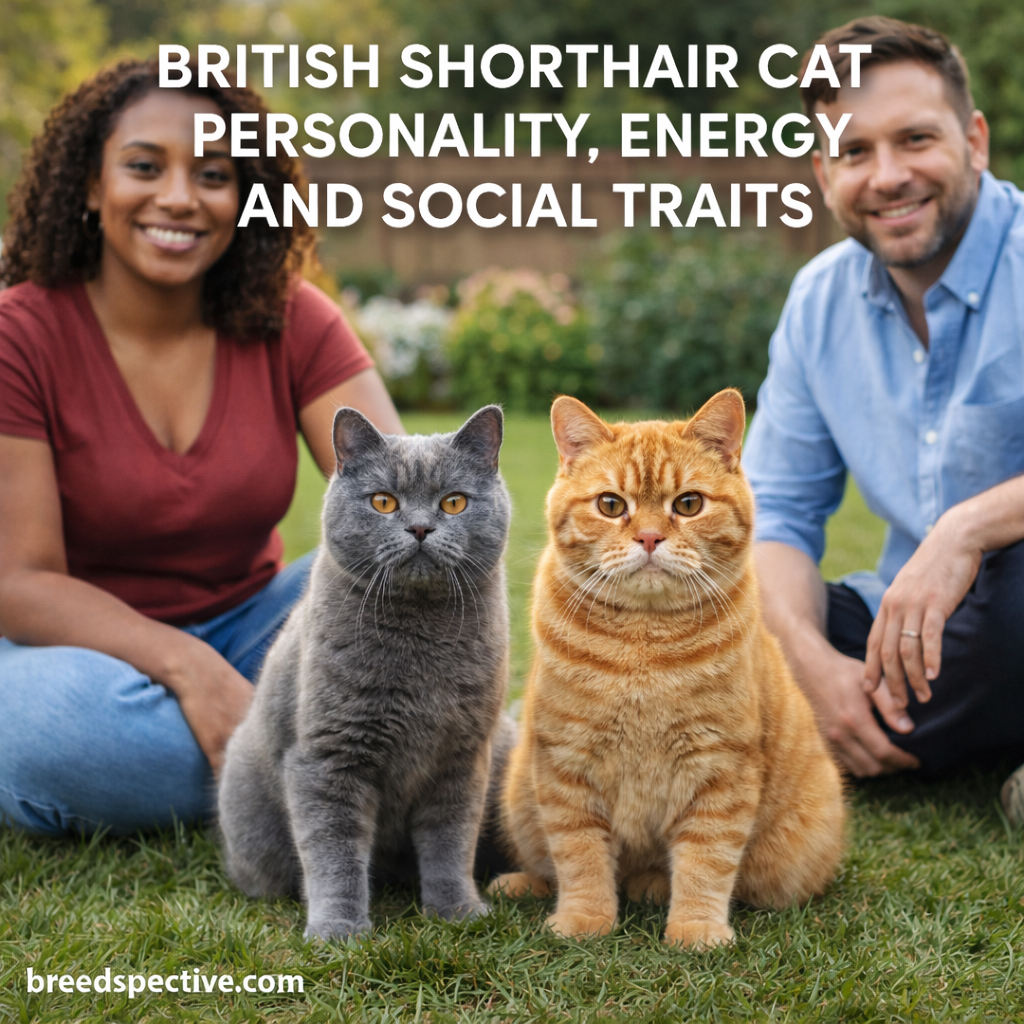
The British Shorthair cat personality is calm, quiet, affectionate and notably independent. These cats usually enjoy being near their people without demanding constant attention, and they tend to prefer sitting beside you rather than being carried or spending hours on your lap, according to the Cat Fanciers’ Association (CFA) and The International Cat Association (TICA). The Cat Fanciers’ Association
That combination makes the British Shorthair appealing to people who want companionship without the intensity of a highly vocal or constantly active breed. The trade-off is that their relaxed lifestyle and love of food make weight management and regular play particularly important.
British Shorthair at a Glance
| Trait | What to Expect |
|---|---|
| Size | Medium to large; solid and muscular |
| Lifespan | TICA lists approximately 12–20 years, depending on background and circumstances |
| Activity level | Low to moderate |
| Grooming | Low to moderate; weekly combing is usually sufficient |
| Vocalness | Low; generally quiet |
| Good with children | Often, especially with gentle children who respect boundaries |
| Good with other pets | Often; generally tolerant of compatible cats and dogs |
| Affection level | Moderate to high, but usually understated |
| Independence | High compared with many companion breeds |
| Typical style | Calm, observant and quietly involved in household life |
British Shorthairs are substantial cats. TICA describes adult females as typically 8–11 pounds and males as 10–16 pounds, while CFA notes that the breed matures slowly and may not reach full physical development until roughly three to five years of age. TICA
British Shorthair Breed History and Origin
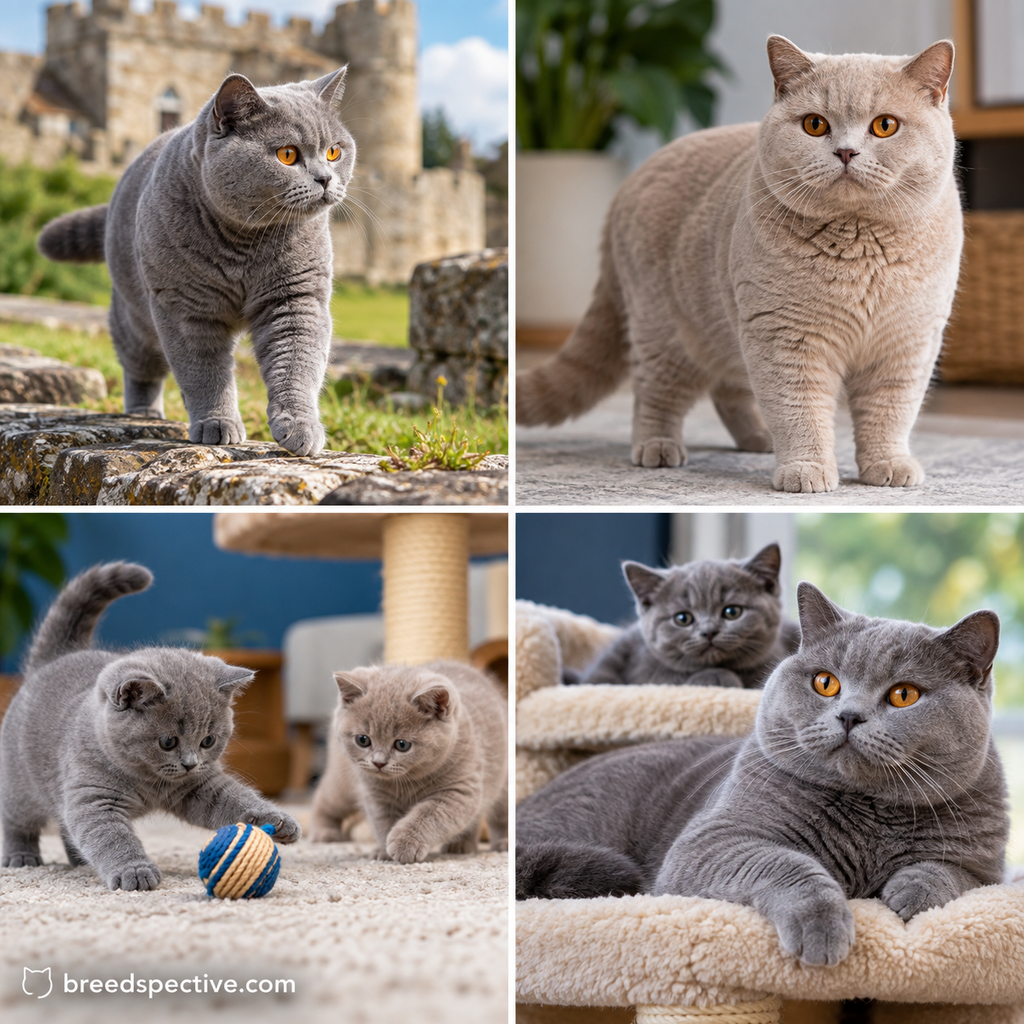
The British Shorthair has one of the longest histories among recognized cat breeds.
The breed is believed to descend from cats that accompanied the Romans into Britain. TICA traces its ancestry to cats brought into Rome and later carried into Great Britain during the Roman invasion beginning in the first century CE. Over generations, these cats became established in Britain and developed into sturdy working cats suited to local conditions. TICA
The British Shorthair later became part of the development of the modern cat fancy.
Harrison Weir, an artist, author and influential early cat-show organizer sometimes called the “father of the cat fancy,” helped bring Britain’s native cats into the organized show world. British cats were exhibited at the landmark Crystal Palace cat show in London in 1871, an event closely associated with the beginnings of modern pedigree cat showing.
The blue-gray variety became especially prominent. In fact, blue was once so strongly associated with these cats that they were commonly registered and referred to as British Blues. CFA notes that cats exported to the United States in the early 20th century were initially registered under that name. Today, blue remains particularly popular, but the British Shorthair is recognized in a much wider range of colors and patterns. The Cat Fanciers’ Association
Rebuilding the Breed After the World Wars
The two World Wars severely reduced British Shorthair breeding populations.
Breeders used carefully selected crosses to rebuild the population and maintain the breed. CFA documents crosses with Persians and random-bred domestic shorthairs, while TICA’s breed history also describes the use of domestic shorthairs, Russian Blues and Persians during the breed’s recovery. The Cat Fanciers’ Association
These breeding programs ultimately preserved the distinctive British type: a compact, powerful body, broad chest, round head, prominent cheeks and exceptionally dense short coat.
TICA granted the British Shorthair championship status in 1979. TICA
British Shorthair Personality in Everyday Life
A British Shorthair typically wants to be part of the household without needing to be the center of it.
CFA describes the breed as calm, quiet and interested in its owners’ activities. TICA similarly characterizes British Shorthairs as gentle, loyal and affectionate while retaining a considerable degree of independence. The Cat Fanciers’ Association
That makes everyday life with one different from living with a highly interactive breed.
Affection Without Constant Contact
British Shorthairs can form strong attachments to their families, but affection is often expressed through proximity rather than constant physical contact.
A British Shorthair may follow you between rooms, settle beside you on the sofa or quietly supervise whatever you are doing. CFA specifically notes that these cats often wait for an invitation to sit beside their owners rather than immediately climbing into their laps. The Cat Fanciers’ Association
They also tend not to appreciate being carried around.
TICA describes them as a “four feet on the floor” breed, while CFA similarly notes their preference for keeping their feet firmly planted. TICA
That distinction matters if your idea of an affectionate cat is one you can frequently pick up and cuddle. A British Shorthair can be deeply attached without enjoying that particular form of affection.
For comparison, the Ragdoll cat’s personality, energy, and social traits may suit someone looking for a different style of companion.
Energy Level and Play
British Shorthairs are not generally high-energy cats.
TICA describes them as relatively inactive adults that occasionally have energetic bursts. They tend to keep their activity closer to the floor rather than seeking out elaborate aerial adventures. TICA
That doesn’t mean exercise should be optional.
Regular play is especially useful because the breed’s substantial build can disguise excess body fat. TICA specifically cautions that British Shorthairs can gain weight if their food intake isn’t matched to their relatively sedentary lifestyle. TICA
Useful activities include:
- Wand or teaser toys that encourage chasing
- Balls and toy mice
- Puzzle feeders
- Scratching posts
- Low-to-moderate climbing structures
- Short interactive play sessions throughout the day
The goal isn’t to turn a British Shorthair into an endurance athlete. It is to make movement a predictable part of daily life.
Vocalization and Communication
British Shorthairs tend to be quiet.
CFA describes them as peaceful cats that may occasionally comment on household activities but rarely engage in prolonged vocal conversations. The Cat Fanciers’ Association
They often communicate more subtly through positioning, eye contact, following people or a gentle paw when they want attention.
People looking for a quiet household companion may appreciate this. Someone who enjoys frequent vocal interaction with a cat may find the British Shorthair comparatively restrained.
Children and Family Life
A well-socialized British Shorthair can make a good family cat.
CFA describes the breed as extremely patient and generally good with children, while TICA similarly notes tolerance of children. Both sources emphasize a significant limitation: these cats generally don’t enjoy being carried around. The Cat Fanciers’ Association
Children should therefore learn to:
- Let the cat approach voluntarily
- Pet rather than restrain it
- Avoid chasing or rough handling
- Leave the cat alone when it retreats
- Keep play gentle and appropriate
A British Shorthair may withdraw from noisy activity rather than participate in it, so providing quiet resting areas is useful in busy family homes.
Other Cats and Dogs
British Shorthairs can coexist successfully with other pets.
CFA describes them as confident and easygoing around dogs and other animals, while TICA notes their tolerance of dogs. The Cat Fanciers’ Association
Breed tendencies don’t eliminate the need for careful introductions. Personality, previous socialization, age and the behavior of the other animal all influence how well a multi-pet household works.
Independence and Time Alone
One of the British Shorthair’s most useful characteristics for some households is independence.
TICA notes that these cats can quietly amuse themselves while their owners are away. TICA
That doesn’t mean they should routinely be ignored or left without adequate care and interaction. It means an adult British Shorthair may cope better with periods of independent time than a breed that constantly seeks human involvement.
For apartment dwellers, temperament can make the breed particularly interesting. Our guide to the best cat breeds for apartment living looks at the broader factors that matter when choosing a cat for a smaller home.
Who a British Shorthair Suits — and Who Should Avoid One
A British Shorthair is particularly well suited to someone who wants a cat that is affectionate without being constantly demanding.
The breed can work well for:
- Singles and couples
- Families with respectful children
- Apartment residents
- Households with compatible cats or dogs
- People who appreciate a quieter cat
- Owners who don’t need constant lap-cat behavior
- People who can manage food portions and encourage regular activity
The breed may be less suitable if you want a cat that enjoys being carried frequently, expect prolonged lap cuddling, want an extremely active companion or prefer a highly vocal, continuously interactive breed.
A calm personality also shouldn’t be confused with zero care requirements. British Shorthairs still need daily interaction, exercise, grooming, preventive veterinary care and appropriate nutrition.
If you are comparing similarly calm-looking breeds, the Persian cat’s personality, energy, and social traits provides a useful contrast in both temperament and grooming requirements.
For a wider breed-selection framework, see how to choose the right cat breed for your home.
British Shorthair Grooming and Care Routine
The British Shorthair’s coat is short, but it is exceptionally dense.
CFA describes the coat as short, very dense and resilient, while TICA describes a thick, plush coat that is comparatively straightforward to maintain. The Cat Fanciers’ Association
Coat Care
For most British Shorthairs, weekly combing is a practical baseline.
CFA specifically recommends a quick weekly comb or brushing to manage loose hair. TICA notes that additional combing during seasonal coat changes can help remove dead hair. The Cat Fanciers’ Association
Use grooming sessions to check for:
- Skin changes
- Lumps or swelling
- Fleas or other parasites
- Excessive dandruff
- Areas of unusual hair loss
- Changes in body condition
Routine bathing generally isn’t necessary for a healthy British Shorthair unless your veterinarian recommends it or the cat becomes unusually dirty.
Nails, Ears and Teeth
Trim the nails as needed and inspect the ears during regular grooming.
CFA recommends regular claw trimming and occasional ear cleaning as part of routine British Shorthair care. The Cat Fanciers’ Association
Healthy ears shouldn’t require aggressive cleaning. If you notice persistent discharge, odor, redness or discomfort, have your veterinarian examine the ears rather than repeatedly cleaning them at home.
Dental care should also be part of routine cat ownership. Ask your veterinarian about appropriate home dental care and professional examinations.
Exercise and Weight Management
Weight deserves particular attention with this breed.
A British Shorthair should look powerful and substantial, but “stocky” isn’t the same thing as overweight. TICA specifically warns that the combination of enthusiasm for food and a sedentary lifestyle can result in excess weight. TICA
Measure meals rather than repeatedly topping up the bowl, monitor body condition and make interactive play part of the daily routine.
A practical schedule might look like this:
| Frequency | Care task |
|---|---|
| Daily | Measured feeding, fresh water, litter-box cleaning, interaction and play |
| Weekly | Comb coat and check skin, ears, paws and body condition |
| As needed | Trim nails and clean ears if appropriate |
| During heavier shedding | Increase combing frequency |
| Ongoing | Monitor weight, appetite, mobility and litter-box habits |
| Veterinary schedule | Preventive exams, vaccines, dental assessment and health screening appropriate for the individual cat |
Our guide to daily care routines for cats at every life stage can help integrate breed-specific tasks into everyday cat care.
Litter Box Habits and Routine
British Shorthairs don’t require a breed-specific litter setup.
They do benefit from the same fundamentals as other cats: adequately sized boxes, convenient locations, suitable litter and regular cleaning. Because adult British Shorthairs can be substantial cats, make sure the box gives the cat enough room to enter, turn and dig comfortably.
Don’t assume sudden house-soiling is stubbornness. Changes in elimination can have medical, environmental or behavioral causes.
Our guide to why cats avoid the litter box and how to fix it explains common causes and practical steps, but sudden or persistent changes warrant veterinary attention.
British Shorthair Health Issues to Screen For
British Shorthairs are generally robust cats, but prospective owners should still ask breeders about health screening and family history.
Hypertrophic Cardiomyopathy
Hypertrophic cardiomyopathy (HCM) is the most common form of heart disease in cats generally. It causes thickening of the muscular walls of the heart and can eventually interfere with normal heart function.
TICA specifically identifies HCM as a health concern relevant to the British Shorthair. TICA
If you are purchasing a kitten, ask the breeder what cardiac screening is performed on breeding cats and whether documentation is available.
No screening program can guarantee that a kitten will remain free of heart disease throughout life. Its value is in giving prospective owners more information about the health of the breeding population rather than relying on vague assurances that a line is healthy.
Weight-Related Problems
Obesity isn’t unique to British Shorthairs, but the breed’s relatively low activity level makes weight control worth emphasizing.
TICA specifically advises owners to monitor portions because British Shorthairs can gain excess weight. TICA
Ask your veterinarian to show you how to assess your cat’s body condition rather than judging healthy weight solely from the number on a scale. The breed is naturally broad and muscular, so body composition matters.
Regular activity becomes even more valuable as the cat moves into middle and senior age.
What to Ask a Breeder
Before buying a British Shorthair kitten, ask for concrete information rather than accepting “vet checked” as a complete health history.
Useful questions include:
- What health screening is performed on the parents?
- Has either parent been screened for heart disease?
- Can I see the relevant veterinary documentation?
- What health problems have occurred in close relatives?
- What vaccinations and veterinary care has the kitten received?
- At what age will the kitten go to its new home?
- What written health information accompanies the kitten?
A responsible breeder should be willing to discuss both the strengths and potential health problems of the breed.
Realistic Cost of Owning a British Shorthair
British Shorthair ownership involves more than the kitten’s purchase price.
Actual prices vary substantially by breeder, region, pedigree, age and availability, so there isn’t one purchase figure that accurately represents every market.
Plan for both initial and recurring expenses:
| Expense | What to Budget For |
|---|---|
| Purchase or adoption | Upfront cost varies considerably by source and location |
| Veterinary care | Exams, vaccinations and treatment for illness or injury |
| Food | Complete and balanced diet appropriate for age and body condition |
| Grooming | Comb or brush, nail clippers and basic grooming supplies |
| Dental care | Home dental care and veterinary dental treatment when required |
| Litter | Recurring expense throughout the cat’s life |
| Pet insurance | Optional; premiums, deductibles and exclusions vary |
| Home equipment | Carrier, litter boxes, scratching surfaces, beds and toys |
| Emergency care | A dedicated emergency fund or another plan for unexpected veterinary bills |
The British Shorthair’s easy coat can make grooming expenses comparatively modest, but that shouldn’t create the impression that the breed is inexpensive to keep.
Veterinary costs can occur unexpectedly with any cat. Prospective owners should be financially prepared for illness or injury rather than budgeting only for food, litter and routine vaccinations.
If considering pet insurance, compare policies before a health condition is diagnosed. Pre-existing-condition exclusions and coverage limits can significantly affect what a policy ultimately pays.
Verdict: Is a British Shorthair the Right Cat for You?
The British Shorthair is a strong match for someone who wants a calm, quiet and relatively independent companion. These cats tend to be affectionate without constantly demanding attention, can adapt to family life and often tolerate compatible pets while maintaining their own space.
They are particularly appealing if your ideal cat is one that follows you around the house, settles nearby and participates in family life without needing to occupy your lap every time you sit down.
They are less suitable if you want a cat that enjoys frequent carrying, constant cuddling or highly energetic interaction. Their laid-back temperament also comes with a practical responsibility: owners need to prevent inactivity from turning into excess weight.
For a household that respects a cat’s boundaries and values quiet companionship, the British Shorthair’s reserved but affectionate personality can be an excellent fit.