
Best Cat Breeds for Apartment Living

Apartment residents with calm cat breeds indoors, illustrating the best cat breeds suited for apartment living.
Calm, apartment-friendly cat breeds relaxing indoors with owners, highlighting ideal traits for small-space living. breedspective.com.

The best cat breeds for apartments are generally calm, adaptable cats that can meet their exercise, social, and enrichment needs indoors. British Shorthairs, Ragdolls, Persians, Russian Blues, Exotic Shorthairs, American Shorthairs, Burmese, and other compatible adult cats can all work well in smaller homes when their environment is set up properly.

Square footage matters less than many people assume. A small apartment with climbing areas, scratching surfaces, hiding places, clean litter boxes, and daily play can provide a better feline environment than a larger home with little enrichment.

Continue reading “Best Cat Breeds for Apartment Living”

Potty Training Timelines by Dog Breed

Puppies of different dog breeds practicing potty training indoors, illustrating how training timelines vary by breed.
Puppies learning potty training indoors, highlighting differences in training timelines by dog breed. breedspective.com.

There is no scientifically established potty-training timeline for each individual dog breed. Breed and especially adult size can influence the process, but age, bladder capacity, previous training, routine and owner consistency usually matter more than whether your puppy is a Labrador, Chihuahua or Dachshund.

As a practical expectation, house-training usually takes weeks to months, not days. Toy and small puppies often need more frequent bathroom trips because of their smaller size, while an individual puppy of any breed can take longer to become completely reliable.

Continue reading “Potty Training Timelines by Dog Breed”

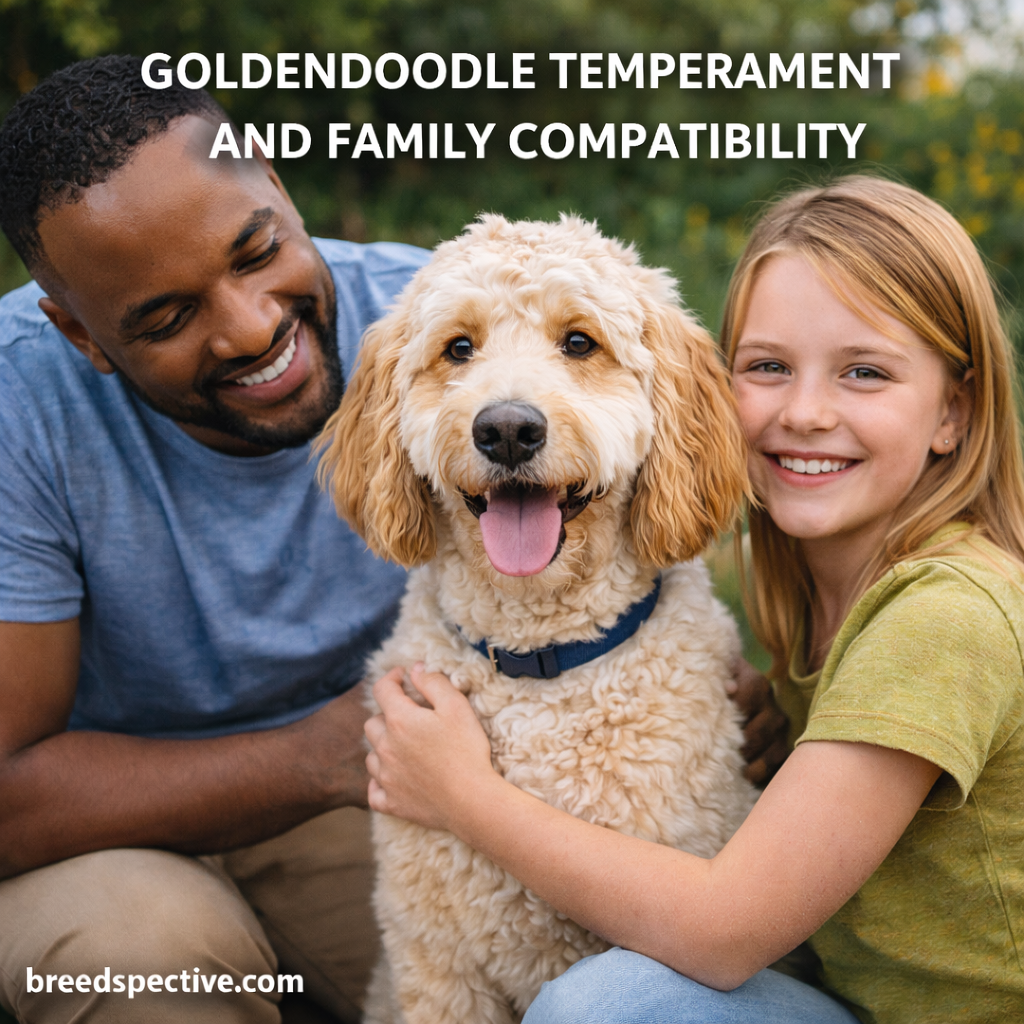
Goldendoodle Temperament and Family Compatibility

Goldendoodle with family outdoors, showing friendly temperament and strong compatibility with children and families.
A Goldendoodle enjoying time with family members outdoors, highlighting the breed’s affectionate and family-friendly nature. breedspective.com.

Goldendoodle temperament is typically social, affectionate, intelligent, playful, and strongly people-oriented, but individual dogs can vary considerably. A Goldendoodle combines Golden Retriever and Poodle ancestry, so prospective owners should expect an active companion that needs training, exercise, regular grooming, and substantial interaction rather than assuming every Goldendoodle will be a calm, non-shedding family dog.

Goldendoodles can be excellent companions for active families, including many households with children. Their popularity, however, has also produced a large commercial breeding market, making parent health testing, temperament, coat expectations, and breeder selection especially important.

Continue reading “Goldendoodle Temperament and Family Compatibility”

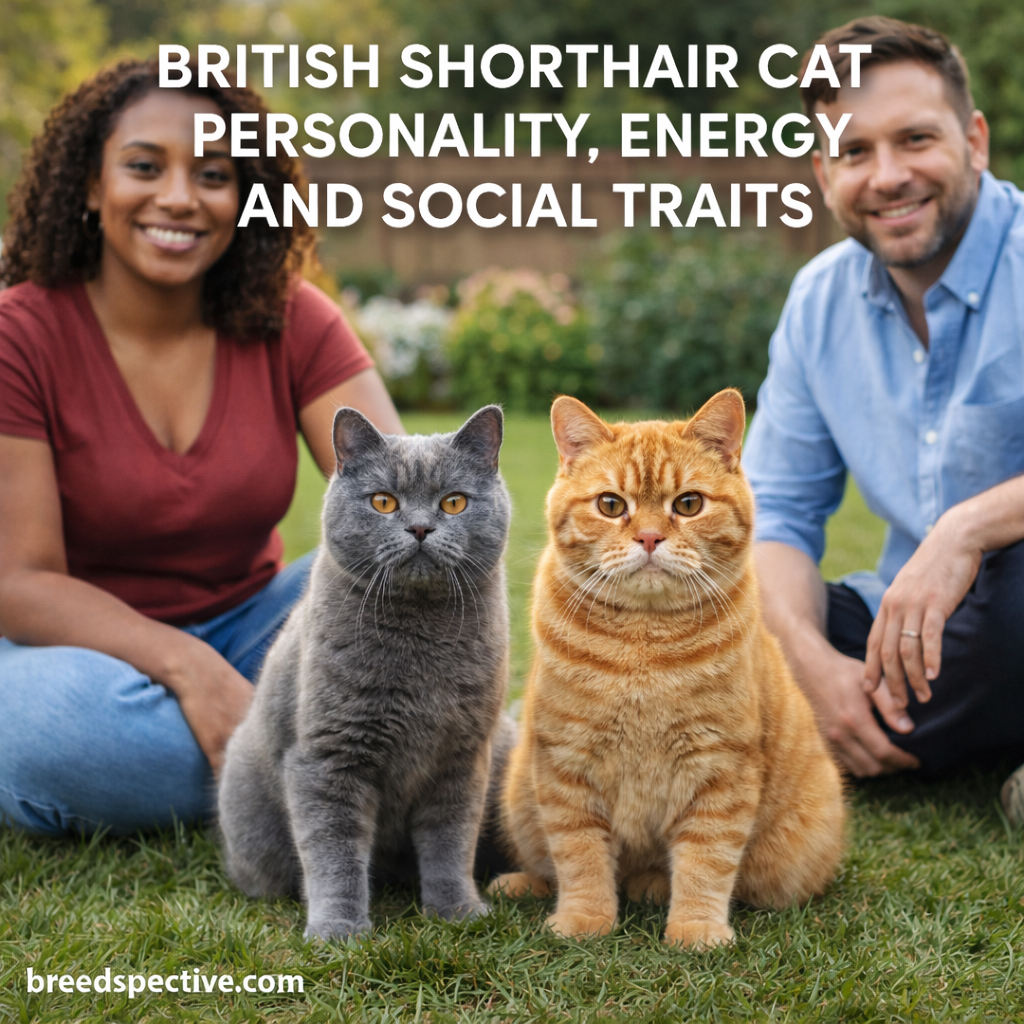
British Shorthair Cat Personality, Energy, and Social Traits

British Shorthair cats with owners outdoors, illustrating calm personality, moderate energy level, and social traits.
British Shorthair cats with their owners outdoors, reflecting the breed’s calm temperament and social nature. breedspective.com.

The British Shorthair cat personality is calm, quiet, affectionate and notably independent. These cats usually enjoy being near their people without demanding constant attention, and they tend to prefer sitting beside you rather than being carried or spending hours on your lap, according to the Cat Fanciers’ Association (CFA) and The International Cat Association (TICA). The Cat Fanciers’ Association

That combination makes the British Shorthair appealing to people who want companionship without the intensity of a highly vocal or constantly active breed. The trade-off is that their relaxed lifestyle and love of food make weight management and regular play particularly important.

Continue reading “British Shorthair Cat Personality, Energy, and Social Traits”

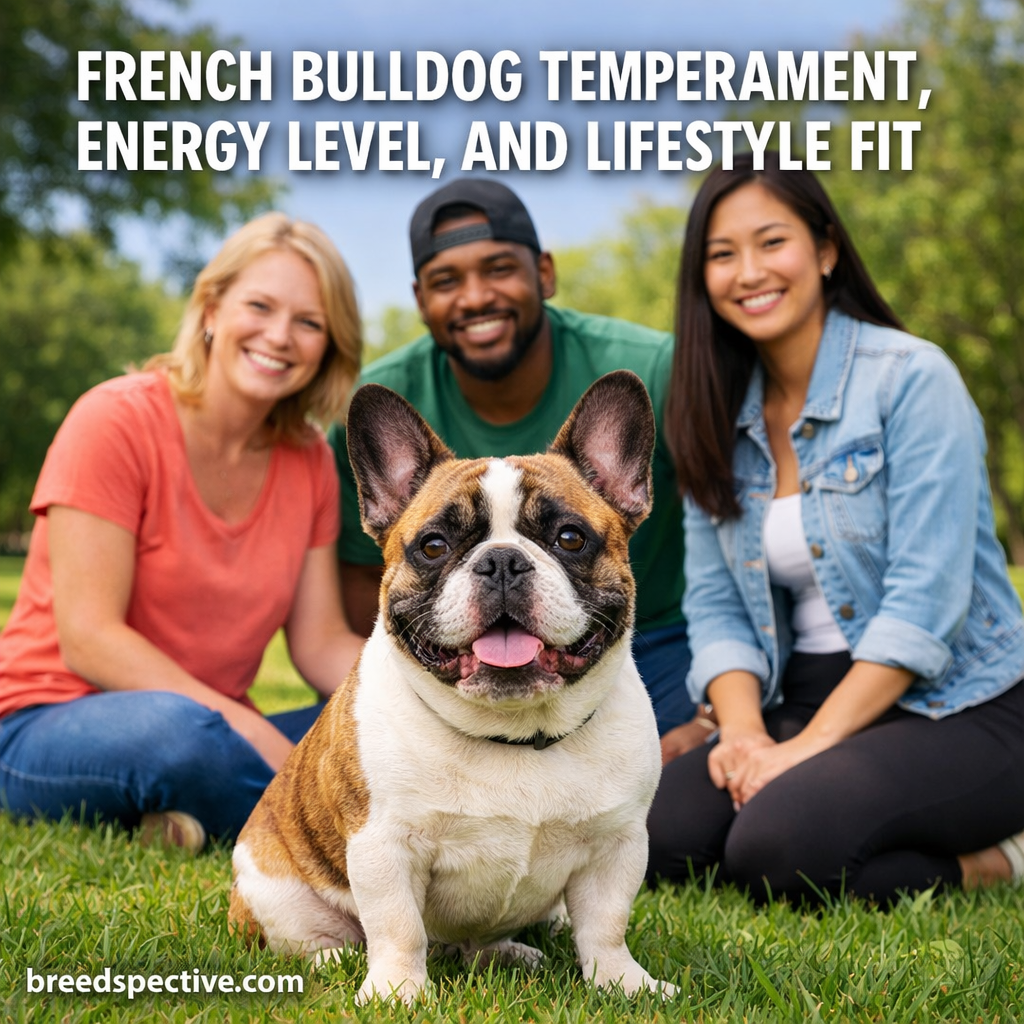
French Bulldog Temperament, Energy Level, and Lifestyle Fit

French Bulldog sitting on grass with diverse owners, illustrating temperament, energy level, and lifestyle fit.
A French Bulldog relaxing outdoors with owners, highlighting temperament, energy level, and lifestyle fit. breedspective.com.

French Bulldog temperament is typically affectionate, playful, adaptable, alert, and strongly oriented toward human companionship. Frenchies generally need less strenuous exercise than athletic working breeds, but their compact size and moderate activity needs should not be mistaken for easy ownership: their brachycephalic anatomy creates significant health, heat, exercise, and veterinary-care considerations.

For someone who wants a small companion that enjoys staying close and participating in household life, the personality can be an excellent match. For someone wanting a jogging partner, an outdoor dog, or a breed with relatively few structural health concerns, it is not.

Continue reading “French Bulldog Temperament, Energy Level, and Lifestyle Fit”

Low-Shedding Dog Breeds Explained

Low-shedding dog breeds pictured with owners, showing different coat types commonly associated with reduced shedding.
Low-shedding dog breeds shown with owners, illustrating coat types that shed less and require regular grooming. breedspective.com.

Popular low-shedding dog breeds include Poodles, Bichon Frises, Maltese, Schnauzers, Portuguese Water Dogs, Havanese, Yorkshire Terriers, and several wire-coated terriers. They leave less loose hair around the home than heavy-shedding breeds, but low shedding usually means more coat maintenance, not less, because loose hair can remain trapped in the coat and contribute to tangles and mats.

Low shedding also does not mean hypoallergenic. The American Academy of Allergy, Asthma & Immunology (AAAAI) states that there are no truly hypoallergenic dog breeds because dog allergens come from proteins in sources such as dander and saliva, not simply from shed hair.

Continue reading “Low-Shedding Dog Breeds Explained”

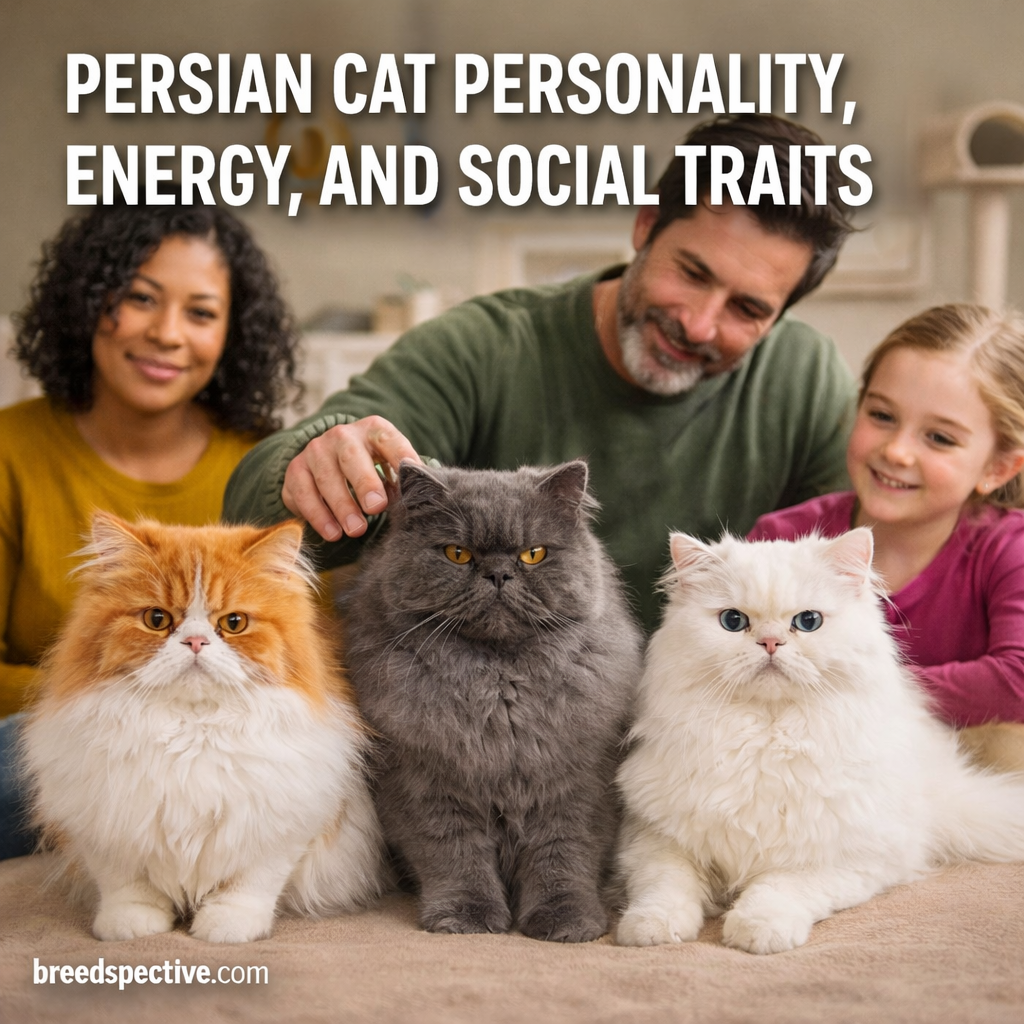
Persian Cat Personality, Energy, and Social Traits

Persian cats sitting calmly with owners, illustrating the breed’s gentle personality, low energy level, and social traits.
Persian cats shown with owners, reflecting the breed’s calm personality, relaxed energy, and affectionate social nature. breedspective.com.

The typical Persian cat personality is gentle, quiet, affectionate, and relatively low-energy. Persians generally prefer calm companionship and short periods of play over constant activity, making them appealing to people who want a relaxed indoor cat—but their intensive grooming and facial care mean they are not a low-maintenance breed.

The Cat Fanciers’ Association (CFA) describes Persians as sweet, affectionate, and quiet, while The International Cat Association (TICA) characterizes them as gentle cats that favor calm surroundings and gentle handling. Individual personalities vary, but a peaceful, people-oriented temperament is strongly associated with the breed.

Continue reading “Persian Cat Personality, Energy, and Social Traits”

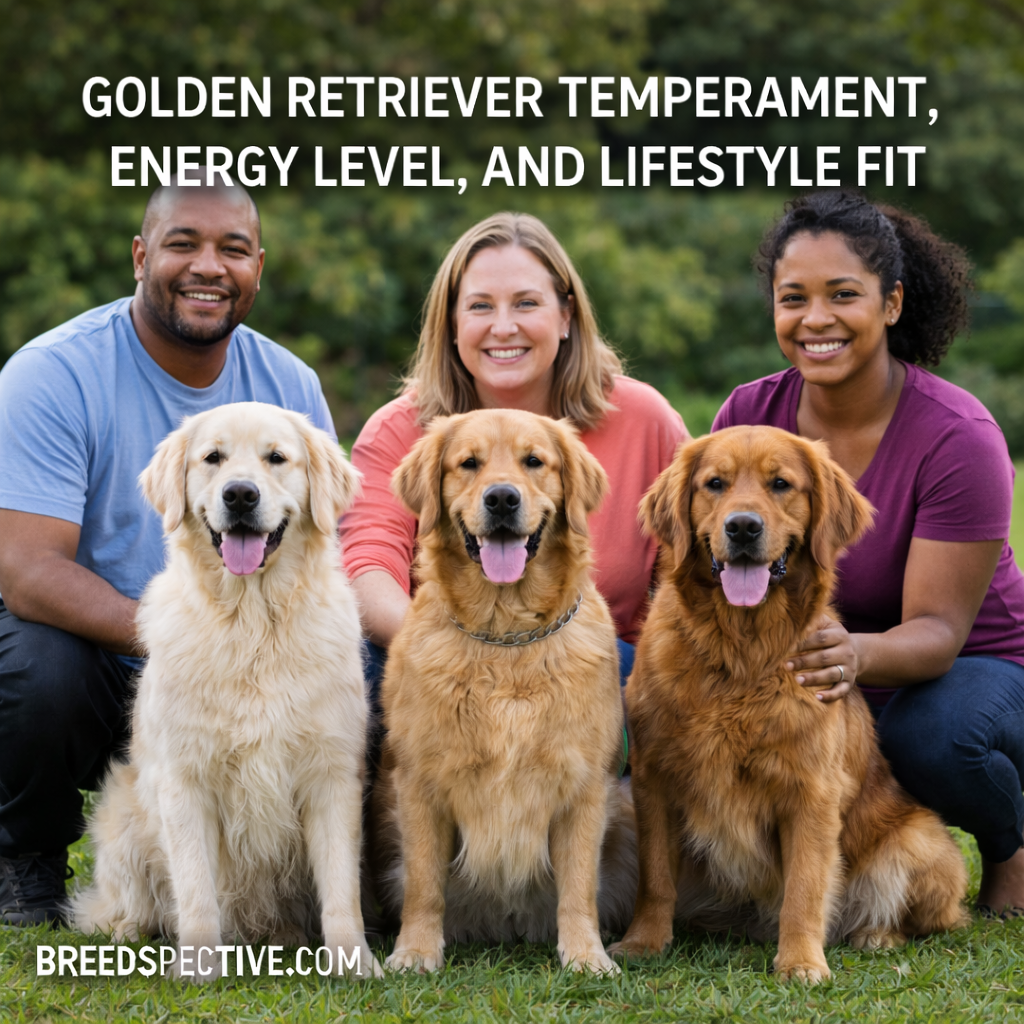
Golden Retriever Temperament, Energy Level, and Lifestyle Fit

Golden Retrievers sitting with a diverse group of people outdoors, illustrating friendly temperament, energy level, and family lifestyle fit.
Golden Retrievers pictured with people to highlight the breed’s friendly temperament, active energy level, and family-friendly lifestyle fit. breedspective.com.

Golden Retriever temperament is typically friendly, confident, eager to please, social, and strongly oriented toward people. Goldens are highly trainable family and working dogs, but their easygoing reputation can hide substantial exercise, grooming, training, and companionship needs—especially during puppyhood and adolescence.

A well-bred Golden should not be timid, hostile, or excessively protective. The AKC breed standard specifically calls for a friendly, reliable, trustworthy temperament, while describing hostility toward people or other dogs and unwarranted timidity or nervousness as contrary to breed character.

Continue reading “Golden Retriever Temperament, Energy Level, and Lifestyle Fit”

Best Dog Breeds for Seniors

Senior adults spending time with calm dog breeds outdoors, showing companionship and low-energy dogs ideal for seniors.
Seniors enjoying gentle, companion-friendly dog breeds that suit relaxed lifestyles and daily routines. breedspective.com.

The best dog breeds for seniors are generally manageable in size, moderate or low in energy, responsive to training, and compatible with the owner’s mobility and daily routine. Cavalier King Charles Spaniels, Shih Tzus, Miniature Poodles, Maltese, Bichon Frises, Whippets, and carefully selected adult mixed-breed dogs are all strong options, but the individual dog’s age and leash manners can matter more than breed alone.

A calm 7-year-old dog that walks politely may be considerably easier to manage than a 12-pound puppy that darts underfoot and needs months of training. For older adults, the best match is the dog whose exercise, grooming, veterinary costs, physical strength, and expected lifespan all remain realistic.

Continue reading “Best Dog Breeds for Seniors”

Daily Care Routines for Cats at Every Life Stage

Cats at different life stages being cared for by people, showing feeding, grooming, and daily care routines.
Cats of various ages receiving daily care to illustrate feeding, grooming, and routine health support at every life stage. breedspective.com.

A good daily cat care routine covers six basics: appropriate feeding, fresh water, litter-box care, play and enrichment, grooming or coat checks, and attention to changes in health or behavior. What changes with age is the amount of supervision and the details—kittens need more frequent feeding and social development, adults need weight control and consistent enrichment, and senior cats need closer monitoring and easier access to everyday resources.

The 2021 AAHA/AAFP Feline Life Stage Guidelines divide cats into four age-related stages: kitten (birth to 1 year), young adult (1–6 years), mature adult (7–10 years), and senior (over 10 years). These ages are useful guides rather than rigid boundaries; individual health, body condition and behavior still matter.

Continue reading “Daily Care Routines for Cats at Every Life Stage”