Ragdoll Cat Personality, Energy, and Social Traits

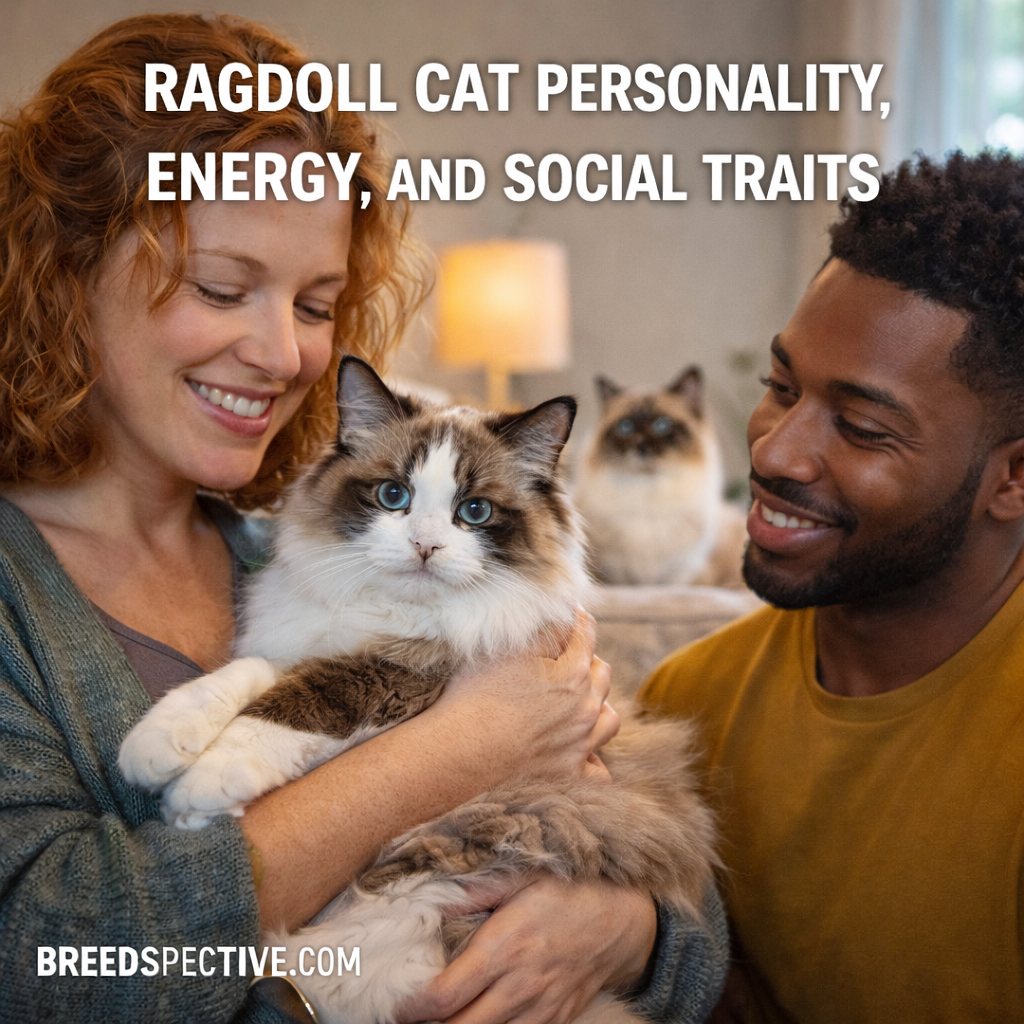
Ragdoll cat being held by people indoors, illustrating the breed’s affectionate personality, calm energy, and social nature.
A Ragdoll cat shown with people to highlight the breed’s gentle personality, low energy level, and strong social traits. breedspective.com.

The typical Ragdoll cat personality is affectionate, calm, sociable, and people-oriented, with a playful side that is usually less intense than that of highly active breeds. Ragdolls often enjoy following family members around, relaxing nearby, and participating in gentle play, but they still need regular interaction and exercise rather than being treated as passive lap cats.

The Cat Fanciers’ Association (CFA) describes Ragdolls as docile, placid, affectionate, and sociable. The International Cat Association (TICA) similarly characterizes them as loving, quiet cats with laid-back dispositions, although kittens and young adults can be much more energetic.

Continue reading “Ragdoll Cat Personality, Energy, and Social Traits”
German Shepherd Temperament, Energy Level, and Lifestyle Fit

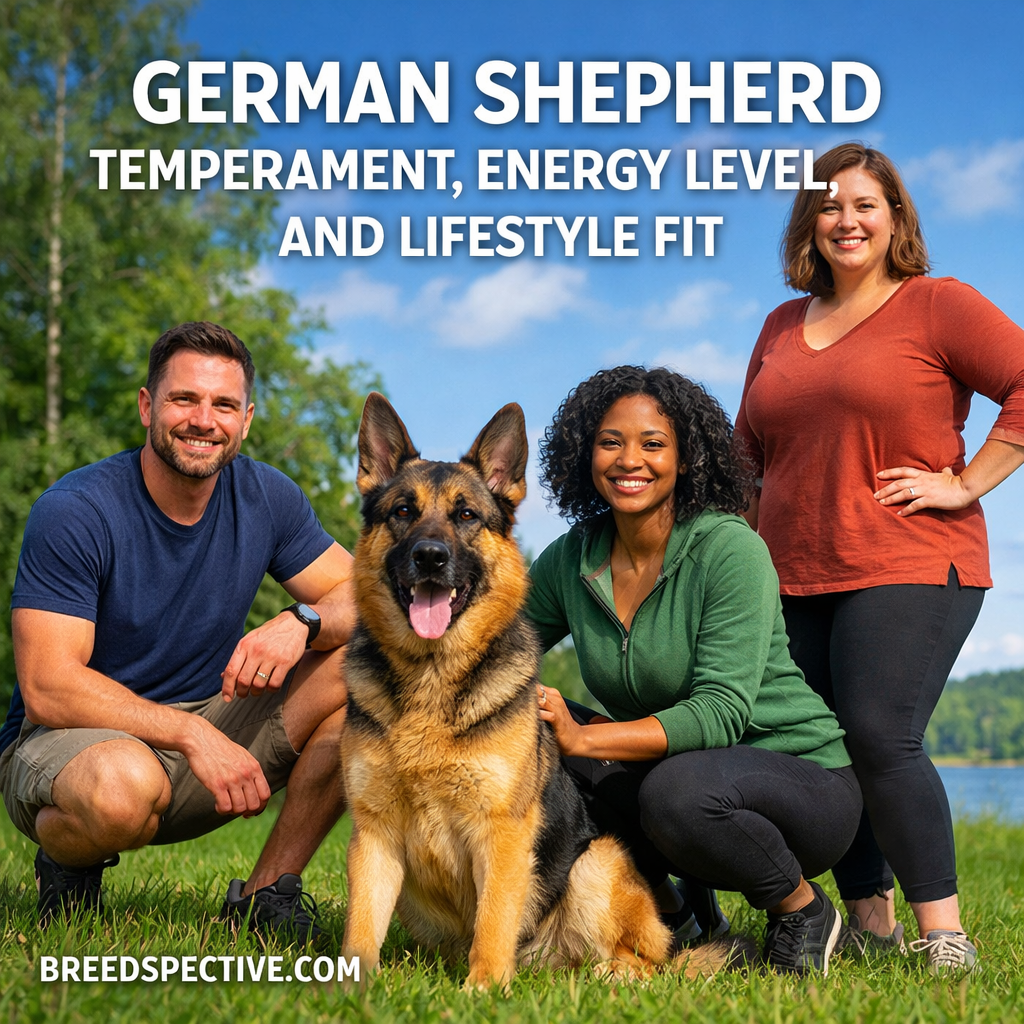
German Shepherd sitting with a diverse group of people outdoors, representing temperament, energy level, and lifestyle fit.
A German Shepherd pictured with people to illustrate temperament, energy level, and lifestyle compatibility. breedspective.com.

German Shepherd temperament should be confident, intelligent, alert, trainable, and somewhat reserved with strangers without being fearful or indiscriminately aggressive. This is an energetic working breed that forms strong bonds with its household and usually needs considerably more training, exercise, and mental engagement than the average companion dog.

A well-bred, well-socialized German Shepherd can be a steady family companion as well as an exceptional working partner. Poor breeding, inadequate socialization, or insufficient outlets for its drive can produce a powerful dog that is difficult to manage.

Continue reading “German Shepherd Temperament, Energy Level, and Lifestyle Fit”

Dog Breeds Known for Natural Protective Instincts

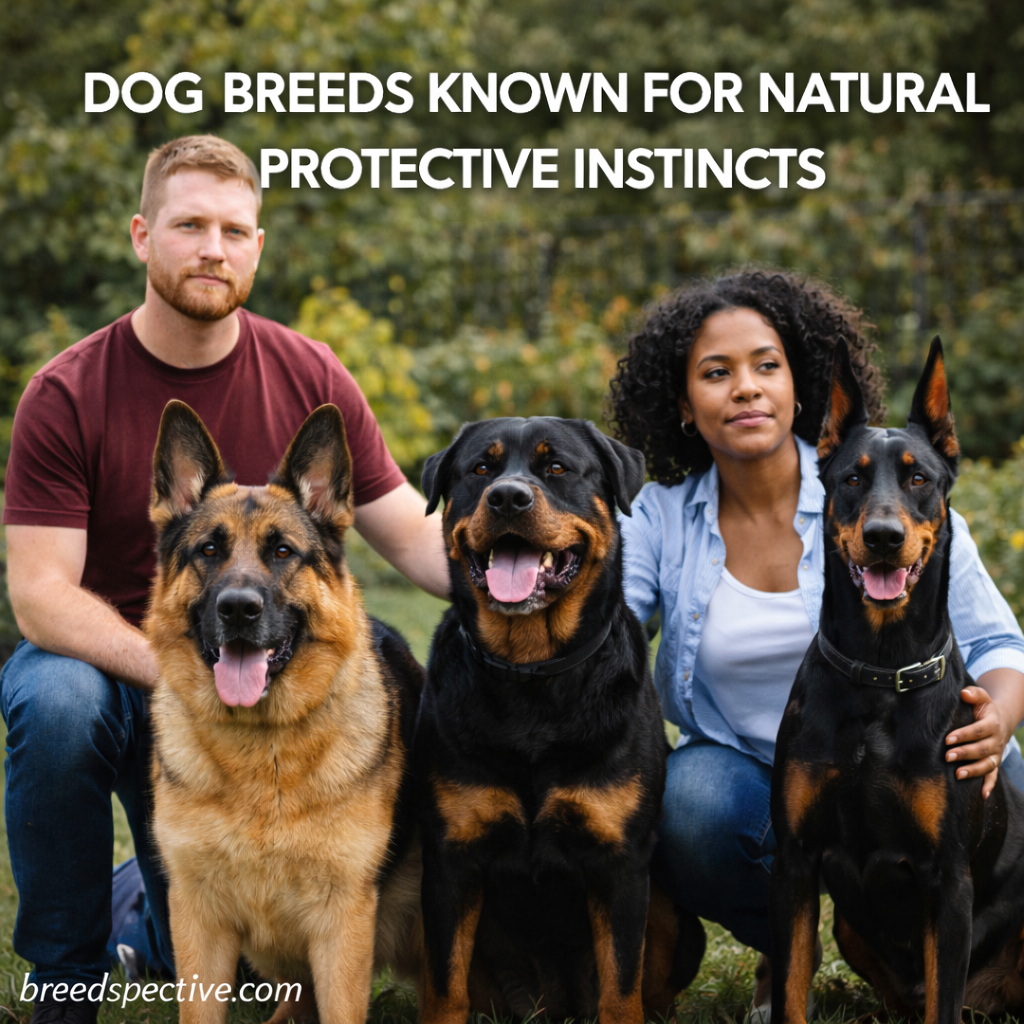
German Shepherd, Rottweiler, and Doberman Pinscher sitting alert with their owners outdoors, illustrating dog breeds known for natural protective instincts.
Protective dog breeds pictured with their owners, highlighting loyalty, alertness, and natural guarding instincts. breedspective.com.

Dog breeds known for natural protective instincts include the German Shepherd, Rottweiler, Doberman Pinscher, Cane Corso, Bullmastiff, Belgian Malinois, Akita, Great Pyrenees, and Rhodesian Ridgeback. These breeds tend to combine qualities such as alertness, confidence, territorial awareness, loyalty, and willingness to monitor unfamiliar situations, but a naturally protective dog is not the same thing as a professionally trained protection dog.

For most households, the goal should be a stable companion that can recognize normal people and situations without treating everything unfamiliar as a threat. Early socialization, reward-based training, secure management, and realistic expectations are especially important when the dog is large, powerful, or naturally reserved with strangers.

Continue reading “Dog Breeds Known for Natural Protective Instincts”

Best Dog Breeds for Families with Young Children

Young children sitting with family-friendly dog breeds including a Golden Retriever, Beagle, and mixed-breed dog, showing gentle and kid-friendly temperaments.
Family-friendly dog breeds pictured with young children, highlighting gentle temperaments and compatibility with kids. breedspective.com.

The best dog breeds for families with young children include Labrador Retrievers, Golden Retrievers, Poodles, Beagles, Boxers, Cavalier King Charles Spaniels, Bichon Frises, and Newfoundlands. For most families, a Labrador or Golden Retriever is a strong place to start because both combine trainability, sociability, and family-oriented temperaments — but size, exercise needs, the individual dog’s history, and adult supervision matter just as much as breed.

There is no breed that is automatically safe with toddlers. The CDC recommends supervising young children around all dogs, including trusted family pets, and notes that most bites involving young children happen during ordinary interactions with familiar dogs.

Continue reading “Best Dog Breeds for Families with Young Children”

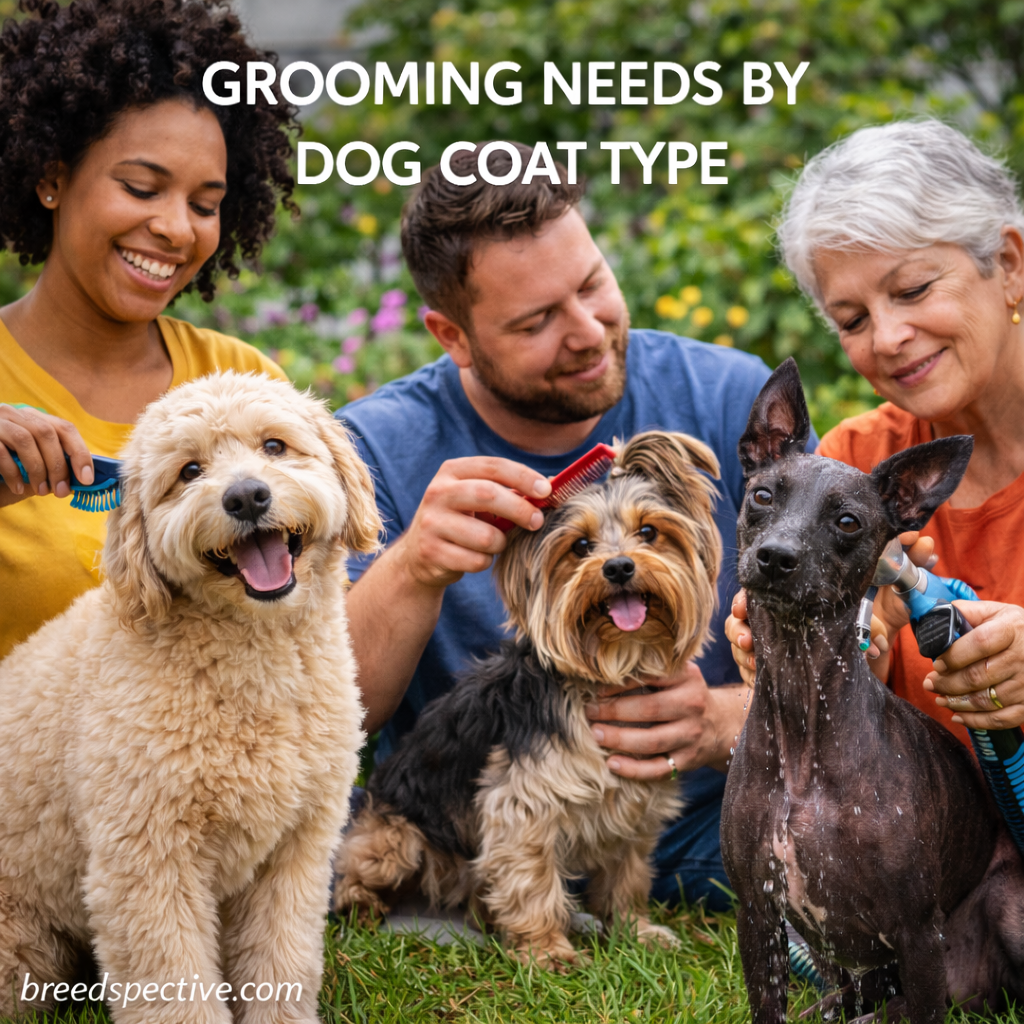
Grooming Needs by Dog Coat Type

People grooming dogs with different coat types, including curly, long-haired, and hairless coats, demonstrating coat-specific grooming needs.
Dogs with different coat types being groomed, illustrating how grooming needs vary by coat structure. breedspective.com.

Dog grooming should match the coat: short coats usually need simple brushing, double coats need thorough undercoat removal, long and curly coats need consistent detangling, and wire coats may require specialized hand-stripping. The wrong routine can leave mats behind, irritate the skin or, in the case of many double-coated breeds, unnecessarily alter the protective coat.

Coat type also determines the time and money involved. A short-coated dog may need mostly at-home maintenance, while a Poodle or other continuously growing coat can require brushing between regular professional grooming appointments.

Continue reading “Grooming Needs by Dog Coat Type”

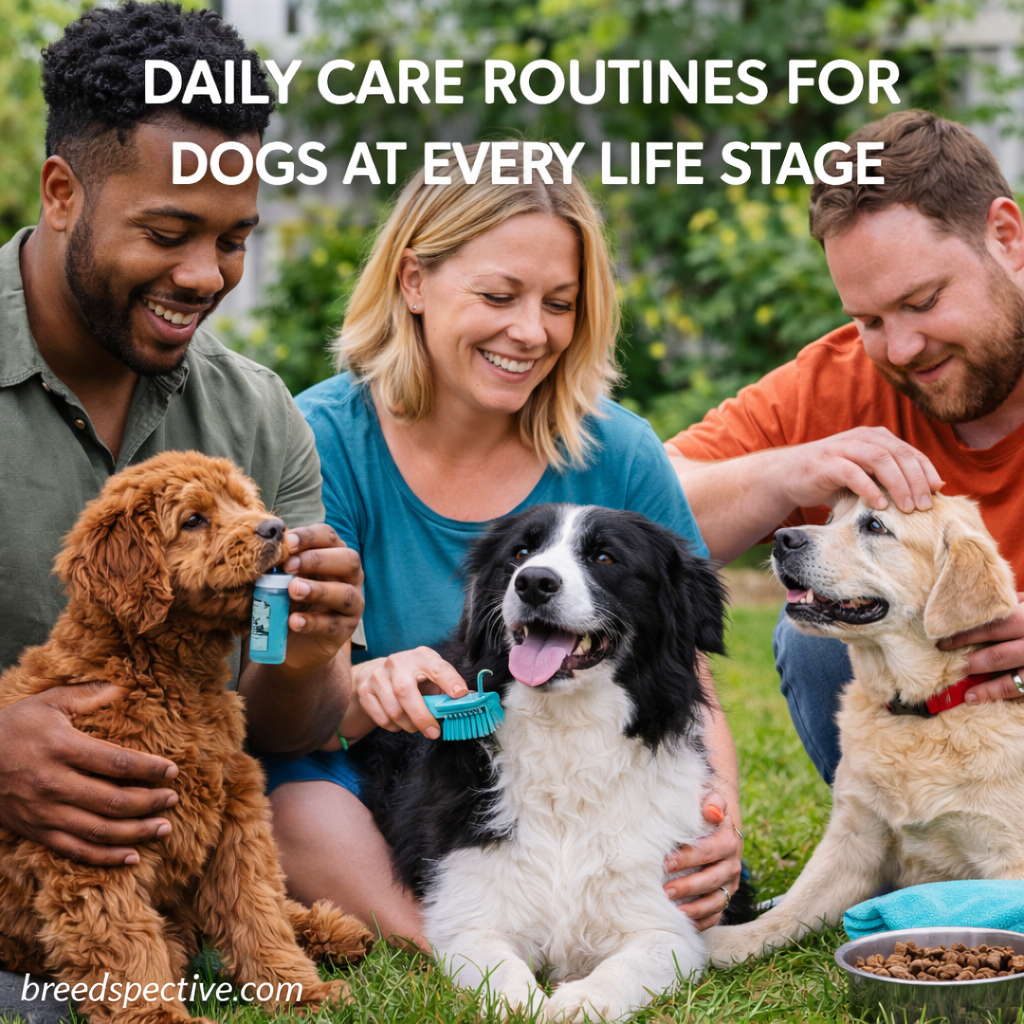
Daily Care Routines for Dogs at Every Life Stage

Three people caring for dogs of different ages outdoors, including a puppy, an adult dog, and a senior dog, illustrating daily care routines at every life stage.
Dogs at different life stages receiving daily care and attention, highlighting age-appropriate routines for lifelong health. breedspective.com.

A good daily dog care routine covers feeding, fresh water, bathroom breaks, exercise, mental stimulation, social interaction and basic health monitoring. The routine should change as your dog ages: puppies need frequent supervision and training, adults need consistent exercise and preventive care, and senior dogs often need gentler activity, easier access to resources and closer health monitoring.

Breed, size, coat, health and energy level matter just as much as age. A young Border Collie and a young Bulldog, for example, should not automatically receive identical exercise routines simply because both are adults.

Continue reading “Daily Care Routines for Dogs at Every Life Stage”

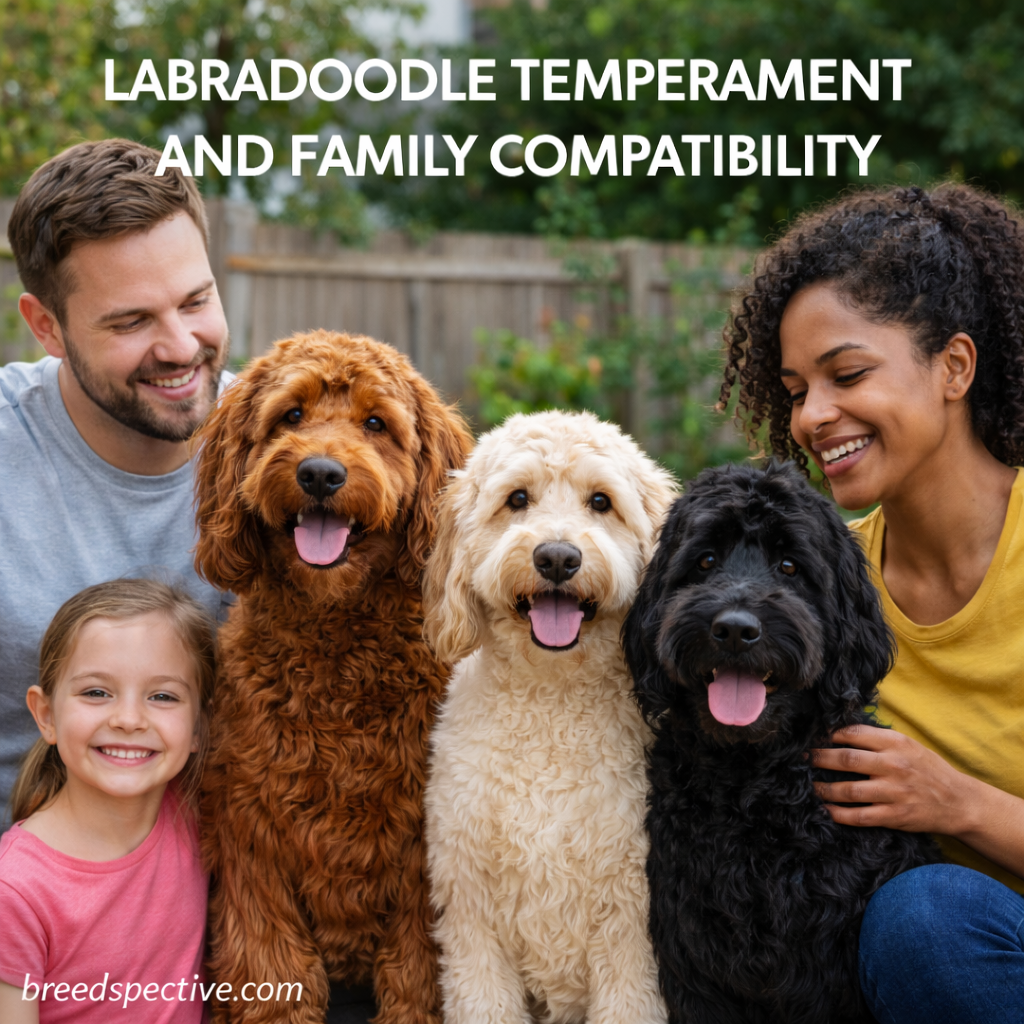
Labradoodle Temperament and Family Compatibility

Labradoodles of different coat colors sitting with a diverse family outdoors, illustrating the breed’s friendly temperament and family compatibility.
Labradoodles pictured with a family in a backyard setting, highlighting the breed’s affectionate temperament and suitability for family life. breedspective.com.

Labradoodle temperament is typically social, energetic, intelligent, playful, and strongly people-oriented, reflecting traits found in both Labrador Retrievers and Poodles. Many make excellent family companions, but a Labradoodle is not automatically calm, non-shedding, allergy-friendly, or easy to own—the cross can vary considerably in coat, size, energy, and personality.

For the right household, that combination can produce an affectionate, highly trainable dog that enjoys being involved in daily family life. The trade-offs are substantial exercise needs, potentially demanding grooming, excitable adolescent behavior, and the need to choose a breeder who properly health-tests both sides of the pedigree.

Continue reading “Labradoodle Temperament and Family Compatibility”

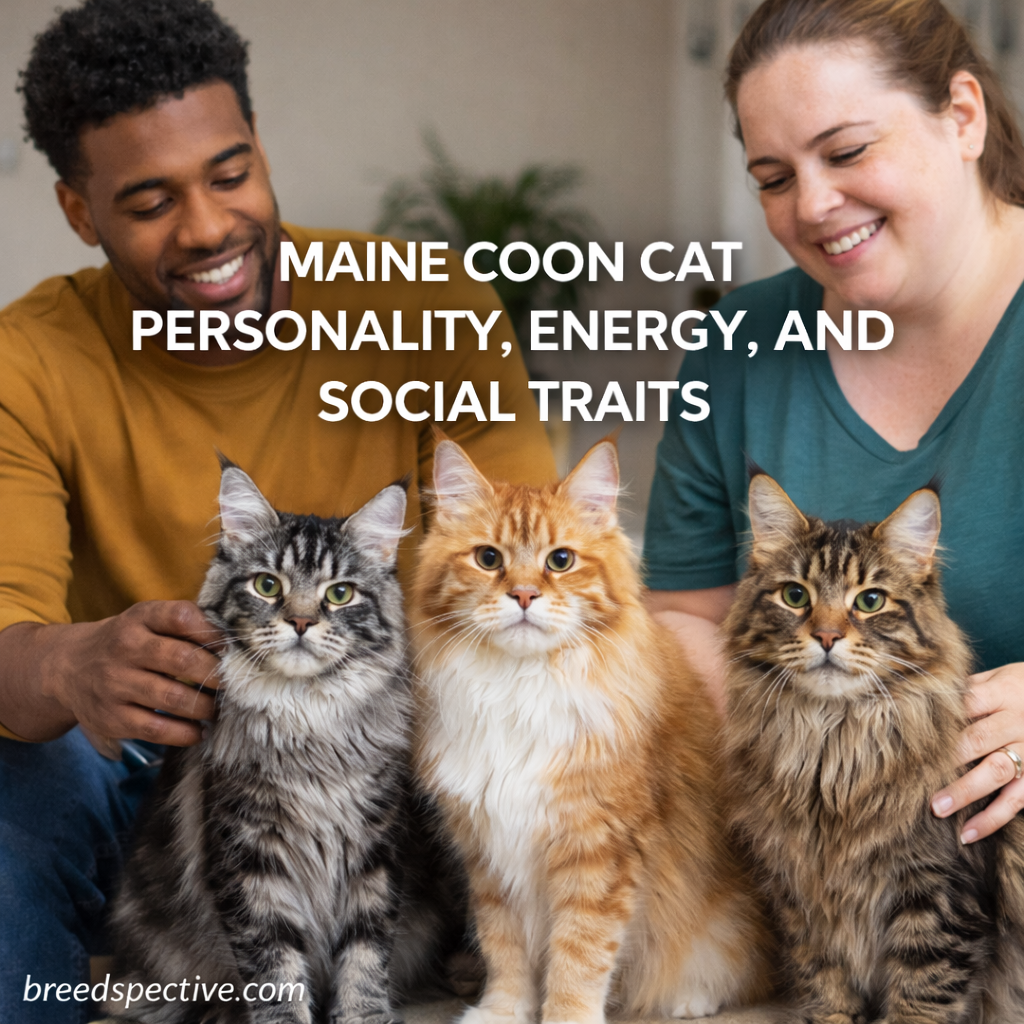
Maine Coon Cat Personality, Energy, and Social Traits

Three Maine Coon cats of different colors sitting indoors with two people, illustrating the breed’s friendly personality, moderate energy level, and social nature.
Maine Coon cats pictured with their owners, highlighting the breed’s affectionate personality, calm energy, and strong social traits. breedspective.com.

The typical Maine Coon cat personality is friendly, sociable, playful, intelligent, and relatively easygoing. These large cats often enjoy staying close to their people without demanding constant physical attention, giving them a useful balance of companionship and independence.

The Cat Fanciers’ Association (CFA) describes the breed as gentle and easygoing yet active, while The International Cat Association (TICA) characterizes Maine Coons as sweet-tempered, friendly cats that often follow their people around the home. Individual temperament varies, but the breed is generally known for being social rather than aloof.

Continue reading “Maine Coon Cat Personality, Energy, and Social Traits”

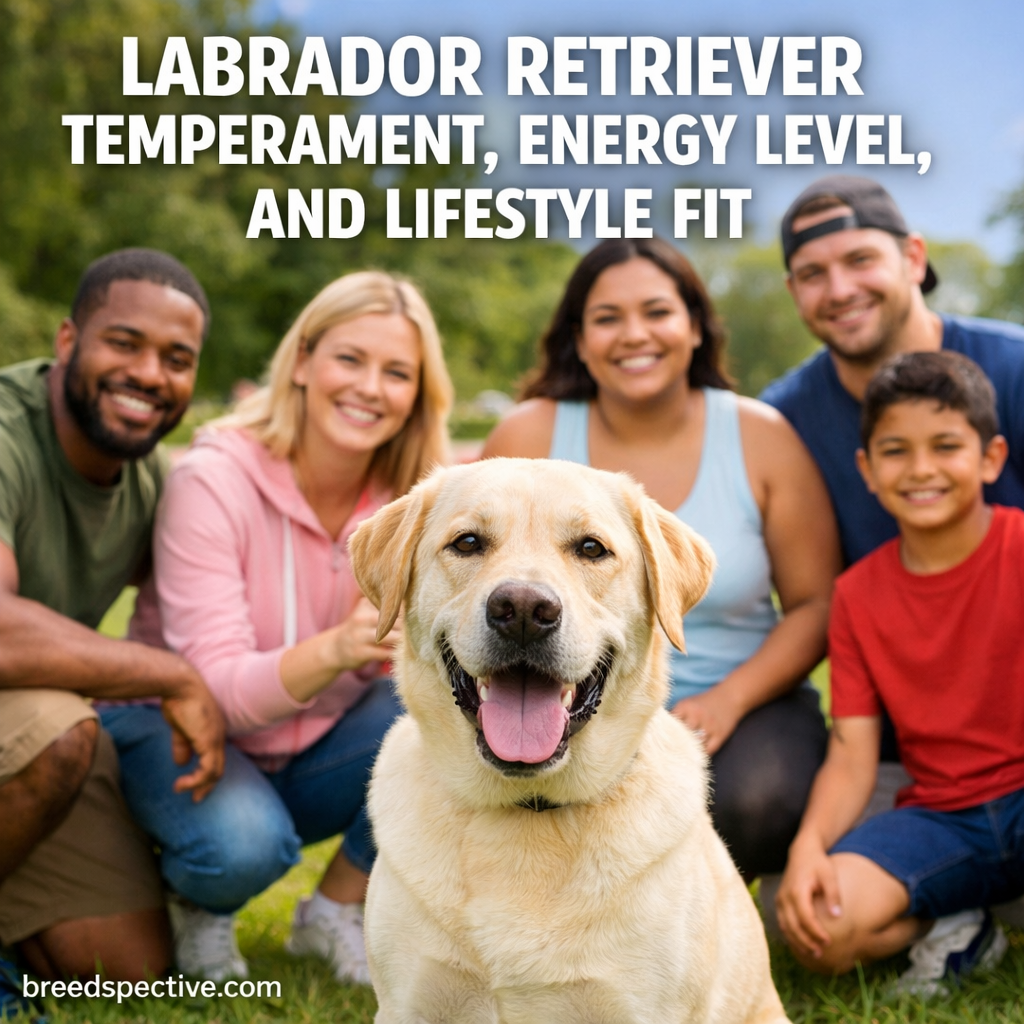
Labrador Retriever Temperament, Energy Level, and Lifestyle Fit

A happy Labrador Retriever sitting in front of a diverse family outdoors, representing Labrador Retriever temperament, energy level, and lifestyle fit.
A friendly Labrador Retriever with an active, family-oriented lifestyle. breedspective.com

Labrador Retriever temperament is typically friendly, outgoing, eager to please, confident, and highly social with people. Labs are famously trainable family companions, but they are also energetic working retrievers whose adolescent intensity, mouthiness, appetite, shedding, and need for daily activity are easy for new owners to underestimate.

The Labrador Retriever Club describes correct temperament as a hallmark of the breed: kindly, outgoing, tractable, eager to please, and non-aggressive toward people or animals. That sociable personality helps explain the Labrador’s enduring popularity, but temperament alone does not make this a low-effort dog.

Continue reading “Labrador Retriever Temperament, Energy Level, and Lifestyle Fit”