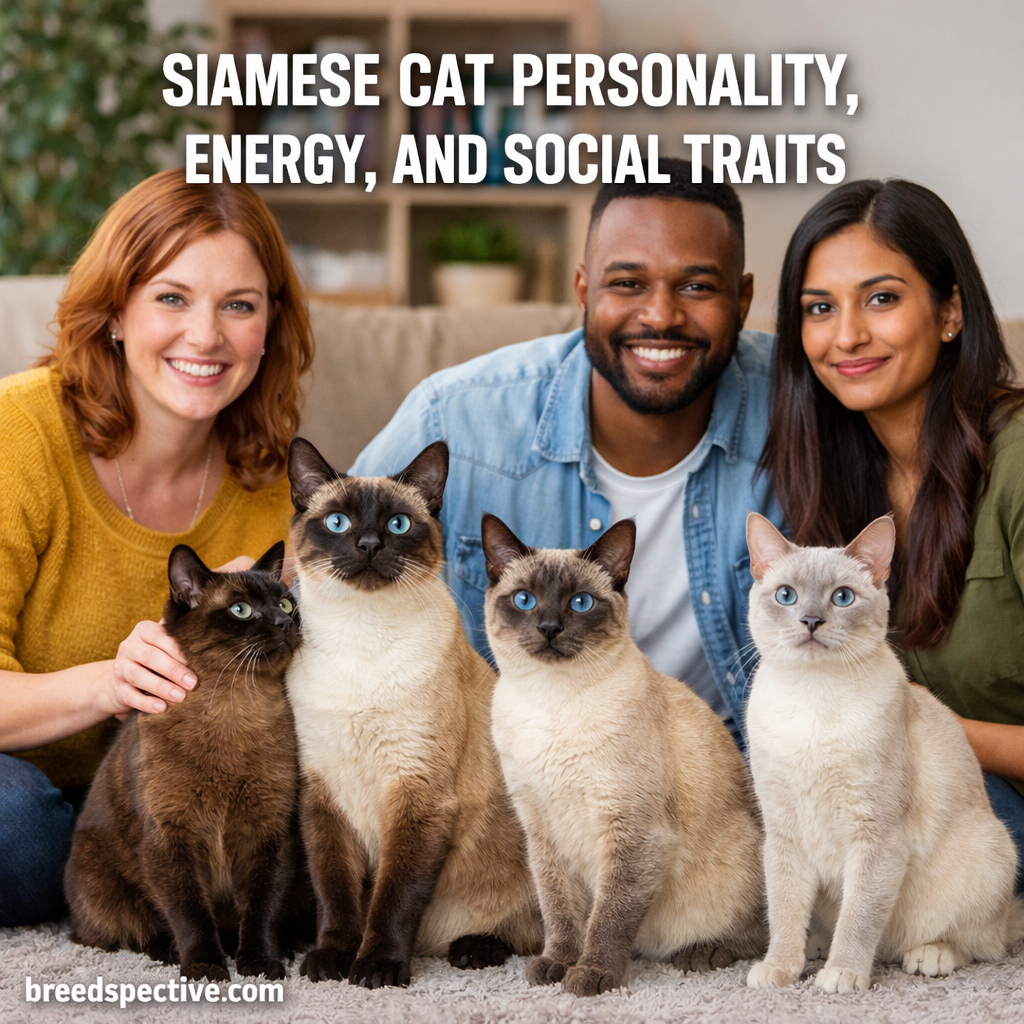
The typical Siamese cat personality is highly social, vocal, intelligent, affectionate, and active. These cats usually want substantial interaction with their people and can be persistent about getting it, making the Siamese a better fit for an engaged household than for someone seeking a quiet, independent companion.
The Cat Fanciers’ Association (CFA) describes the Siamese as vocal, affectionate, active, and sometimes insistent. The International Cat Association (TICA) similarly describes the breed as lively, intelligent, talkative, and strongly people-oriented. (cfa.org)
Siamese Cat at a Glance
| Trait | Siamese |
|---|---|
| Size | Medium; TICA lists females around 5–8 lb and males around 8–12 lb |
| Lifespan | TICA lists 10+ years |
| Activity level | High |
| Grooming | Low |
| Vocalness | Very high |
| Good with children | Often, especially with respectful children who enjoy interactive pets |
| Good with other cats | Often, with proper introductions |
| Good with dogs | Can be, particularly with social, cat-friendly dogs |
| Typical personality | Vocal, affectionate, intelligent, active, social and curious |
| Build | Long, slender, athletic and muscular |
A Siamese looks delicate at first glance, but the breed is not supposed to be frail. CFA’s standard describes a medium-sized, refined cat that is long and slender while remaining muscular. The wedge-shaped head, large ears, almond-shaped blue eyes, long legs and fine short coat create the breed’s unmistakable silhouette. (cfa.org)
Siamese Breed History and Origins
The Siamese has a much longer documented history than many modern pedigreed breeds.
Its roots are in Thailand, historically known as Siam. TICA points to manuscripts from Ayutthaya, an ancient capital of Siam, that depict native pointed cats. The famous Thai collection of cat poems commonly known as the Tamra Maew, or Cat Book Poems, includes cats with pale bodies and dark ears, faces, feet, and tails. (tica.org)
CFA likewise traces documentation of Siamese-type cats to a historic Thai collection of cat poems from the Ayutthaya period. (cfa.org)
The breed began attracting considerable attention in the West during the late 1800s.
TICA records the Siamese appearing at London’s Crystal Palace cat show in 1871. CFA notes that one of the earliest documented Siamese cats in the United States, named Siam, was given to President Rutherford B. Hayes in 1878 by the American consul in Bangkok. (cfa.org)
The breed became part of the American cat fancy early. Siamese was among the breeds recognized when CFA was founded in 1906.
Modern show-line Siamese have a particularly long, refined body and wedge-shaped head. Cats preserving a more moderate appearance similar to earlier Western Siamese are recognized separately by TICA as the Thai breed. (tica.org)
Why Siamese Cats Have Dark Points
The Siamese coat pattern is more than an unusual color arrangement. It is influenced by temperature.
The genetic variant responsible for Siamese colorpointing affects pigment production in a temperature-sensitive way. CFA explains that the Siamese gene is thermally sensitive, causing more pigment to develop in cooler areas of the body.
That is why the extremities—the ears, face, paws, legs, and tail—are darker than the warmer central body.
Kittens develop in the consistently warm environment of the uterus, so Siamese kittens are born very pale. Their points become increasingly visible after birth as temperature differences across the body begin influencing pigmentation.
The effect can continue throughout life. Environmental temperature, age, and individual genetics can affect how much contrast develops between the body and points.
CFA recognizes four traditional Siamese colors: seal point, chocolate point, blue point, and lilac point. (cfa.org)
Siamese Personality in Everyday Life
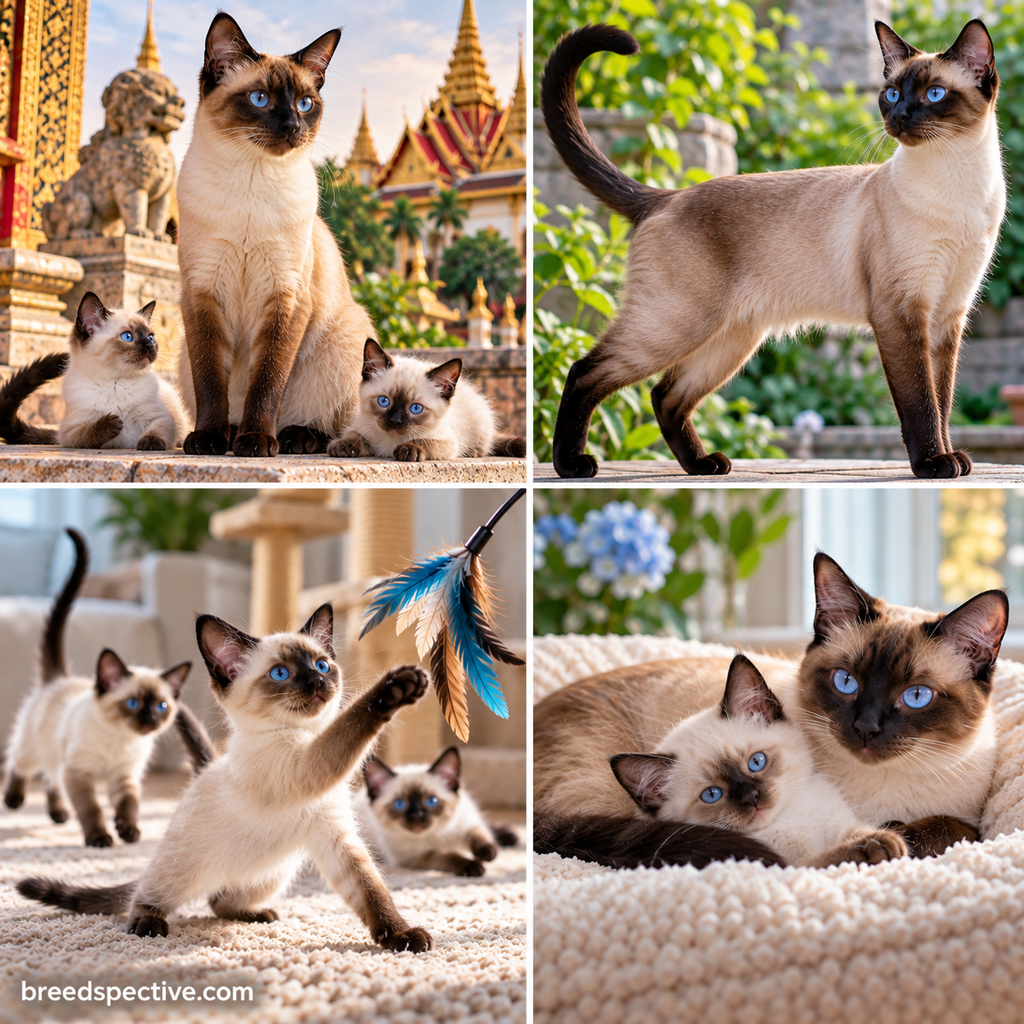
Living with a Siamese usually means living with a cat that wants to participate.
CFA describes the breed as unusually effective at communicating with people through both vocalizations and body language. TICA emphasizes the same social intensity, describing Siamese as people-oriented cats that need companionship. (tica.org)
This is not usually a cat that spends the entire day quietly occupying a distant room.
A Siamese may follow family members around, investigate whatever they are doing, seek a warm lap, initiate play, or vocalize when it wants attention.
Intelligent and Curious
Siamese cats need more than physical exercise. They benefit from having problems to solve and environments to investigate.
TICA describes the breed as very intelligent as well as lively and playful. CFA likewise highlights intelligence and the breed’s strong ability to communicate what it wants. (cfa.org)
Useful enrichment includes:
- Puzzle feeders
- Wand toys
- Balls and chase toys
- Fetch-style games
- Clicker or reward-based training
- Tall cat trees
- Scratching surfaces
- Window observation areas
- Regular toy rotation
A household that wants similarly high levels of activity may also want to compare the Bengal cat’s personality, energy, and social traits.
The two breeds are not interchangeable, but both demand more engagement than the typical low-energy companion cat.
Siamese Energy Level and Exercise Needs
Siamese cats are active and playful, and their lean build reflects an athletic breed rather than a sedentary one.
TICA describes the Siamese as lively and recommends the breed for someone who wants considerable interaction and activity. CFA similarly classifies the Siamese as active. (tica.org)
Plan for interactive play every day rather than simply leaving toys on the floor.
A practical setup can include several shorter play sessions spread throughout the day. Chase games can provide physical activity, while puzzle feeders and training add mental work.
Vertical territory is especially useful. A sturdy cat tree, shelves designed for cats, or other safe elevated resting areas allow an athletic Siamese to climb and survey its environment.
Young cats may be particularly busy, but prospective owners should not expect the breed’s social and playful personality to disappear when adulthood arrives.
Siamese Vocalization: Expect a Talkative Cat
Anyone considering a Siamese should be comfortable with vocal communication.
Siamese are among the cat breeds most strongly associated with frequent, persistent vocalization. CFA calls them vocal and sometimes insistent, while TICA describes them as talkative. (cfa.org)
Their vocalizations may accompany:
- Greetings
- Requests for food
- Requests for attention
- Play invitations
- Frustration
- Interest in what someone is doing
- Routine changes
Some owners enjoy having a cat that seems to participate in a back-and-forth conversation. Someone who wants a quiet home may find exactly the same behavior exhausting.
Vocalization also needs context. A sudden increase in meowing should not automatically be dismissed as normal Siamese behavior. Changes in vocalization can accompany discomfort, illness, stress, or age-related problems and deserve attention when they are unusual for the individual cat.
Their Need for Attention and Company
The Siamese need for companionship deserves separate consideration because it can determine whether the breed fits a household.
TICA states that Siamese are very social and people-oriented and emphasizes their need for company. CFA describes an intense desire for closeness and human attention and notes that other compatible pets can also become close companions. (tica.org)
That does not mean a Siamese can never be left alone.
It does mean that routinely expecting one to entertain itself with minimal social contact is a poor match for the breed’s typical temperament.
A second compatible cat can provide companionship, but adopting another animal should not be treated as an automatic cure for loneliness. The cats still need proper introductions, compatible personalities, adequate resources, and human interaction.
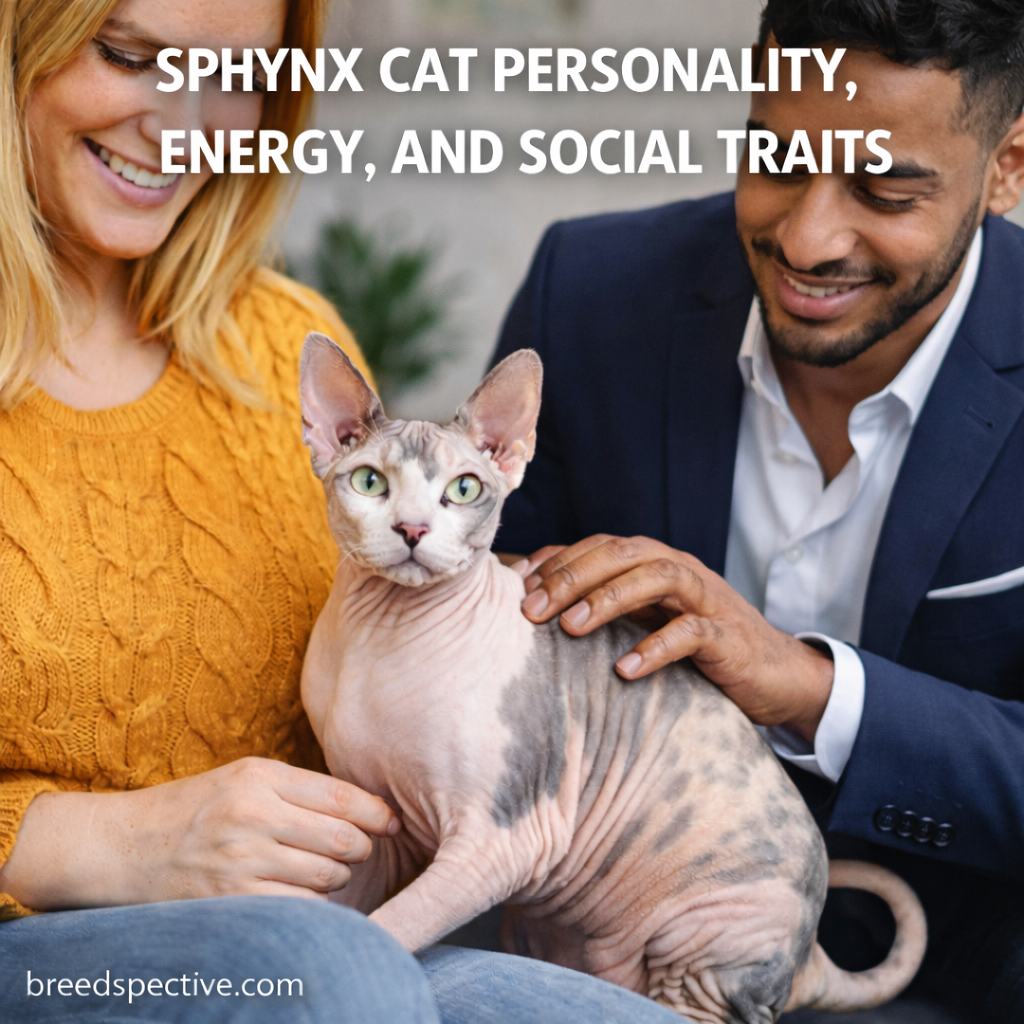
People who enjoy highly social cats may also want to compare the Sphynx cat’s personality, energy, and social traits.
Siamese Cats With Children and Other Pets
The Siamese’s social, playful personality can work well in a family environment.
An older child who enjoys throwing toys, using wand toys, or helping with reward-based training may provide exactly the sort of interaction an active Siamese enjoys.
As with any breed, children should learn appropriate handling. A cat should be able to walk away rather than being chased, restrained, or carried after it has had enough.
Siamese can also form relationships with other cats and compatible dogs. CFA notes that although human or Siamese companionship may suit them particularly well, many Siamese develop close relationships with other pets. (cfa.org)
Introductions should still be gradual. Breed reputation cannot guarantee that two individual animals will get along.
Can a Siamese Live in an Apartment?
Yes. Square footage is less important than how the available space is used.
A Siamese living in an apartment still needs opportunities to climb, scratch, chase, observe, play, and interact. Vertical territory can make a relatively small home considerably more interesting.
The potential problem is noise rather than size.
A particularly vocal Siamese in a building with thin walls could be a consideration for close neighbors, especially if the cat becomes vocal when seeking attention.
Our guide to the best cat breeds for apartment living covers temperament, activity, noise, and space in more detail.
Who a Siamese Suits — and Who Should Avoid One
A Siamese can be an excellent match for someone who genuinely wants an interactive cat.
The breed may suit you if you:
- Want a cat that actively seeks human company
- Enjoy a vocal pet
- Have time for daily interactive play
- Like training and enrichment
- Want an athletic but easy-to-groom cat
- Prefer an expressive personality
- Can provide climbing and exploration opportunities
Think carefully before choosing one if you:
- Want a quiet cat
- Prefer a highly independent pet
- Spend most days away with little interaction at home
- Find persistent meowing irritating
- Want a sedentary companion
- Do not want to provide regular enrichment
For a broader comparison of temperament, activity, grooming, and household requirements, see our guide to choosing the right cat breed for your home.
Siamese Grooming and Care Needs
One major advantage of the Siamese is straightforward coat care.
The coat is very short, fine, and close-lying. CFA notes that no elaborate grooming equipment is necessary and suggests removing loose hair with damp hands or a rubber grooming brush. (cfa.org)
A weekly grooming session is generally enough to:
- Remove loose hair
- Check the skin
- Look for lumps or injuries
- Examine the ears
- Check nails and paws
- Reinforce comfortable handling
Siamese do shed, but their coat does not create the matting problems associated with longhaired breeds.
Nails should be trimmed as needed, and dental care deserves particular attention. Regular veterinary examinations should also include assessment of body condition, teeth, eyes, heart, and respiratory health.
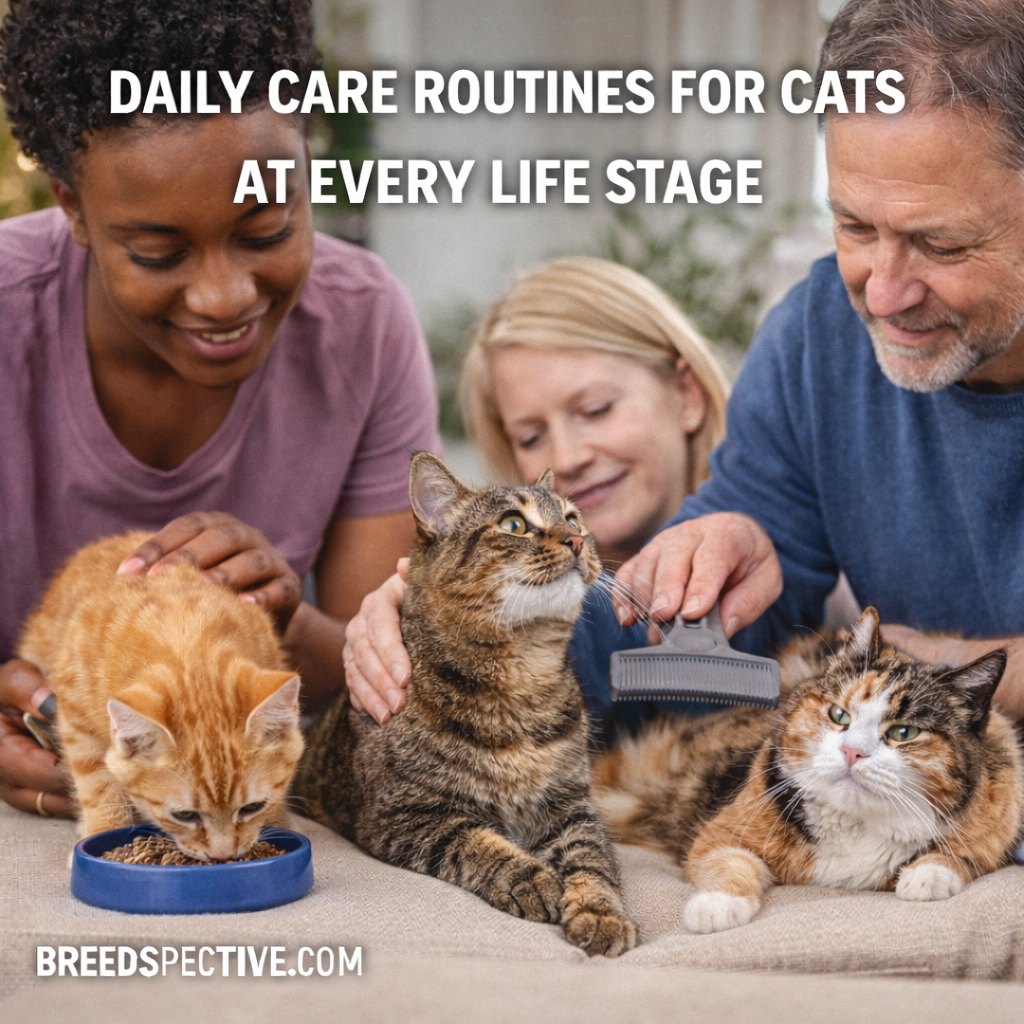
Our guide to daily care routines for cats at every life stage can help organize grooming alongside feeding, play, litter maintenance, and routine health observations.
Litter Box and Everyday Care
An active, intelligent breed still needs the same basic resources as every other cat: clean water, an appropriate complete diet, comfortable resting areas, scratching surfaces, and accessible litter boxes.
Keep litter boxes clean and provide enough room for the cat to turn, dig, and position itself comfortably.
Do not interpret elimination outside the box as revenge or stubbornness. Medical conditions, litter preference, dirty boxes, stress, resource competition, and poor box placement can all contribute.
If habits change, our guide to why cats avoid the litter box and how to fix it explains how to work through common causes.
A sudden change should also prompt veterinary consideration, particularly if there is straining, frequent attempts to urinate, blood, discomfort, or other signs of illness.
Siamese Health Issues to Screen For
Siamese can develop illnesses seen throughout the domestic cat population, but breed-associated risks make breeder health screening and good veterinary care particularly valuable.
Progressive Retinal Atrophy
One inherited condition relevant to Siamese cats is progressive retinal atrophy (PRA).
The UC Davis Veterinary Genetics Laboratory identifies a genetic variant associated with progressive retinal atrophy in several breeds including the Siamese. PRA causes progressive degeneration of the retina and can ultimately result in blindness.
DNA testing is available for the associated variant, making this a sensible subject to raise with a breeder.
Ask to see the actual test documentation rather than relying on a general claim that the breeding cats have been “health tested.”
Amyloidosis
Siamese cats are also among the breeds associated with familial amyloidosis, a disorder in which abnormal amyloid proteins accumulate in tissues and can damage organs.
International Cat Care identifies Siamese and closely related breeds among cats in which inherited forms of amyloidosis have been reported. The condition is complex, and a routine DNA screening test equivalent to some single-gene disorders is not available for every form.
This makes family health history particularly useful.
Ask breeders about unexplained kidney or liver disease and unusually early deaths among close relatives rather than focusing solely on a checklist of DNA tests.
Other Health Considerations
No screening program can guarantee that a kitten will remain healthy for life.
A responsible breeder should be willing to discuss health problems found within the breed and their own breeding lines, explain what screening they perform, provide veterinary documentation, and avoid making absolute health guarantees.
For an individual Siamese, your veterinarian can recommend examinations and testing based on age, symptoms, family history, and overall health.
Realistic Siamese Cat Costs
The Siamese’s easy coat can make routine grooming less expensive than that of a longhaired breed, but the overall cost of ownership remains substantial.
Purchase prices vary by breeder, region, pedigree, age, and whether the cat is sold as a companion or for breeding/show purposes. A single fixed price is therefore less useful than planning for the full range of ongoing expenses.
| Expense | What to Plan For |
|---|---|
| Purchase or adoption | Variable initial cost |
| Veterinary care | Exams, preventive care, illness and emergencies |
| Food | Ongoing complete diet appropriate for age and condition |
| Litter | Recurring lifetime expense |
| Grooming | Relatively inexpensive compared with longhaired breeds |
| Dental care | Home prevention plus veterinary treatment when needed |
| Enrichment | Puzzle feeders, interactive toys and replacements |
| Cat furniture | Sturdy scratching and climbing structures |
| Carrier | Secure carrier for veterinary visits and emergencies |
| Emergency care | Emergency savings or suitable pet insurance |
Enrichment is a genuine ownership expense for this breed. Toys do not have to be expensive, but an active Siamese benefits from having enough variety to prevent its environment from becoming monotonous.
Time is also part of the cost. The coat may require little work, but the personality requires substantially more interaction than someone might expect from a supposedly “easy-care” shorthaired cat.
Choosing a Siamese Responsibly
Do not choose a Siamese solely for its blue eyes and pointed coat.
Ask a breeder about:
- PRA testing
- Amyloidosis in the family
- Other hereditary disease in the pedigree
- Veterinary records
- Temperament of the parents
- How kittens are socialized
- Pedigree documentation
- When kittens leave for their new homes
- Vaccinations and preventive care
- The breeder’s contract and return policy
Spend time evaluating temperament as well as appearance.
The ideal Siamese owner should actually enjoy the characteristics the breed is known for. A breeder describing a kitten as talkative, persistent, or constantly involved is not necessarily describing a flaw.
Those characteristics can become problems, however, when the owner expected a quiet decorative pet.
Verdict: Is a Siamese Cat Right for You?
A Siamese is right for someone who wants a social, intelligent, athletic, and highly communicative cat. The breed offers relatively easy coat care but expects considerably more interaction than many people associate with cat ownership.
It is not a good match for someone seeking a quiet, detached, low-energy companion. Frequent vocalization, persistent requests for attention, daily play, and a strong interest in household activity are central parts of the Siamese experience rather than minor quirks.
The trade-off is clear: Siamese cats are physically easy to groom but socially demanding.
For an owner who enjoys talking to, playing with, training, and living closely alongside a cat, that intensity can be exactly the appeal. For someone who values silence and independence, another breed is likely to fit the household better.