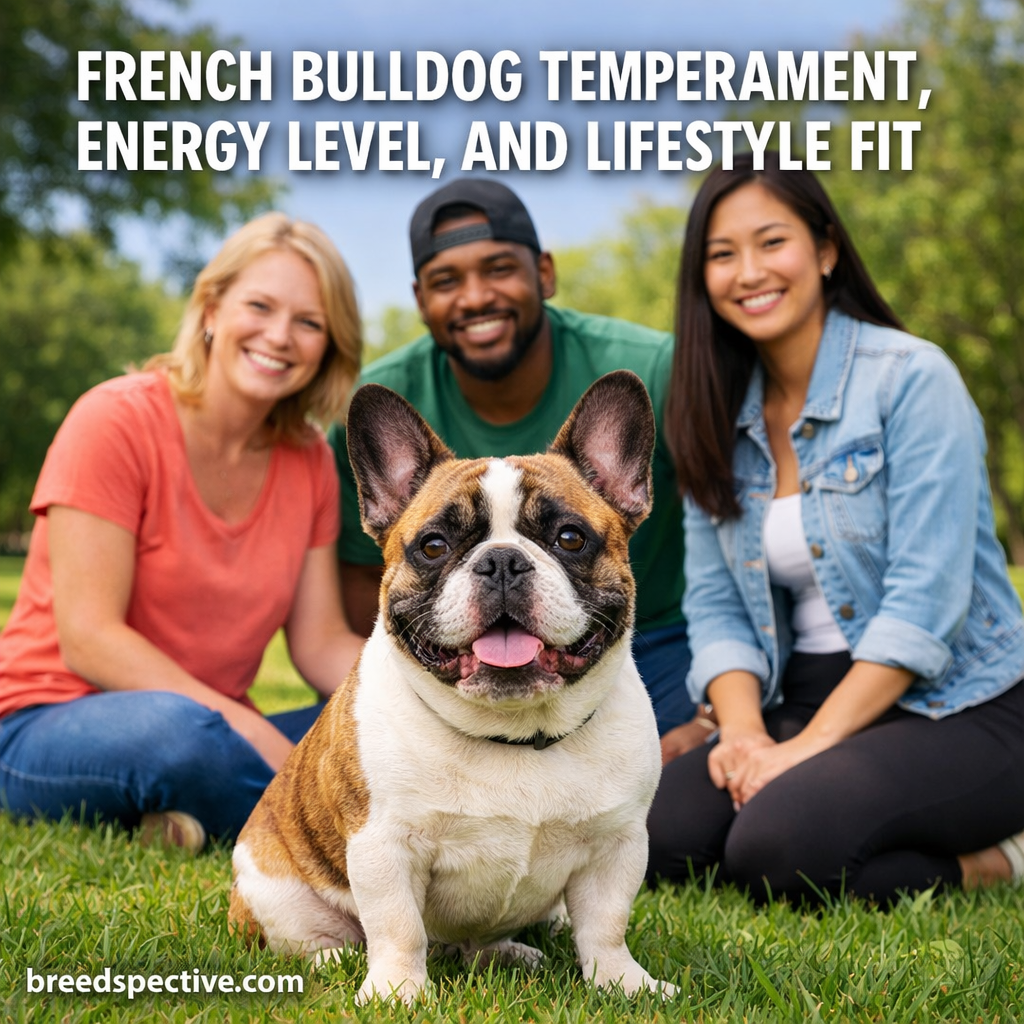
French Bulldog temperament is typically affectionate, playful, adaptable, alert, and strongly oriented toward human companionship. Frenchies generally need less strenuous exercise than athletic working breeds, but their compact size and moderate activity needs should not be mistaken for easy ownership: their brachycephalic anatomy creates significant health, heat, exercise, and veterinary-care considerations.
For someone who wants a small companion that enjoys staying close and participating in household life, the personality can be an excellent match. For someone wanting a jogging partner, an outdoor dog, or a breed with relatively few structural health concerns, it is not.
French Bulldog at a Glance
| Trait | French Bulldog |
|---|---|
| Size | Small; no more than 28 pounds under the AKC standard |
| Life expectancy | About 10–12 years |
| Exercise needs | Low to moderate; short daily walks and play |
| Grooming | Low coat maintenance; facial folds require attention |
| Trainability | Intelligent and capable, but sometimes independent |
| Good with children? | Often, with appropriate supervision |
| Good with other pets? | Often, especially with early socialization |
| Vocal level | Usually moderate rather than highly vocal |
| Heat tolerance | Poor |
| Swimming ability | Poor; close supervision around water is essential |
| Best fit | Indoor, companion-focused household able to manage brachycephalic health needs |
The American Kennel Club’s French Bulldog profile and breed standard describes the Frenchie as playful, alert and adaptable, with a compact, muscular body and the breed’s characteristic upright “bat ears.”
French Bulldog History and Original Purpose
Unlike many breeds developed primarily to hunt, herd or guard livestock, the French Bulldog’s history centers largely on companionship.
The breed traces back to small Bulldogs kept by lace workers in Nottingham, England, during the Industrial Revolution. When mechanization displaced many lace workers, some moved to northern France and took their small dogs with them.
According to AKC breed-history material, those toy Bulldogs became increasingly popular in France and developed into the dogs that eventually became known as French Bulldogs.
American enthusiasts later played an important role in defining the breed’s appearance.
European dogs could have either the folded “rose” ear associated with Bulldogs or the upright bat ear now immediately recognizable as French Bulldog. American fanciers strongly preferred the bat ear and incorporated it into their breed standard. The French Bull Dog Club of America, founded in 1897, helped establish the upright ear as a defining breed characteristic.
More than a century later, the breed experienced an extraordinary rise in popularity. AKC registration statistics placed the French Bulldog first in 2022, ending the Labrador Retriever’s 31-year run at the top of the organization’s U.S. rankings.
Popularity, however, does not automatically mean a breed is suitable for every household.
French Bulldog Temperament in Everyday Life
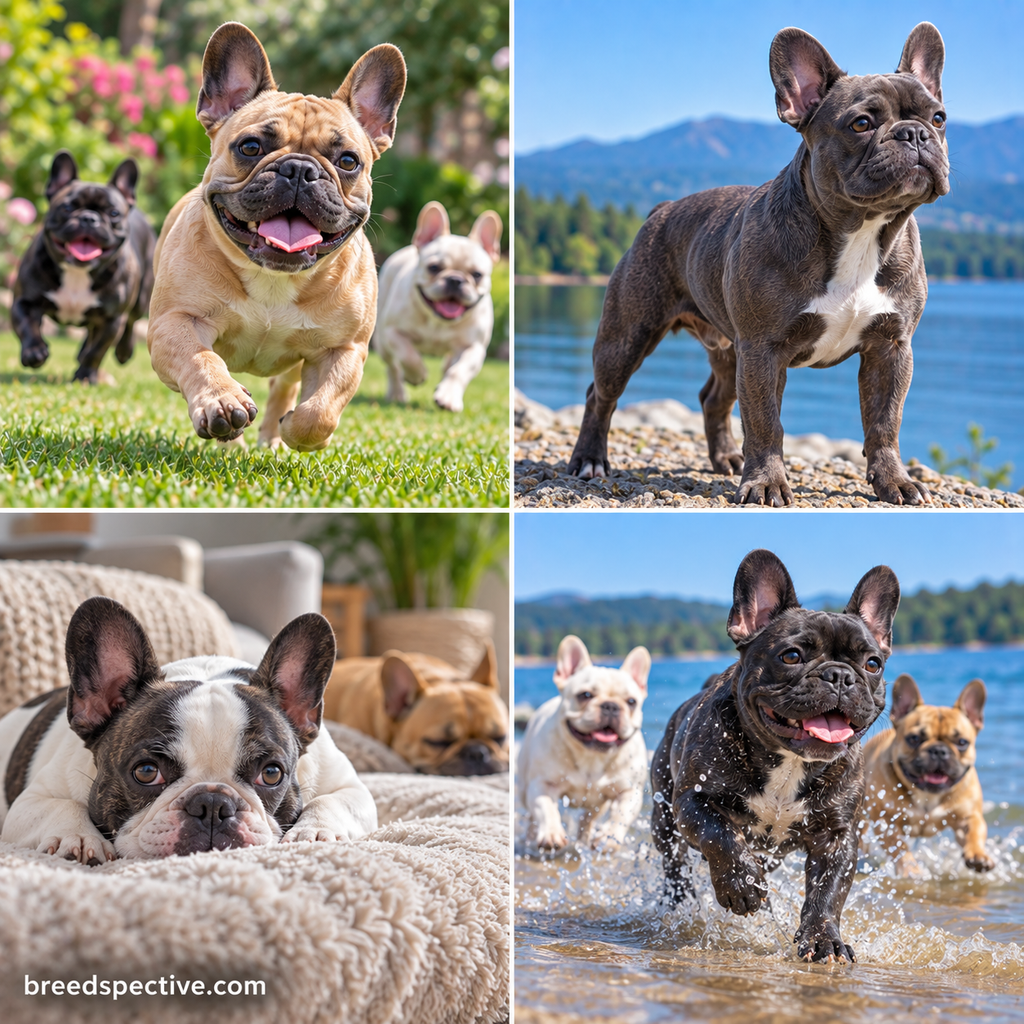
The Frenchie’s appeal is not difficult to understand.
Most are companion-oriented dogs that enjoy interacting with their households without requiring the amount of physical activity associated with many sporting, herding or working breeds.
Affectionate and Companion-Focused
French Bulldogs were developed primarily as companions, and that history remains evident in their behavior.
Many prefer to stay near their people, following household activity and settling nearby when nothing interesting is happening. They often enjoy physical affection without necessarily needing constant high-energy entertainment.
That closeness can become a problem when independence is never taught.
A puppy that spends every waking minute beside someone may have difficulty adjusting when eventually left alone. Owners should introduce short, comfortable periods of independence from an early age instead of assuming companionship means the dog should never practice being alone.
Playful Without Being an Endurance Athlete
Frenchies can be lively and entertaining.
Many enjoy tug, toys, short games of fetch, training sessions and energetic bursts around the home. What they generally are not built for is prolonged strenuous exercise.
This distinction matters because respiratory limitations can look like a dog simply being “out of shape.”
Exercise intolerance, excessive panting, unusually noisy breathing or difficulty recovering after activity can be associated with brachycephalic obstructive airway syndrome and deserve veterinary attention. UC Davis School of Veterinary Medicine specifically lists exercise intolerance and overheating among potential signs of airway disease in brachycephalic dogs.
Alert but Usually Not a Constant Barker
French Bulldogs can make useful alert dogs because they notice unfamiliar activity without typically having the vocal reputation of breeds such as Dachshunds or Beagles.
Individual variation still matters. A Frenchie can learn to bark repeatedly at hallway noises, windows, visitors or other dogs if that behavior is continually rehearsed.
For readers comparing small companion breeds with very different behavioral histories, our guide to Dachshund temperament, energy level, and lifestyle fit shows how a hunting background can produce a different set of everyday challenges.
How Much Exercise Does a French Bulldog Need?
French Bulldogs need daily exercise, but intensity matters more with this breed than hitting an ambitious mileage target.
For many healthy adults, roughly 30–60 minutes of total low-to-moderate activity spread across the day is a practical starting framework. That might mean two short walks plus indoor play and training rather than one long, strenuous outing.
Individual tolerance varies considerably, particularly because some Frenchies have more significant airway restriction than others.
Suitable activities include:
- Short walks in cool conditions
- Indoor play
- Gentle fetch
- Food puzzles
- Scent games
- Short reward-based training sessions
- Supervised exploration
Long-distance running, prolonged vigorous exercise and hard activity in warm or humid conditions are poor choices.
A Frenchie should not have to become exhausted to receive meaningful daily enrichment.
For owners specifically seeking dogs with modest activity requirements, our guide to low-energy dog breeds for apartment living provides additional comparisons.
Brachycephalic Health: The Biggest French Bulldog Trade-Off
The French Bulldog’s short face is not merely cosmetic.
Frenchies are brachycephalic, meaning the skull has been shortened. UC Davis School of Veterinary Medicine explains that brachycephalic dogs can have narrowed nostrils, restricted throats and small airways that interfere with normal breathing.
This collection of airway abnormalities can produce brachycephalic obstructive airway syndrome (BOAS).
Cornell University College of Veterinary Medicine identifies French Bulldogs among the breeds most frequently affected. Potential abnormalities include stenotic—or abnormally narrow—nostrils, an elongated soft palate, everted laryngeal saccules and a hypoplastic, or abnormally narrow, trachea.
Possible warning signs include:
- Loud or labored breathing
- Frequent snorting or wheezing
- Excessive panting
- Difficulty exercising
- Gagging
- Open-mouth breathing when inappropriate
- Poor recovery after exercise
- Blue or gray gums or tongue
- Collapse
Snoring and snorting are sometimes dismissed as normal Frenchie sounds. UC Davis warns that regarding respiratory noise as simply “normal for the breed” can delay diagnosis of genuine airway disease.
Moderately or severely affected dogs may require surgical treatment.
Heat Intolerance
Heat management is a fundamental part of French Bulldog ownership.
Dogs rely heavily on panting to dissipate heat. The shortened and potentially obstructed airway of a brachycephalic dog can make that cooling system less efficient.
UC Davis advises owners of brachycephalic dogs to be particularly careful during exercise and hot weather because of the increased risk of breathing difficulty and overheating. The University of Cambridge’s BOAS research program likewise notes that affected dogs can have difficulty regulating body temperature and recommends avoiding excessive exercise and hot environments.
In practical terms:
- Exercise during cooler parts of the day
- Avoid strenuous activity in heat or humidity
- Provide air-conditioned or otherwise reliably cool indoor space during hot weather
- Keep fresh water available
- Maintain a healthy body condition
- Stop activity if breathing becomes unusually labored
- Never leave a dog in a parked vehicle
Heavy panting, excessive drooling, weakness, confusion, vomiting, collapse or difficulty breathing in hot conditions can indicate a medical emergency.
French Bulldogs and Swimming
Do not assume a Frenchie can save itself after falling into water.
The AKC specifically warns that the breed’s front-heavy structure makes French Bulldogs poor swimmers and advises that they never be left unattended around pools, tubs or other bodies of water.
A properly fitted canine life jacket adds protection around water, but it does not replace direct supervision.
This matters even for owners who never plan to take their dog swimming. Backyard pools, ponds and vacation rentals can create accidental exposure.
Anesthesia Requires Extra Consideration
Brachycephalic anatomy can also increase anesthetic risk.
UC Davis notes that brachycephalic dogs have increased risks associated with sedation and general anesthesia because narrowed airways can complicate recovery. Regurgitation and swelling can create additional problems, making careful monitoring especially important.
That does not mean French Bulldogs cannot safely receive necessary procedures. It means their airway anatomy should be considered when veterinary teams plan anesthesia and recovery.
C-Sections and Reproduction
French Bulldog reproductive health is another significant welfare consideration.
The University of Illinois College of Veterinary Medicine notes that brachycephalic breeds including French Bulldogs commonly require Caesarean delivery, including in some non-emergency situations.
Research highlighted by the Royal Veterinary College has also found substantially increased odds of dystocia—difficulty giving birth—in French Bulldogs compared with crossbred dogs.
This is especially relevant to anyone considering breeding a Frenchie. Pregnancy and delivery should not be treated as simple or low-risk undertakings and require veterinary planning.
Training a French Bulldog
French Bulldogs are capable learners, but training should start early.
Their small size makes it easy to tolerate behaviors during puppyhood that become irritating later. Jumping, demanding attention, ignoring recall or refusing to settle can become established habits if the dog repeatedly gets what it wants.
Use:
- Food rewards
- Toys and play
- Short sessions
- Clear household rules
- Consistent reinforcement
- Gradually increasing distractions
Because obesity can worsen breathing problems in brachycephalic dogs, training treats should be accounted for as part of daily food intake. Cambridge’s BOAS research identifies excess body condition as an important factor associated with airway disease.
Common French Bulldog Behavior Problems
Frenchies are companion dogs, but they still need training and boundaries.
Difficulty Being Left Alone
A dog that strongly prefers company can become overly dependent if independence is never practiced.
Start with brief periods in another room or safe resting area. Give the puppy something appropriate to do and return before distress escalates. Increase duration gradually.
Persistent panic, destructive escape behavior, prolonged vocalization or other severe distress warrants professional behavioral and veterinary guidance.
House-Training Difficulties
Small dogs still require a structured toilet-training routine.
Take puppies outside frequently, particularly after sleeping, eating and playing. Reward successful elimination immediately rather than waiting until you are back inside.
Supervision prevents repeated indoor accidents from becoming established habits.
Attention-Seeking
Frenchies can quickly learn that pawing, barking, jumping or nudging makes humans respond.
Instead of continually rewarding demanding behavior with attention, deliberately reinforce behaviors you want repeated: sitting quietly, resting on a mat or approaching calmly.
Overexcitement Around Visitors
A social Frenchie may become excessively excited when someone arrives.
Teach a mat or place cue and reward four paws on the floor. Practice with cooperative visitors before expecting the dog to perform perfectly during a busy gathering.
Resource Guarding
Any breed can guard food, toys or resting areas.
Do not routinely remove valuable items to test the dog. Teach voluntary trades using higher-value rewards. Repeated growling, snapping or escalating guarding should be addressed with qualified professional help.
Are French Bulldogs Good With Children?
French Bulldogs can be good family companions because they are compact, playful and generally people-oriented.
As with every breed, supervision is necessary.
Children should not climb on the dog, disturb it while sleeping, interfere with meals or pull on ears and skin folds. The Frenchie should also have somewhere quiet to retreat when it does not want interaction.
The dog’s relatively sturdy body can be an advantage compared with extremely delicate toy breeds, but that does not make rough handling appropriate.
French Bulldogs and Other Pets
Many Frenchies can live successfully with other dogs and cats when properly introduced and socialized.
Compatibility depends on the individuals involved rather than breed alone. Early exposure to appropriate animals can help, but owners should still manage introductions rather than putting unfamiliar pets together and expecting them to resolve disagreements themselves.
For another compact companion with a distinctly different temperament profile, compare the Frenchie with our guide to Chihuahua temperament, energy level, and lifestyle fit.
Apartment Living and Senior Households
The French Bulldog’s small size and modest exercise requirements can make the breed practical in apartments.
A yard is not essential if the dog receives regular walks, toilet breaks and enrichment. Frenchies also tend to be more manageable indoors than highly active working breeds.
Apartment suitability still depends on climate. A small apartment that becomes dangerously hot is not appropriate simply because the dog fits easily inside it.
Their exercise requirements can also appeal to older adults who want canine companionship without several miles of daily walking. However, prospective owners should weigh physical convenience against potentially significant veterinary needs. Our guide to the best dog breeds for seniors considers those broader trade-offs.
Grooming and Routine Care
The short coat is relatively simple to maintain. Regular brushing helps remove loose hair, while nails, teeth and ears need routine attention.
Facial folds require more care.
UC Davis notes that wrinkles and skin folds in brachycephalic dogs can trap warmth and moisture, contributing to irritation and bacterial or fungal overgrowth. Folds should be monitored and kept clean and dry according to veterinary guidance.
Frenchies can also experience eye problems because their shortened facial anatomy leaves the eyes relatively prominent and vulnerable to injury. Squinting, redness, discharge or apparent eye pain warrants prompt veterinary attention.
French Bulldog Health Testing
Health testing should be a major part of evaluating any French Bulldog breeder.
The French Bull Dog Club of America’s health-testing guidance identifies four screenings required for its OFA/CHIC program:
- Hip evaluation through OFA or PennHIP
- Eye examination by a veterinary ophthalmologist
- Patellar luxation evaluation
- Cardiac evaluation
The club also recommends additional screening that can include tracheal hypoplasia, elbow dysplasia, juvenile hereditary cataracts, the Respiratory Function Grading Scheme for BOAS, and cystinuria Type 3.
Do not accept “health tested” as sufficient information.
Ask which tests were performed and look up the results. Health screening cannot guarantee that a puppy will remain healthy, but it provides considerably more useful information than a routine veterinary examination alone.
Respiratory function deserves particular attention in this breed. A Frenchie being able to breathe quietly and exercise comfortably should not be treated as an optional luxury.
How Much Does a French Bulldog Cost Per Year?
The French Bulldog’s small size keeps food costs relatively modest, but medical expenses can change the ownership budget dramatically.
A practical U.S. annual planning framework is:
| Expense | Practical annual planning range |
|---|---|
| Food and treats | $300–$700 |
| Routine veterinary care | $300–$800 |
| Parasite prevention | $150–$350 |
| Toys and enrichment | $100–$300 |
| Grooming/basic supplies | $75–$250 |
| Training | $0–$500+ |
| Pet insurance | $500–$1,500+ |
| Typical planning total | About $1,425–$4,400+ |
These are planning estimates, not fixed national prices. Location, insurance, age, diet and individual health can substantially change the total.
More importantly, ordinary yearly expenses do not capture the breed’s financial downside. Airway surgery, emergency heat treatment, spinal care, eye procedures, allergy treatment and other specialized veterinary needs can push costs far beyond a normal annual budget.
Our guide to the hidden costs of owning a dog or cat can help prospective owners budget beyond food and routine checkups.
Who Is a French Bulldog Best Suited To?
A Frenchie can suit someone who genuinely wants a companion-oriented indoor dog rather than an athletic partner.
Good matches often include people who:
- Want a small, affectionate companion
- Prefer moderate rather than strenuous exercise
- Spend substantial time at home
- Can provide a reliably cool indoor environment
- Will monitor breathing and heat exposure carefully
- Are prepared for potentially substantial veterinary expenses
- Want a dog suitable for smaller living spaces
- Are willing to investigate breeder health testing carefully
The breed’s manageable exercise needs and companion-focused personality can be highly appealing when the health responsibilities are understood from the beginning.
Who Should Think Twice About a French Bulldog?
A French Bulldog is a poor match for some lifestyles despite its adaptability.
Think carefully if:
- You want a jogging or hiking companion for strenuous outings
- Your home frequently becomes hot
- You expect a dog to spend substantial time outdoors
- You have an unfenced pool and cannot guarantee supervision
- You are uncomfortable with the possibility of expensive veterinary treatment
- You want a dog that can routinely tolerate long periods alone
- You are choosing primarily because of appearance or social-media popularity
- You are unwilling to investigate BOAS and breeder health testing
The breed’s popularity can make the decision seem easier than it is. Before committing, use our guide to choosing the right dog breed for your lifestyle to compare temperament with the practical responsibilities of ownership.
Verdict: Is a French Bulldog Right for You?
A French Bulldog is right for someone seeking an affectionate, playful, compact companion who can live primarily indoors and receive regular interaction, moderate exercise and careful health management. Their size and activity level can work particularly well in apartments and less athletic households.
A French Bulldog is not right for someone who wants an endurance athlete, an outdoor dog or a breed with minimal structural health concerns. BOAS, heat intolerance, poor swimming ability and other brachycephalic risks are central considerations in French Bulldog ownership, not minor footnotes.
The best prospective owner is therefore someone attracted to the Frenchie’s temperament while remaining equally prepared for the medical and environmental responsibilities created by its anatomy.