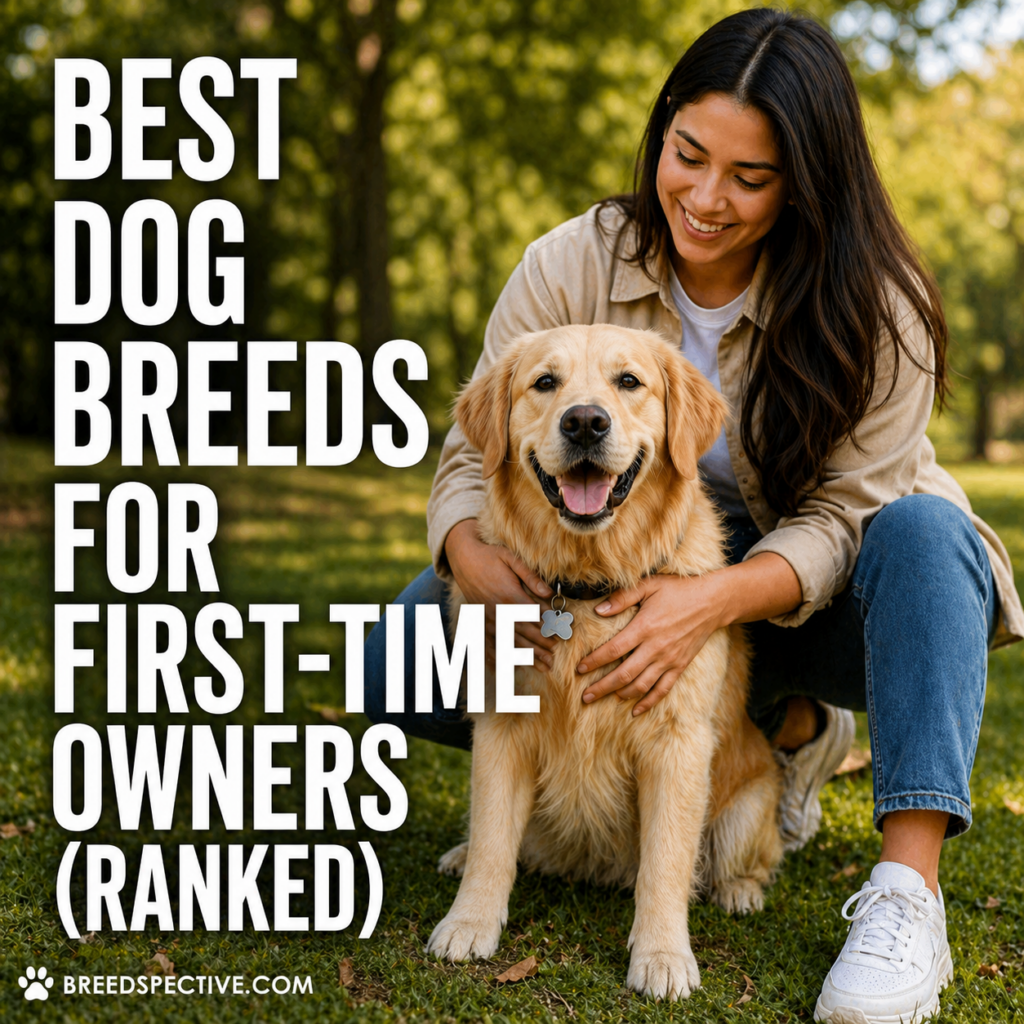
The best dog breeds for first-time owners are generally trainable, people-oriented, adaptable, and manageable in their everyday care needs. Labrador Retrievers, Golden Retrievers, Poodles, Cavalier King Charles Spaniels, and Bichon Frises are among the strongest choices, but the right first dog depends just as much on your schedule and activity level as the breed.
A beginner-friendly dog should give you room to learn. That means looking beyond friendliness and considering how much exercise, training, grooming, space, and ongoing care a particular dog will require.
How We Ranked the Best Dogs for Beginners
There is no breed that is effortless to own. Every dog requires training, exercise, veterinary care, socialization, and a long-term financial commitment.
For this ranking, we considered five practical factors:
| Factor | Why It Matters for a First-Time Owner |
|---|---|
| Trainability | Dogs that respond readily to consistent training are easier for beginners to manage. |
| Energy | Extremely high exercise and stimulation needs can overwhelm an inexperienced household. |
| Grooming | Coat care can add considerable time and expense to dog ownership. |
| Health | Prospective owners should understand breed-specific health screening and potential veterinary needs. |
| Size | Large, powerful dogs can magnify leash manners, jumping, and training mistakes. |
Temperament and adaptability also matter. A highly trainable dog is not necessarily an easy dog.
Stanley Coren’s 1994 book The Intelligence of Dogs, for example, ranked the Border Collie, Poodle, and German Shepherd at the top for working and obedience intelligence. Yet those three breeds can present very different challenges to a novice owner. Intelligence may help a dog learn commands quickly, but an intelligent dog can also learn unwanted routines remarkably quickly when rules are inconsistent.
Before choosing a breed, compare its needs with your own routine using our guide to choosing the right dog breed for your lifestyle.
Best Dog Breeds for First-Time Owners at a Glance
| Rank | Breed | Trainability | Energy | Grooming | Best Fit |
|---|---|---|---|---|---|
| 1 | Labrador Retriever | High | High | Moderate | Active households |
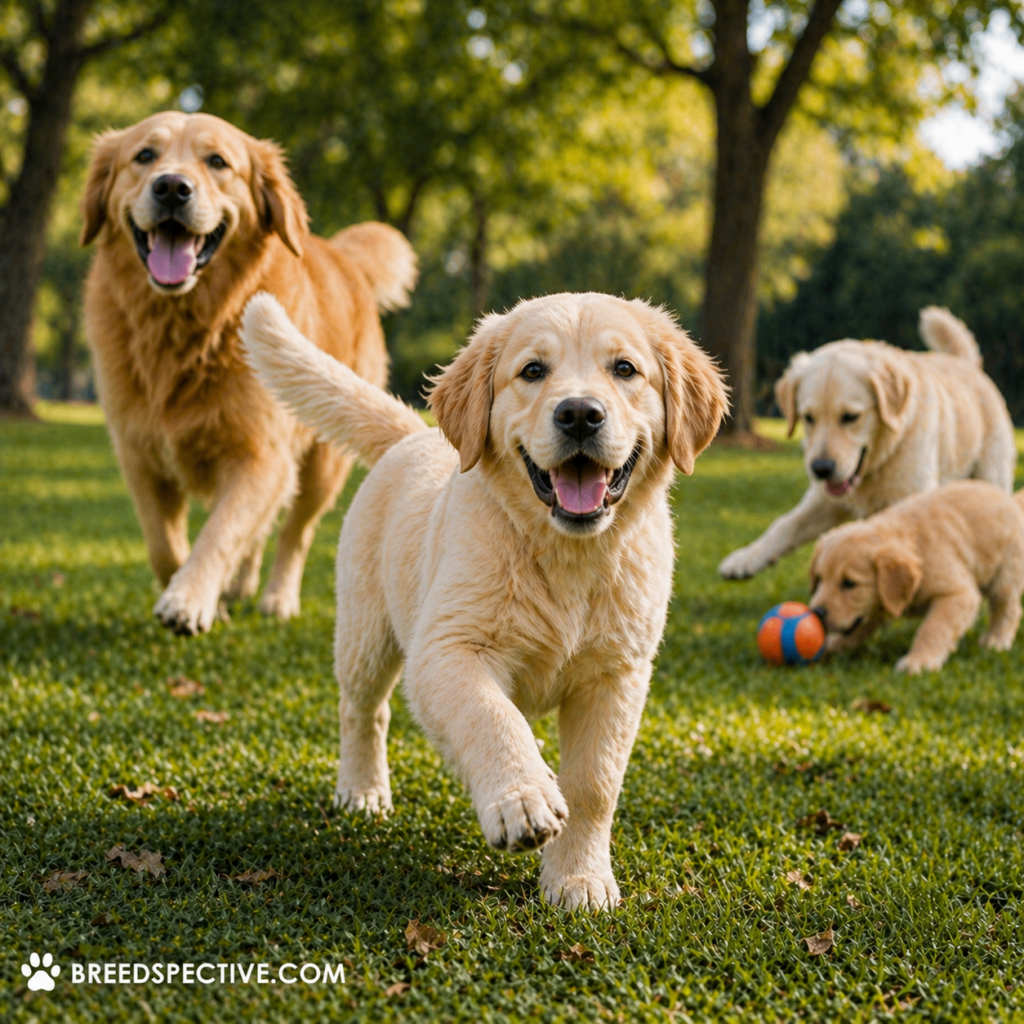
| 2 | Golden Retriever | High | High | Moderate-high | Active families |
| 3 | Poodle | Very high | High | High | Owners prioritizing training |
| 4 | Cavalier King Charles Spaniel | High | Moderate | Moderate | Companion-focused homes |
| 5 | Bichon Frise | High | Moderate | High | Small-home owners |
| 6 | Whippet | Moderate | Moderate | Low | Quieter households |
| 7 | Papillon | High | Moderate-high | Moderate | Owners wanting a small, smart dog |
| 8 | Shih Tzu | Moderate | Low-moderate | High | Less-active households |
| 9 | English Springer Spaniel | High | High | Moderate | Active owners |
| 10 | Cavapoo | Variable | Moderate | Moderate-high | Companion-oriented homes |
These rankings describe typical breed tendencies, not guarantees about an individual dog.
1. Labrador Retriever
For many first-time owners, the Labrador Retriever offers one of the most manageable combinations of friendliness, trainability, and adaptability.
The American Kennel Club (AKC) describes Labs as friendly, outgoing companions and notes that they are intelligent and enthusiastic about working with their owners. That willingness to participate makes basic obedience training more approachable for a beginner.
There is a significant catch: Labs are energetic dogs. They were developed as working retrievers, and the AKC emphasizes that they need substantial daily exercise. An under-exercised young Labrador can be considerably harder to live with than its easygoing reputation suggests.
Best for: Active owners who want a sociable medium-to-large dog and are prepared for daily exercise.
Think twice if: You want a sedentary dog, dislike shedding, or cannot consistently exercise and train a strong young dog.
Read our complete guide to Labrador Retriever temperament, energy level, and lifestyle fit.
2. Golden Retriever
Golden Retrievers earn a high position for many of the same reasons as Labradors: they are social, trainable, and generally eager to work with people.
According to the AKC, Goldens are outgoing, eager to please, and relatively easy to train. Those qualities give a novice owner an advantage when establishing household rules and basic obedience.
They are not low-maintenance dogs, however. Golden Retrievers need daily physical activity and have a double coat that sheds throughout the year, with heavier periods of shedding. Regular brushing needs to become part of the household routine.
Best for: Families and active individuals who want a highly social dog and enjoy training.
Think twice if: You want minimal shedding, minimal grooming, or a dog requiring little exercise.
See our detailed look at Golden Retriever temperament, energy level, and lifestyle fit.
3. Poodle
Poodles combine exceptional trainability with a choice of three sizes: Standard, Miniature, and Toy.
Their intelligence is well established. Stanley Coren placed the Poodle second in his 1994 working and obedience intelligence ranking, behind the Border Collie.
The AKC likewise describes Poodles as intelligent, attentive, people-oriented dogs that are generally easy to train. They are also active and require both physical activity and mental engagement.
The trade-off is grooming. Keeping a Poodle’s coat maintained requires regular brushing and clipping. The AKC notes that many owners keeping a shorter pet trim use professional grooming approximately every four to six weeks.
Best for: Owners who enjoy training and want a highly interactive dog in a size appropriate for their household.
Think twice if: Regular coat maintenance and professional grooming costs would be a burden.
Our Poodle temperament, energy level, and lifestyle fit guide covers those trade-offs in more detail.
4. Cavalier King Charles Spaniel
The Cavalier King Charles Spaniel can suit someone who wants a smaller companion without the intensity associated with many working breeds.
The AKC includes the Cavalier among its suggested breeds for first-time owners and describes the breed as gentle, affectionate, adaptable, trainable, and generally open to strangers.
Their smaller size can make everyday handling easier, but size should never be mistaken for zero maintenance. Prospective owners still need to research grooming, exercise, health screening, training, and the amount of companionship an individual dog needs.
Best for: Owners seeking a small, affectionate companion and plenty of interaction with their dog.
Think twice if: The dog will routinely spend long periods without company or you have not budgeted for routine and unexpected veterinary care.
5. Bichon Frise
The Bichon Frise is small and adaptable without being purely a lap dog.
The AKC describes Bichons as relatively easy to train outside of potential housetraining challenges. They need daily walks and play, but their activity tends to include shorter bursts rather than the sustained workload expected from many sporting and herding dogs.
The biggest beginner surprise is grooming. Bichons need frequent brushing, and the AKC notes that many pet owners use a professional groomer every four to six weeks.
Best for: People wanting a cheerful small dog and who are comfortable budgeting time and money for coat care.
Think twice if: You want a genuinely low-maintenance grooming routine.
6. Whippet
The Whippet deserves more attention from first-time owners who want a medium-sized dog but do not necessarily want retriever-level activity throughout the day.
Whippets are athletic sighthounds, yet the AKC describes them as calm in the house and notes that they can adapt to apartment living when properly exercised. Their short, smooth coat also requires relatively little grooming.
Their sighthound instincts create a different challenge: safe containment matters. The AKC recommends keeping Whippets on leash when they are outside a securely fenced area.
Best for: Owners who want a quiet, gentle indoor companion but can provide safe opportunities for exercise.
Think twice if: You expect reliable off-leash freedom in unsecured areas or want a dog intensely focused on obedience work.
7. Papillon
Do not confuse small size with low capability. The Papillon is an active, intelligent toy breed that can be remarkably responsive to training.
The AKC describes Papillons as intelligent, eager to please, and capable of learning a wide variety of behaviors. They need exercise and mental engagement despite their small stature.
That combination makes them appealing to a beginner who actively wants to train a dog rather than simply have a quiet lap companion.
Their size also means owners need to manage interactions with much larger animals carefully.
Best for: Someone wanting a compact, bright and trainable companion.
Think twice if: You are specifically looking for a very low-energy small dog.
For owners primarily constrained by space rather than size preference, our guide to low-energy dog breeds for apartment living offers additional options.
8. Shih Tzu
A Shih Tzu can be a practical first dog for someone whose lifestyle cannot accommodate a high-energy sporting breed.
The AKC describes the Shih Tzu as a house companion whose exercise needs can generally be met through short daily walks and indoor play.
Training requires patience. The breed can be less straightforward to train than a Labrador, Golden, or Poodle, so consistency still matters.
Grooming is the larger commitment. A long-coated Shih Tzu needs daily brushing, although owners can choose a shorter professional trim to make coat management more practical. The breed’s short face also makes heat management particularly important.
Best for: Less-active owners seeking a small companion.
Think twice if: You want minimal grooming or a dog for strenuous outdoor activity, especially in hot conditions.
9. English Springer Spaniel
An English Springer Spaniel can work well for a beginner who actively wants an energetic dog.
This is an important distinction. Beginner-friendly does not have to mean low-energy. A motivated owner who walks, trains, plays, and spends significant time with a dog may find an active but cooperative breed easier than a more independent dog with lower exercise needs.
Springers require an owner who takes both training and exercise seriously, so they rank below the more broadly adaptable options above.
Best for: Active beginners who want training and outdoor activities to become part of daily life.
Think twice if: Your ideal dog mainly needs to fit around a sedentary schedule.
If trainability is your highest priority, compare additional options in our guide to the easiest dog breeds to train and why.
10. Cavapoo
The Cavapoo — typically a cross between a Cavalier King Charles Spaniel and a Poodle — can appeal to first-time owners looking for a smaller companion dog.
Mixed ancestry also means you should be cautious about assuming exactly which traits a puppy will inherit. Size, coat, activity level, grooming requirements, and temperament can vary between individuals.
That variability is why the Cavapoo ranks below established breeds in this list. A first-time owner should evaluate the individual dog rather than relying on the expectations attached to the cross’s name.
Best for: Owners seeking a companion-oriented dog and comfortable with variation between individuals.
Think twice if: You expect a puppy’s eventual coat, size, temperament, or care requirements to be completely predictable.
See our guide to Cavapoo temperament and family compatibility before deciding.
A Well-Matched Adult Rescue Dog May Be Easier Than a Puppy
Your first dog does not need to be a puppy — or even a particular breed.
An adult rescue dog can sometimes be easier for a first-time owner because more of the dog’s adult temperament and behavior can already be observed. A foster home or rescue may be able to tell you how an individual dog behaves indoors, responds to strangers, walks on leash, or interacts with other animals.
A puppy is much less developed. Even a puppy from a breed known for trainability still requires housetraining, socialization, supervision, bite-inhibition work, basic obedience, and considerable patience.
For a beginner, a calm adult dog whose observed temperament fits the household may therefore be a more manageable choice than an eight-week-old puppy from the breed at the top of a ranking.
Breeds to Approach Carefully as a First-Time Owner
Some breeds present a steeper learning curve. That does not make them bad dogs, nor does it mean a committed first-time owner can never succeed with one.
The concern is the combination of traits involved.
A novice owner should think particularly carefully about breeds with extreme exercise requirements, intense working drives, substantial physical power, strong guarding tendencies, high independence, or demanding mental-stimulation needs.
Examples can include the Belgian Malinois, Siberian Husky, Cane Corso, Border Collie, and some other working, herding, guardian, and northern breeds.
The Border Collie demonstrates why intelligence alone is a poor measure of beginner suitability. It ranked first in Stanley Coren’s 1994 working and obedience intelligence ranking, but a dog bred for demanding work may require far more daily mental and physical engagement than a typical novice household expects.
The German Shepherd, which ranked third in Coren’s list, is another example of why “smart” and “easy” should not be treated as synonyms.
Highly intelligent dogs notice patterns quickly. With good training, that is a major advantage. With inconsistent boundaries, they can become equally efficient at practicing behaviors you never intended to teach.
What Matters More Than the Ranking
Breed should narrow your search, not make the entire decision.
Two Labrador Retrievers can differ in confidence, activity, sociability, and behavior. Age matters too. A calm six-year-old dog and an adolescent dog of the same breed can create completely different ownership experiences.
Before committing, ask yourself:
- How much exercise can I provide every day, not just on weekends?
- How much time can I devote to training during the first year?
- Can I afford professional grooming if the coat requires it?
- Am I comfortable managing a 60- to 80-pound dog that pulls on leash while learning?
- How many hours will the dog normally spend alone?
- Do I want a dog that constantly seeks activities, or one that settles more readily?
- Am I prepared for routine veterinary expenses and unexpected medical bills?
- Does the breeder perform the health testing recommended for that breed?
- If adopting, what has the rescue or foster home observed about this particular dog?
The AKC similarly recommends considering activity, grooming, living environment, and the activities you want to share with your dog when selecting a breed.
Households with small children have another set of considerations, including the dog’s size, play style and the need to supervise interactions. Our guide to the best dog breeds for families with young children addresses that situation specifically.
Common First-Dog Mistakes
The biggest mistake is choosing primarily by appearance.
A Husky’s appearance does not tell you whether its exercise and management requirements fit your weekday schedule. A tiny Papillon’s size does not tell you that it still wants activity and mental stimulation. A Poodle’s reputation for intelligence does not eliminate the need for training or grooming.
Other common mismatches happen when prospective owners underestimate:
- Puppy workload. Puppies need frequent supervision and repeated training.
- Adult size and strength. Poor leash manners become much more consequential with a large dog.
- Exercise needs. Access to a yard does not automatically provide meaningful exercise or interaction.
- Grooming costs. Low shedding can come with substantial brushing and clipping requirements.
- Mental stimulation. Working breeds may need purposeful activities in addition to physical exercise.
- The individual dog. Breed tendencies are useful, but they cannot predict every dog’s personality.
The goal is not to find the dog with the fewest needs. It is to find needs that you can reliably meet for years.
Verdict: Who Should Get a Beginner-Friendly Breed?
A Labrador Retriever or Golden Retriever is a strong first-dog candidate for an active owner who wants a larger, sociable, trainable companion and accepts shedding and substantial daily exercise.
A Poodle is particularly well suited to a beginner who enjoys training and wants a highly responsive dog, provided regular grooming and mental stimulation fit the budget and schedule.
Cavaliers, Bichons, Papillons, Shih Tzus, and Whippets offer alternatives for people who prefer smaller dogs, quieter homes, or different exercise requirements — but each replaces one challenge with another, from coat maintenance to training style.
These breeds are not automatically right for someone who has little time for training, exercise, companionship, grooming, or veterinary care. No breed removes those responsibilities.
For a first-time owner, the strongest match is ultimately a dog whose energy, size, trainability, grooming needs, and individual temperament fit the life you already have. A well-matched adult rescue can be just as sensible — and sometimes more manageable — than starting with a puppy.