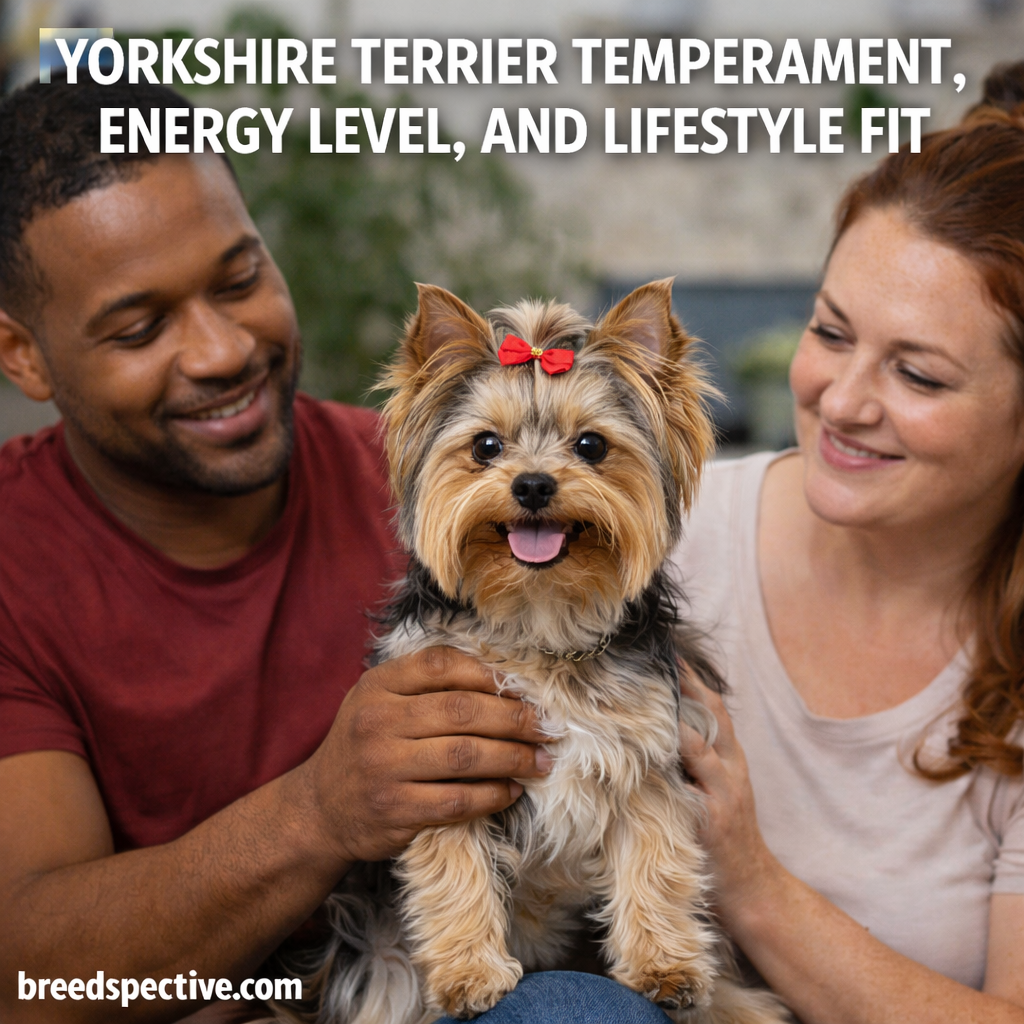
Yorkshire Terriers may be small in size, but their personalities are anything but. Known for their confidence, intelligence, and affectionate nature, Yorkies are a popular companion breed for people who want a lively yet adaptable dog.
But here’s what many people underestimate—Yorkies are not passive lap dogs. Their terrier background gives them energy, curiosity, and a bold attitude that requires structure and engagement.
This guide breaks down Yorkshire Terrier temperament, energy level, and lifestyle fit so you can decide if this spirited breed is right for your home.
Yorkshire Terrier Temperament Overview
Yorkshire Terriers are bold, alert, and highly people-oriented. Despite their small size, they carry classic terrier traits like confidence and determination.
Common temperament traits:
- Strong attachment to their owners
- High confidence and self-assurance
- Alert and watchful behavior
- Curious and inquisitive nature
Yorkies often behave like much larger dogs, approaching the world with fearlessness and enthusiasm.
Affectionate and People-Focused Personality
Yorkshire Terriers thrive on human connection and form strong emotional bonds.
Affection-related traits:
- Enjoy cuddling and lap time
- Prefer staying close to their owners
- Often bond closely with one primary person
- Can become anxious if left alone too long
👉 Learn how dogs impact your lifestyle:
How Your Lifestyle Changes After Getting a Dog
They do best in homes where they receive regular attention and interaction.
Intelligence and Trainability
Yorkies are intelligent and capable learners—but their independence can show during training.
Training characteristics:
- Learn commands quickly when motivated
- Respond well to positive reinforcement
- May test boundaries if inconsistent
- Benefit from short, engaging sessions
👉 Avoid common mistakes:
Biggest Mistakes New Pet Owners Make
Consistency and patience are essential to bringing out their best behavior.
Yorkshire Terrier Energy Level Explained
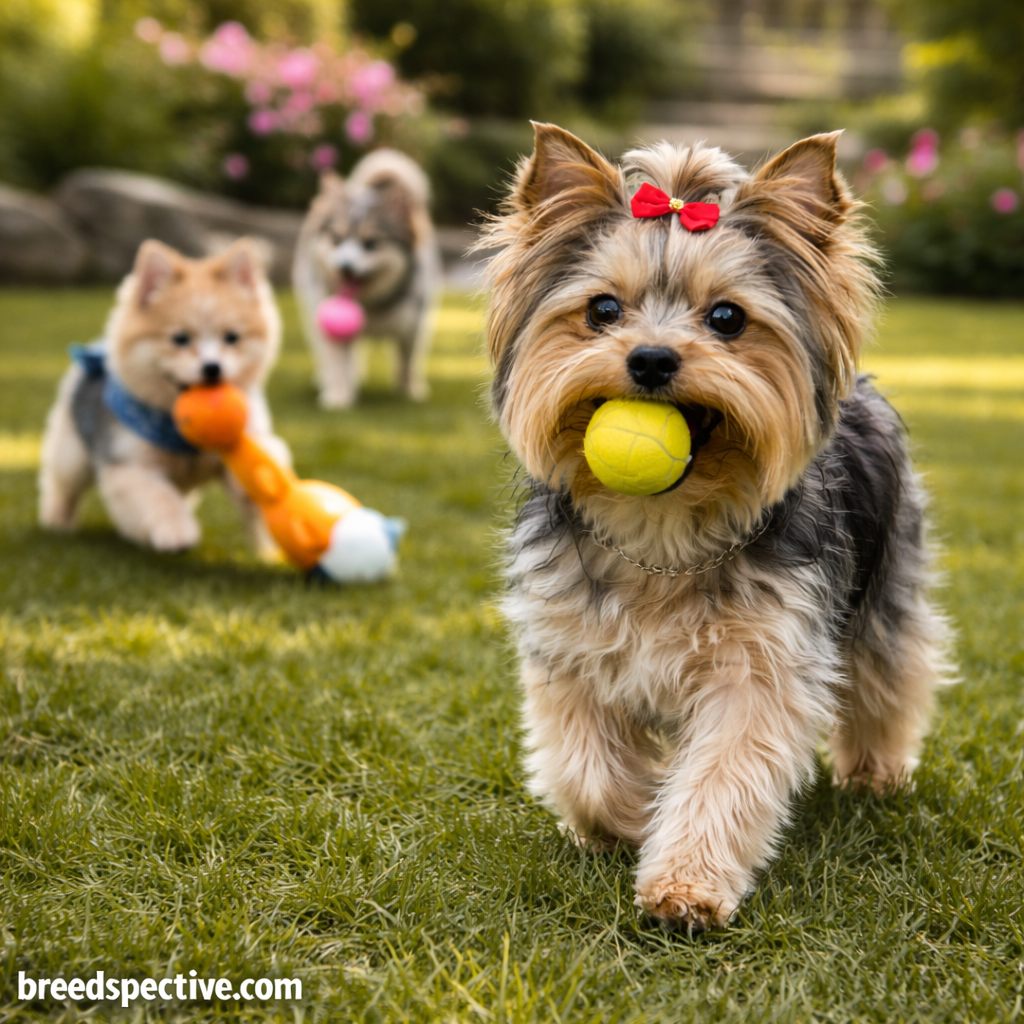
Yorkshire Terriers have a moderate energy level, especially for their size.
Typical energy traits:
- Enjoy short walks and indoor play
- Experience bursts of high energy
- Adapt well to smaller spaces
- Do not require intense exercise
👉 Learn how energy fits your routine:
How to Match a Dog’s Energy Level to Your Daily Routine
They are active enough to stay engaging—but manageable for most lifestyles.
Daily Exercise and Activity Needs
Yorkies don’t need heavy exercise, but they still require daily movement.
Recommended routine:
- 1–2 short walks per day
- Indoor play sessions
- Interactive games
👉 See realistic daily expectations:
Daily Life With a Large Breed Dog (Real Expectations)
Regular activity helps prevent boredom and behavioral issues.
Playfulness and Curiosity
Yorkies are playful well into adulthood.
Common play behaviors:
- Chasing toys and small objects
- Engaging in fetch or interactive games
- Exploring new environments
- Enjoying puzzle toys and enrichment
👉 See what happens without stimulation:
What It’s Really Like Living With a High-Energy Dog
Mental stimulation is just as important as physical activity.
Alertness and Vocal Tendencies
Yorkshire Terriers are naturally alert and make excellent watchdogs.
Vocal tendencies:
- Bark at unfamiliar sounds or visitors
- Vocalize when excited or seeking attention
- May bark excessively without training
👉 Compare with quieter breeds:
French Bulldog Temperament, Energy Level, and Lifestyle Fit
Training and stimulation help reduce excessive barking.
Independence and Terrier Traits
Despite their affectionate nature, Yorkies are independent thinkers.
Terrier-influenced traits:
- Strong opinions and preferences
- Occasional stubbornness
- High prey drive for small animals
- Confidence in unfamiliar situations
These traits add personality—but require consistent guidance.
Compatibility With Children
Yorkshire Terriers can live with children, but care is needed.
Key considerations:
- Best with older, gentle children
- Small size makes them fragile
- May react defensively if startled
Supervision and teaching proper interaction are essential.
Compatibility With Other Pets
Yorkies can coexist with other pets when properly socialized.
Common tendencies:
- Usually friendly with other dogs
- May chase small animals
- Benefit from gradual introductions
Early exposure helps ensure smooth relationships.
Apartment Living and Space Needs
Yorkshire Terriers are ideal for smaller living spaces.
Why they adapt well:
- Compact size
- Moderate exercise needs
- Comfortable indoors
👉 See other apartment-friendly breeds:
French Bulldog Temperament, Energy Level, and Lifestyle Fit
They are especially popular among city dwellers and apartment owners.
Lifestyle Fit: Who Is a Yorkshire Terrier Best For?
Yorkies thrive in homes that provide attention and interaction.
Best fit for:
- Individuals or couples seeking companionship
- Seniors wanting an engaging but manageable dog
- Remote workers or home-based lifestyles
- Owners willing to provide grooming and care
Not ideal for:
- Homes where the dog is left alone most of the day
- Owners wanting a low-interaction pet
👉 Learn more about choosing the right breed:
What Most First-Time Pet Owners Get Wrong About Breed Selection
Common Behavioral Challenges
Like all breeds, Yorkies can develop behavioral issues if their needs aren’t met.
Common problems:
- Separation-related behaviors
- Excessive barking
- House-training difficulties
- Overconfidence leading to risky behavior
Most issues improve with routine, training, and consistency.
Common Mistakes With Yorkshire Terriers
- Treating them like fragile lap dogs only
- Not training early
- Ignoring barking behavior
- Leaving them alone too often
Real-Life Expectation: Daily Life With a Yorkshire Terrier
A typical day includes:
- Short walk or play session
- Interaction and companionship
- Indoor activity or rest
- Evening bonding time
👉 See full routine breakdown:
How Your Lifestyle Changes After Getting a Dog
Final Thoughts
Yorkshire Terriers combine affection, intelligence, and confidence in a small but spirited package. Their moderate energy level and adaptability make them suitable for many lifestyles—but their emotional needs require attention and consistency.
If you’re ready to provide:
- Daily interaction
- Light exercise
- Consistent training
…a Yorkie can be a loyal, entertaining, and deeply connected companion.
If not, their independence and vocal tendencies can become challenging.