

Living with a large breed dog can be one of the most rewarding experiences—but it also comes with real responsibilities, higher costs, and lifestyle adjustments that many owners underestimate.
From daily routines to space requirements, large dogs impact nearly every part of your life. This guide breaks down what to expect so you can decide if a large breed dog truly fits your lifestyle.
What Qualifies as a Large Breed Dog?
Large breed dogs typically weigh 50–100+ pounds and include breeds such as:
- Labrador Retrievers
- German Shepherds
- Golden Retrievers
- Rottweilers
- Great Danes
👉 Learn more:
How to Match a Dog’s Energy Level to Your Daily Routine
They require more space, food, and management than smaller breeds.
Your Daily Routine Will Be Structured
Large dogs thrive on consistency and routine.
A typical day includes:
- Morning walk or exercise session
- Feeding (larger portions)
- Bathroom breaks throughout the day
- Evening walk or playtime
- Basic training or reinforcement
Reality check:
Skipping routine can lead to behavioral issues, especially in active large breeds.
Exercise Needs Vary by Breed
Not all large dogs are high-energy—but most still need regular activity.
General expectations:
- 45–90 minutes of daily exercise
- Walking, play, or structured activities
- Space to move comfortably
Examples:
- High-energy large breeds (German Shepherds, Labs): need more activity
- Lower-energy large breeds (Great Danes): less intense but still consistent
Space Requirements Are Significant
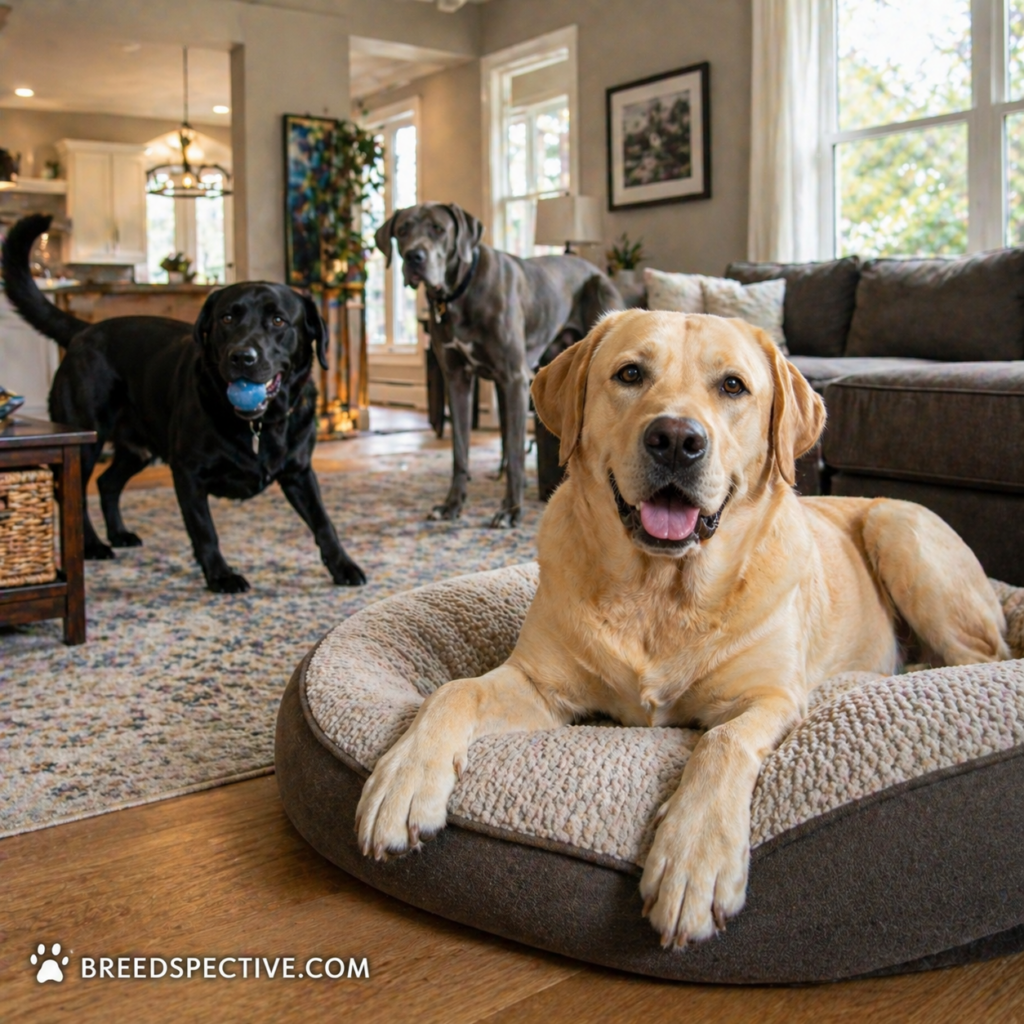
Large dogs take up space—physically and behaviorally.
Ideal living setup:
- Medium to large home
- Access to a yard or outdoor space
- Enough room to move indoors
Challenges in small spaces:
- Limited movement
- Increased restlessness
- Potential behavioral issues
👉 Avoid mismatches:
Worst Dog Breeds for Apartment Living
Feeding and Costs Are Higher
Everything costs more with a large dog.
Expect higher expenses for:
- Food (significantly larger portions)
- Vet care
- Medications
- Grooming (for certain breeds)
- Supplies (beds, crates, equipment)
Reality check:
Budgeting is essential before committing to a large breed.
Training Is Non-Negotiable
Training isn’t optional—it’s necessary for safety and control.
Important areas:
- Leash manners
- Basic obedience (sit, stay, recall)
- Socialization
- Managing strength and size
A poorly trained large dog can be difficult to manage—even unintentionally.
Strength and Handling Matter
Large dogs are physically powerful.
You’ll need to manage:
- Pulling on the leash
- Jumping behavior
- Excitement levels
Key point:
Even friendly large dogs can overwhelm people if not properly trained.
Home Impact and Adjustments
Large dogs change how your home functions.
Common adjustments:
- Larger sleeping areas (dog beds, crates)
- More cleaning (shedding, dirt)
- Space for toys and equipment
You’ll likely reorganize parts of your home to accommodate them.
Time Commitment Is Real
Large dogs require consistent time investment.
Daily commitment includes:
- Exercise
- Feeding
- Training
- Interaction
This is not a “low-maintenance” pet.
The Emotional Rewards
Despite the challenges, large dogs offer incredible benefits.
What owners love:
- Strong companionship
- Protective instincts
- Calm presence (in many breeds)
- Deep loyalty
Large dogs often form very strong bonds with their families.
Who Large Breed Dogs Are Best For
Large dogs thrive with:
- Owners with space and time
- Families who can share responsibilities
- People comfortable handling large animals
They are not ideal for:
- Small living spaces without activity
- Owners wanting minimal effort
- People unable to manage size and strength
Common Mistakes New Owners Make
- Underestimating size and strength
- Not budgeting properly
- Skipping training
- Choosing based on appearance
👉 Avoid these mistakes:
What Most First-Time Pet Owners Get Wrong About Breed Selection
How to Succeed With a Large Breed Dog
Practical tips:
- Establish a routine early
- Invest in training
- Provide consistent exercise
- Prepare your home environment
- Budget realistically
Real-Life Example: A Typical Day
- Morning walk + feeding
- Midday bathroom break
- Evening exercise or play
- Relaxation time indoors
A well-managed routine leads to a calm, well-behaved dog.
Final Thoughts: Is a Large Breed Dog Right for You?
Living with a large breed dog means committing to:
- Time
- Space
- Training
- Financial responsibility
But if you’re prepared, you’ll gain a loyal, loving companion that becomes a central part of your life.
The key is making sure your lifestyle matches their needs before bringing one home.