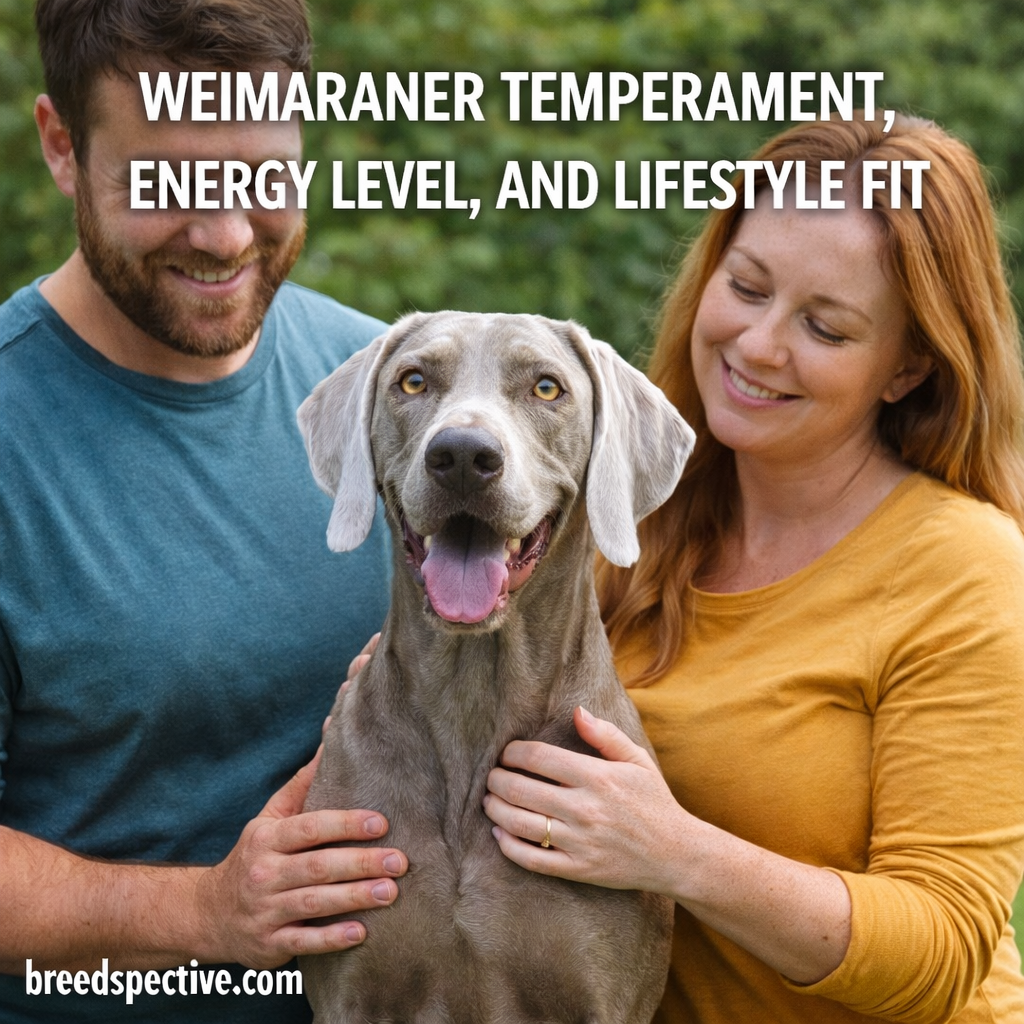
The Weimaraner is a striking, athletic breed known for its sleek gray coat, piercing eyes, and intense personality. Originally bred as a hunting and working dog, the Weimaraner is intelligent, energetic, and deeply devoted to its people. While often described as elegant and confident, this breed requires a lifestyle that matches its physical and emotional needs.
This guide explores the Weimaraner’s temperament, energy level, and lifestyle fit to help determine whether this high-drive breed is right for your home.
Weimaraner Temperament
Weimaraners are affectionate, loyal, and highly people-oriented. They form strong bonds with their families and often prefer constant companionship rather than independence.
Common Weimaraner temperament traits include:
- Extremely loyal and attached to owners
- Affectionate and physically expressive
- Intelligent and alert
- Emotionally sensitive
- Can be demanding or intense
Because of their strong attachment, Weimaraners are sometimes referred to as “velcro dogs.” They thrive when included in daily life and may struggle if ignored or left alone too often.
Energy Level and Daily Activity Needs

Weimaraners have a very high energy level and require substantial daily exercise. This is not a breed suited to a sedentary lifestyle.
Typical energy characteristics include:
- High stamina and endurance
- Strong need for daily structured exercise
- Restlessness when under-stimulated
- Mental sharpness that requires engagement
Most Weimaraners need at least 90 minutes to 2 hours of activity per day, combining physical exercise with mental stimulation.
Exercise Preferences
Weimaraners excel in active environments and enjoy activities that challenge both body and mind.
Ideal exercise options include:
- Running or jogging with owners
- Long walks or hikes
- Fetch and endurance-based games
- Agility, tracking, or field training
- Off-leash play in secure areas
Without adequate exercise, Weimaraners may develop destructive or anxious behaviors.
Training and Intelligence
Weimaraners are highly intelligent and capable learners, but their independence and sensitivity require thoughtful training approaches.
Training traits include:
- Quick learners when motivated
- Easily bored by repetitive drills
- Sensitive to tone and correction
- Thrive with positive reinforcement
Early obedience training and continued mental challenges are essential. Harsh training methods often backfire, leading to anxiety or resistance.
Social Behavior With People and Other Pets
Weimaraners are generally friendly and social, especially with people they know well. However, their enthusiasm and size may be overwhelming for some households.
Social behavior traits include:
- Strong attachment to family members
- Friendly but excitable with visitors
- Usually good with other dogs when socialized
- High prey drive toward small animals
Early socialization helps shape calm, confident adult behavior.
Ideal Living Environment
Weimaraners do best in homes that can accommodate their activity level and emotional needs.
Best living situations include:
- Active households
- Homes with yards or regular outdoor access
- Owners who enjoy exercise and training
- Families with time for daily interaction
Apartment living is possible only if exercise and stimulation needs are consistently met.
Potential Challenges to Consider
While rewarding companions, Weimaraners are not an easy breed for every owner.
Common challenges include:
- Separation anxiety
- Destructive behavior when bored
- Excessive energy in under-stimulating homes
- Strong prey drive
- Need for consistent training and attention
Understanding these challenges ahead of time helps prevent frustration.
Who Is a Weimaraner Best For?
A Weimaraner may be a great fit if you are looking for:
- A loyal, deeply bonded companion
- A dog that enjoys intense daily activity
- A breed that thrives on mental engagement
- A highly interactive family dog
They may not be ideal for:
- First-time dog owners
- Sedentary lifestyles
- Households away from home most of the day
Final Thoughts on Weimaraner Lifestyle Fit
The Weimaraner is an intelligent, energetic, and emotionally connected breed that thrives in active, involved homes. Their temperament and energy level reflect a working heritage that still demands daily outlets and strong human connection.
For owners willing to commit time, structure, and exercise, the Weimaraner can be an exceptionally loyal and rewarding companion.