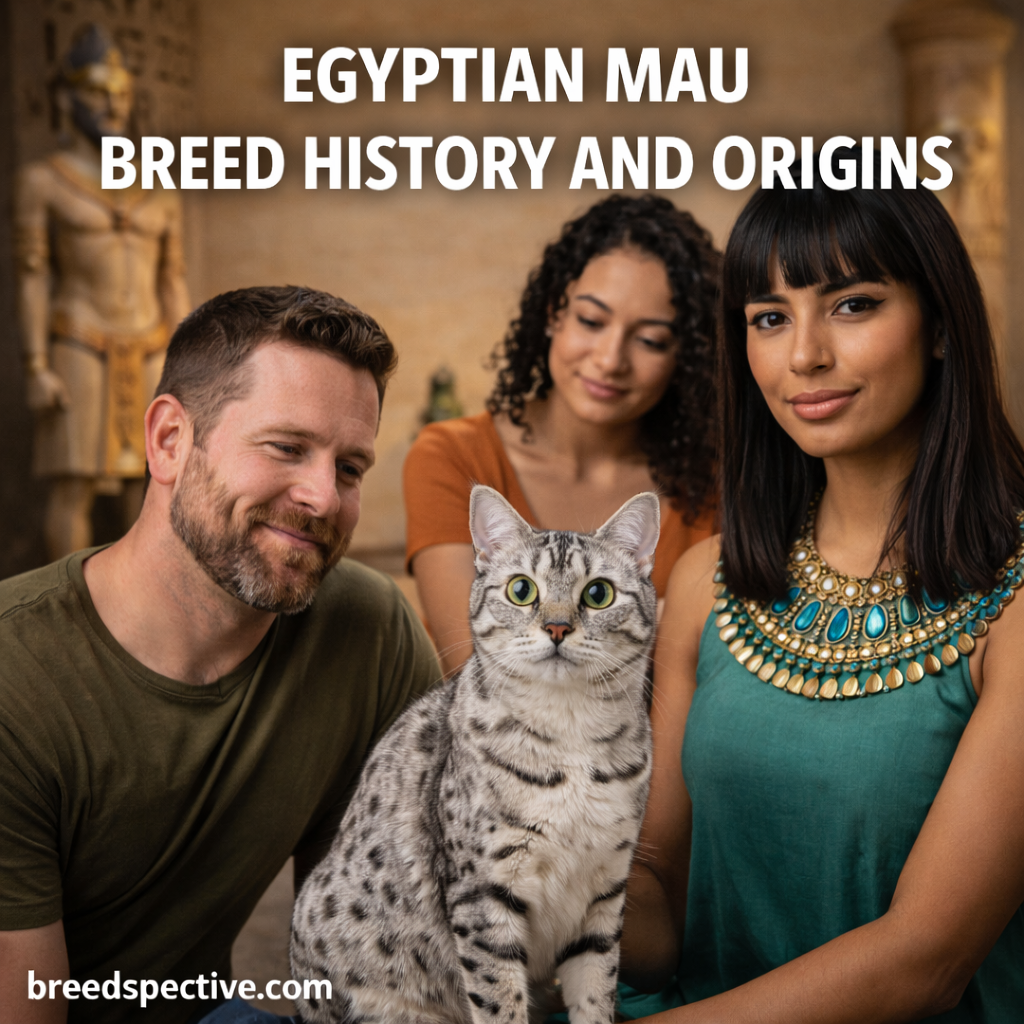
The Egyptian Mau is one of the oldest and most historically significant cat breeds in the world. Unlike many modern breeds developed through selective breeding, the Egyptian Mau stands apart as a naturally occurring spotted cat whose appearance and temperament have changed very little over thousands of years.
Exploring the history and origins of the Egyptian Mau reveals how ancient culture, geography, and human companionship shaped one of today’s most unique feline breeds.
Ancient Roots in Early Civilization
The Egyptian Mau’s story begins in ancient Egypt, where cats were revered as sacred animals rather than simple companions.
Archaeological evidence shows:
- Spotted cats resembling the modern Mau in ancient art
- Cats living alongside humans as early as 4,000 years ago
- Strong cultural and spiritual associations with feline figures
Cats were valued for both practical and symbolic reasons, protecting grain stores from rodents while representing grace, protection, and divine energy.
The Mau in Ancient Egyptian Culture
The word “Mau” itself comes from the ancient Egyptian word meaning “cat.”
In Egyptian society:
- Cats were protected by law
- Harming a cat carried severe punishment
- Cats were often mummified and buried with honors
- Feline imagery appeared in temples, jewelry, and tombs
Cats were closely associated with the goddess Bastet, a symbol of protection, fertility, and domestic harmony. This reverence elevated cats—especially spotted cats like the Mau—to an elite status.
A Naturally Occurring Spotted Breed
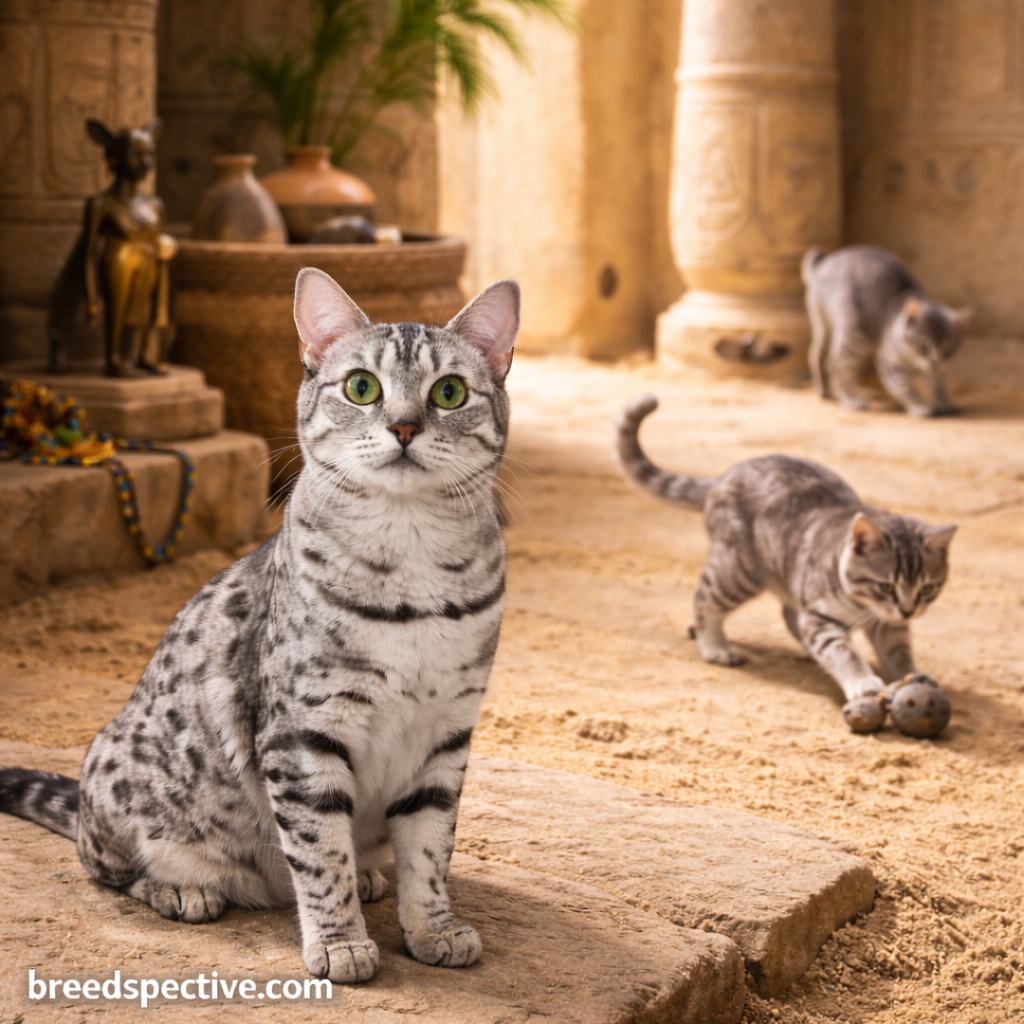
What makes the Egyptian Mau historically unique is that its spotted coat is natural, not the result of human-directed breeding.
Distinct natural traits include:
- Randomly placed spots (no two Mau coats are identical)
- A muscular yet elegant body
- Long hind legs adapted for speed
- A loose skin flap along the belly aiding athletic movement
These traits developed through natural selection rather than artificial design, making the Mau one of the few truly ancient cat breeds still in existence.
Decline and Near Disappearance
Despite its ancient prominence, the Egyptian Mau faced near extinction in the modern era.
Contributing factors included:
- Political instability in North Africa
- World War II disrupting breeding populations
- Decline of native cat lines due to crossbreeding
By the mid-20th century, pure Egyptian Maus were extremely rare, even within their native region.
Preservation and Revival in the 20th Century
The modern survival of the Egyptian Mau is largely credited to dedicated preservation efforts rather than commercial breeding.
Key moments in revival include:
- Careful importation of native spotted cats
- Selective breeding to preserve natural traits
- Emphasis on temperament, athleticism, and coat authenticity
These efforts focused on maintaining the breed’s ancient characteristics rather than altering appearance for show standards.
Introduction to the Western World
The Egyptian Mau was introduced to Europe and North America in the mid-1900s.
As the breed gained recognition:
- Breed standards were formalized
- Genetic diversity was carefully managed
- Interest grew due to the Mau’s historical authenticity
Cat fanciers were drawn to the Mau not only for its appearance but for its living connection to ancient history.
Recognition by Cat Associations
Over time, the Egyptian Mau achieved official recognition by major cat organizations.
Milestones included:
- Acceptance into championship status
- Formal documentation of breed standards
- International breeding programs
Despite recognition, the breed remains relatively rare compared to more modern cat breeds.
How History Influences Modern Egyptian Mau Personality
The Egyptian Mau’s ancient origins still influence its behavior today.
Historically rooted traits include:
- Strong loyalty to familiar people
- Heightened alertness and awareness
- Athleticism and speed
- Emotional sensitivity to environment
These characteristics reflect a cat shaped by survival, observation, and close human companionship rather than constant domestication.
Common Misconceptions About Egyptian Mau Origins
Some myths surround the breed’s history.
Clarifications include:
- Not all spotted cats are Egyptian Maus
- Maus are not a modern hybrid breed
- Their markings are naturally occurring, not engineered
Understanding these distinctions helps preserve respect for the breed’s authentic lineage.
Why the Egyptian Mau Is Considered a Living Relic
Few domestic animals can trace their lineage so clearly to ancient civilizations.
The Egyptian Mau represents:
- Thousands of years of natural evolution
- A direct link to early human–animal relationships
- A preserved example of ancient feline form and behavior
Owning an Egyptian Mau is often described as sharing life with a piece of living history.
Egyptian Mau History Summary
The Egyptian Mau’s origins are rooted in reverence, survival, and natural beauty.
Key historical points include:
- Ancient presence in early Egyptian civilization
- Sacred cultural status
- Natural spotted coat developed without human design
- Near extinction followed by careful preservation
Final Thoughts
The Egyptian Mau is far more than a visually striking cat—it is a direct descendant of one of humanity’s earliest animal companions. Its history shapes everything from its athletic build to its emotionally intelligent personality.
Understanding the Egyptian Mau’s breed history and origins adds depth to the experience of sharing life with this remarkable and timeless cat.