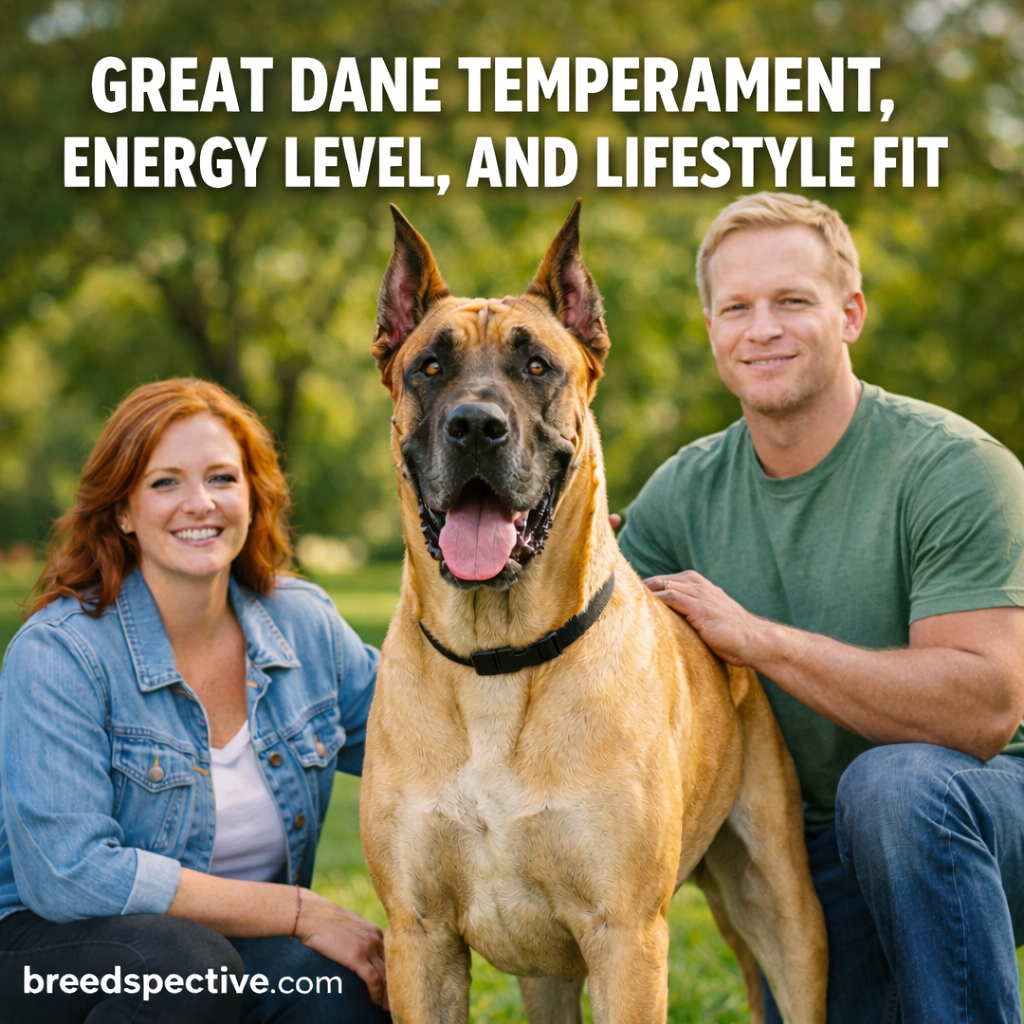
Great Danes are often called “gentle giants,” and that reputation is well earned. Despite their massive size, they are known for their calm temperament, affectionate nature, and strong bond with their families.
But here’s the reality—while they aren’t high-energy dogs, Great Danes are not low-maintenance. Their size alone brings unique responsibilities, from space considerations to higher costs and careful activity management.
This guide breaks down Great Dane temperament, energy level, and lifestyle fit so you can determine if this impressive breed matches your home and routine.
Great Dane Temperament Overview
Great Danes are widely admired for their balanced, friendly personalities. They are deeply people-oriented and thrive on companionship.
Common temperament traits:
- Gentle and affectionate with family
- Patient and tolerant with respectful children
- Loyal and closely bonded to their owners
- Calm and relaxed indoors
- Emotionally sensitive and responsive
👉 Compare with other calm companion breeds:
Bulldog Temperament, Energy Level, and Lifestyle Fit
Despite their size, well-socialized Great Danes are rarely aggressive and tend to be approachable and friendly.
Energy Level and Activity Needs
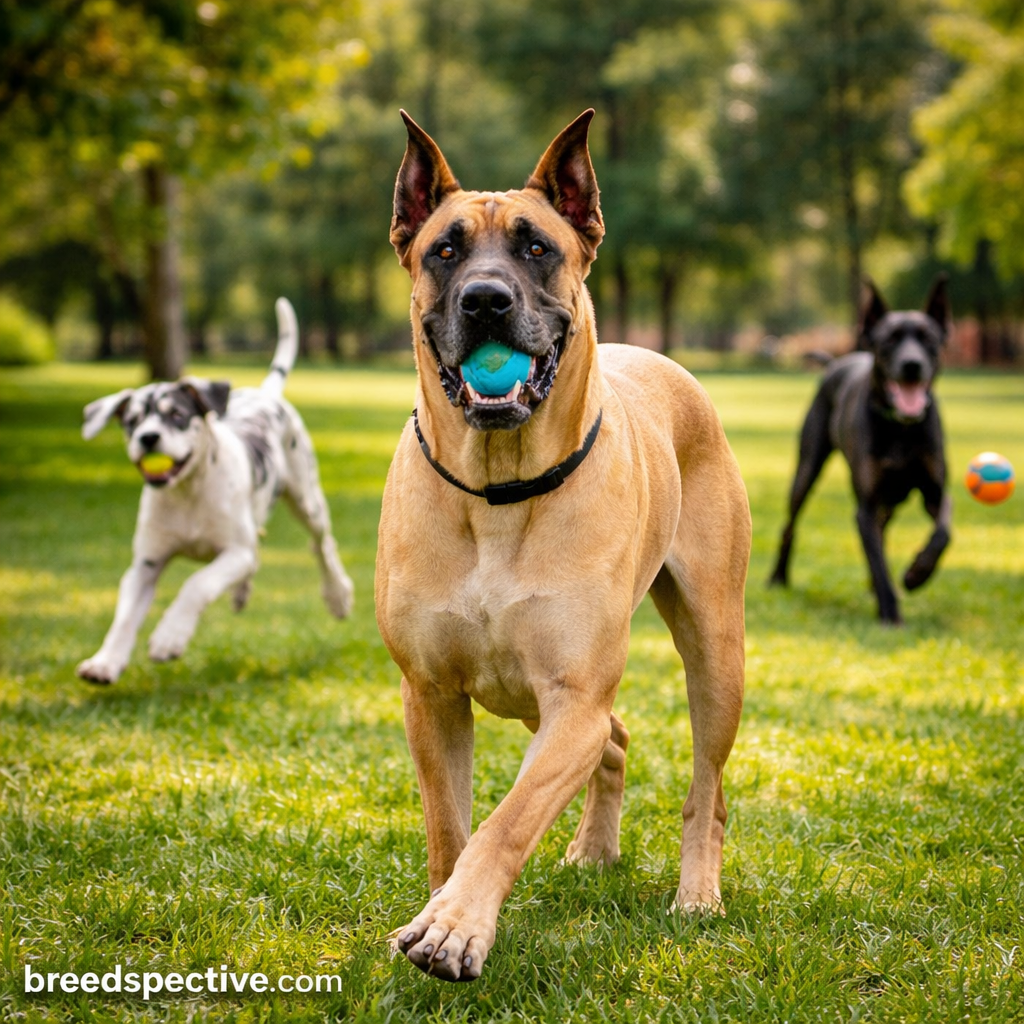
Great Danes have a moderate energy level, with a mix of light activity and long rest periods.
Typical energy traits:
- Short bursts of play followed by rest
- Preference for relaxed walks over intense exercise
- Lower endurance compared to athletic breeds
- Can become lazy if under-stimulated
👉 Learn how energy impacts your routine:
How to Match a Dog’s Energy Level to Your Daily Routine
Daily Exercise Requirements
Most Great Danes need 30–60 minutes of light to moderate activity per day.
Ideal activities include:
- One or two relaxed walks
- Gentle play sessions
- Light outdoor exploration
👉 See realistic expectations:
Daily Life With a Large Breed Dog (Real Expectations)
Important considerations:
- Avoid excessive running or jumping, especially in puppies
- Protect joints during growth stages
- Focus on controlled, low-impact activity
Their size makes joint health and injury prevention a priority.
Indoor Behavior and Home Life
Inside the home, Great Danes are typically calm and affectionate.
What to expect:
- Enjoy lounging on couches or soft surfaces
- Prefer staying close to family members
- Low destructive behavior when properly exercised
- Often unaware of their size
👉 Learn how dogs affect your lifestyle:
How Your Lifestyle Changes After Getting a Dog
They may be large, but they often behave like oversized lap dogs.
Great Danes With Children and Other Pets
Great Danes are generally excellent family companions when properly raised.
With children:
- Gentle and patient
- Tolerant of interaction
- Best suited for homes with older children
With other pets:
- Usually friendly with other dogs
- Can live with cats if introduced early
- Benefit from early socialization
Supervision is important—not because of aggression, but because their size can lead to accidental bumps or knocks.
Living Environment and Space Needs
Great Danes are more adaptable than expected, but their size still matters.
Best living conditions:
- Homes with open indoor space
- Owners who are home frequently
- Calm, structured environments
Apartment living:
- Possible with commitment
- Requires consistent exercise
- Depends on building size and layout
👉 See other large breed expectations:
What It’s Really Like Living With a High-Energy Dog
Even in smaller spaces, they need room to move comfortably.
Lifestyle Fit: Who Is a Great Dane Best For?
Great Danes thrive in homes that match their calm but companion-focused nature.
Best fit for:
- Owners seeking a relaxed, affectionate dog
- Families with space and structure
- People who spend a lot of time at home
- Those prepared for large-breed costs
Not ideal for:
- Highly active lifestyles seeking a running partner
- Owners frequently away from home
- Small, crowded living spaces
👉 Learn more about choosing the right breed:
What Most First-Time Pet Owners Get Wrong About Breed Selection
Common Behavioral Challenges
Great Danes are generally easygoing, but challenges can arise.
Common issues:
- Clumsiness due to size
- Separation-related behaviors
- Lack of awareness of personal space
- Laziness if under-stimulated
Most of these are manageable with routine, training, and engagement.
Common Mistakes With Great Danes
- Underestimating space needs
- Overexercising during growth stages
- Ignoring training due to calm temperament
- Not preparing for higher food and vet costs
👉 Learn more about ownership costs:
The Hidden Costs of Owning a Dog or Cat
Real-Life Expectation: Daily Life With a Great Dane
A typical day includes:
- Morning walk or light activity
- Long rest periods indoors
- Occasional play and interaction
- Evening walk and bonding time
👉 See full routine breakdown:
How Your Lifestyle Changes After Getting a Dog
Final Thoughts
Great Danes offer a unique combination of size, calmness, and affection. Their moderate energy level makes them manageable, but their size and care needs require thoughtful ownership.
If you’re ready to provide:
- Space and comfort
- Consistent companionship
- Proper care and structure
…a Great Dane can be an incredibly loyal and loving companion.
If not, their size and needs can quickly become overwhelming.