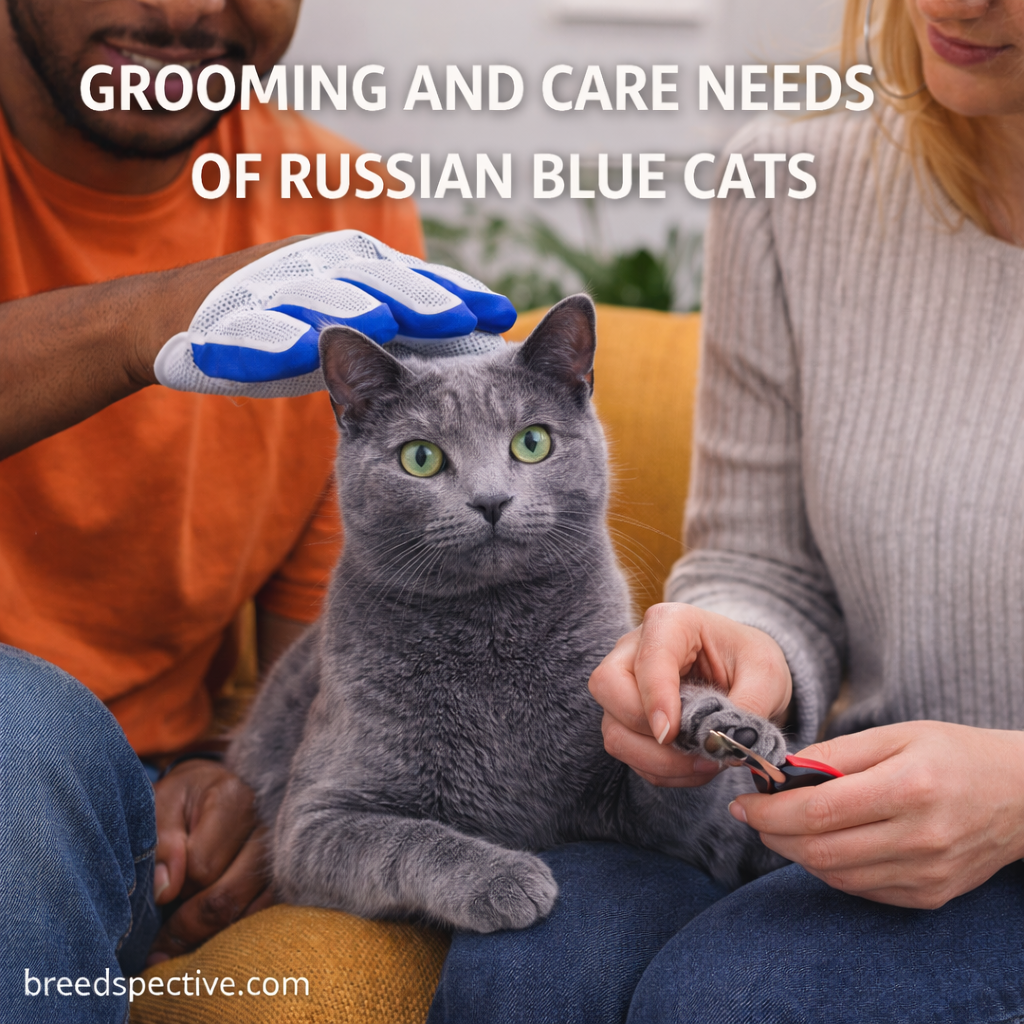
Russian Blue cats are known for their plush silver-blue coats, striking green eyes, and naturally clean habits. While they appear luxurious, Russian Blues are relatively low-maintenance compared to many other short-haired breeds. Understanding the grooming and care needs of Russian Blue cats helps owners maintain their health, comfort, and elegant appearance throughout all life stages.
This guide covers coat care, hygiene, nutrition, health routines, and lifestyle considerations specific to the Russian Blue breed.
Coat Type and Maintenance Overview
Russian Blues have a unique double coat that feels dense, soft, and plush to the touch. Unlike many short-haired cats, their fur stands slightly away from the body, giving them a velvety appearance.
Key coat characteristics include:
- Dense double coat with fine texture
- Minimal shedding compared to many breeds
- Naturally clean and odor-resistant fur
- Low tendency toward matting
Despite their thick coat, Russian Blues do not require intensive grooming.
Brushing Frequency and Best Practices
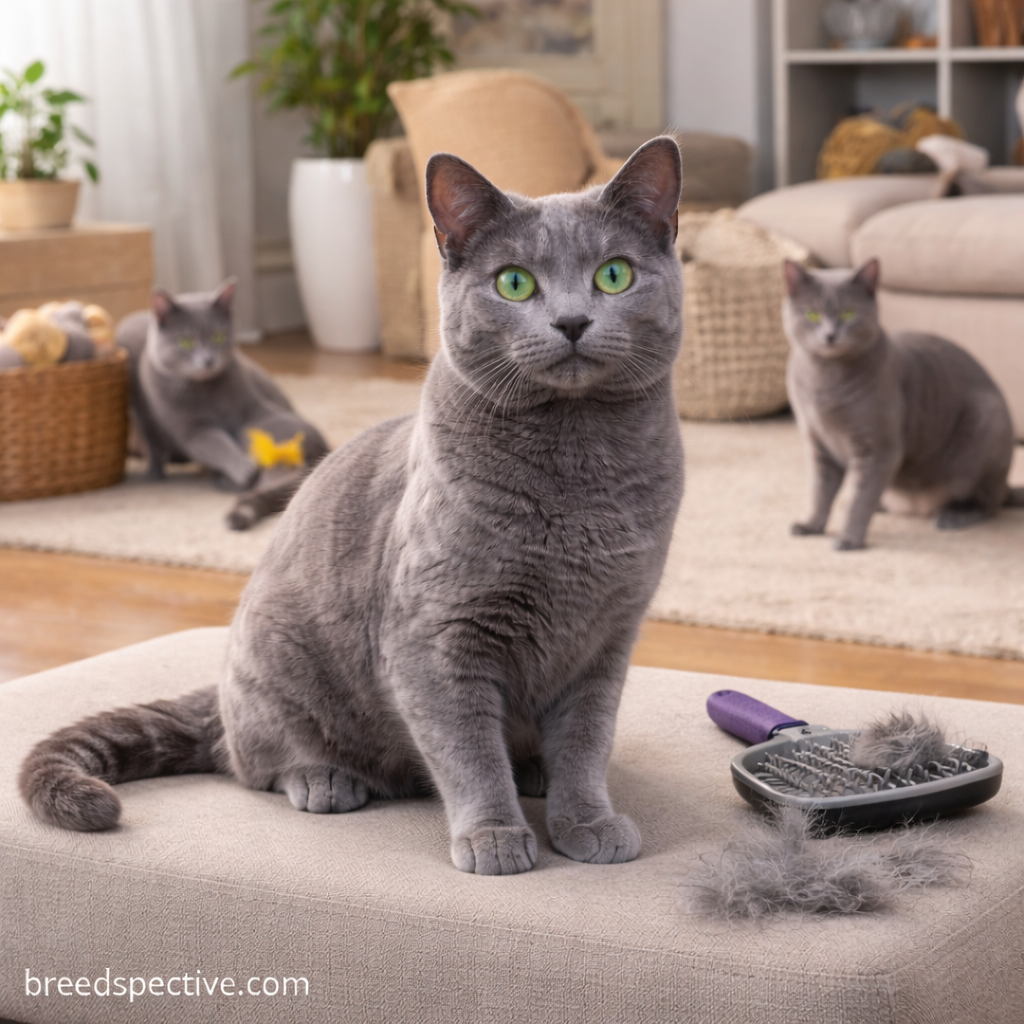
Regular brushing helps maintain coat health and reduces loose hair, especially during seasonal shedding periods.
Recommended brushing routine:
- Brush once or twice per week
- Use a soft bristle brush or rubber grooming mitt
- Brush gently in the direction of hair growth
- Increase frequency slightly during seasonal changes
Over-brushing is unnecessary and may irritate the skin.
Bathing Requirements
Russian Blue cats rarely need baths due to their self-grooming habits and clean coats.
Bathing guidelines include:
- Bathe only if visibly dirty or contaminated
- Use a mild, cat-safe shampoo
- Keep baths calm and brief
- Dry thoroughly in a warm environment
Many Russian Blues prefer to avoid water, so bathing should be limited to special situations.
Nail Trimming and Paw Care
Routine nail maintenance helps prevent discomfort and household damage.
Best practices include:
- Trim nails every 2 to 4 weeks
- Use cat-specific nail clippers
- Provide scratching posts to maintain nail health
- Check paw pads for dryness or irritation
Regular trimming reduces the risk of overgrown or snagged claws.
Ear and Eye Care
Russian Blues generally have clean ears and clear eyes, but regular checks are still important.
Care recommendations:
- Inspect ears weekly for wax buildup or odor
- Clean gently with a vet-approved solution if needed
- Monitor eyes for discharge or redness
- Seek veterinary advice for persistent issues
Routine checks help catch problems early.
Dental Care and Oral Health
Dental health is an essential but often overlooked part of cat care.
Recommended dental care includes:
- Brushing teeth weekly with cat-safe toothpaste
- Offering dental treats or toys approved by a veterinarian
- Scheduling regular veterinary dental exams
Good oral hygiene supports overall health and longevity.
Nutrition and Weight Management
Proper nutrition plays a major role in maintaining coat quality, energy levels, and joint health.
Feeding considerations include:
- High-quality protein-rich diet
- Balanced fats for skin and coat health
- Controlled portion sizes
- Consistent feeding schedule
Russian Blues can be prone to weight gain, so portion control and regular monitoring are important.
Exercise and Mental Wellbeing
While grooming focuses on physical care, mental and emotional wellbeing are equally important.
Daily care routines should include:
- Interactive play sessions
- Puzzle toys or treat dispensers
- Window perches for observation
- Predictable routines
Mental stimulation supports healthy grooming behaviors and reduces stress.
Litter Box and Hygiene Needs
Cleanliness plays a role in coat and paw health.
Best litter box practices include:
- Daily scooping
- Weekly full litter changes
- Low-dust litter to protect respiratory health
- Easy access for kittens and senior cats
Russian Blues are particularly sensitive to litter box cleanliness.
Health Monitoring and Preventive Care
Routine health checks are a core part of responsible care.
Preventive care includes:
- Annual veterinary exams
- Monitoring weight and appetite
- Watching for coat or skin changes
- Keeping vaccinations and parasite prevention current
Early detection helps maintain long-term health and comfort.
Seasonal Care Considerations
Russian Blues may shed slightly more during seasonal transitions.
Seasonal care tips:
- Increase brushing during shedding periods
- Monitor skin for dryness in winter
- Adjust diet if coat quality changes
Small adjustments help keep the coat healthy year-round.
Final Thoughts
Russian Blue cats are relatively easy to care for, thanks to their clean habits, manageable coats, and calm demeanor. With regular brushing, basic hygiene, proper nutrition, and routine veterinary care, Russian Blues remain healthy, elegant, and comfortable companions.
By understanding and meeting the grooming and care needs of Russian Blue cats, owners can enjoy a long-lasting bond with one of the most refined and emotionally intuitive feline breeds.