The Rottweiler is one of the oldest working dog breeds in the world, known today for strength, loyalty, and guarding ability. Long before modern breed standards existed, Rottweilers were valued for practical work—moving livestock, protecting property, and assisting humans in demanding environments.
This article explores the history of the Rottweiler, tracing its origins from ancient times to its original working purpose and eventual development into the modern breed we recognize today.
Ancient Roots of the Rottweiler
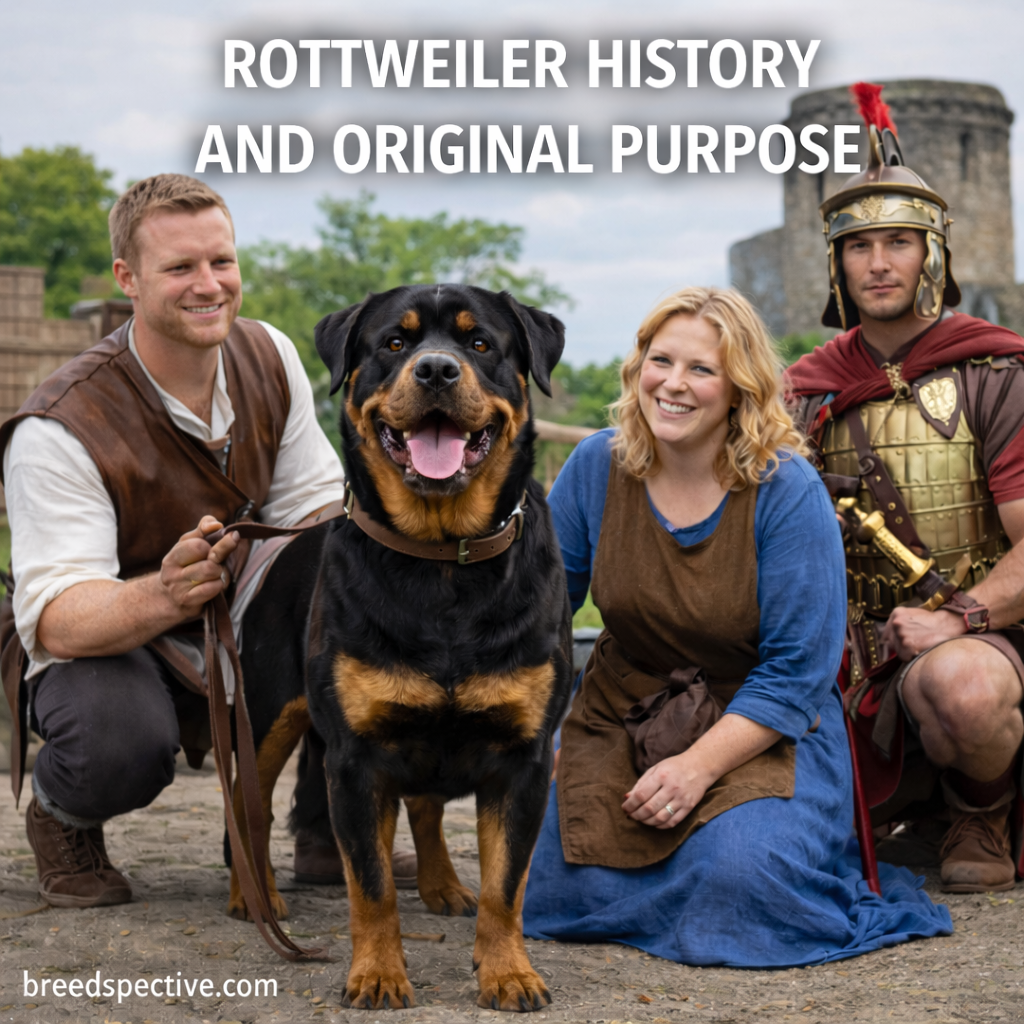
The Rottweiler’s ancestry dates back nearly 2,000 years, with roots tied to the expansion of the Roman Empire.
Roman legions traveled across Europe with large, powerful mastiff-type dogs that were used to:
- Guard camps and supply routes
- Herd and control cattle used as food sources
- Protect soldiers during long marches
These dogs were valued for endurance, strength, and obedience—traits that would later become hallmarks of the Rottweiler breed.
The Role of Roman Drover Dogs
As Roman armies advanced into what is now southern Germany, their drover dogs interbred with local herding and guardian dogs.
These early working dogs were responsible for:
- Driving cattle over long distances
- Protecting livestock from predators and thieves
- Remaining calm and reliable under pressure
This combination of Roman and regional dogs laid the foundation for the Rottweiler’s physical build and temperament.
The Town of Rottweil and Breed Naming
The breed takes its name from the town of Rottweil, one of the oldest towns in Germany and a major livestock trading hub during the Middle Ages.
In Rottweil, these dogs became known as Rottweiler Metzgerhund, or “Butcher’s Dog of Rottweil.”
Their duties included:
- Herding cattle to market
- Guarding money pouches worn by butchers
- Protecting goods during travel
- Pulling small carts loaded with meat or supplies
Their reliability made them indispensable to local tradespeople.
Rottweilers as Cattle Dogs and Guardians
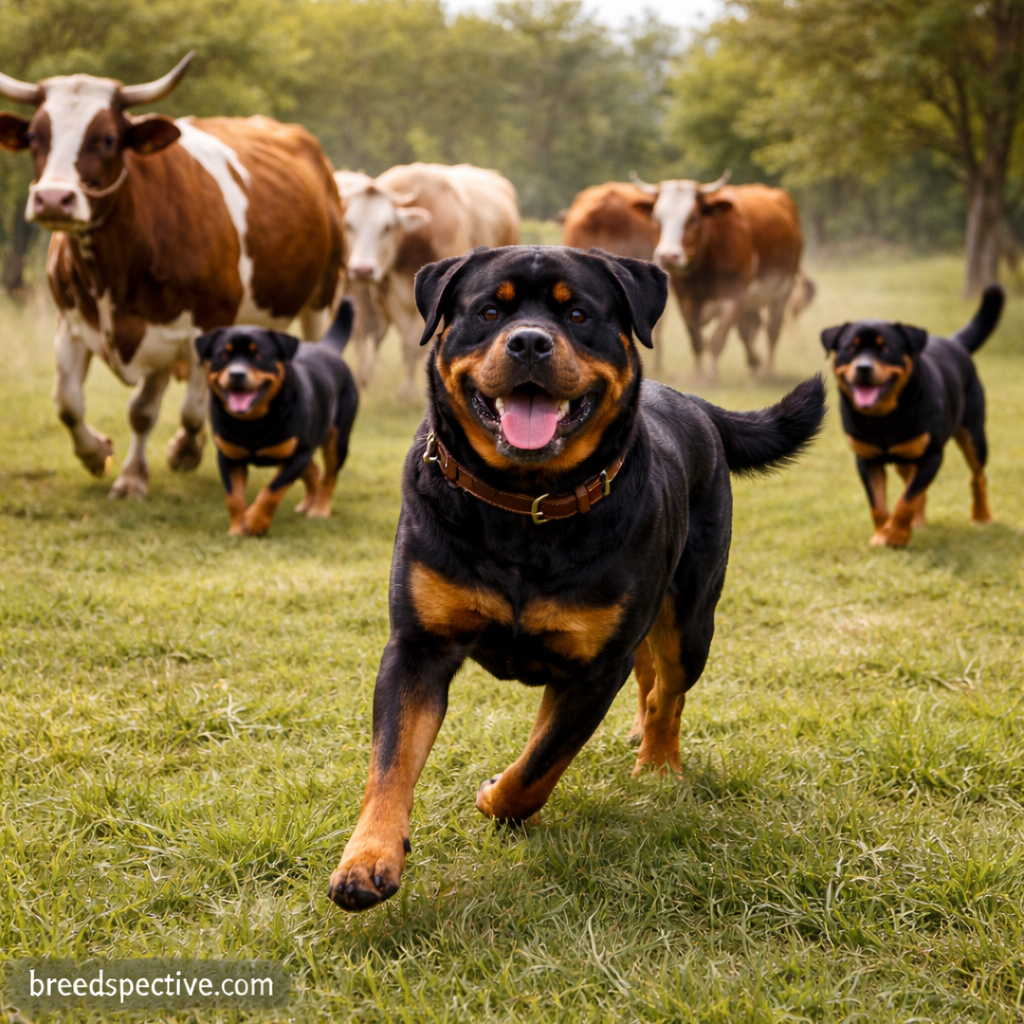
Before refrigeration, cattle had to be transported alive to market. Rottweilers excelled in this role due to their:
- Physical power
- Calm confidence
- Natural guarding instincts
- Ability to work independently
They were trusted not only with livestock but also with protecting the earnings of butchers, often sleeping beside money belts or wagons.
Decline During Industrialization
The Rottweiler’s traditional role began to decline in the 19th century with the rise of rail transport and industrialization.
Key changes included:
- Cattle transport shifting from roads to trains
- Reduced need for drover dogs
- Mechanization of labor
By the late 1800s, Rottweilers were nearly extinct, with only a small number remaining in rural areas.
Rediscovery and Breed Preservation
Interest in the Rottweiler was revived in the early 20th century as people recognized the breed’s working potential beyond herding.
Rottweilers were found to be well-suited for:
- Police and military work
- Guarding and protection roles
- Search and rescue
- Service and working companionship
Breed enthusiasts began formal efforts to preserve and standardize the Rottweiler.
Early Breed Standardization
The first Rottweiler breed clubs were established in Germany in the early 1900s.
Their goals included:
- Preserving working ability
- Standardizing appearance
- Promoting stable temperament
- Preventing uncontrolled breeding
This period marked the transition from regional working dog to recognized breed.
Rottweilers in Modern Working Roles
Throughout the 20th century, Rottweilers gained recognition worldwide for their versatility.
They became widely used as:
- Police dogs
- Military working dogs
- Guard and protection dogs
- Search-and-rescue dogs
Their intelligence, loyalty, and strength made them ideal for structured, demanding roles.
From Working Dog to Family Companion
As the breed spread internationally, Rottweilers increasingly entered family homes.
Despite this shift, their original traits remain evident:
- Strong protective instincts
- Deep loyalty to their people
- Calm confidence when properly trained
- Need for structure and purpose
Modern Rottweilers still reflect their working origins in both temperament and physical presence.
How History Shaped the Rottweiler Temperament
Understanding the Rottweiler’s history helps explain key aspects of the breed today:
- Guarding instincts stem from livestock and money protection
- Confidence developed through independent decision-making
- Loyalty evolved from close human partnership
- Strength and endurance were shaped by demanding work
These traits are strengths when matched with responsible ownership and training.
Final Thoughts on Rottweiler History and Purpose
The Rottweiler is not a modern invention but a breed forged through centuries of real-world work. From Roman cattle drover to butcher’s guardian to modern working dog, the Rottweiler’s history is defined by utility, reliability, and loyalty.
Understanding the breed’s origins provides valuable insight into its temperament and needs, helping owners appreciate the Rottweiler not just as a companion—but as a dog shaped by purpose and responsibility.