The Poodle is often associated with elegance, show rings, and companion lifestyles, but its origins tell a very different story. Beneath the refined appearance lies a hardworking, intelligent dog originally bred for demanding field work.
Understanding the history and original purpose of the Poodle reveals why this breed remains one of the most versatile, intelligent, and capable dogs in the world today.
The True Origins of the Poodle
Despite its strong association with France, the Poodle’s earliest roots trace back to Germany.
The name “Poodle” comes from the German word pudel or pudelin, meaning “to splash in water.” This directly reflects the breed’s original role as a water retriever.
Early Origins at a Glance
- Developed in Germany as a water dog
- Bred for strength, endurance, and swimming ability
- Used primarily for retrieving waterfowl
- Valued for intelligence and trainability
France later adopted and refined the breed, which is why the Poodle is now recognized as France’s national dog.
Original Purpose: Waterfowl Retrieving
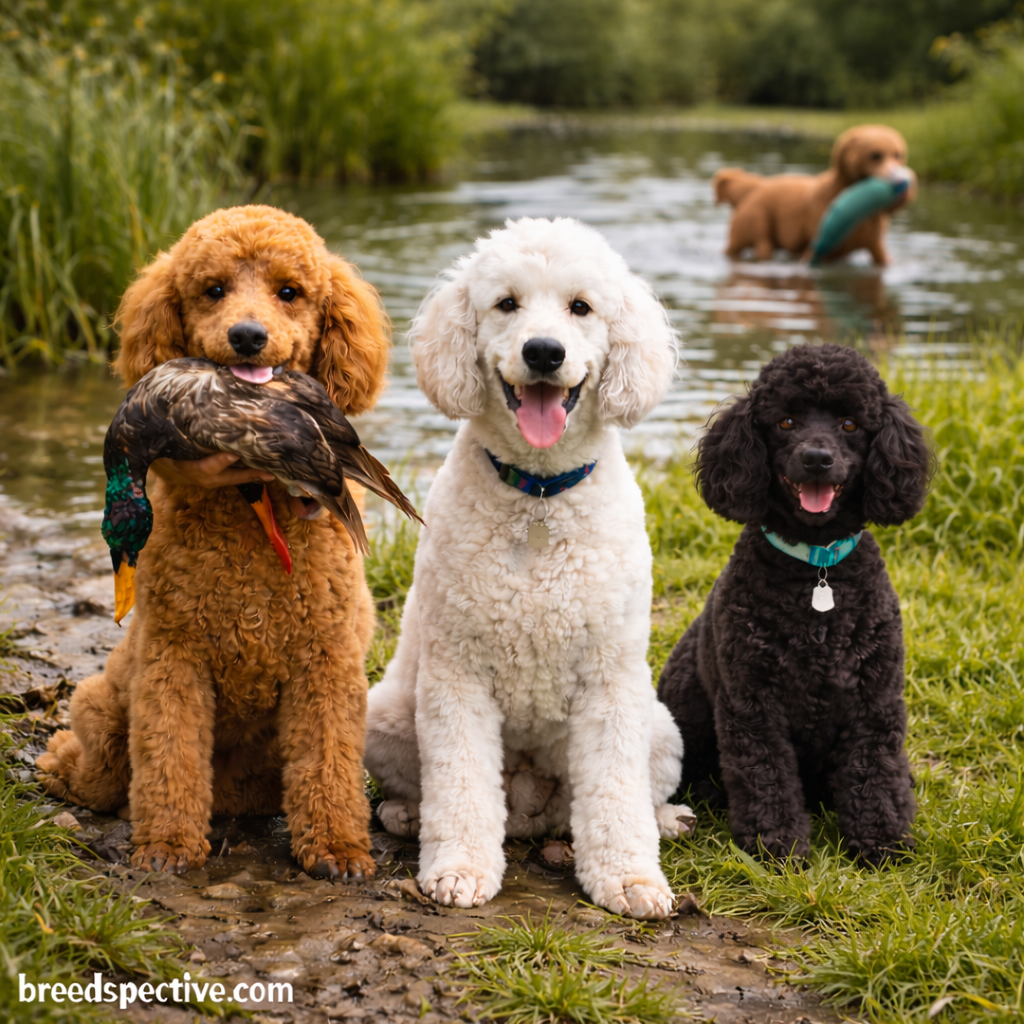
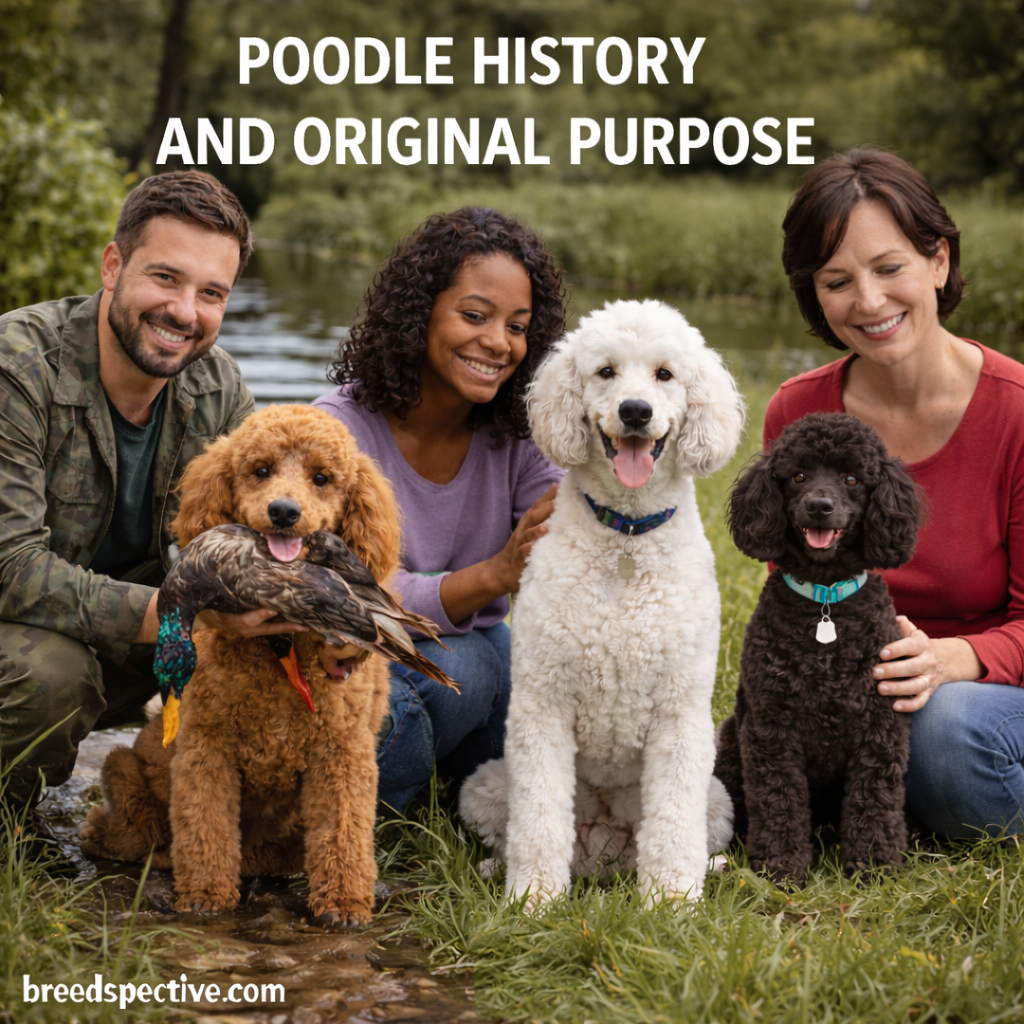
Poodles were originally working dogs bred to retrieve ducks and other waterfowl for hunters.
Traits That Made Poodles Ideal Retrievers
- Strong swimming ability
- Dense, water-resistant curly coat
- High intelligence and trainability
- Excellent stamina
- Natural retrieving instincts
Their coat protected them from cold water, while their athletic build allowed them to move efficiently through lakes and marshes.
The Practical Origins of the Poodle Clip
One of the most misunderstood aspects of Poodle history is the traditional haircut.
The classic Poodle clip was never meant to be decorative—it was functional.
Purpose of the Traditional Poodle Clip
- Shaved areas reduced drag while swimming
- Pom-poms protected vital joints and organs
- Chest hair kept the heart and lungs warm
- Leg hair insulated joints from cold water
Over time, these practical trims evolved into more stylized grooming patterns used in dog shows.
Expansion Into France and Cultural Refinement
When Poodles became popular in France, their role expanded beyond hunting.
How France Influenced the Breed
- Selective breeding for temperament and appearance
- Increased use as companion dogs
- Popularity among nobility and performers
- Refinement of size variations
French breeders emphasized intelligence, elegance, and companionship while preserving working ability.
Development of Poodle Sizes
The Standard Poodle came first. Smaller sizes were developed later to suit different lifestyles and purposes.
Evolution of Poodle Sizes
- Standard Poodle: Original working retriever
- Miniature Poodle: Companion and truffle hunter
- Toy Poodle: Urban companion dog
Despite size differences, all Poodles share the same core intelligence and personality traits.
Poodles as Performers and Working Dogs
Thanks to their intelligence and trainability, Poodles quickly found roles beyond hunting.
Historical Working Roles
- Circus and performance dogs
- Military and messenger dogs
- Search and retrieval roles
- Assistance and service dogs
Their ability to learn complex behaviors made them standouts in public demonstrations and practical work.
Poodles in Art, Literature, and Society
By the 18th and 19th centuries, Poodles were firmly established in European culture.
Cultural Significance
- Frequently depicted in paintings and literature
- Associated with sophistication and status
- Favored by artists, royalty, and intellectuals
- Symbol of intelligence and refinement
This cultural presence helped shape the modern perception of the breed.
Transition to Modern Roles
While fewer Poodles are used for hunting today, their working heritage remains evident.
Modern-Day Roles
- Family companions
- Therapy and service dogs
- Competitive obedience and agility
- Sporting and water-based activities
Their versatility allows them to excel in both active and relaxed lifestyles.
How History Shapes the Modern Poodle
Understanding the Poodle’s history explains many modern traits.
Historical Traits Still Seen Today
- Love of water and swimming
- High energy and endurance
- Exceptional intelligence
- Strong bond with humans
- Need for mental stimulation
These traits are direct reflections of the breed’s original working purpose.
Final Thoughts
The Poodle’s history is rooted in hard work, athleticism, and intelligence—not just elegance. Originally bred as a skilled water retriever, the Poodle evolved into one of the most adaptable dog breeds in the world while retaining its working-dog foundation.
Knowing the Poodle’s true origins helps owners better understand the breed’s needs, strengths, and remarkable versatility in modern life.