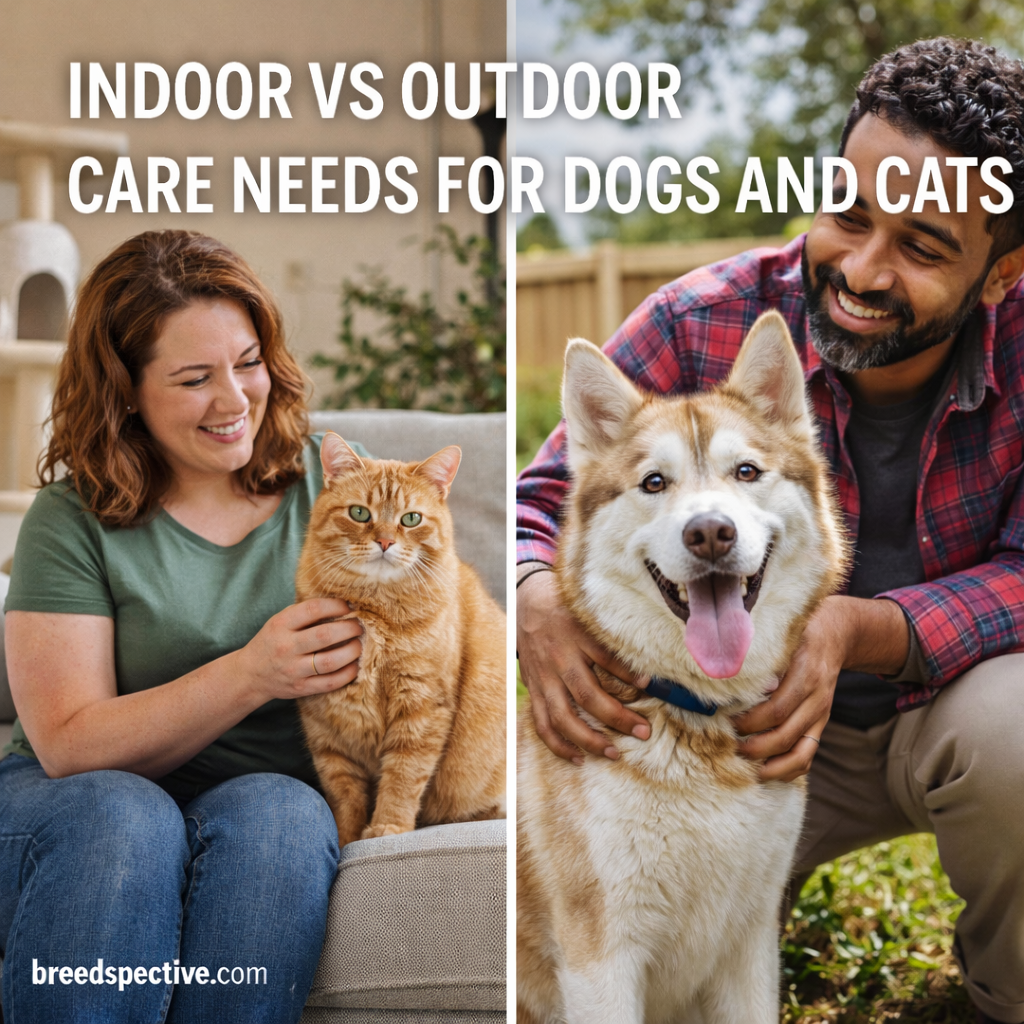
Choosing whether pets live primarily indoors, outdoors, or a combination of both has a major impact on their daily care needs. Dogs and cats thrive under very different conditions depending on their environment, and understanding these differences helps owners provide safer, healthier, and more enriching lives.
This guide breaks down the key care requirements for indoor and outdoor dogs and cats, highlighting how routines, health needs, and safety considerations change based on where pets spend most of their time.
Understanding Indoor Pet Care
Indoor pets live primarily inside the home, relying on their owners for stimulation, exercise, and environmental enrichment.
Key benefits of indoor living:
- Greater protection from traffic, predators, and weather
- Reduced risk of infectious diseases and parasites
- Longer average lifespan, especially for cats
- Easier health monitoring
However, indoor living also places more responsibility on owners to meet physical and mental needs.
Indoor Care Needs for Dogs
Dogs kept primarily indoors still require daily outdoor activity and structured routines.
Essential indoor dog care includes:
- Daily walks and exercise sessions
- Consistent potty routines
- Mental stimulation through training and toys
- Social interaction with people and other dogs
Indoor dogs benefit from:
- Puzzle feeders
- Obedience training
- Interactive play
- Designated rest areas
Without sufficient stimulation, indoor dogs may develop boredom-related behaviors such as barking, chewing, or anxiety.
Indoor Care Needs for Cats
Indoor cats depend heavily on environmental enrichment since they don’t roam freely.
Important indoor cat care needs:
- Scratching posts and climbing structures
- Interactive toys and play sessions
- Window perches for visual stimulation
- Clean, accessible litter boxes
Indoor cats are generally safer, but owners must prevent:
- Obesity due to inactivity
- Stress from lack of stimulation
- Litter box avoidance caused by poor maintenance
Understanding Outdoor Pet Care
Outdoor pets are exposed to natural environments, which introduces different risks and responsibilities.
Outdoor living may include:
- Fully outdoor pets
- Indoor-outdoor access
- Enclosed outdoor spaces
While outdoor access provides stimulation and freedom, it also increases exposure to hazards.
Outdoor Care Needs for Dogs
Dogs living outdoors require careful planning to ensure safety and comfort.
Essential outdoor dog care includes:
- Secure fencing or containment
- Weather-appropriate shelter
- Constant access to fresh water
- Regular health checks for injuries or parasites
Outdoor dogs still need:
- Daily human interaction
- Training and structure
- Supervision during extreme weather
Dogs left outdoors without engagement may experience behavioral issues or emotional stress.
Outdoor Care Needs for Cats
Outdoor and indoor-outdoor cats experience higher levels of stimulation but also greater risk.
Outdoor cat care considerations:
- Increased parasite prevention
- Vaccinations kept up to date
- Identification (microchip or collar)
- Monitoring for injuries or illness
Risks for outdoor cats include:
- Traffic accidents
- Predators
- Disease transmission
- Conflicts with other animals
Because of these risks, many owners opt for enclosed outdoor spaces like catios.
Health Differences Between Indoor and Outdoor Pets
Living environment directly affects health priorities.
Indoor pets typically need:
- Weight management
- Mental enrichment
- Dental care monitoring
Outdoor pets often require:
- More frequent parasite prevention
- Injury monitoring
- Seasonal health checks
- Protection from environmental toxins
Routine veterinary care is essential regardless of lifestyle, but outdoor pets usually need more frequent preventative treatments.
Mental Stimulation and Enrichment

Indoor pets rely on structured enrichment, while outdoor pets receive natural stimulation.
Indoor enrichment options:
- Training games
- Food puzzles
- Interactive toys
- Rotating play routines
Outdoor enrichment considerations:
- Safe exploration
- Supervised play
- Enrichment without unsupervised roaming
Balanced enrichment prevents stress, anxiety, and destructive behaviors.
Safety Considerations for Both Environments
Safety should always be the top priority.
Indoor safety tips:
- Secure toxic plants and chemicals
- Prevent access to dangerous areas
- Provide safe climbing and resting spots
Outdoor safety tips:
- Secure fencing and enclosures
- Shade and shelter from weather
- Protection from predators
- Supervised outdoor time when possible
Choosing the Right Lifestyle for Your Pet
The best environment depends on:
- Species and breed
- Age and health
- Personality and energy level
- Owner availability and lifestyle
Many pets thrive with a combination of indoor living and controlled outdoor access.
Final Thoughts
Indoor and outdoor care needs for dogs and cats differ significantly, but both lifestyles can be safe and enriching when managed properly. Indoor pets require intentional stimulation and exercise, while outdoor pets demand heightened safety measures and health monitoring.
By understanding these differences and adapting care routines accordingly, pet owners can create environments that support long, healthy, and happy lives—no matter where pets spend most of their time.