
The Bloodhound is a scent-driven working breed best known for its unmatched tracking ability and calm, steady demeanor. While often portrayed as droopy and laid-back, the Bloodhound is a complex dog with strong instincts, notable independence, and very specific lifestyle needs.
Understanding the Bloodhound’s temperament, energy level, and daily requirements is essential for anyone considering this breed, as it differs greatly from more obedience-focused or people-pleasing dogs.
Bloodhound Temperament
Bloodhounds are gentle, patient, and deeply scent-oriented dogs.
Core temperament traits
- Calm and even-tempered
- Friendly and tolerant with people
- Highly independent thinkers
- Persistent and single-minded
- Sensitive but not overly reactive
- Stubborn when following a scent
Bloodhounds are typically affectionate with their families and generally good-natured with strangers. Aggression is uncommon in the breed. However, their friendliness should not be confused with eagerness to obey—Bloodhounds are famously selective listeners.
Once their nose is engaged, their focus can override almost everything else.
Intelligence and Independence
Bloodhounds are intelligent dogs, but their intelligence expresses itself differently than in obedience-driven breeds.
How their intelligence shows up
- Exceptional scent discrimination
- Strong problem-solving skills
- Ability to work independently for long periods
- Decision-making guided by scent rather than commands
This independence stems from centuries of breeding for trailing work, where the dog was expected to follow a scent trail without guidance. As a result, Bloodhounds often evaluate commands instead of automatically complying.
Energy Level and Activity Needs
Bloodhounds have a moderate energy level with very high endurance.
What their energy looks like
- Calm indoors when needs are met
- Capable of hours-long tracking sessions
- Less interested in fast-paced play
- Strong motivation when following scent
They do not require constant high-speed activity, but they do need regular, purposeful exercise. Long walks, hikes, and scent-based activities are far more satisfying than short bursts of intense play.
Without adequate outlets, boredom can lead to vocalization, wandering, or destructive behavior.
Scent Drive and Tracking Instincts
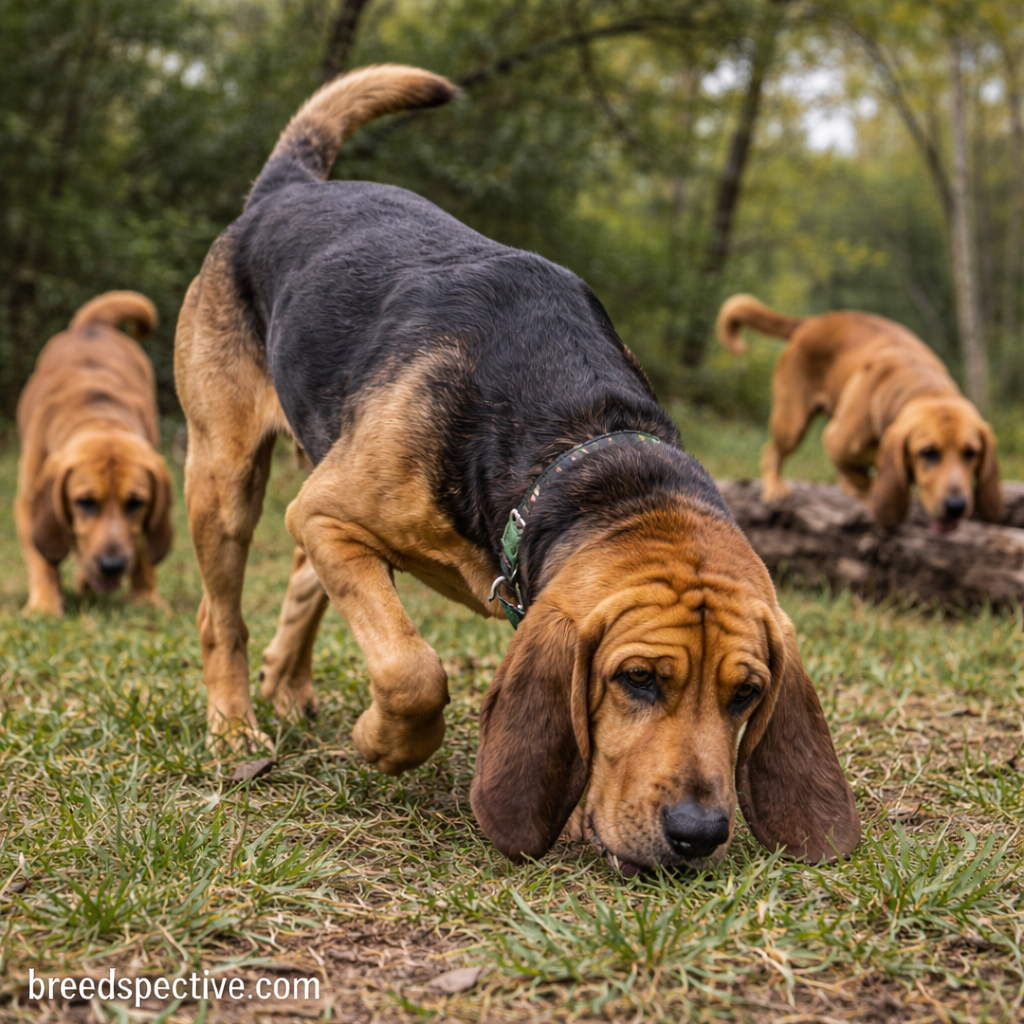
The Bloodhound’s defining trait is its nose.
How scent drive affects behavior
- Easily distracted outdoors
- Pulling strongly on leash
- Ignoring recalls when tracking
- Persistent following of scent trails
This instinct makes off-leash reliability extremely difficult unless in fully enclosed areas. Secure fencing and leash control are non-negotiable for this breed.
Owners must accept that scent will always outrank obedience.
Training Considerations
Training a Bloodhound requires patience and realistic expectations.
Training challenges
- Slow response to repetitive commands
- Easily distracted by smells
- Low motivation for praise alone
- Resistance to force-based methods
Positive reinforcement, food motivation, and short, engaging sessions work best. Training success is measured in cooperation and safety, not precision obedience.
Bloodhounds respond poorly to harsh corrections and may shut down or become stubborn if pressured.
Vocalization and Communication
Bloodhounds are known for their deep, baying voice.
Common vocal behaviors
- Howling or baying when bored
- Vocalizing during excitement
- Alert barking at unusual sounds
- Communicating through long, drawn-out calls
This trait is part of their working heritage but can be challenging in suburban or close-quarter living environments.
Space and Living Environment
Bloodhounds are not well-suited to confined spaces.
Ideal living conditions
- Homes with secure, tall fencing
- Access to outdoor exploration
- Rural or quiet suburban settings
- Owners comfortable with leash walking
Apartment living is difficult for this breed due to space needs, vocal tendencies, and scent-driven wandering.
Social Behavior With People and Dogs
Bloodhounds are typically social and tolerant.
Social tendencies
- Gentle with children
- Friendly with visitors
- Generally good with other dogs
- Low territorial aggression
Their laid-back nature makes them poor guard dogs but excellent companions in social households.
Early socialization helps ensure confidence and adaptability, especially in busy environments.
Family Compatibility
Bloodhounds can make excellent family dogs in the right setting.
Best fit households
- Patient, experienced dog owners
- Families who enjoy outdoor activities
- Homes that value temperament over obedience
- Owners prepared for drool, noise, and independence
They are not ideal for owners seeking a highly responsive, low-maintenance, or quiet dog.
Common Lifestyle Mismatches
Many Bloodhound challenges stem from mismatched expectations.
Poor lifestyle fits include
- Owners wanting off-leash reliability
- Small living spaces with close neighbors
- Low-tolerance for drool or noise
- Desire for fast, precision obedience
Understanding the breed’s instincts prevents frustration and disappointment.
Is the Bloodhound Right for You?
The Bloodhound is a gentle, fascinating breed with unmatched tracking ability and a calm, affectionate personality. However, it demands patience, secure management, and acceptance of independence.
For owners who appreciate scent work, enjoy long outdoor activities, and value character over compliance, the Bloodhound can be a deeply rewarding companion. Success with this breed comes from working with its instincts—not against them.