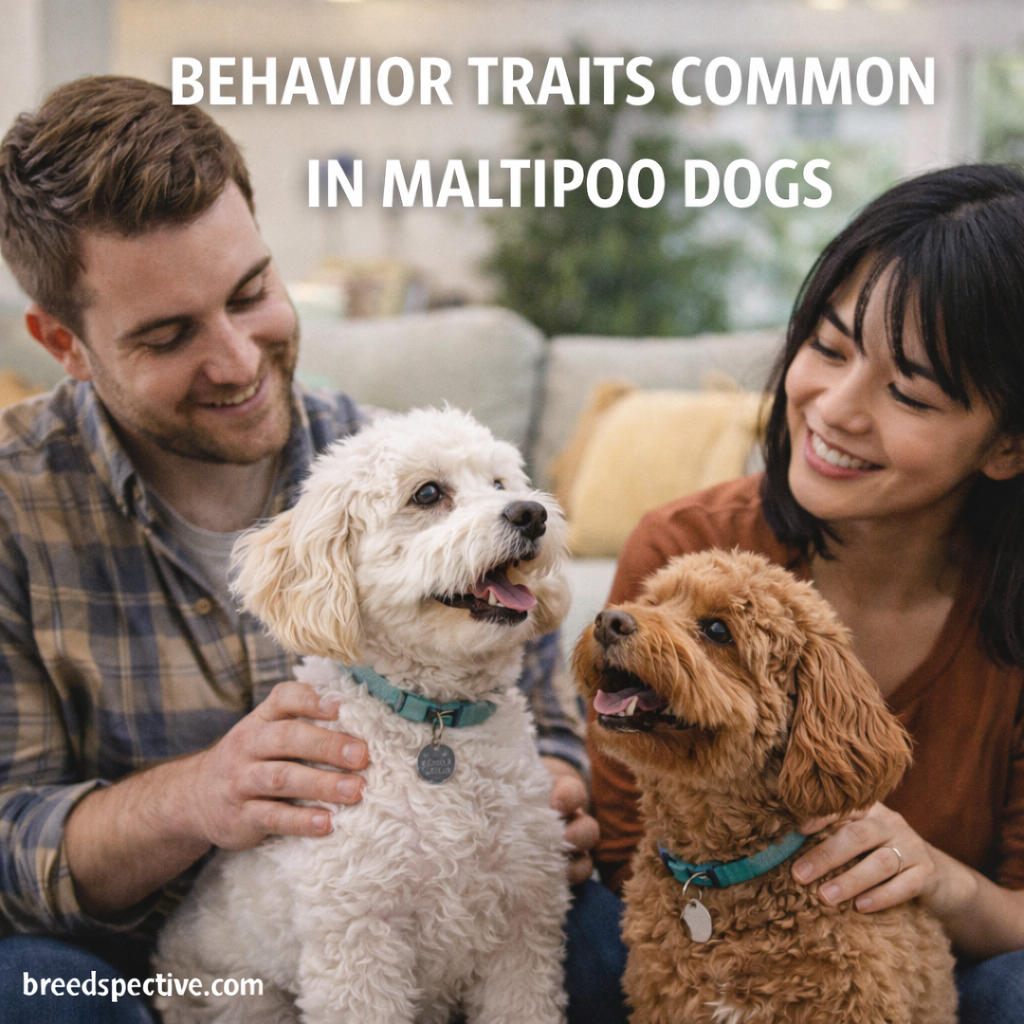
Maltipoos are a popular mixed breed known for their affectionate nature, intelligence, and adaptable personalities. A cross between the Maltese and the Poodle, this mix blends two people-oriented breeds into a companion dog that thrives on attention, routine, and close bonds.
While Maltipoos are often described as easygoing, their behavior traits are shaped by both genetics and environment. Understanding common Maltipoo behaviors helps owners meet their needs and prevent avoidable challenges.
Affectionate and People-Oriented Nature
One of the most defining Maltipoo traits is their strong attachment to people.
Common affectionate behaviors include:
- Seeking constant proximity to owners
- Enjoying lap time and physical closeness
- Following family members from room to room
- Becoming visibly excited when people return home
Maltipoos tend to form strong emotional bonds and prefer being involved in daily activities rather than left alone.
Intelligence and Quick Learning
Thanks to their Poodle heritage, Maltipoos are typically intelligent and quick to pick up new behaviors.
Signs of intelligence include:
- Learning commands with minimal repetition
- Responding well to positive reinforcement
- Picking up household routines quickly
- Showing curiosity about their environment
This intelligence makes them highly trainable, but it also means they can learn bad habits just as fast if boundaries are inconsistent.
Playful but Not Overwhelming Energy

Maltipoos have moderate energy levels that balance playfulness with relaxation.
Typical energy traits include:
- Enjoying short play sessions throughout the day
- Being content with daily walks and indoor play
- Settling down easily after activity
They are not hyperactive dogs, but they still need regular movement and interaction to stay balanced.
Sensitivity and Emotional Awareness
Maltipoos are emotionally sensitive dogs that often mirror their owner’s mood.
This sensitivity may show as:
- Reacting to raised voices or tension
- Becoming anxious in chaotic environments
- Thriving in calm, predictable households
Harsh training methods can easily overwhelm this breed. Gentle guidance and consistency work best.
Separation-Related Behaviors
Because Maltipoos are so people-focused, they can struggle with being alone.
Common separation-related behaviors include:
- Whining or barking when owners leave
- Pacing or restlessness
- Destructive behavior in some cases
These behaviors are usually rooted in attachment rather than defiance. Gradual independence training and structured routines help reduce stress.
Alertness and Vocal Tendencies
Maltipoos are often alert and aware of their surroundings, which can lead to vocal behavior.
You may notice:
- Barking at unfamiliar noises
- Alert barking when someone approaches the home
- Vocalizing when excited or seeking attention
While not aggressive, they can become excessive barkers without guidance. Early training helps set appropriate limits.
Social Behavior With Other Dogs and Pets
Maltipoos are generally friendly and social when properly introduced.
Typical social tendencies include:
- Enjoying play with other small to medium dogs
- Adapting well to multi-pet households
- Preferring gentle companions over rough play
Early socialization helps ensure confidence rather than clinginess or fearfulness around other animals.
Behavior Around Children and Guests
Maltipoos often do well in family environments, especially with respectful handling.
Common traits include:
- Friendly curiosity toward guests
- Enjoyment of gentle interaction
- Sensitivity to rough or loud behavior
They are better suited to calm or supervised households rather than chaotic environments.
Attention-Seeking Tendencies
Because they thrive on interaction, Maltipoos may seek attention frequently.
This can include:
- Pawing or nudging owners
- Barking for engagement
- Interrupting activities to be noticed
Providing regular playtime, training, and affection helps prevent excessive attention-seeking behaviors.
Adaptability to Different Lifestyles
One of the Maltipoo’s strengths is adaptability.
They often do well in:
- Apartments or houses
- Urban or suburban settings
- Homes with singles, couples, or families
As long as their social and emotional needs are met, Maltipoos adjust well to a wide range of living situations.
Common Behavior Challenges
Most Maltipoo behavior challenges stem from unmet needs rather than temperament flaws.
Potential issues include:
- Excessive barking
- Separation anxiety
- Overdependence on owners
- Mild stubbornness during training
These challenges are typically manageable with consistency, structure, and positive reinforcement.
How to Encourage Balanced Behavior
Supporting healthy Maltipoo behavior focuses on routine and engagement.
Helpful strategies include:
- Daily walks and play sessions
- Short, positive training routines
- Mental stimulation through toys and puzzles
- Teaching calm independence early
Meeting both emotional and mental needs is key to long-term behavior balance.
Final Thoughts on Maltipoo Behavior Traits
Maltipoos are affectionate, intelligent, and emotionally attuned companions. Their behavior traits make them deeply rewarding dogs for owners who value closeness and interaction—but they are not ideal for hands-off lifestyles.
When given structure, gentle guidance, and consistent companionship, Maltipoos develop into well-mannered, happy dogs that fit comfortably into many types of homes.