
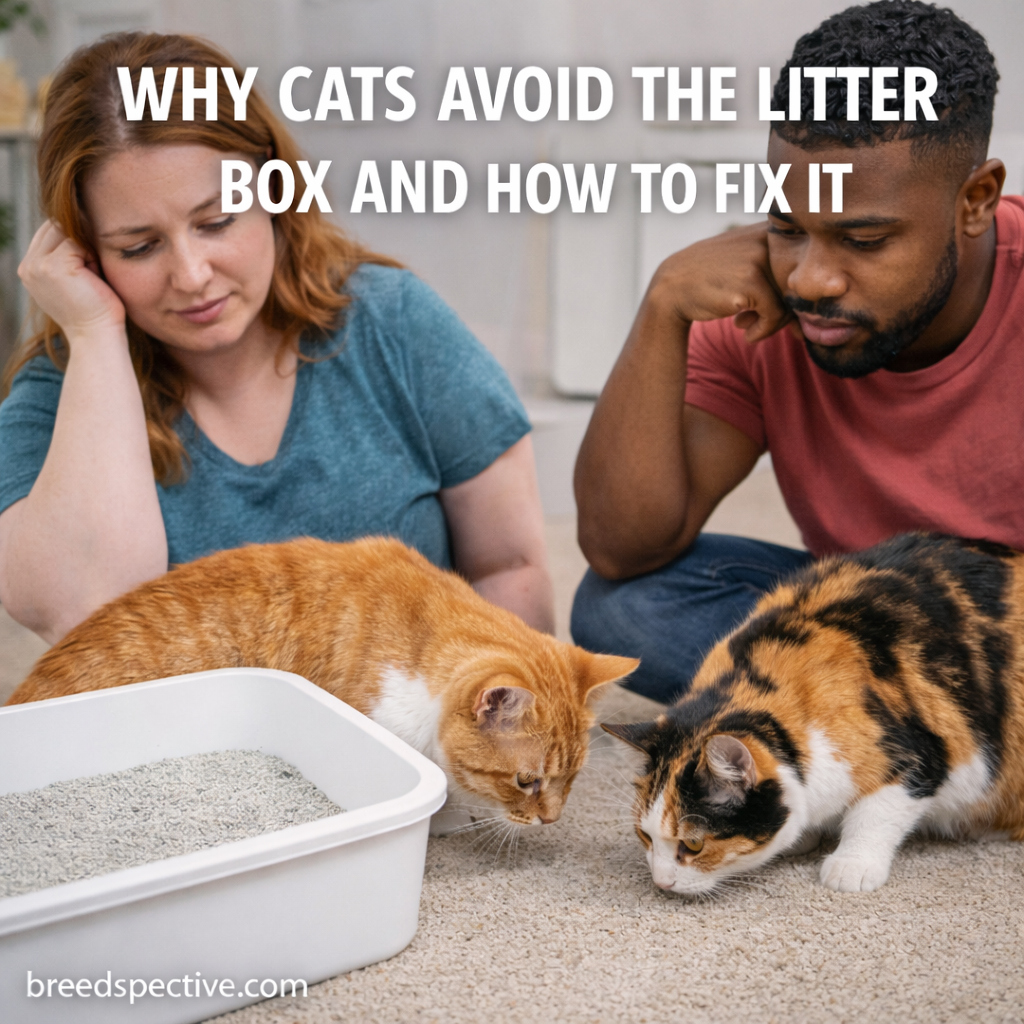
When a cat stops using the litter box, it can be frustrating, confusing, and stressful for owners. Litter box avoidance is one of the most common behavior issues in cats—but it’s rarely about spite or “bad behavior.” In most cases, a cat is trying to communicate discomfort, stress, or dissatisfaction with its environment.
This article explains the most common reasons cats avoid the litter box and provides practical, humane solutions to fix the problem.
Understanding Litter Box Avoidance
Cats are naturally clean animals with strong instincts to bury waste. When a cat avoids the litter box, it usually means something about the setup, routine, or health has changed.
Key points to remember:
- Litter box problems are a signal, not misbehavior
- Punishment will make the issue worse
- The cause is often fixable once identified
Solving the problem starts with understanding the underlying reason.
Dirty or Poorly Maintained Litter Boxes
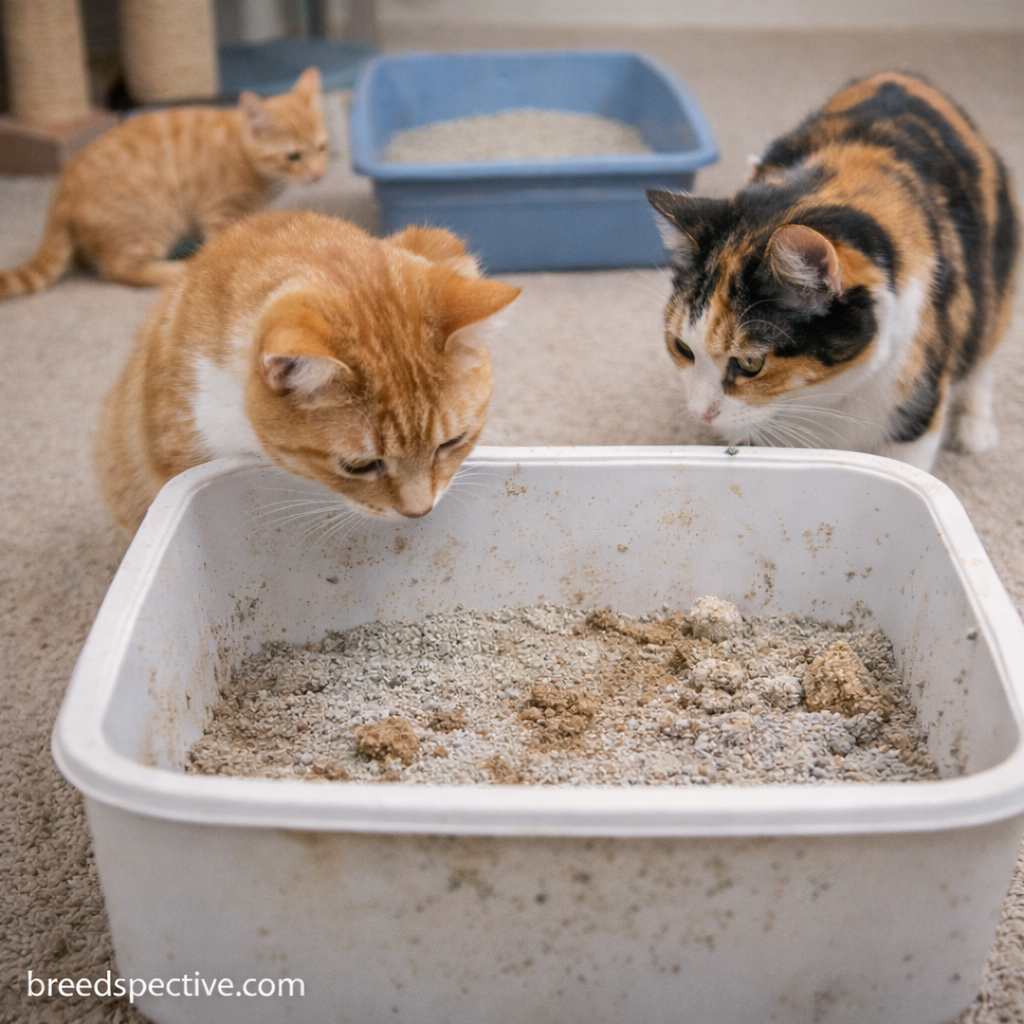
One of the most common reasons cats avoid the litter box is cleanliness.
Common issues include:
- Litter not scooped daily
- Strong odors from waste buildup
- Litter changed too infrequently
Cats may choose alternative spots if the box feels unpleasant or unsanitary.
How to fix it:
- Scoop at least once daily
- Fully change litter weekly
- Wash the box regularly with mild soap
A clean box is the foundation of litter box success.
Litter Type Preferences
Cats can be extremely particular about the texture and scent of litter.
Litter-related problems include:
- Sudden changes in litter brand or type
- Strongly scented litter
- Rough or uncomfortable textures
Some cats prefer fine, unscented clumping litter, while others may prefer non-clumping or natural options.
How to fix it:
- Avoid scented litters
- Introduce new litter gradually
- Offer two boxes with different litter types to test preferences
Let your cat “choose” what feels right.
Litter Box Location Problems
Even the best litter box won’t be used if it’s placed in a stressful or inconvenient location.
Poor placement issues:
- Loud or high-traffic areas
- Near appliances like washers or furnaces
- Difficult-to-access corners
Cats want privacy, safety, and easy access.
How to fix it:
- Place boxes in quiet, low-traffic areas
- Ensure easy access at all times
- Avoid moving boxes frequently
Location matters just as much as cleanliness.
Not Enough Litter Boxes
Sharing or competing for litter boxes can lead to avoidance, especially in multi-cat households.
General rule:
- One litter box per cat, plus one extra
Problems caused by too few boxes:
- Territorial stress
- Blocking or guarding behavior
- Increased accidents
Adding boxes often resolves the issue quickly.
Medical Issues and Pain
Health problems are a major cause of sudden litter box avoidance.
Medical conditions to consider:
- Urinary tract infections
- Bladder inflammation
- Arthritis or joint pain
- Gastrointestinal issues
Painful urination or difficulty entering the box can cause cats to associate the litter box with discomfort.
What to do:
- Schedule a veterinary exam immediately
- Rule out medical causes first
- Follow treatment recommendations before behavioral changes
Never assume the problem is purely behavioral.
Stress, Anxiety, and Environmental Changes
Cats are sensitive to changes in their environment.
Common stress triggers:
- Moving to a new home
- New pets or people
- Changes in routine
- Loud noises or renovations
Stress can cause cats to avoid familiar behaviors, including litter box use.
How to reduce stress:
- Maintain consistent routines
- Provide hiding spots and vertical space
- Use calming pheromone diffusers if needed
Reducing anxiety often restores normal litter habits.
Litter Box Size and Design Issues
Some cats avoid boxes that feel cramped or uncomfortable.
Problematic box features:
- Too small for the cat’s size
- Covered boxes that trap odors
- High sides that are hard to enter
Senior or large cats are especially affected.
How to fix it:
- Use large, open boxes
- Ensure easy entry and exit
- Avoid lids if odor buildup is an issue
Comfort directly affects usage.
Negative Associations With the Litter Box
If a cat experiences fear or pain while using the box, it may avoid it afterward.
Possible causes:
- Loud noises while using the box
- Being startled by another pet
- Pain during urination
Cats may choose “safer” locations instead.
How to help:
- Keep the litter area calm and quiet
- Separate boxes for multi-cat households
- Address pain or fear triggers
Rebuilding positive associations takes patience.
What Not to Do
Some reactions can make the problem worse.
Avoid:
- Punishing or scolding your cat
- Rubbing their nose in accidents
- Forcing them into the litter box
These responses increase stress and reduce trust.
Step-by-Step Plan to Fix Litter Box Avoidance
A systematic approach works best:
- Rule out medical issues first
- Improve cleanliness and maintenance
- Adjust litter type and box design
- Optimize location and number of boxes
- Reduce stress and environmental triggers
Changes should be gradual and consistent.
Final Thoughts
When cats avoid the litter box, they’re communicating that something isn’t right. Whether the cause is medical, environmental, or related to preferences, most litter box problems are solvable with patience and observation.
By addressing your cat’s comfort, health, and environment, you can restore proper litter habits and strengthen the bond you share—without stress or punishment.