
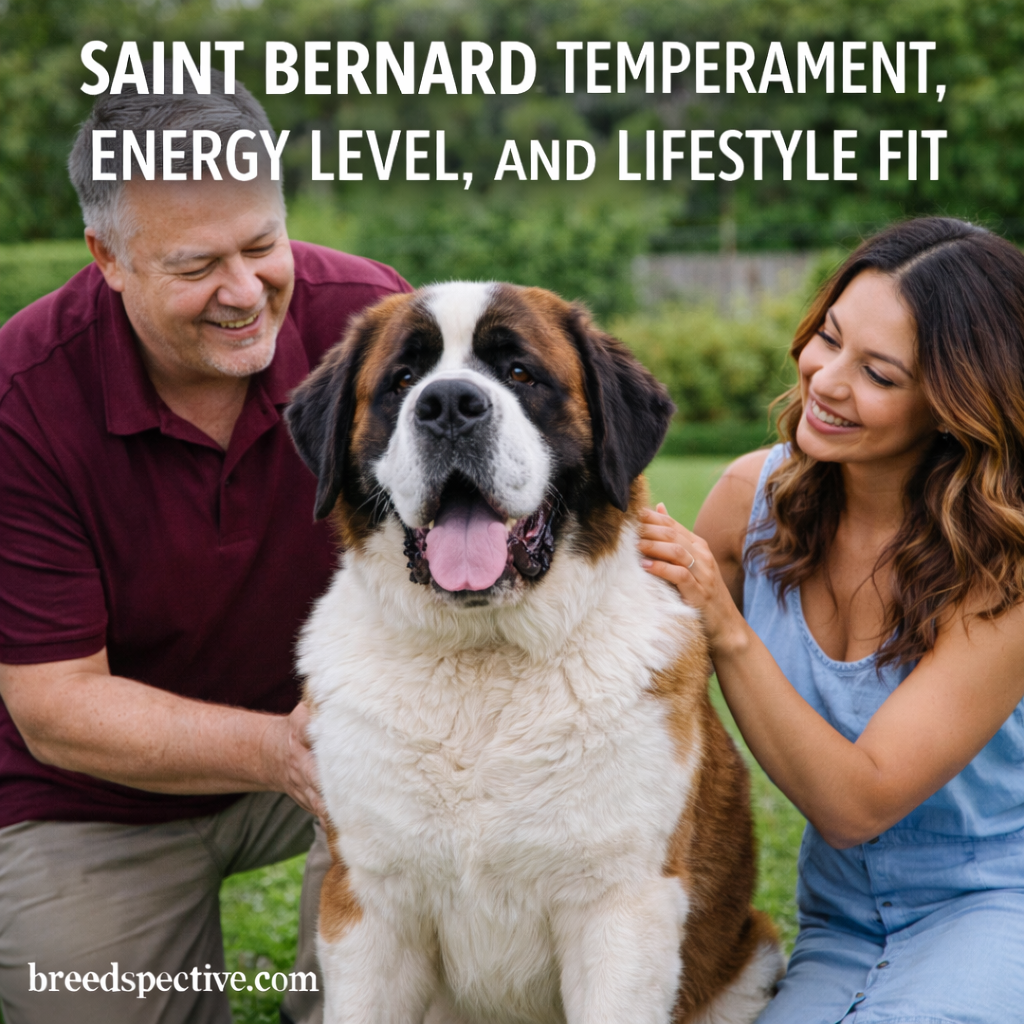
Saint Bernard Temperament Overview
The Saint Bernard is best known for its calm demeanor, affectionate personality, and patient nature. Often described as a classic “gentle giant,” this breed is deeply loyal and naturally inclined toward companionship rather than independence.
Saint Bernards are emotionally intuitive and tend to form strong bonds with their families. They are rarely aggressive and generally prefer peaceful, predictable environments where they can remain close to the people they love.
Key temperament traits include:
- Gentle and affectionate
- Calm and steady in most situations
- Loyal and people-oriented
- Patient and tolerant
- Emotionally sensitive
Their combination of size and softness makes them especially appealing to families seeking a large but loving dog.
Personality Traits in Everyday Life
In everyday life, Saint Bernards are relaxed, friendly companions. They enjoy being present with family members and often position themselves nearby rather than demanding constant attention.
Common personality characteristics include:
- Calm indoor behavior
- Enjoyment of physical closeness, such as leaning or sitting nearby
- Slow, deliberate movements
- Friendly but not overly excitable greetings
- Protective instincts without aggression
They are not known for hyperactivity and tend to move at a comfortable, unhurried pace.
Energy Level and Activity Needs

Saint Bernards have a low to moderate energy level. Despite their large size, they do not require intense or prolonged exercise and are better suited to gentle, consistent activity.
Typical energy patterns include:
- Short periods of moderate activity
- Long rest periods throughout the day
- Preference for low-impact movement
Recommended daily activity includes:
- 30–60 minutes of light exercise
- Leisurely walks rather than running
- Gentle outdoor play
- Mental stimulation through calm training
Overexertion should be avoided, particularly in puppies and young adults, due to joint stress.
Saint Bernard and Family Compatibility
Saint Bernards are widely regarded as excellent family dogs. Their patience, tolerance, and nurturing disposition make them especially well-suited for homes with children.
Why Saint Bernards work well in families:
- Gentle and patient with kids
- Calm during household noise
- Naturally protective without being reactive
- Enjoy predictable routines
Due to their size, supervision around small children is important, but issues are more likely to involve accidental bumps than intentional roughness.
Behavior With Children
Saint Bernards are known for their exceptional patience with children. They typically tolerate handling well and are slow to react emotionally.
Positive traits around children include:
- High tolerance for noise and movement
- Gentle play style
- Watchful, caring demeanor
- Rarely reactive or aggressive
Teaching children respectful interaction ensures a safe and positive relationship.
Compatibility With Other Pets
Saint Bernards are generally accepting of other animals, especially when properly socialized.
Pet compatibility includes:
- Calm interactions with other dogs
- Low prey drive
- Generally peaceful coexistence with cats
- Rare territorial behavior
Early socialization helps reinforce their naturally relaxed approach to other pets.
Trainability and Intelligence
Saint Bernards are intelligent but not fast-paced learners. Their calm temperament and independent thinking can sometimes be mistaken for stubbornness.
Training characteristics include:
- Respond well to positive reinforcement
- Sensitive to harsh tones or correction
- Benefit from short, consistent sessions
- Learn best through patience and repetition
Firm but gentle guidance produces the best long-term results.
Emotional Sensitivity and Attachment
Saint Bernards are emotionally sensitive and form strong attachments to their families. They prefer inclusion and may struggle with extended periods of isolation.
Signs of emotional sensitivity include:
- Seeking reassurance from owners
- Becoming anxious if ignored
- Responding to household stress
They do best in stable, calm homes where they are treated as true family members.
Ideal Living Environment
Because of their size and temperament, Saint Bernards require space but not constant activity.
Ideal living conditions include:
- Homes with ample indoor space
- Access to outdoor areas for gentle exercise
- Cooler climates or climate-controlled homes
- Owners who enjoy a relaxed pace of life
Apartment living can be challenging but possible with careful planning and daily walks.
Climate Considerations
Saint Bernards are built for cold climates and struggle in heat due to their dense coats and large bodies.
Important climate factors include:
- High sensitivity to warm temperatures
- Risk of overheating
- Exercise should be limited in hot weather
- Air conditioning is essential in warm regions
Owners must adjust routines seasonally to keep them comfortable.
Common Behavioral Challenges
Saint Bernards are generally easygoing but can develop issues if their needs are not met.
Potential challenges include:
- Drooling and messiness
- Stubbornness during adolescence
- Separation anxiety
- Weight gain due to inactivity
Most challenges are manageable with routine, structure, and proper care.
Who Is a Saint Bernard Best For?
Saint Bernards are best suited for owners who value calm companionship and patience over energy and intensity.
They are a great fit for:
- Families with children
- Calm, structured households
- Owners with space for a large dog
- People seeking a gentle, loyal companion
They may not be ideal for:
- Very active lifestyles
- Small living spaces without accommodations
- Hot climates without climate control
Final Thoughts on Saint Bernard Lifestyle Fit
The Saint Bernard offers a unique blend of size, gentleness, and emotional warmth. Their calm demeanor, family-friendly nature, and steady temperament make them a deeply rewarding companion for the right household.
With proper space, moderate exercise, and consistent companionship, the Saint Bernard thrives as a loyal and loving family member whose presence brings comfort rather than chaos.