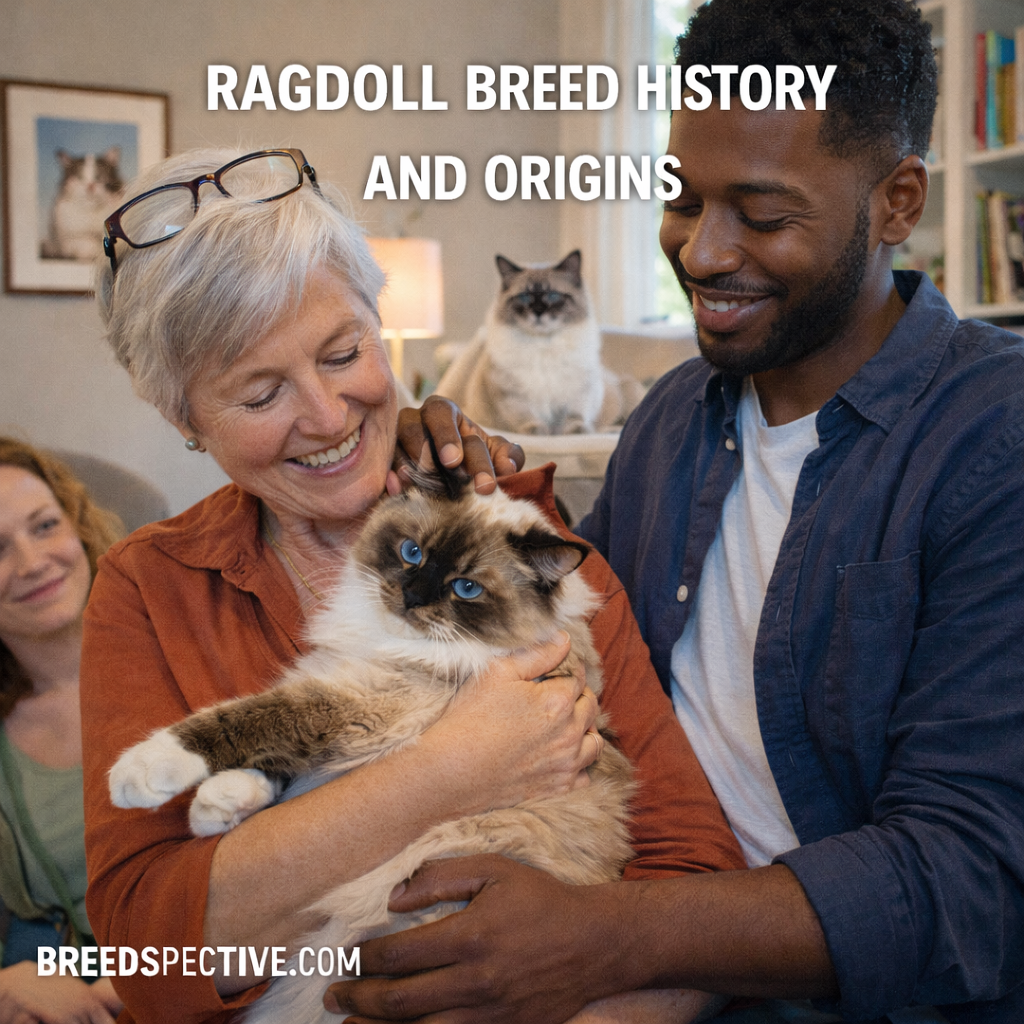
The Ragdoll is one of the most distinctive and recognizable cat breeds in the world, known for its striking blue eyes, plush coat, and famously gentle temperament. Unlike many ancient cat breeds, the Ragdoll has a modern, well-documented history that traces back to a single breeder and a carefully controlled breeding program.
Understanding the Ragdoll’s origins helps explain why the breed is so affectionate, calm, and people-oriented today.
The Origins of the Ragdoll Cat
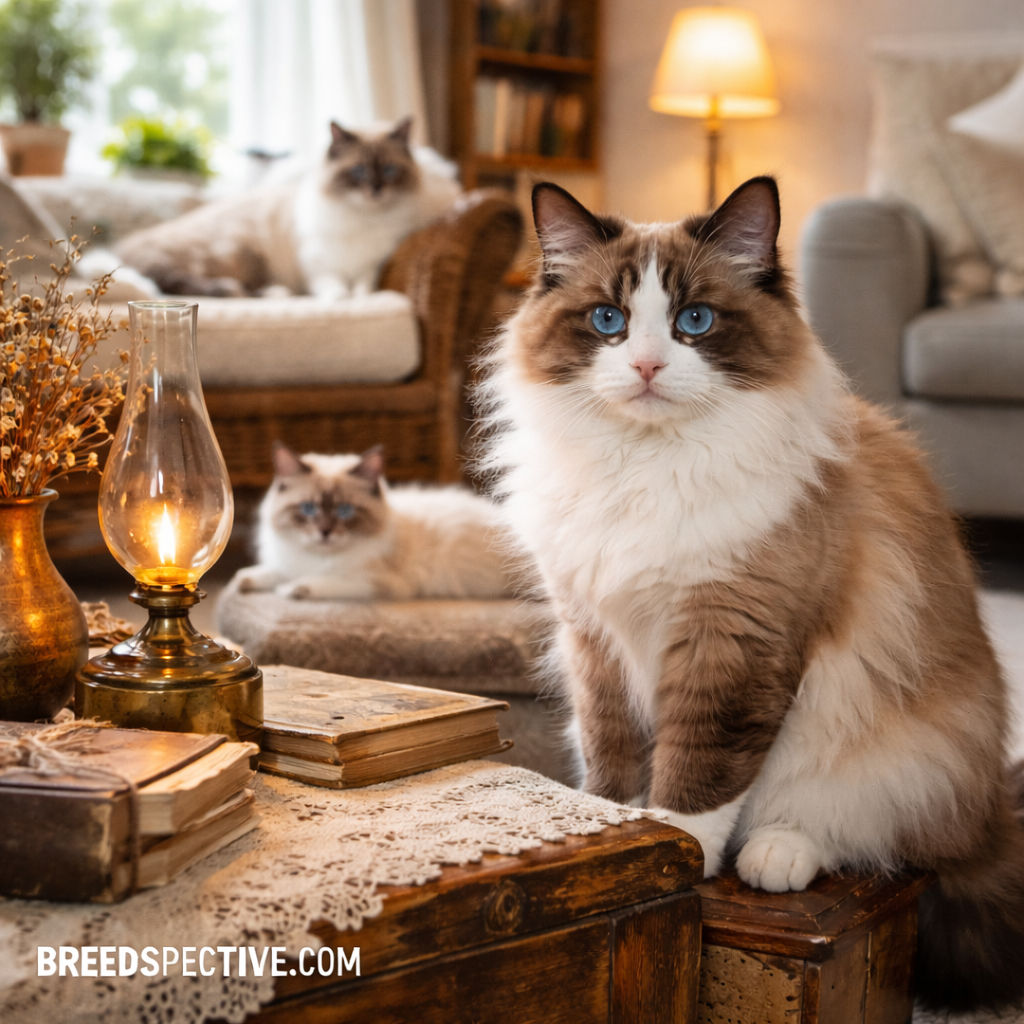
The Ragdoll breed originated in California during the early 1960s. Unlike naturally evolving landrace breeds, Ragdolls were intentionally developed through selective breeding.
The foundation cat was a white, long-haired domestic cat named Josephine, owned by breeder Ann Baker. Josephine was not originally a Ragdoll, but she possessed traits that would later define the breed.
Josephine was known for:
- A calm, docile temperament
- Strong maternal instincts
- Producing kittens with unusually relaxed behavior
- Tolerance for handling and human interaction
After a reported accident and recovery, Baker claimed Josephine’s kittens exhibited distinctive personality traits—though many of these claims were later considered exaggerated or anecdotal.
Ann Baker and the Creation of the Breed
Ann Baker is credited as the creator of the Ragdoll breed. She selectively bred Josephine with other long-haired cats, including those with:
- Colorpoint markings
- Blue eyes
- Large, sturdy body frames
- Gentle, placid temperaments
Baker focused heavily on personality rather than hunting instinct or independence. Her goal was to create a cat that behaved more like a companion than a traditional feline.
The name “Ragdoll” came from the cats’ tendency to relax completely when picked up.
Early Breeding Program and Line Development
The earliest Ragdolls were bred from a small, controlled gene pool. This included cats believed to have Burmese, Birman, and Persian influence, although exact lineage details remain unclear.
Early breeding priorities included:
- Predictable temperament
- Large size with solid bone structure
- Semi-long, silky coat that resisted matting
- Colorpoint patterns with blue eyes
This controlled breeding approach helped establish consistent physical and behavioral traits across generations.
Trademark Controversy and Breed Expansion
Ann Baker attempted to tightly control the Ragdoll breed by trademarking the name and creating a registry separate from traditional cat associations.
This approach caused significant controversy.
Key developments included:
- Some breeders breaking away from Baker’s control
- Formation of independent Ragdoll breeding lines
- Expansion of the breed beyond California
- Eventual recognition by major cat registries
By the 1970s and 1980s, breeders outside Baker’s organization helped standardize the Ragdoll and promote it globally.
Recognition by Cat Associations
Over time, the Ragdoll gained acceptance by major feline organizations due to its consistent traits and growing popularity.
Major milestones:
- Recognition by The International Cat Association (TICA)
- Acceptance by the Cat Fanciers’ Association (CFA)
- Inclusion in championship show classes
- Global spread across North America, Europe, and beyond
Today, the Ragdoll is one of the most popular pedigree cat breeds worldwide.
How History Shaped the Ragdoll Personality
Because the Ragdoll was bred specifically for temperament, its historical origins directly influence its modern behavior.
Traits rooted in breed history include:
- Low aggression and minimal prey drive
- Strong attachment to humans
- High tolerance for handling
- Calm response to new environments
- Preference for indoor living
Unlike many cats bred for hunting or independence, Ragdolls were intentionally designed to be companions.
Ragdoll Coat Patterns and Evolution
As the breed evolved, several coat patterns and color variations became standardized.
Common Ragdoll patterns include:
- Colorpoint
- Mitted
- Bicolor
Colors expanded over time to include seal, blue, chocolate, lilac, red, and cream, as well as lynx and tortie variations.
Despite these differences, temperament consistency remained a primary breeding focus.
Modern Ragdolls vs Early Ragdolls
While modern Ragdolls are more genetically diverse than early lines, breeders still prioritize the original goals set during the breed’s creation.
Modern Ragdolls tend to be:
- Larger and more structurally balanced
- Health-tested for genetic conditions
- Bred with stricter ethical standards
- More consistent in temperament
Responsible breeding has helped maintain the breed’s gentle reputation while improving overall health.
Final Thoughts
The Ragdoll is a truly modern cat breed, intentionally created to be affectionate, calm, and deeply bonded to humans. Its origins in 1960s California, combined with focused selective breeding, shaped a cat that stands apart from more independent or high-energy breeds.
Understanding the Ragdoll’s history helps owners appreciate why these cats are so trusting, people-focused, and relaxed. The traits that define the breed today are not accidental—they are the direct result of its carefully guided origins.