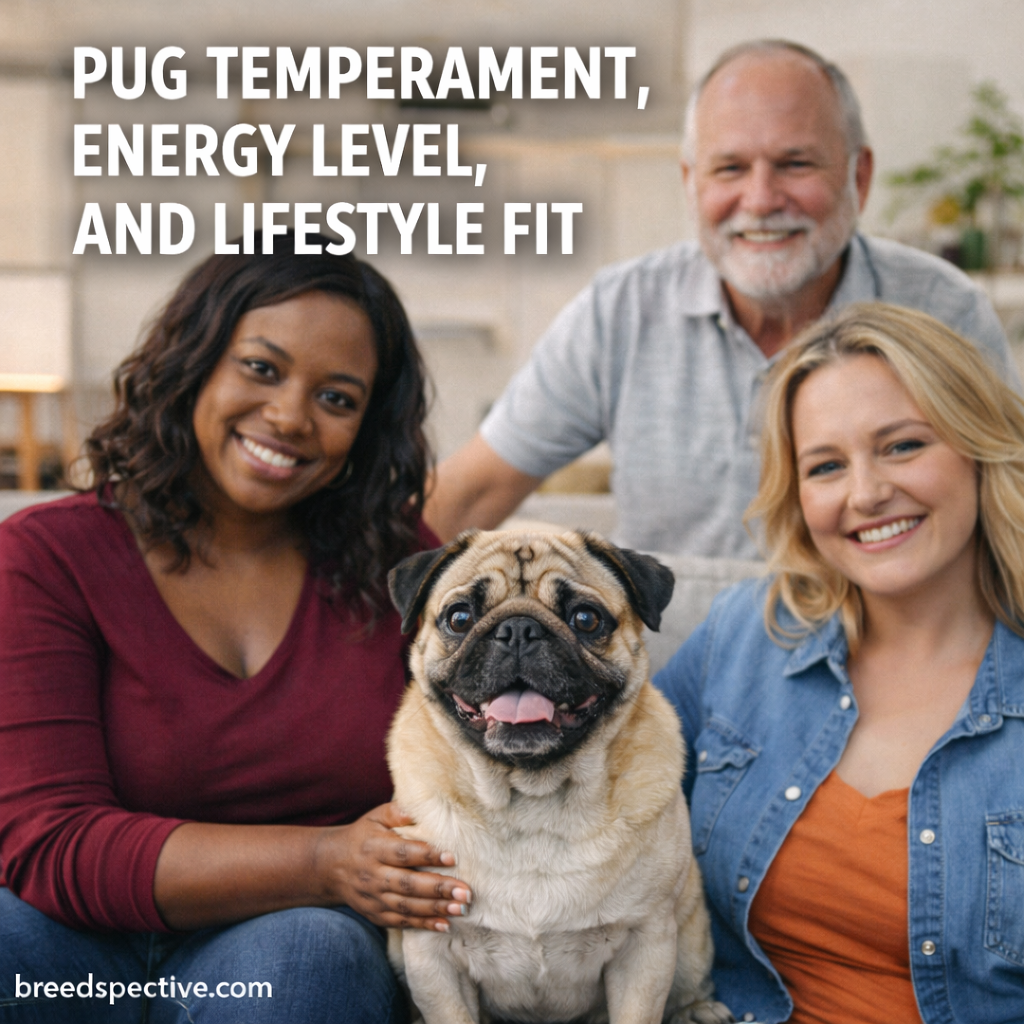
Pugs are charming, affectionate dogs known for their expressive faces and people-loving personalities. Bred primarily for companionship, the Pug thrives on human interaction and is happiest when included in everyday family life. Their combination of low-to-moderate energy, playful humor, and emotional sensitivity makes them a favorite among families, apartment dwellers, and first-time dog owners.
This guide explores the Pug’s temperament, daily energy needs, and ideal lifestyle fit to help you decide whether this lovable breed is right for your home.
Pug Temperament Overview
Pugs are friendly, emotionally intuitive, and highly social dogs. They form strong bonds with their people and dislike being left out of household activity.
Common temperament traits include:
- Affectionate and people-oriented
- Playful and humorous
- Gentle and even-tempered
- Emotionally sensitive
- Social with strangers and pets
Pugs are not independent dogs—they prefer constant companionship and emotional connection.
Personality Strengths of the Pug
Loving and Loyal Companions
Pugs are often described as “shadows” because they like to stay close to their owners.
They tend to:
- Follow family members from room to room
- Enjoy cuddling and lap time
- Seek frequent attention and affection
Their devotion makes them excellent emotional support companions.
Friendly and Social Nature
Pugs are typically welcoming and outgoing.
They often:
- Enjoy meeting new people
- Get along well with children
- Coexist peacefully with other pets
Aggression and territorial behavior are uncommon in well-socialized Pugs.
Playful but Easygoing
Pugs have a playful streak but know when to settle down.
They enjoy:
- Short play sessions
- Gentle games indoors
- Interactive toys
After playtime, they are content to nap nearby.
Potential Temperament Challenges
Stubbornness
Pugs are intelligent but can be strong-willed.
Common challenges include:
- Selective listening
- Slow response to commands
- Testing boundaries
Positive reinforcement and patience work far better than forceful training.
Attention-Seeking Behavior
Because Pugs crave interaction, they may develop attention-seeking habits.
These can include:
- Barking or vocalizing for attention
- Pawing or nudging owners
- Interrupting activities
Clear boundaries and structured interaction help manage this behavior.
Sensitivity to Tone
Pugs are emotionally sensitive dogs.
Harsh correction may lead to:
- Withdrawal
- Anxiety
- Loss of trust
They respond best to calm guidance and praise-based training.
Energy Level and Daily Activity Needs
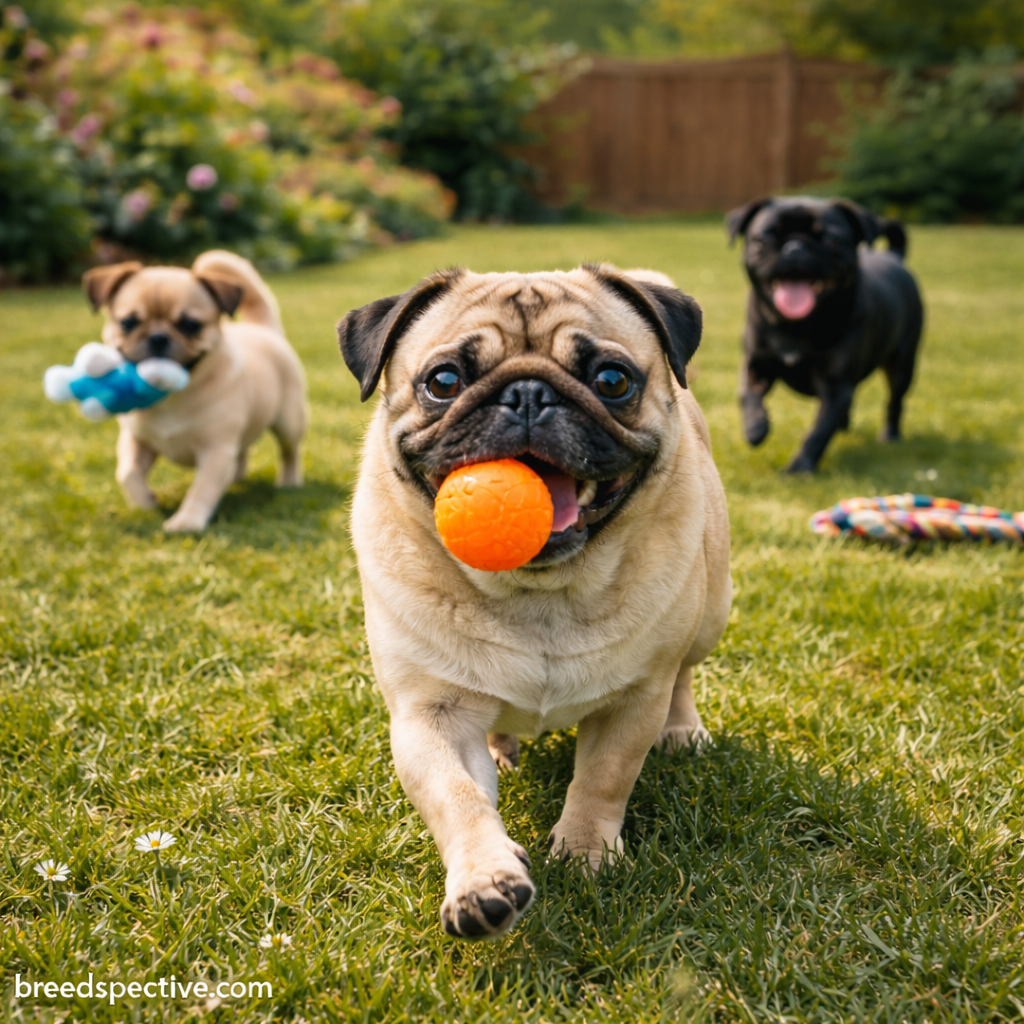
Pugs have a low-to-moderate energy level and are not built for endurance exercise.
Typical Energy Profile
- Short bursts of playful energy
- Frequent rest periods
- Preference for relaxed routines
They enjoy activity but tire easily.
Daily Exercise Requirements
Most Pugs thrive with:
- 1–2 short walks per day
- Light indoor playtime
- Mental enrichment through toys
Overexertion should be avoided, especially in warm weather.
Mental Stimulation Needs
Mental engagement is just as important as physical activity.
Helpful options include:
- Puzzle toys
- Short training sessions
- Interactive games
Mental stimulation helps reduce boredom-related behaviors.
Ideal Living Environment
Pugs are highly adaptable and do well in many living situations.
Apartment Living
Pugs are excellent apartment dogs because they:
- Don’t need large spaces
- Are typically quiet indoors
- Prefer indoor companionship
As long as their emotional needs are met, space is rarely an issue.
Houses With Yards
A yard is a bonus but not necessary.
Pugs enjoy:
- Supervised outdoor time
- Short play sessions
- Safe, shaded areas
They should not be left outdoors unsupervised for long periods.
Pugs and Family Life
With Children
Pugs are generally patient and tolerant with children.
Best practices include:
- Teaching gentle handling
- Supervising interactions with younger kids
- Avoiding rough play
Their sturdy build and gentle nature make them good family dogs.
With Other Pets
Pugs typically:
- Get along well with other dogs
- Are tolerant of cats
- Show low prey drive
Early socialization supports positive multi-pet households.
Health and Lifestyle Considerations
Pugs are a brachycephalic breed, which affects lifestyle compatibility.
Important considerations include:
- Sensitivity to heat and humidity
- Need for climate-controlled environments
- Avoidance of intense exercise
Owners should prioritize comfort and safety over activity intensity.
Ideal Owner Profile
Pugs are best suited for owners who enjoy close companionship.
They are a strong match for:
- First-time dog owners
- Families
- Seniors or retirees
- Apartment dwellers
- Remote workers
They may struggle in homes where they are left alone for long hours.
Training and Socialization Tips
Training Approach
Pugs respond best to:
- Positive reinforcement
- Food motivation (used responsibly)
- Short, engaging sessions
Consistency is key, especially with house training.
Socialization Importance
Early exposure to:
- Different people
- New environments
- Other animals
helps ensure a confident and well-adjusted adult dog.
Is a Pug Right for You?
The Pug is an ideal choice for those seeking a loving, low-energy, emotionally connected companion.
Choose a Pug if you want:
- A people-focused personality
- Moderate exercise needs
- A dog that thrives indoors
- Strong emotional bonding
If you want a highly athletic or independent dog, another breed may be a better fit.
Final Thoughts
The Pug’s temperament is defined by affection, humor, and loyalty. Their low-to-moderate energy level and adaptable nature make them suitable for a wide range of lifestyles, provided their emotional and health needs are met.
With proper care, training, and companionship, a Pug can be a joyful and devoted member of the family for many years.