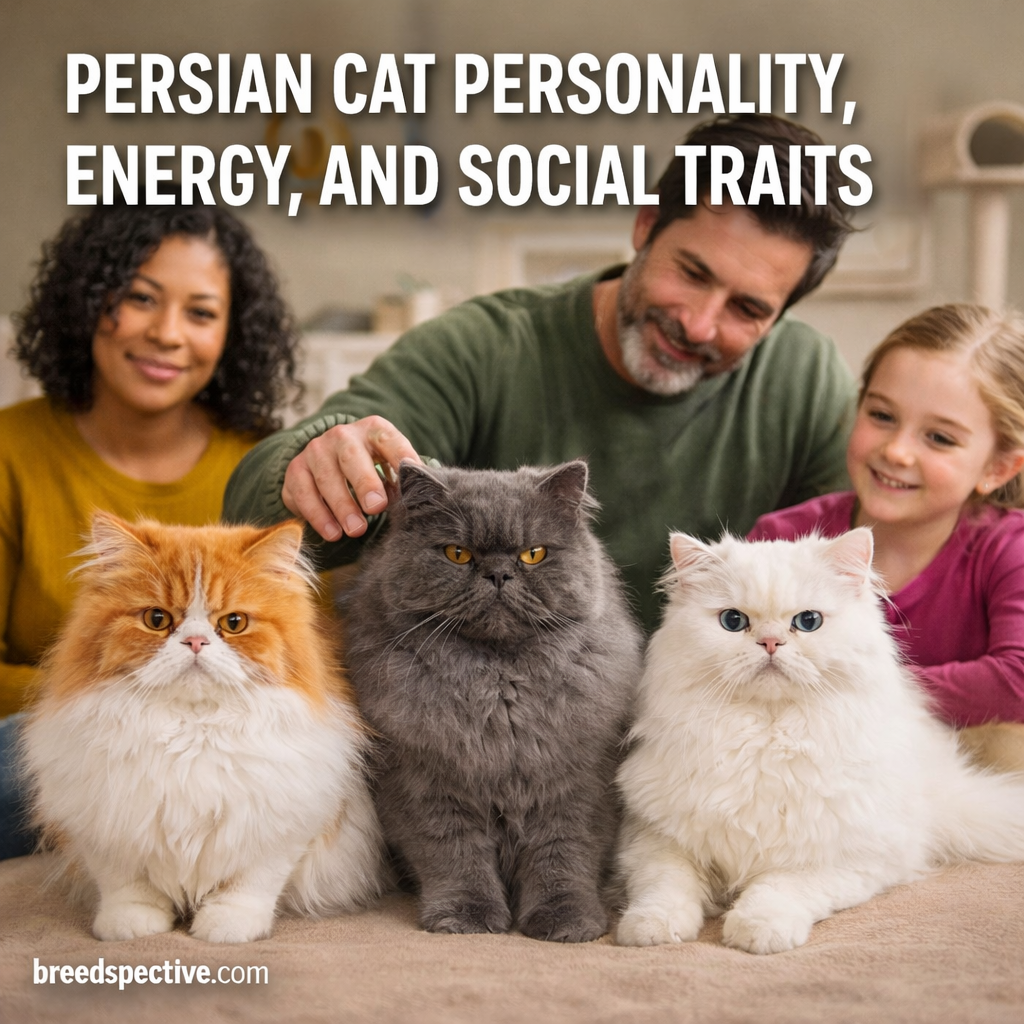
Persian cats are known for their luxurious coats, expressive faces, and calm, affectionate nature. Unlike highly energetic or vocal breeds, Persians thrive in peaceful environments where comfort, routine, and gentle companionship are prioritized. Understanding their personality, energy levels, and social traits helps owners create the ideal home for this famously relaxed breed.
This guide explores what makes Persian cats unique, how they interact with people and other pets, and what kind of lifestyle suits them best.
Overall Personality of Persian Cats
Persian cats are often described as sweet, gentle, and quietly affectionate. They form strong bonds with their owners but express love in subtle, low-key ways rather than demanding attention.
Key personality traits include:
- Calm and even-tempered
- Affectionate without being clingy
- Loyal to familiar people
- Sensitive to loud noises and chaos
- Content with predictable routines
Persians prefer stability and can become stressed in noisy or constantly changing environments. They are happiest in homes where days follow a comfortable rhythm.
Energy Levels and Activity Needs
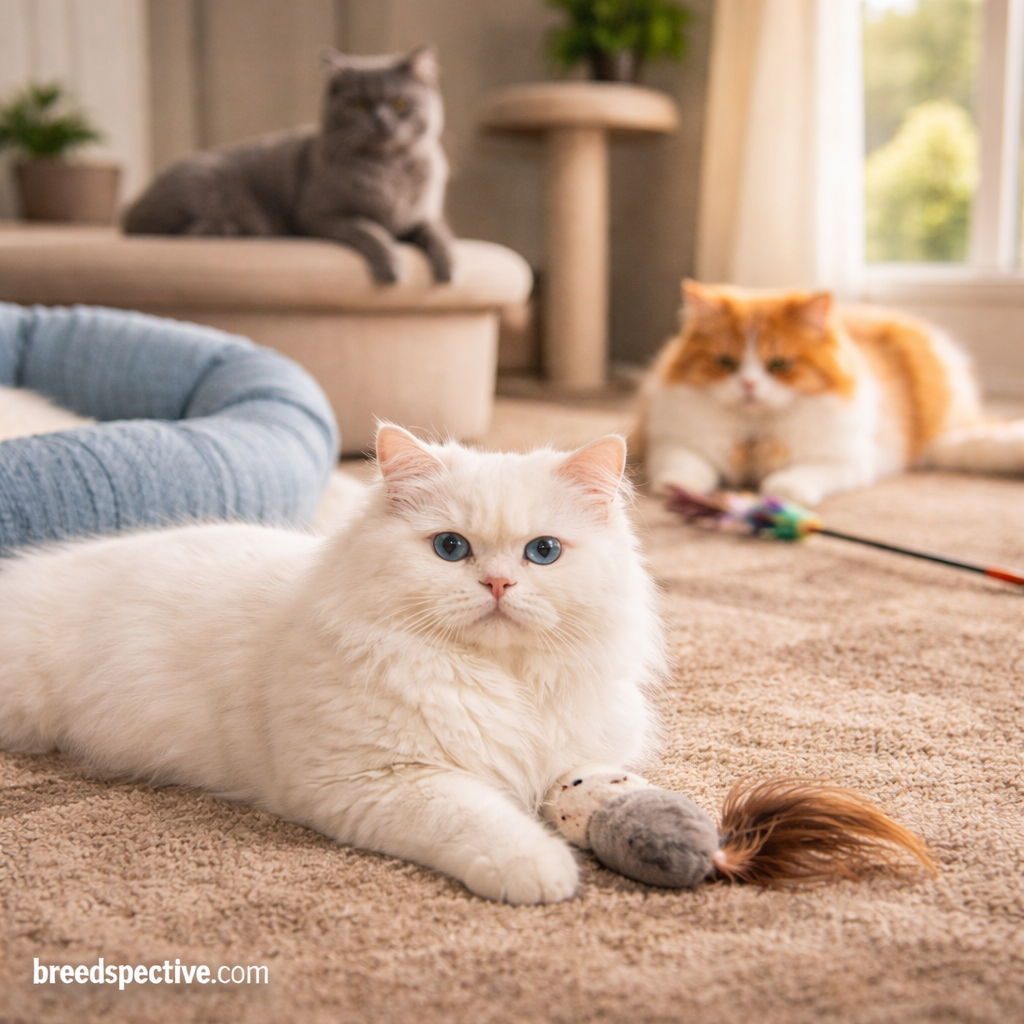
Persian cats are low-energy compared to many other breeds. They enjoy short bursts of play but spend much of their day lounging in cozy spots.
Typical energy characteristics:
- Low to moderate activity levels
- Short, gentle play sessions
- Preference for resting over climbing
- Minimal zoomies or wild behavior
They don’t require extensive exercise, but light daily play is still important to maintain physical health and prevent weight gain.
Best ways to engage a Persian cat:
- Wand toys with slow movements
- Soft balls or plush toys
- Calm interactive play once or twice a day
- Comfortable perches near windows
Social Traits With Humans
Persian cats are people-oriented but selective about attention. They enjoy being near their owners rather than constantly on top of them.
How Persians show affection:
- Sitting close by instead of demanding lap time
- Gentle head nudges or slow blinks
- Quiet purring when relaxed
- Following owners from room to room
They are typically patient and gentle with adults and older children who respect their boundaries. Rough handling or excessive stimulation can cause them to withdraw.
Interaction With Children
Persian cats can do well with children, especially in calm households. However, they are not ideal for homes with very young or overly energetic kids.
Best conditions for success:
- Children taught to handle cats gently
- Quiet play instead of chasing or grabbing
- Respect for the cat’s need to retreat
When treated kindly, Persians often become affectionate and tolerant companions.
Compatibility With Other Pets
Persian cats are generally peaceful and non-confrontational. They can coexist well with other pets if introductions are slow and stress-free.
They tend to do best with:
- Other calm cats
- Gentle, low-energy dogs
- Households without aggressive or dominant animals
Because of their laid-back nature, Persians may be easily intimidated by overly playful or assertive pets.
Vocalization and Communication Style
Persian cats are among the quieter breeds. They communicate softly and sparingly.
Common communication traits:
- Soft, pleasant meows
- Minimal attention-seeking vocalization
- Subtle body language
- Expressive eyes and facial cues
Owners often describe Persians as emotionally expressive without being noisy or demanding.
Emotional Sensitivity and Stress Tolerance
Persian cats are emotionally sensitive and can be affected by changes in their environment.
Potential stress triggers include:
- Loud noises
- Frequent visitors
- Rearranged furniture
- Schedule disruptions
- Tension between household members
Providing a stable routine and quiet retreat spaces helps keep them emotionally balanced.
Ideal Home Environment for Persian Cats
Persian cats thrive in calm, indoor environments where safety and comfort are prioritized.
Ideal home traits:
- Quiet or moderately active households
- Predictable daily routines
- Indoor-only living
- Soft bedding and cozy resting areas
- Owners who enjoy relaxed companionship
They are particularly well-suited for apartments, seniors, remote workers, and low-noise homes.
Final Thoughts
Persian cats are gentle, affectionate companions best suited for peaceful households. Their low energy, quiet nature, and loyal temperament make them ideal for owners who value calm connection over constant activity.
By understanding their personality, respecting their sensitivity, and providing a stable environment, Persian cats reward their owners with quiet devotion, warmth, and timeless elegance.