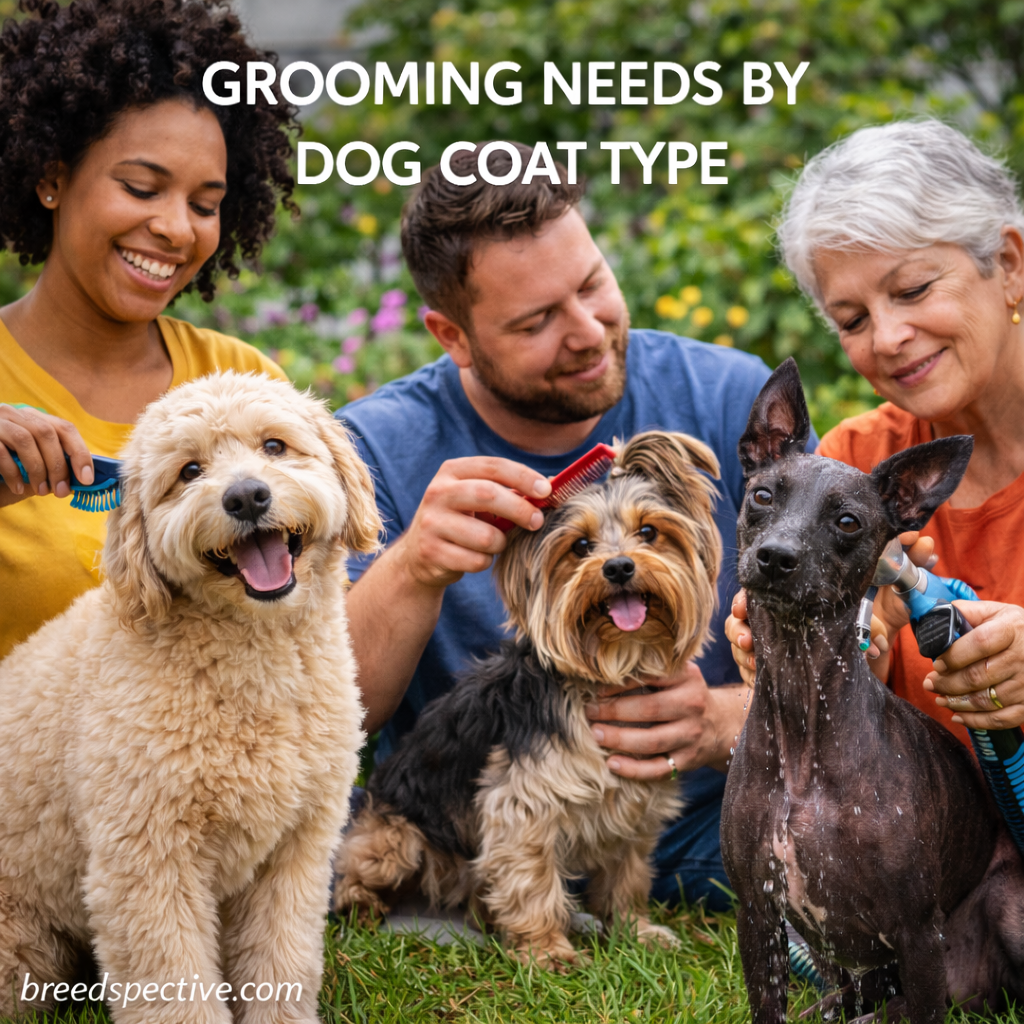
Not all dogs have the same grooming needs. A dog’s coat type plays a major role in how often it needs brushing, bathing, trimming, and professional grooming. Understanding coat-specific care helps owners keep their dogs comfortable, healthy, and looking their best — while avoiding common grooming mistakes.
This guide breaks down grooming needs by dog coat type so you can build the right routine for your dog’s unique coat.
Why Coat Type Matters in Grooming
Dog coats evolved for different climates, jobs, and lifestyles. These differences affect how coats shed, mat, repel water, and regulate temperature.
Matching grooming routines to coat type helps:
- Prevent painful matting
- Reduce excessive shedding
- Protect skin health
- Improve coat appearance
- Catch skin issues early
Using the wrong approach can damage the coat or cause discomfort.
Smooth and Short Coats
Smooth-coated dogs have short, close-lying hair with minimal feathering or undercoat.
Common examples include:
- Boxers
- Greyhounds
- Dobermans
- Dalmatians
Grooming Needs for Smooth Coats
Smooth coats are among the easiest to maintain, but they still benefit from routine care.
Recommended care:
- Brushing: 1–2 times per week
- Tools: rubber curry brush or soft bristle brush
- Bathing: every 4–8 weeks or as needed
- Nail trims: every 2–4 weeks
Short coats shed year-round and brushing helps remove loose hair and distribute natural oils.
Double Coats
Double-coated dogs have a dense undercoat beneath a longer outer coat. These coats provide insulation but require consistent maintenance.
Common examples include:
- Labrador Retrievers
- German Shepherds
- Huskies
- Golden Retrievers
Grooming Needs for Double Coats
Double coats require attention to manage shedding and prevent matting.
Recommended care:
- Brushing: 2–3 times per week
- During shedding seasons: daily brushing
- Tools: undercoat rake, slicker brush
- Bathing: every 6–10 weeks
Shaving a double-coated dog is generally discouraged, as it can damage coat regrowth and temperature regulation.
Long and Flowing Coats
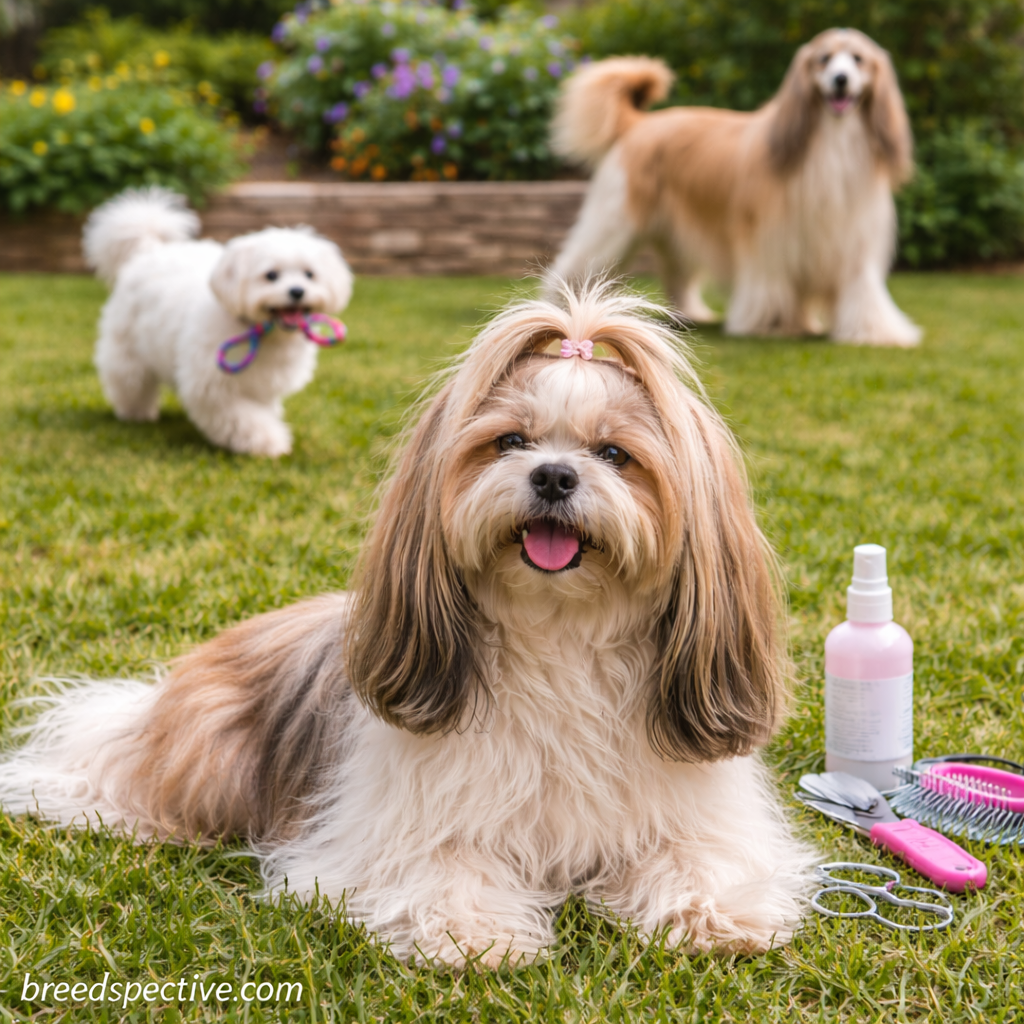
Long-coated dogs have hair that continues to grow and is prone to tangles and mats.
Common examples include:
- Shih Tzus
- Afghan Hounds
- Maltese
- Yorkshire Terriers
Grooming Needs for Long Coats
Long coats require frequent grooming to stay healthy and mat-free.
Recommended care:
- Brushing: daily or every other day
- Tools: slicker brush, wide-tooth comb
- Bathing: every 3–6 weeks
- Trimming: regular professional grooming
Skipping grooming can quickly lead to painful mats, especially around ears, legs, and bellies.
Curly and Wavy Coats
Curly and wavy coats trap loose hair rather than shedding freely, increasing matting risk.
Common examples include:
- Poodles
- Labradoodles
- Portuguese Water Dogs
Grooming Needs for Curly Coats
Curly coats require structured grooming routines.
Recommended care:
- Brushing: 3–4 times per week
- Tools: slicker brush, metal comb
- Bathing: every 4–6 weeks
- Haircuts: professional grooming every 6–8 weeks
These coats often require professional grooming to maintain shape and comfort.
Wire and Rough Coats
Wire coats have a coarse outer layer and softer undercoat, originally developed for protection in harsh environments.
Common examples include:
- Terriers
- Schnauzers
- Wire Fox Terriers
Grooming Needs for Wire Coats
Wire coats require specialized care.
Recommended care:
- Brushing: weekly
- Tools: slicker brush, stripping knife (if hand-stripped)
- Bathing: minimal, as needed
- Coat maintenance: hand-stripping or clipping
Hand-stripping preserves coat texture, while clipping softens the coat over time.
Corded Coats
Corded coats form natural rope-like strands that require unique maintenance.
Common examples include:
- Puli
- Komondor
Grooming Needs for Corded Coats
Corded coats are labor-intensive but visually distinctive.
Recommended care:
- Cord separation: regular manual maintenance
- Bathing: infrequent but thorough
- Drying: extensive drying time
- Professional guidance often recommended
These coats are not ideal for owners seeking low-maintenance grooming.
Hairless and Sparse Coats
Hairless or sparsely coated dogs have minimal fur but still require grooming and skin care.
Common examples include:
- Chinese Crested
- Xoloitzcuintli
Grooming Needs for Hairless Dogs
Skin care replaces traditional coat care.
Recommended care:
- Bathing: weekly or biweekly
- Moisturizing skin as needed
- Sun protection
- Regular skin checks
Hairless dogs are prone to skin irritation if neglected.
Shedding vs Non-Shedding Coats
Some coats shed heavily, while others trap loose hair.
Key differences:
- Shedding coats require frequent brushing
- Non-shedding coats require trimming
- Both need regular skin checks
- No coat is truly maintenance-free
Understanding shedding patterns prevents unrealistic expectations.
Grooming Tools by Coat Type
Choosing the right tools is essential.
Common tools include:
- Slicker brushes
- Bristle brushes
- Undercoat rakes
- Metal combs
- De-shedding tools
- Clippers and scissors
Using improper tools can cause breakage or skin irritation.
When to Seek Professional Grooming
Some coat types benefit greatly from professional care.
Consider professional grooming if:
- Mats become unmanageable
- Coat style requires precision
- Dog resists grooming
- Coat health declines
Professional groomers are trained to work with specific coat types safely.
Building a Coat-Specific Grooming Routine
A successful grooming routine considers:
- Coat type
- Activity level
- Environment
- Age and health
- Owner availability
Consistency matters more than perfection.
Final Thoughts
Grooming needs vary widely depending on dog coat type, but every dog benefits from regular, thoughtful care. Matching grooming routines to coat structure protects skin health, prevents discomfort, and strengthens the bond between dog and owner.
By understanding your dog’s coat type and adjusting care accordingly, grooming becomes a manageable and rewarding part of daily life.