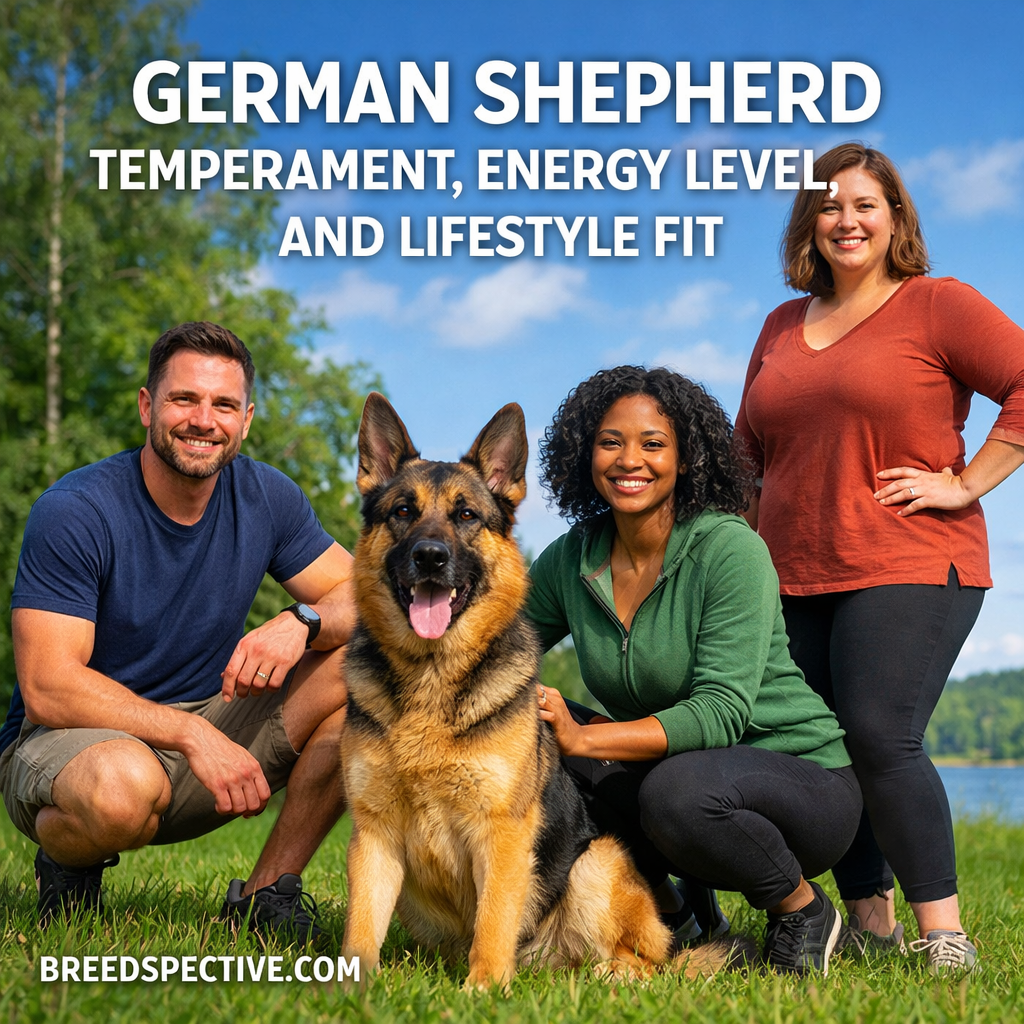
The German Shepherd is one of the most recognized and respected dog breeds in the world. Known for intelligence, loyalty, and versatility, this breed excels as a family companion, working dog, and protector. However, German Shepherds are not a low-maintenance or passive breed. Their temperament and energy level require commitment, structure, and an active lifestyle to truly thrive.
This guide explores German Shepherd temperament, energy needs, and lifestyle compatibility to help you decide if this breed is the right fit for your home.
German Shepherd Temperament Overview
German Shepherds are confident, intelligent, and deeply loyal dogs. They form strong bonds with their owners and often choose one primary person as their emotional anchor.
Common temperament traits include:
- Loyal and protective toward family
- Highly intelligent and quick to learn
- Confident but sensitive to environment and handling
- Alert, watchful, and naturally cautious with strangers
- Strong work ethic and desire for purpose
This combination makes German Shepherds excellent working dogs but also means they need consistent leadership and mental stimulation.
Are German Shepherds Good Family Dogs?
German Shepherds can be exceptional family dogs when properly trained and socialized. They are often gentle and patient with children they are raised with, especially in structured households.
What works well:
- Strong loyalty to family members
- Natural protective instincts
- Affectionate and emotionally intuitive
- Enjoy participating in family routines
Potential challenges:
- Overprotectiveness if not socialized early
- Can become anxious in chaotic or unpredictable homes
- Require supervision around very young children due to size and strength
German Shepherds do best in families that value training, consistency, and daily engagement.
German Shepherd Energy Level Explained
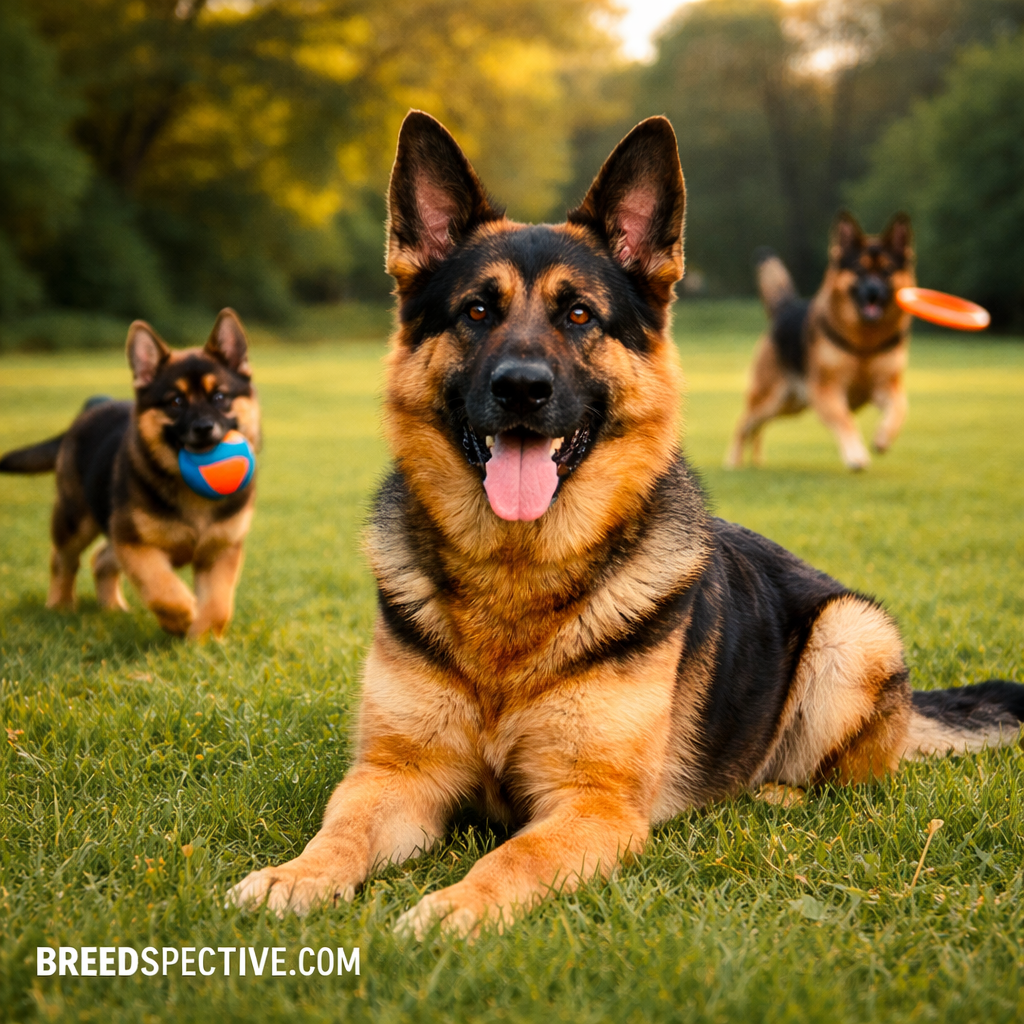
German Shepherds are a high-energy breed. While they can relax at home, they are not content with short walks or minimal exercise.
Typical energy characteristics:
- Require daily physical activity
- Thrive on structured exercise routines
- Enjoy tasks, games, and challenges
- Can develop destructive behaviors if under-stimulated
Without adequate exercise and mental outlets, German Shepherds may resort to chewing, digging, excessive barking, or pacing.
Daily Exercise Needs
Most adult German Shepherds need at least 60–90 minutes of exercise per day. Puppies and adolescents may require shorter but more frequent sessions.
Ideal activities include:
- Long walks or brisk jogs
- Hiking and outdoor adventures
- Fetch or frisbee in secure areas
- Obedience training sessions
- Agility, tracking, or scent work
- Structured play with rules and boundaries
Mental exercise is just as important as physical movement for this breed.
Mental Stimulation and Intelligence
German Shepherds rank among the most intelligent dog breeds. They thrive when given problems to solve and tasks to complete.
Mental stimulation ideas:
- Advanced obedience training
- Puzzle toys and food-dispensing games
- Learning new commands or tricks
- Scent-based games and tracking exercises
- Task-oriented roles like carrying packs or guarding property
A bored German Shepherd is often a stressed or destructive one.
Trainability and Behavior
German Shepherds are highly trainable and eager to please, but they require confident, calm leadership.
Training strengths:
- Learn commands quickly
- Respond well to positive reinforcement
- Excel in obedience, service, and protection roles
- Strong focus and responsiveness when trained consistently
Training challenges:
- Can become stubborn with inconsistent handlers
- Sensitive to harsh corrections
- May test boundaries during adolescence
Consistent structure, patience, and positive reinforcement are essential.
Lifestyle Fit: Who Is a German Shepherd Best For?
German Shepherds thrive in homes where they have purpose, routine, and engagement.
Best fit for:
- Active individuals or families
- Owners committed to training and exercise
- Homes with yards or easy access to outdoor space
- People interested in working, sport, or advanced obedience dogs
Not ideal for:
- Sedentary lifestyles
- Owners away from home most of the day
- First-time dog owners unwilling to invest in training
- Apartment living without daily exercise commitments
Final Thoughts
German Shepherds are loyal, intelligent, and deeply devoted dogs that thrive with structure, purpose, and engagement. When their physical and mental needs are met, they become exceptional companions and protectors. However, this breed is not a casual commitment.
If you’re ready to provide consistent training, daily exercise, and meaningful interaction, a German Shepherd can be one of the most rewarding dogs you’ll ever own.