
Why Some Dog Breeds Are Harder to House Train

Dog owners with breeds often considered harder to house train, including a Beagle, Siberian Husky, and Dachshund, in a home setting.
Dog owners pictured with breeds commonly considered harder to house train, highlighting differences in temperament and training needs. breedspective.com.

House training is one of the first—and sometimes most challenging—steps in raising a dog. While every dog can learn proper bathroom habits, some breeds tend to take longer than others. This doesn’t mean they’re stubborn or incapable; it usually comes down to instinct, temperament, physical traits, and how they were originally bred to work.

Understanding why certain dog breeds are harder to house train helps owners set realistic expectations, choose better training strategies, and avoid frustration during the process.

Continue reading “Why Some Dog Breeds Are Harder to House Train”

How Long It Takes to Train Different Dog Breeds

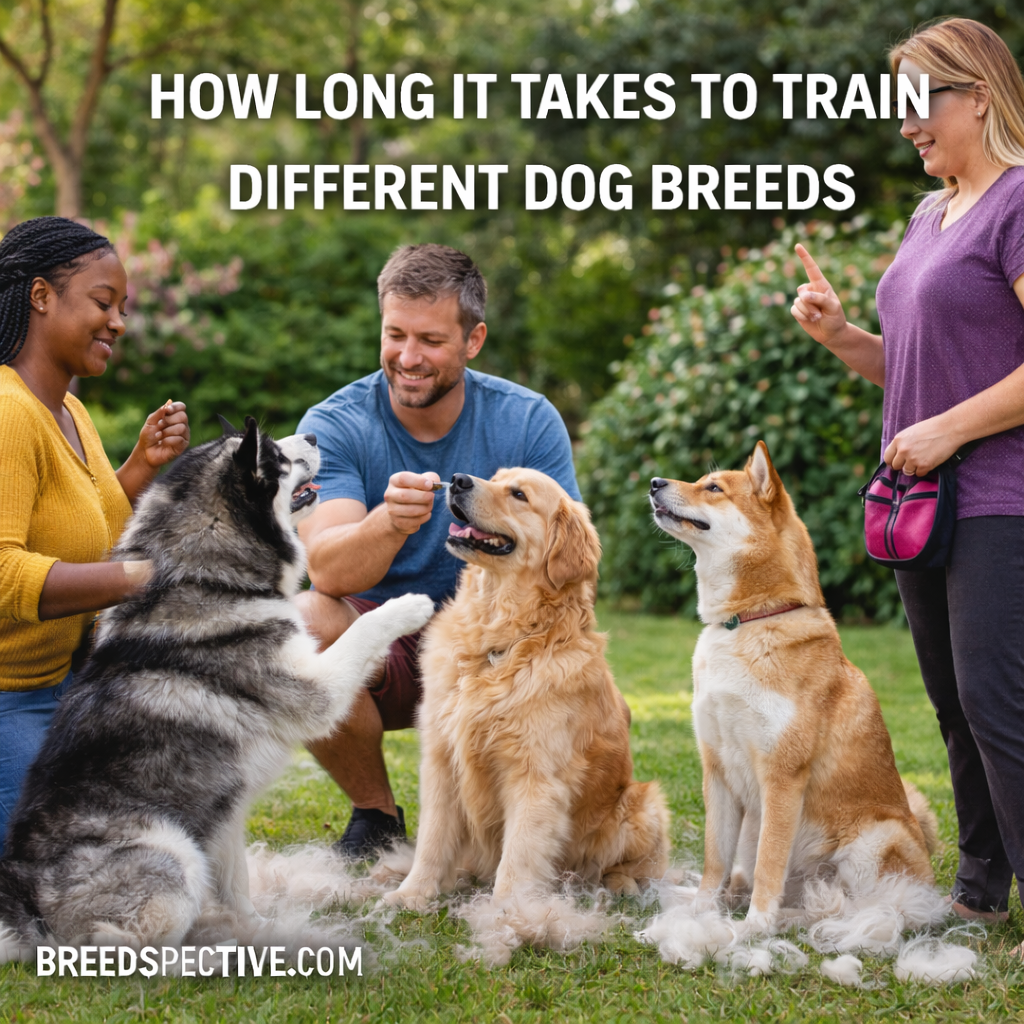
Different dog breeds training with people outdoors, showing varied learning speed, obedience, and training timelines.
Dogs of different breeds participating in training to illustrate how learning speed and trainability vary by breed. breedspective.com.

Training a dog is not a one-size-fits-all process. Some dogs pick up commands quickly and thrive on structure, while others need more repetition, patience, and motivation. How long it takes to train a dog depends heavily on breed traits, temperament, intelligence, and consistency, not just effort.

This guide explains how long training typically takes for different dog breeds, what affects training speed, and how to set realistic expectations based on breed tendencies.

Continue reading “How Long It Takes to Train Different Dog Breeds”

Basic Training Expectations by Dog Breed

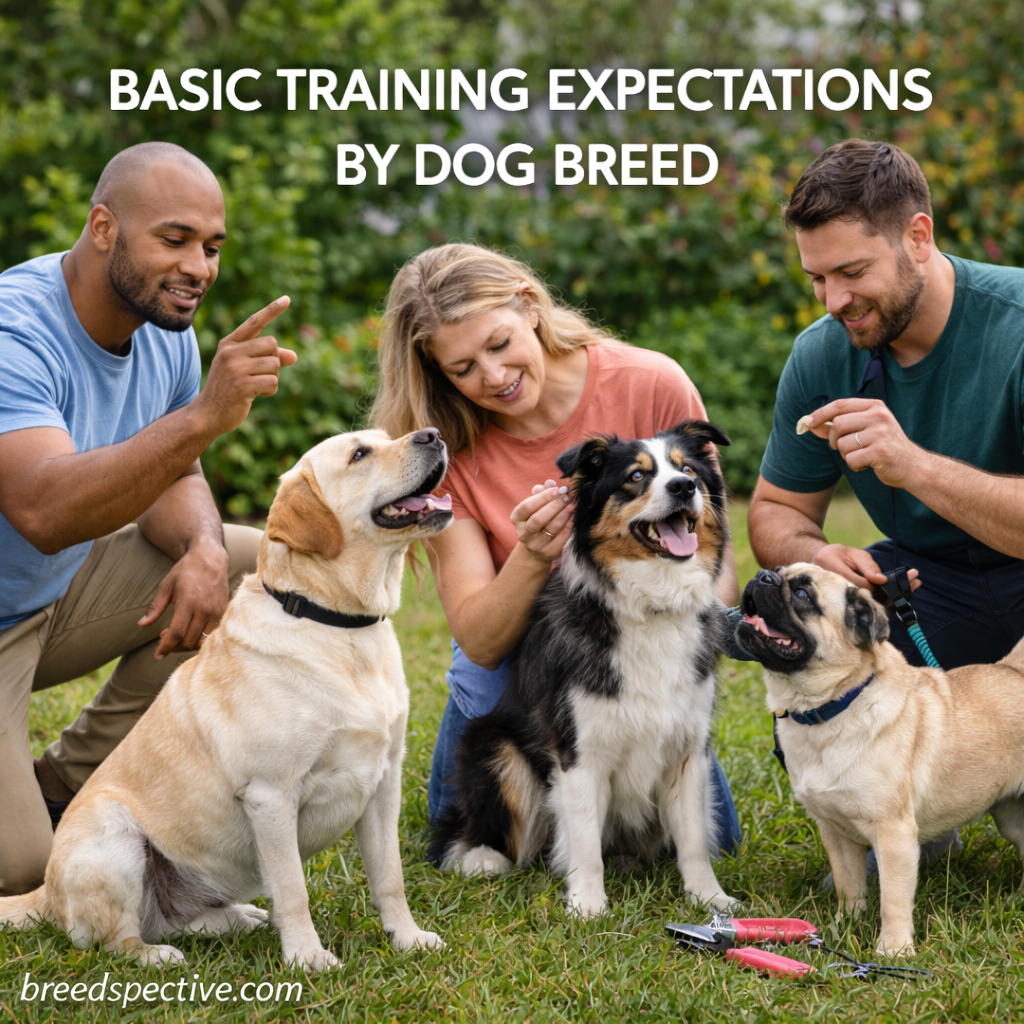
Dogs of different breeds training with their owners outdoors, showing how training expectations vary by breed type.
Dogs from different breed groups practicing basic training with their owners, highlighting breed-specific learning styles. breedspective.com.

Every dog needs training, but not every dog learns the same way or at the same pace. Breed traits play a major role in how dogs respond to training, what motivates them, and which habits come most naturally. Understanding basic training expectations by dog breed helps owners set realistic goals and build better communication from the start.

This guide explains how breed tendencies influence training and what owners should expect when working with different types of dogs.

Continue reading “Basic Training Expectations by Dog Breed”