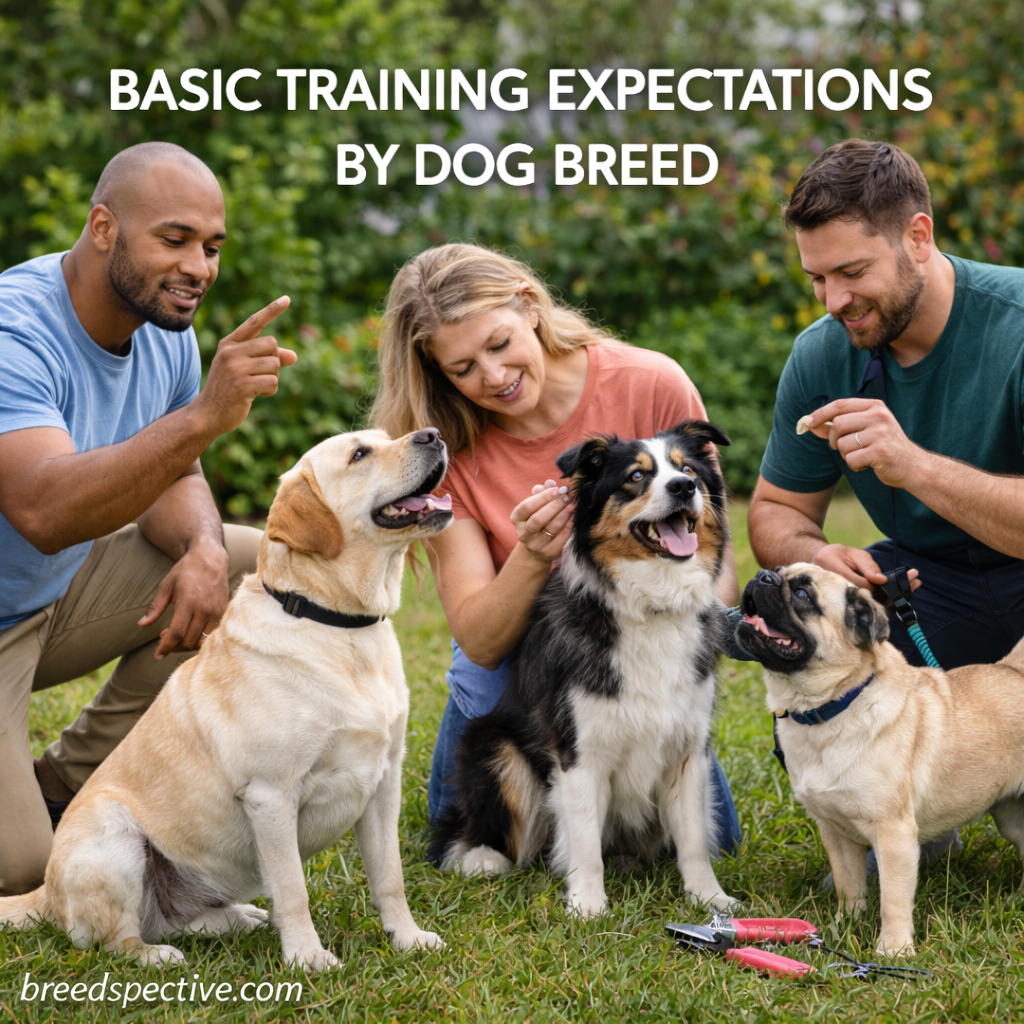
Every dog needs training, but not every dog learns the same way or at the same pace. Breed traits play a major role in how dogs respond to training, what motivates them, and which habits come most naturally. Understanding basic training expectations by dog breed helps owners set realistic goals and build better communication from the start.
This guide explains how breed tendencies influence training and what owners should expect when working with different types of dogs.
Why Dog Breed Matters in Training
Dog breeds were developed for specific purposes such as herding, hunting, guarding, or companionship. These original roles still influence modern behavior and learning styles.
Breed traits affect:
- Attention span
- Energy level
- Independence vs cooperation
- Sensitivity to correction
- Motivation style (food, praise, play)
Training success improves when methods align with natural instincts rather than working against them.
Universal Training Foundations for All Dogs
Regardless of breed, every dog benefits from the same basic training foundation.
Core training expectations include:
- House training
- Leash manners
- Basic obedience commands
- Socialization
- Impulse control
While the timeline varies by breed, consistency and positive reinforcement are essential for all dogs.
Training Expectations for Companion Breeds
Companion breeds were developed primarily for close human interaction rather than work.
Common examples include:
- Cavalier King Charles Spaniels
- Shih Tzus
- Bichon Frises
- Pugs
What to Expect
Companion breeds are often people-oriented and eager to please but may lack high drive.
Typical traits:
- Responsive to gentle training
- Sensitive to tone
- Shorter attention spans
- Strong attachment to owners
Training tips:
- Keep sessions short and positive
- Use praise and treats generously
- Avoid harsh correction
- Focus on consistency over intensity
Training Expectations for Sporting Breeds
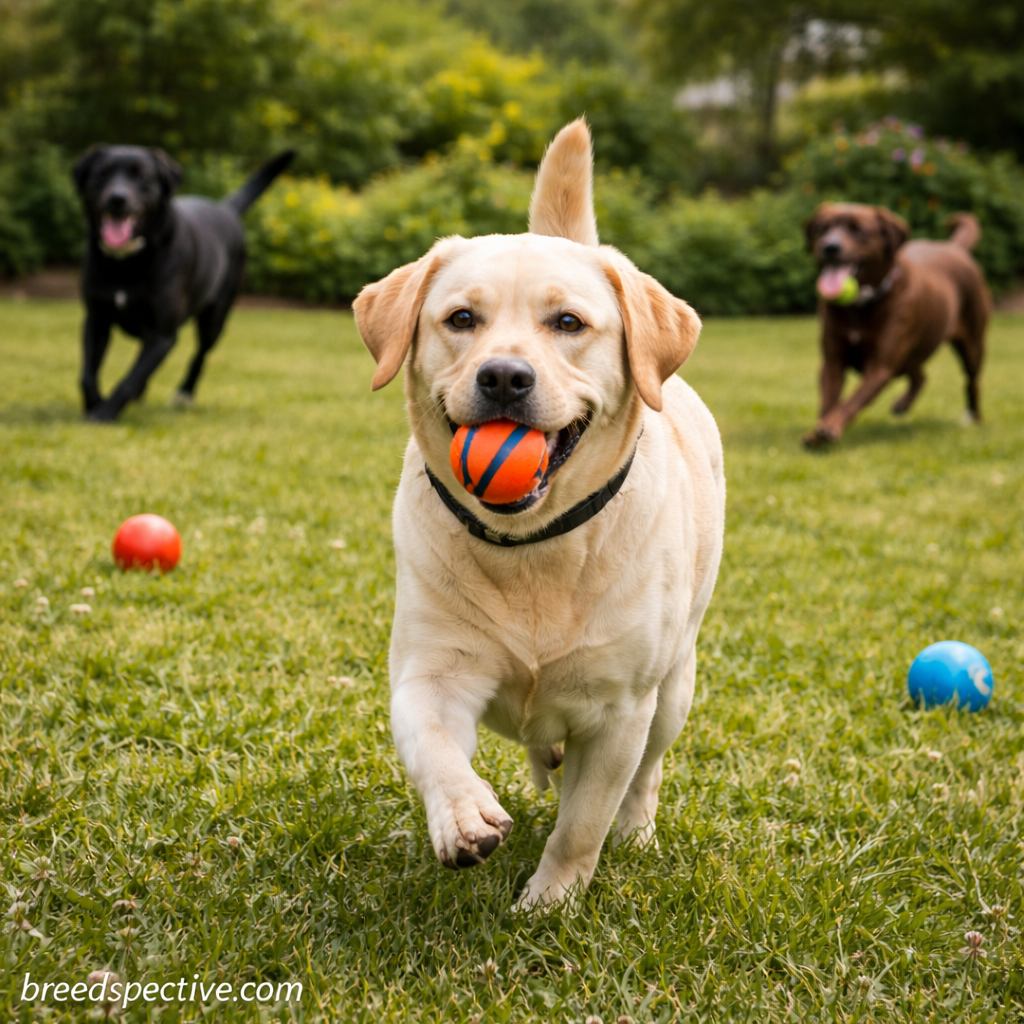
Sporting breeds were bred to work closely with humans during hunting and retrieving tasks.
Common examples include:
- Labrador Retrievers
- Golden Retrievers
- Spaniels
- Pointers
What to Expect
These breeds are often highly trainable and motivated.
Typical traits:
- Strong desire to work
- High energy levels
- Excellent recall potential
- Food and praise motivation
Training tips:
- Incorporate physical activity into training
- Use structured routines
- Provide mental challenges
- Reinforce calm behavior alongside enthusiasm
Training Expectations for Herding Breeds
Herding breeds are intelligent, alert, and naturally responsive to movement.
Common examples include:
- Border Collies
- Australian Shepherds
- German Shepherds
- Shetland Sheepdogs
What to Expect
Herding breeds often learn quickly but require direction.
Typical traits:
- High intelligence
- Strong focus
- Sensitivity to environment
- Tendency to control movement
Training tips:
- Provide clear rules and boundaries
- Use mental enrichment daily
- Redirect herding behaviors appropriately
- Avoid boredom, which leads to problem habits
Training Expectations for Working Breeds
Working breeds were developed for guarding, pulling, protection, and endurance tasks.
Common examples include:
- Rottweilers
- Doberman Pinschers
- Boxers
- Great Danes
What to Expect
These breeds are capable learners but often mature more slowly.
Typical traits:
- Strong confidence
- Physical power
- Protective instincts
- Need for leadership
Training tips:
- Start training early
- Maintain consistent structure
- Build trust before control
- Focus on impulse control and calm behavior
Training Expectations for Terriers
Terriers were bred to work independently and pursue prey.
Common examples include:
- Jack Russell Terriers
- West Highland Terriers
- Scottish Terriers
- Wire Fox Terriers
What to Expect
Terriers are intelligent but independent.
Typical traits:
- Strong prey drive
- Short bursts of focus
- Stubborn tendencies
- High confidence
Training tips:
- Keep sessions engaging and varied
- Use high-value rewards
- Avoid repetitive drills
- Be patient and persistent
Training Expectations for Hound Breeds
Hounds were bred to follow scent or sight independently over long distances.
Common examples include:
- Beagles
- Bloodhounds
- Greyhounds
- Coonhounds
What to Expect
Hounds can be challenging to train off-leash.
Typical traits:
- Strong scent focus
- Independent thinking
- Lower recall reliability
- Calm indoors but driven outdoors
Training tips:
- Use secure environments
- Prioritize leash training
- Reinforce recall heavily
- Accept selective listening as part of the breed
Training Expectations for Toy Breeds
Toy breeds are small in size but vary widely in temperament.
Common examples include:
- Chihuahuas
- Toy Poodles
- Pomeranians
- Yorkshire Terriers
What to Expect
Toy breeds are often underestimated in training needs.
Typical traits:
- High intelligence
- Sensitivity to handling
- Strong attachment
- Potential for small-dog syndrome
Training tips:
- Treat them like dogs, not accessories
- Set clear boundaries
- Avoid reinforcing attention-seeking behaviors
- Focus on confidence-building
Mixed Breeds and Training Expectations
Mixed-breed dogs may inherit traits from multiple breed types.
What to expect:
- Variable learning styles
- Combination of instincts
- Unique motivation patterns
Training tips:
- Observe individual behavior
- Adjust methods as needed
- Focus on the dog, not the label
- Remain flexible and patient
Mixed breeds often excel when training adapts to their individual strengths.
How Age Impacts Training Expectations
Age influences how dogs learn regardless of breed.
General age considerations:
- Puppies learn quickly but tire easily
- Adolescents test boundaries
- Adult dogs benefit from routine reinforcement
- Senior dogs can learn with adjusted expectations
Training should evolve with life stage rather than stop after puppyhood.
Common Training Mistakes Across Breeds
Certain mistakes affect training success across all breeds.
Avoid:
- Inconsistent rules
- Overly long sessions
- Punishment-based methods
- Unrealistic expectations
- Ignoring mental stimulation
Successful training builds communication, not control.
Setting Realistic Training Goals
Breed-aware expectations help owners stay patient and consistent.
Realistic goals include:
- Progress over perfection
- Breed-appropriate behavior
- Clear communication
- Long-term habit building
Understanding what comes naturally — and what doesn’t — leads to better outcomes.
Final Thoughts
Basic training expectations vary by dog breed, but every dog can learn when training respects its natural instincts and learning style. By understanding breed tendencies, owners can tailor their approach, reduce frustration, and build stronger bonds through effective communication.
Training is not about changing who a dog is — it’s about helping each dog thrive within its nature.