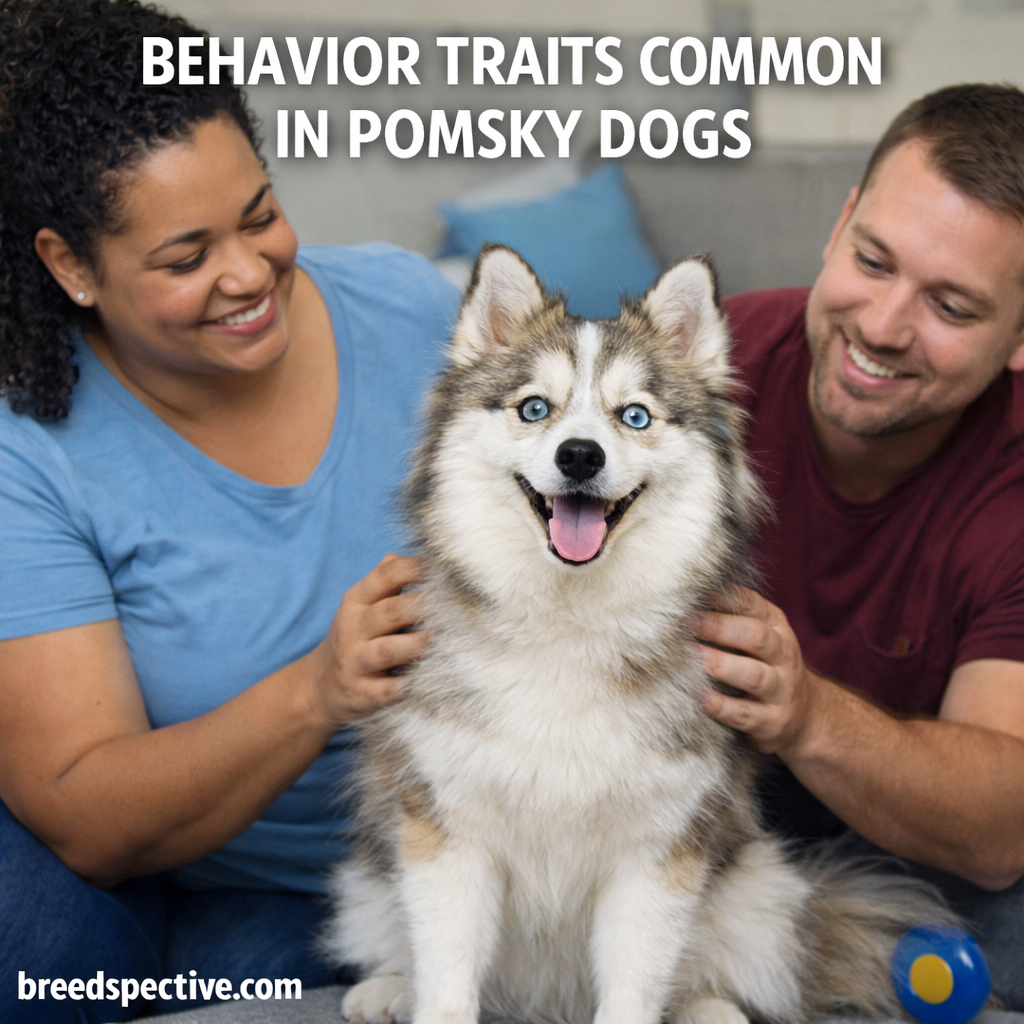
Pomskies — a mix between a Pomeranian and a Siberian Husky — are known for their expressive personalities, intelligence, and playful energy. While individual Pomskies can vary widely, many behavioral traits are commonly seen across this mixed breed due to the strong influence of both parent breeds.
Understanding these traits helps current and prospective owners provide the right environment, training, and daily structure for a happy, well-adjusted Pomsky.
High Intelligence and Quick Learning
Pomskies tend to be highly intelligent dogs, inheriting sharp minds from both parent breeds.
Common intelligence-related behaviors include:
- Fast learning during training sessions
- Strong problem-solving skills
- Curiosity about their environment
- Occasional stubbornness when bored
Because of their intelligence, Pomskies thrive with mentally stimulating activities such as puzzle toys, training games, and interactive play.
Playful and Energetic Nature
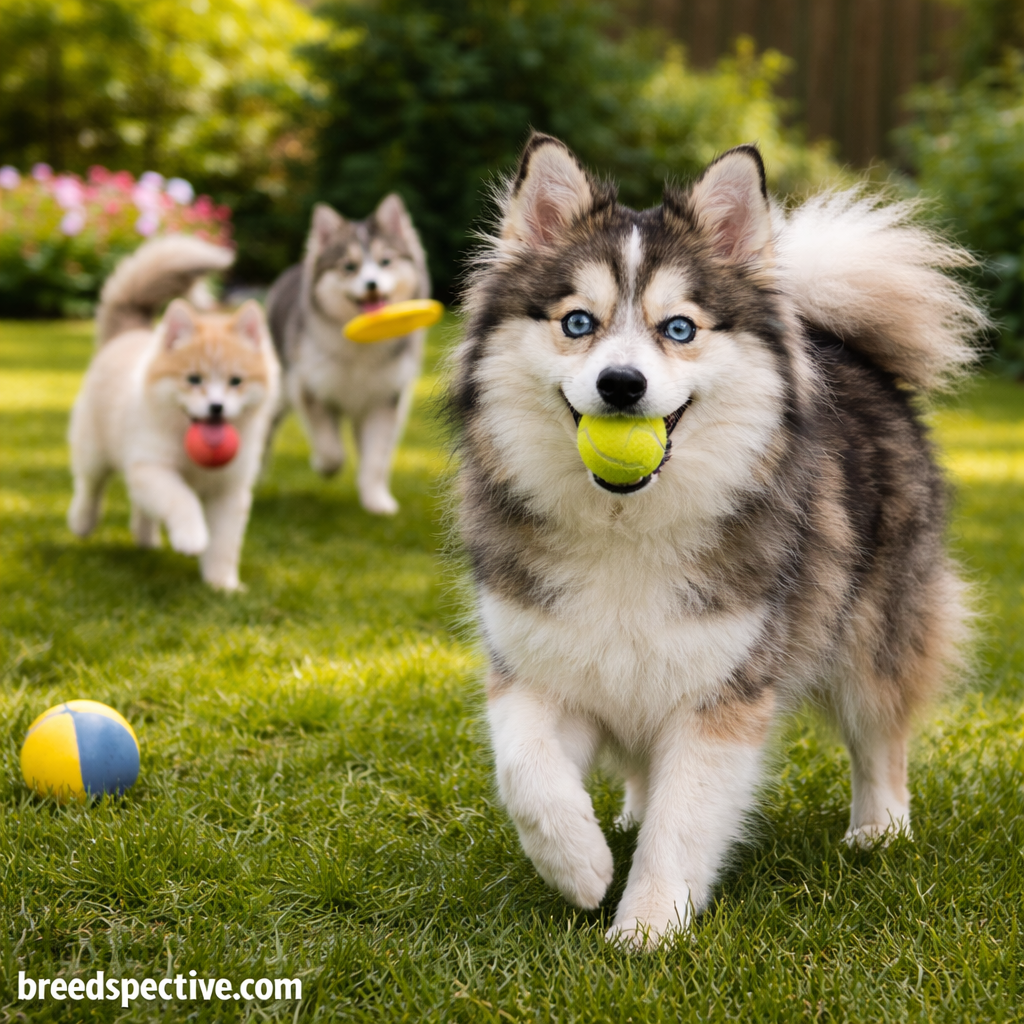
Most Pomskies are energetic and playful, though their energy level can range depending on whether they lean more toward the Husky or Pomeranian side.
Typical energy traits:
- Enjoyment of games like fetch and chase
- Bursts of zoomies, especially when excited
- Strong interest in outdoor activities
- Need for daily physical exercise
Without enough activity, Pomskies may develop restless or destructive behaviors.
Strong Attachment to Their Owners
Pomskies are known for forming close bonds with their families.
Attachment-related behaviors include:
- Following owners from room to room
- Seeking attention and affection
- Disliking long periods of isolation
- Showing excitement when family members return home
This strong attachment makes them loving companions but can also lead to separation-related stress if left alone too often.
Vocal and Expressive Communication
Thanks largely to their Husky heritage, Pomskies are often quite vocal.
Common vocal behaviors:
- Barking to alert or demand attention
- Howling or “talking” in response to sounds
- Expressive whining when excited or frustrated
Early training helps manage excessive vocalization, especially in apartment or shared living spaces.
Independent Yet Affectionate Personality
Pomskies often display a blend of independence and affection.
Behavioral balance may look like:
- Enjoying cuddles on their own terms
- Wanting attention but not constantly
- Making independent decisions during play or exploration
This mix makes them charming but can sometimes challenge first-time dog owners.
Social and Curious Around People
Most Pomskies are friendly and curious, especially when properly socialized early.
Social behavior traits:
- Interest in meeting new people
- Playful behavior with familiar guests
- Alertness around strangers
- Occasional cautiousness if under-socialized
Early exposure to different environments, sounds, and people helps create a confident adult Pomsky.
Potential for Stubbornness
Pomskies can show a stubborn streak, particularly during training.
Stubborn tendencies may include:
- Ignoring commands they find boring
- Testing boundaries
- Responding selectively to cues
Positive reinforcement, consistency, and short training sessions work best for keeping Pomskies engaged.
Prey Drive and Curiosity
Some Pomskies inherit a prey drive from their Husky lineage.
Related behaviors include:
- Chasing small animals
- Strong interest in moving objects
- Pulling on the leash during walks
Secure fencing and leash training are important to keep them safe.
Sensitivity to Environment and Routine
Pomskies often respond strongly to changes in routine or environment.
Sensitivity traits include:
- Stress during sudden schedule changes
- Anxiety in loud or chaotic settings
- Preference for predictable routines
Establishing consistency helps Pomskies feel secure and balanced.
Compatibility With Children and Other Pets
Pomskies can do well in family settings when properly trained and socialized.
General compatibility traits:
- Playful with children when supervised
- Can coexist with other dogs
- May chase smaller pets if not trained
Teaching boundaries and supervising interactions ensures positive relationships.
Signs a Pomsky Needs More Stimulation
Watch for these behaviors, which may indicate unmet needs:
- Excessive barking or howling
- Destructive chewing
- Digging or pacing
- Ignoring commands
These signs often improve with increased exercise, training, and enrichment.
Final Thoughts
Pomskies are intelligent, playful, and affectionate dogs with a strong personality. Their mix of independence, energy, and loyalty makes them rewarding companions for owners who can meet their mental and physical needs.
With proper training, socialization, and daily structure, Pomskies grow into confident, engaging dogs that bring energy and personality into any home.