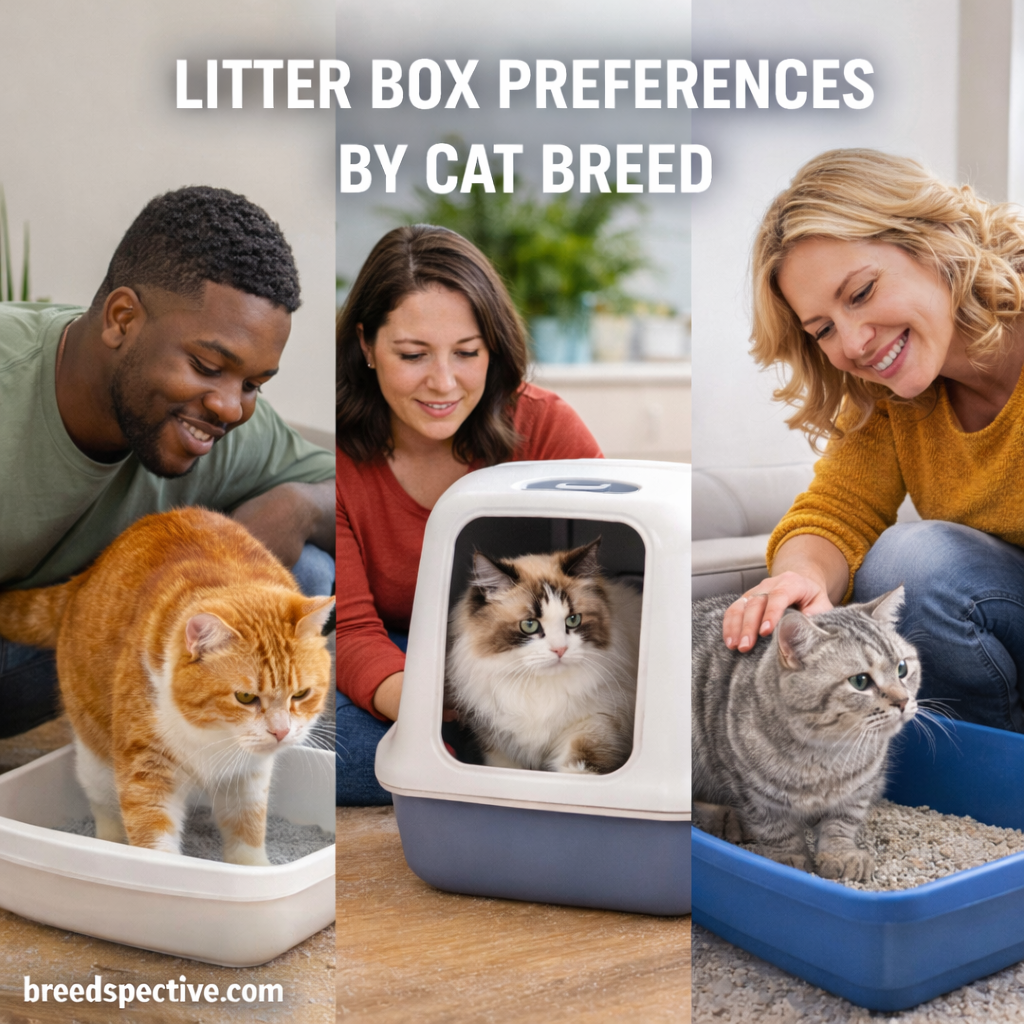
Litter box habits play a major role in a cat’s comfort, cleanliness, and overall well-being. While all cats share basic litter box needs, breed-specific traits can influence preferences for box size, litter type, cleanliness, privacy, and placement.
Understanding how different cat breeds approach litter box use helps owners prevent accidents, reduce stress, and create an environment that supports consistent, healthy habits.
Why Litter Box Preferences Matter
Cats are naturally clean animals, and most litter box problems stem from discomfort rather than disobedience.
When litter box preferences are not met, cats may:
- Avoid the box altogether
- Eliminate outside the box
- Develop stress-related behaviors
- Associate the box with discomfort or fear
Breed tendencies, combined with individual personality, can strongly influence litter box success.
Size and Space Preferences by Breed
The physical size and activity level of a breed affect litter box comfort.
Larger and Long-Bodied Breeds
Breeds such as Maine Coons, Ragdolls, and Norwegian Forest Cats often prefer:
- Extra-large litter boxes
- Open-top designs for easier movement
- High-sided boxes to contain litter
Cramped boxes can discourage use in larger cats.
Smaller and Compact Breeds
Breeds like Singapura or Munchkin cats often do well with:
- Standard-sized litter boxes
- Lower entry points
- Shallow boxes for easier access
Comfort and ease of entry are key factors.
Open vs Covered Litter Box Preferences
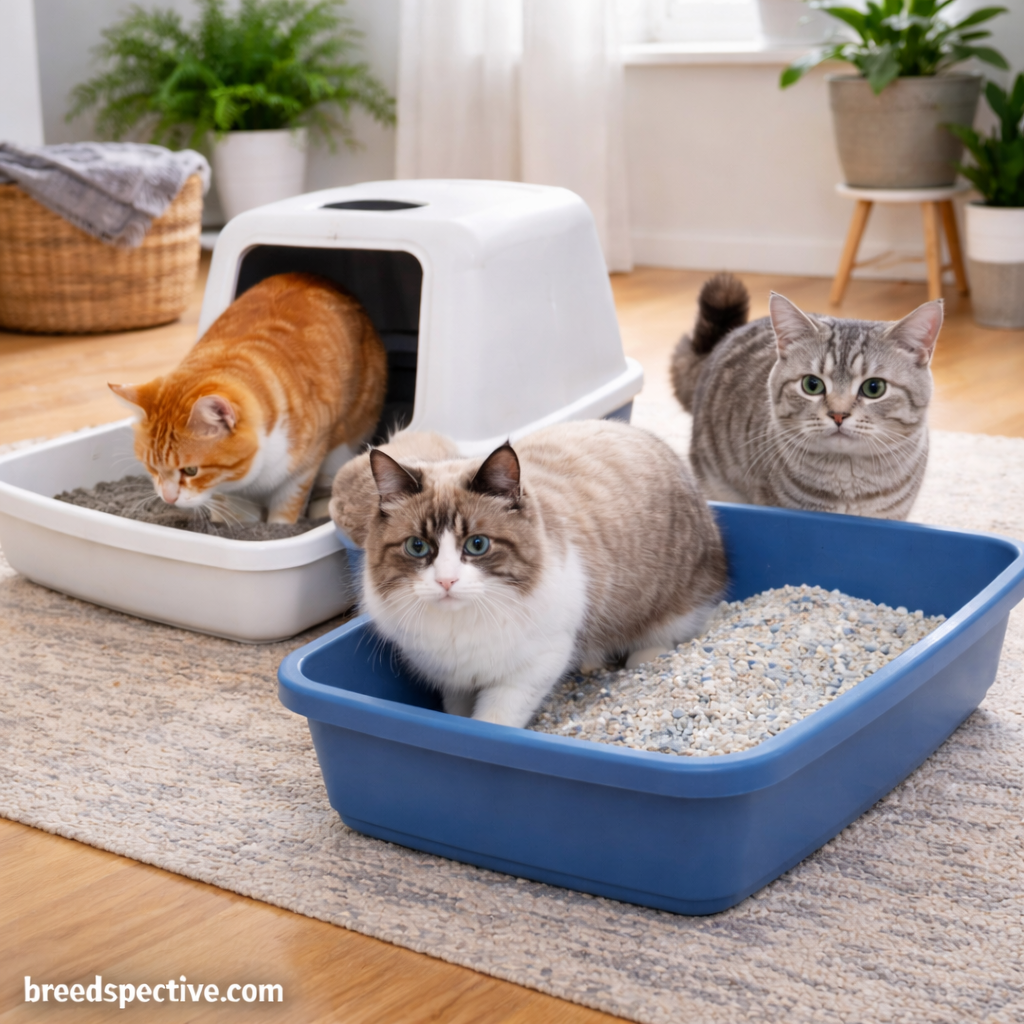
Different breeds show different tolerance levels for enclosed spaces.
Breeds That Often Prefer Open Boxes
- Siamese
- Oriental Shorthair
- Bengal
These breeds tend to be alert, social, and sensitive to surroundings. Open boxes provide better visibility and ventilation.
Breeds That Often Tolerate Covered Boxes
- British Shorthair
- Persian
- Ragdoll
Calmer, less reactive breeds may appreciate the privacy of covered boxes, as long as airflow and cleanliness are maintained.
Litter Texture and Type Preferences
Litter texture can be a deciding factor for many cats.
Fine-Grain and Soft Litter
Commonly preferred by:
- Siamese
- Burmese
- Abyssinian
These breeds often have sensitive paws and prefer sand-like textures.
Pellet or Coarser Litter
Sometimes tolerated by:
- Maine Coon
- Siberian
- Norwegian Forest Cat
Larger paws may handle coarser litter better, though many still prefer finer textures.
Scented litters are generally disliked across most breeds.
Cleanliness Sensitivity by Breed
Some breeds are especially sensitive to litter box cleanliness.
High Cleanliness Sensitivity
- Siamese
- Bengal
- Oriental breeds
These cats often require:
- Daily scooping
- Frequent litter changes
- Multiple boxes in multi-cat homes
Moderate Cleanliness Sensitivity
- Domestic Shorthair
- British Shorthair
- Ragdoll
While still clean animals, these breeds may tolerate slightly less frequent maintenance.
Privacy and Placement Preferences
Where the litter box is placed matters as much as the box itself.
Breeds That Prefer Privacy
- Persian
- Scottish Fold
- Russian Blue
Quiet, low-traffic areas help these cats feel secure.
Breeds That Prefer Awareness of Surroundings
- Bengal
- Siamese
- Savannah
These cats often prefer boxes placed where they can see activity and escape easily if startled.
Avoid placing litter boxes near loud appliances or busy walkways.
Multi-Cat Households and Breed Dynamics
In homes with multiple cats, breed traits can affect litter box sharing.
Social Breeds
- Ragdoll
- Burmese
- Domestic Shorthair
May tolerate shared boxes if kept extremely clean.
Territorial or Assertive Breeds
- Bengal
- Savannah
- Abyssinian
Often require multiple boxes to prevent stress or guarding behavior.
The general rule applies: one box per cat, plus one extra.
Age, Mobility, and Breed Considerations
Breed-related mobility traits can influence litter box access.
Short-Legged or Senior Cats
- Munchkin
- Older Persians
- Senior cats of all breeds
Prefer:
- Low-entry boxes
- Wide door openings
- Stable, non-slip placement
Ease of access becomes increasingly important with age.
Signs a Litter Box Doesn’t Suit Your Cat
Regardless of breed, these behaviors suggest a mismatch.
Warning Signs
- Eliminating just outside the box
- Frequent box avoidance
- Excessive scratching without use
- Sudden changes in bathroom habits
Adjusting box size, litter type, or placement often resolves these issues quickly.
Creating the Ideal Litter Box Setup
Breed tendencies offer guidance, but individual preference matters most.
Best Practices
- Experiment with box styles and litter textures
- Keep boxes clean and accessible
- Place boxes in quiet, safe locations
- Avoid sudden changes when possible
- Observe behavior closely during transitions
Flexibility and observation lead to long-term success.
Final Thoughts
Litter box preferences vary widely by cat breed, personality, and environment. While breed traits provide helpful insight, no two cats are exactly alike. Paying attention to comfort, cleanliness, and accessibility helps create a litter box setup that encourages consistent, stress-free use.
When a cat feels comfortable in their litter box, it supports not only good habits—but overall health and happiness.