
British Shorthair cats are often described as low-maintenance, but proper grooming and daily care are still essential to keeping them healthy, comfortable, and looking their best. Their dense coat, sturdy build, and calm temperament make care relatively straightforward, yet there are specific needs every owner should understand.
This article covers the grooming requirements, hygiene routines, and overall care needs of British Shorthair cats so you can support their long-term well-being.
Understanding the British Shorthair Coat
British Shorthairs are known for their thick, plush, short coats that feel almost like velvet. While the coat is not long or prone to severe matting, its density means loose hair can accumulate quickly.
Key coat characteristics include:
- Short but extremely dense fur
- Thick undercoat
- Seasonal shedding, especially in spring
- Naturally clean texture
Because of this density, regular grooming helps control shedding and maintain coat health.
Brushing Frequency and Technique
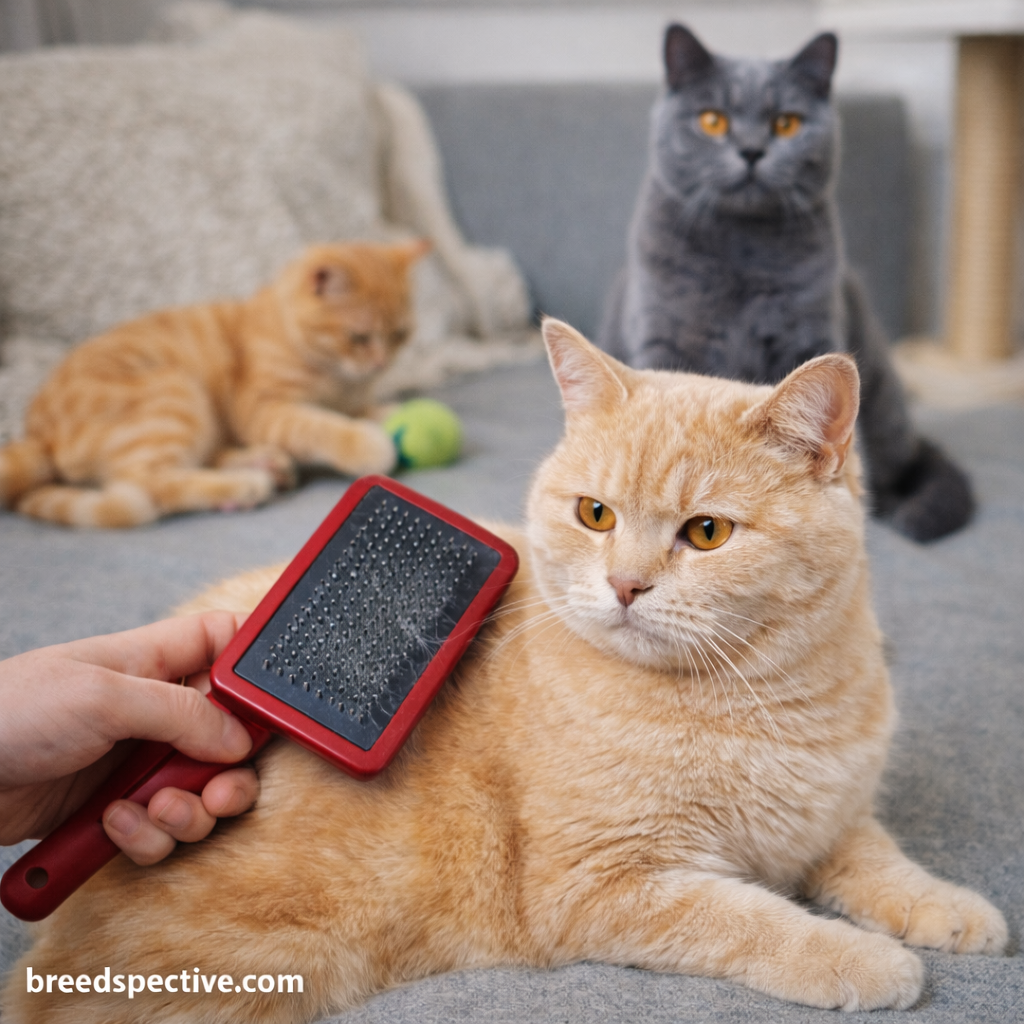
British Shorthair cats benefit from consistent brushing, even though their coats are short.
Recommended brushing routine:
- 1–2 times per week during normal seasons
- 2–3 times per week during heavy shedding periods
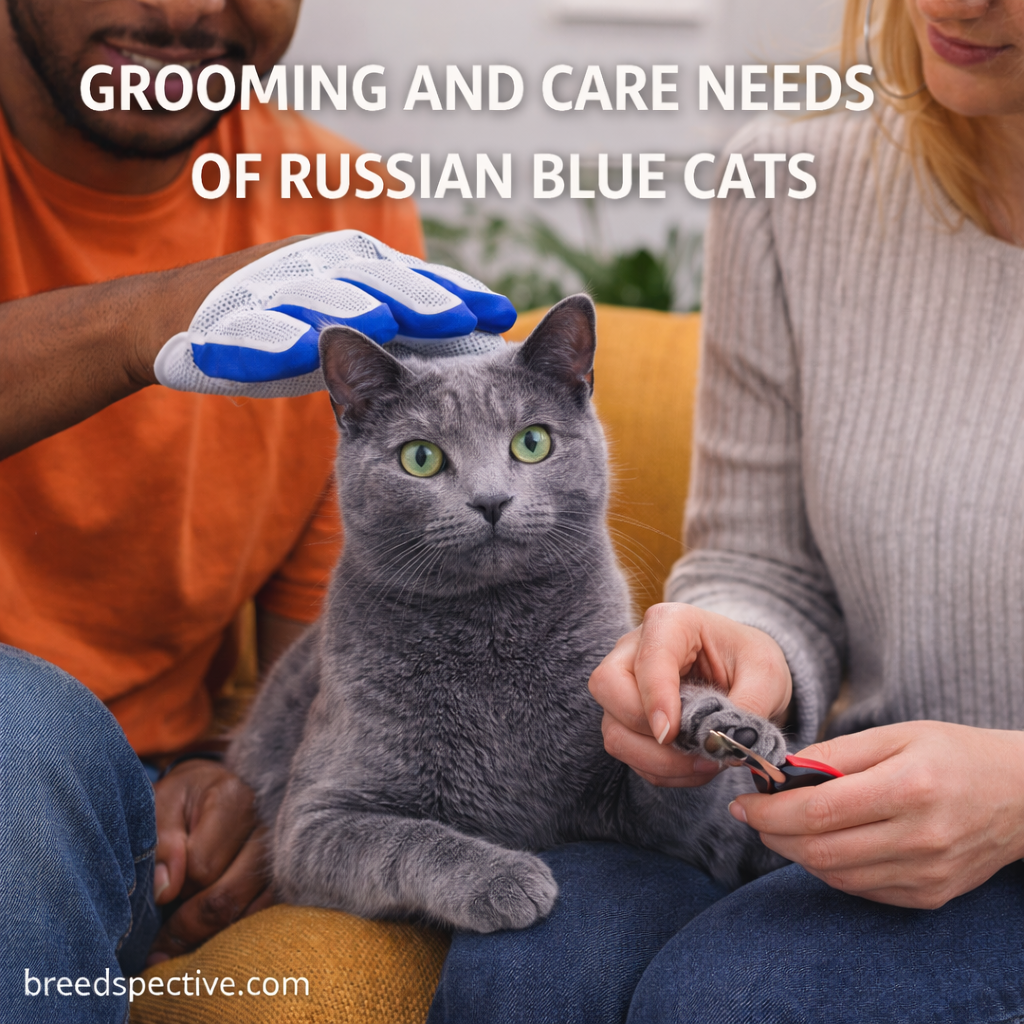
- Use a soft-bristle brush or rubber grooming mitt
- Brush gently to avoid skin irritation
Regular brushing removes loose hair, reduces hairballs, and distributes natural oils throughout the coat.
Managing Shedding and Hairballs
Shedding is normal for British Shorthairs, but it can be managed with proper care.
Helpful strategies include:
- Consistent brushing
- High-quality, balanced diet
- Access to fresh water
- Occasional hairball-control treats if needed
Because British Shorthairs groom themselves regularly, excess loose fur can increase hairball formation without routine brushing.
Bathing Needs
British Shorthair cats rarely need baths.
Bathing is usually only necessary if:
- The cat becomes unusually dirty
- There is exposure to something sticky or harmful
- A veterinarian recommends it
If bathing is required:
- Use a cat-specific shampoo
- Keep water warm and shallow
- Dry thoroughly to prevent chills
Most British Shorthairs prefer to stay clean on their own and may find baths stressful.
Nail Trimming and Paw Care
Regular nail trimming is an important part of British Shorthair care.
General nail care guidelines:
- Trim nails every 2–4 weeks
- Use cat-specific nail clippers
- Avoid cutting into the quick
- Check paw pads for dryness or debris
Providing scratching posts helps keep nails healthy and reduces the need for frequent trimming.
Ear Cleaning and Eye Care
British Shorthair cats have upright ears that generally stay clean, but routine checks are still important.
Ear care tips:
- Check ears weekly for redness or buildup
- Clean only if debris is visible
- Use a vet-approved ear cleaner
- Never insert cotton swabs deep into the ear
Eye care is minimal, though occasional wiping with a damp cloth may help remove minor discharge.
Dental Care and Oral Health
Dental hygiene is often overlooked but crucial for British Shorthairs.
Recommended dental care includes:
- Brushing teeth several times per week if tolerated
- Dental treats or toys designed for cats
- Regular veterinary dental checks
Good oral care helps prevent gum disease, tooth loss, and secondary health issues.
Skin Health and Coat Condition
Healthy skin supports a healthy coat.
To maintain skin health:
- Feed a nutritionally complete diet
- Avoid overbathing
- Monitor for dryness, flakes, or irritation
- Address sudden coat changes with a veterinarian
British Shorthairs typically have resilient skin, but changes can signal underlying health concerns.
Weight Management and Physical Care
British Shorthairs are prone to weight gain due to their stocky build and moderate activity level.
Care considerations include:
- Measuring food portions carefully
- Encouraging daily play
- Monitoring body condition regularly
- Adjusting diet as the cat ages
Maintaining a healthy weight supports joint health and grooming comfort, especially as cats get older.
Grooming Needs at Different Life Stages
Care routines may change as British Shorthairs age.
Kittens:
- Require gentle grooming to build tolerance
- Short, positive brushing sessions
Adults:
- Maintain consistent grooming schedules
- Monitor shedding and weight
Seniors:
- May need more brushing assistance
- Increased focus on joint comfort and dental care
Adapting care routines ensures comfort at every stage of life.
Common Grooming Mistakes to Avoid
Avoid these common errors when caring for a British Shorthair:
- Overbrushing with harsh tools
- Skipping grooming during shedding seasons
- Neglecting dental care
- Ignoring weight-related grooming difficulties
Gentle, consistent care is far more effective than infrequent intensive grooming.
Final Thoughts on Grooming and Care for British Shorthair Cats
British Shorthair cats are relatively easy to groom, but their dense coats and calm nature benefit from regular, thoughtful care. Consistent brushing, basic hygiene routines, and attention to weight and dental health go a long way in keeping this breed comfortable and healthy.
With proper grooming and care, British Shorthairs maintain their signature plush appearance and enjoy a high quality of life well into their senior years.