
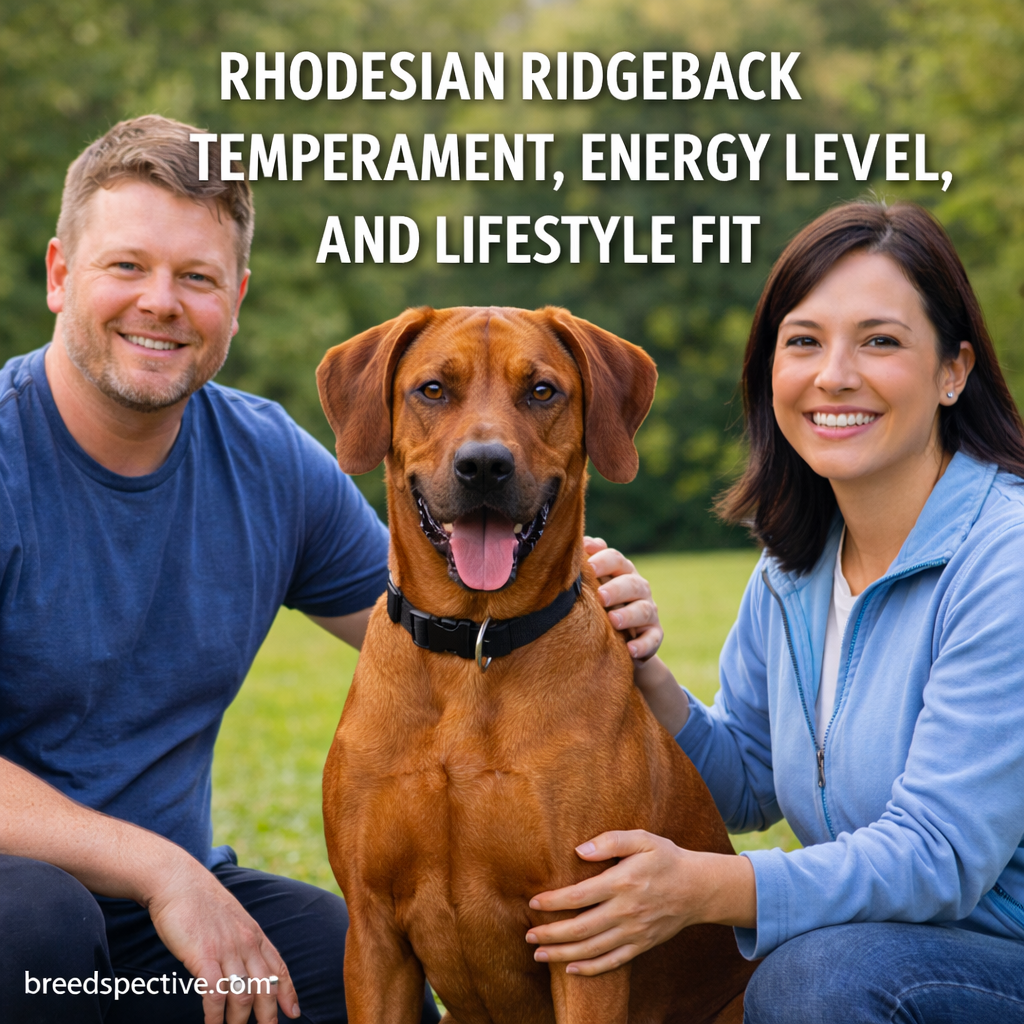
The Rhodesian Ridgeback is a powerful, independent, and loyal breed known for its athletic build and distinctive ridge of hair along its back. Originally bred to hunt large game and guard property, the Rhodesian Ridgeback combines confidence with calmness when raised in the right environment.
Understanding this breed’s temperament, energy level, and lifestyle needs is essential for determining whether a Rhodesian Ridgeback is a good match for your home.
Rhodesian Ridgeback Temperament Overview
Rhodesian Ridgebacks are often described as dignified and reserved rather than overly expressive or needy.
Key temperament traits include:
- Loyal and deeply bonded to their family
- Calm and composed indoors
- Independent thinkers
- Naturally protective without being aggressive
- Aloof or reserved with strangers
Unlike many highly social breeds, Ridgebacks tend to observe before engaging. This makes them excellent watchdogs, but not ideal for owners seeking an overly affectionate or constantly interactive dog.
Intelligence and Independence
Rhodesian Ridgebacks are intelligent but not blindly obedient.
What this means in daily life:
- They learn commands quickly
- They may choose when to respond
- Repetition without purpose can lead to disengagement
- Motivation-based training works best
This independence stems from their history as working dogs that needed to make decisions without constant human direction.
Energy Level and Exercise Needs
Rhodesian Ridgebacks are moderately high-energy dogs with a strong athletic foundation.
Daily Energy Requirements
Most adult Ridgebacks need:
- 60 to 90 minutes of daily exercise
This should include a mix of physical movement and mental engagement.
Best Types of Exercise

Ideal activities for this breed include:
- Long daily walks or hikes
- Jogging with experienced owners
- Off-leash running in secure areas
- Structured play sessions
- Training exercises that challenge focus
While energetic outdoors, Ridgebacks are often calm and relaxed once their exercise needs are met.
Energy Levels by Age
Puppies and adolescents:
- High bursts of energy
- Require structured play and rest
- Need joint-safe exercise
Adults:
- Strong endurance
- Balanced activity needs
- Thrive on routine
Seniors:
- Lower stamina
- Still benefit from daily walks
- Prefer gentle, consistent movement
Compatibility With Different Lifestyles
Rhodesian Ridgebacks are adaptable, but they are not a fit for every household.
Best-Suited Homes
This breed thrives in homes that offer:
- Active owners who enjoy outdoor activity
- Consistent daily routines
- Firm but fair leadership
- Space to move, ideally with a yard
They do best with owners who appreciate independence rather than constant attention.
Apartment Living Considerations
While possible, apartment living requires commitment.
Important factors include:
- Daily structured exercise
- Mental stimulation indoors
- Consistent training to prevent restlessness
- Limited tolerance for boredom
Without adequate outlets, Ridgebacks may become destructive or withdrawn.
Family and Social Compatibility
Rhodesian Ridgebacks can be excellent family dogs when properly socialized.
With Children
They are generally:
- Patient and tolerant
- Protective without being reactive
- Best with respectful, older children
Supervision is recommended due to their size and strength.
With Other Pets
Compatibility depends on early exposure.
Considerations include:
- Strong prey drive toward small animals
- Better success with dogs of similar size
- Early socialization is critical
They may not be suitable for homes with cats or small pets unless raised together carefully.
Training and Socialization Needs
Training a Rhodesian Ridgeback requires consistency and respect.
Effective training strategies:
- Positive reinforcement
- Clear boundaries
- Short, engaging sessions
- Early and ongoing socialization
Harsh corrections or dominance-based methods often lead to resistance rather than compliance.
Common Behavioral Challenges
Without proper structure, some challenges may arise.
Common issues include:
- Stubbornness or selective listening
- Pulling on leash
- Boredom-related destruction
- Aloofness mistaken for disobedience
Most of these behaviors improve significantly with proper exercise, training, and leadership.
Is the Rhodesian Ridgeback Right for You?
This breed is best for owners who:
- Value independence over clinginess
- Enjoy daily physical activity
- Can commit to training and structure
- Want a calm but confident companion
They are not ideal for first-time dog owners or households seeking a low-effort breed.
Final Thoughts
The Rhodesian Ridgeback is a confident, athletic, and loyal dog with a calm presence and strong independence. When matched with the right lifestyle and trained with patience and consistency, this breed becomes a devoted companion that balances power with quiet affection.
Understanding their temperament, energy needs, and lifestyle fit ensures a rewarding relationship built on mutual respect rather than constant control.