

The Weimaraner is a distinctive and elegant breed best known for its sleek silver-gray coat and striking eyes. While today the Weimaraner is admired as an energetic family companion, its origins are firmly rooted in aristocratic hunting traditions and purposeful working roles.
Understanding the Weimaraner’s history and original purpose helps explain the breed’s intelligence, intensity, and strong attachment to people that continue to define it today.
Origins of the Weimaraner
The Weimaraner originated in Germany in the early 19th century. The breed was developed by German nobility, particularly at the court of Weimar, where selective breeding focused on creating a versatile hunting dog with both speed and endurance.
Key points about the breed’s origins include:
- Developed in Germany during the 1800s
- Bred by nobles for elite hunting use
- Carefully controlled breeding to preserve quality
- Named after the Weimar court region
Early Weimaraners were considered exclusive dogs, owned only by members of the aristocracy.
Original Purpose: Big Game Hunting
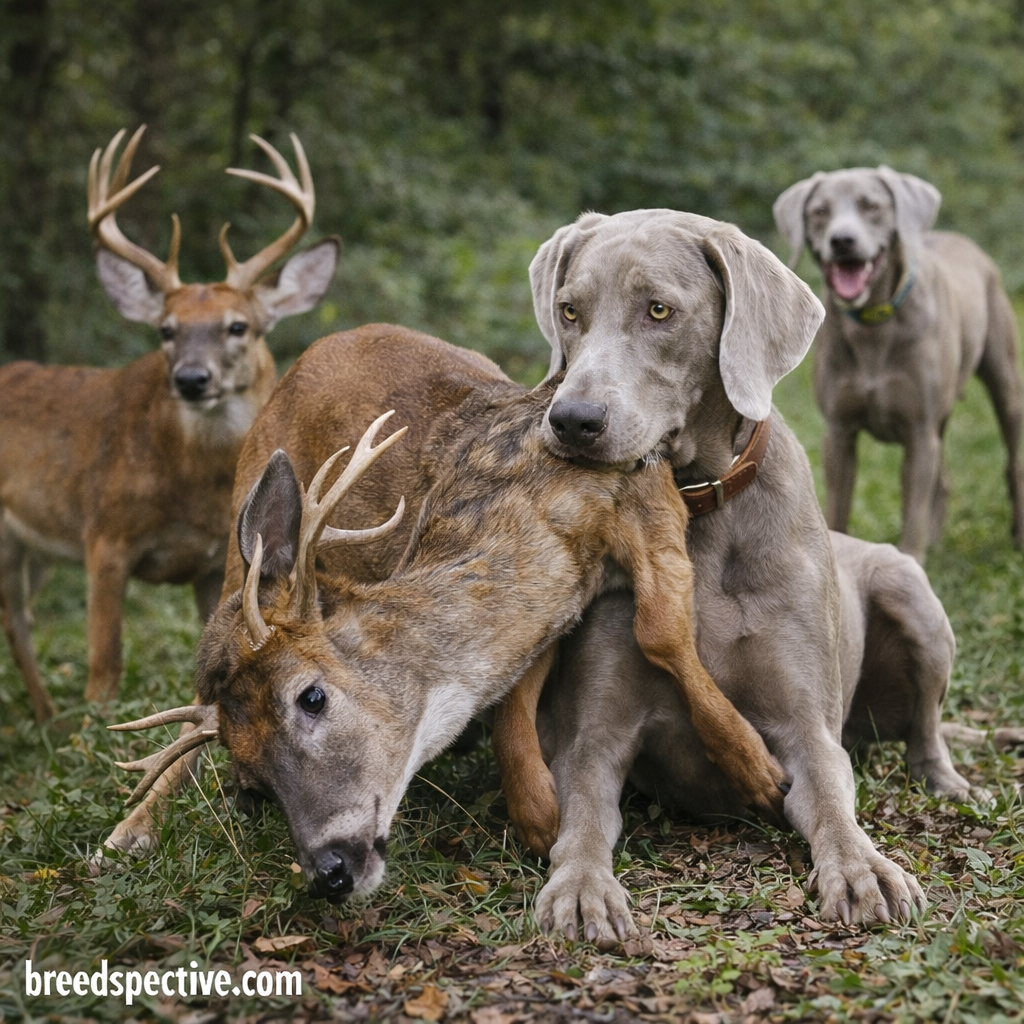
Unlike many modern sporting breeds that were developed primarily for bird hunting, the Weimaraner was originally bred to hunt large game.
Their early hunting roles included:
- Tracking deer, boar, and bear
- Following scent trails over long distances
- Holding game at bay until hunters arrived
- Working closely alongside human handlers
To fulfill these roles, the breed needed courage, stamina, intelligence, and strong loyalty.
Transition to Versatile Gun Dog
As big game hunting declined, the Weimaraner’s role evolved. Breeders adapted the dog’s purpose to suit changing hunting practices, particularly bird hunting.
Expanded hunting duties included:
- Pointing and retrieving birds
- Tracking wounded game
- Working in both forests and open fields
- Performing on land and in water
This transition shaped the Weimaraner into a highly versatile sporting dog while preserving its athletic build and drive.
Physical Traits Shaped by Purpose
Every major physical feature of the Weimaraner reflects its working heritage.
Purpose-driven traits include:
- Sleek, muscular body for speed and endurance
- Long legs built for covering large distances
- Short coat for ease of movement through brush
- Strong jaw and chest for retrieving and stamina
The breed’s distinctive silver-gray coat also helped hunters visually track the dog during pursuits.
Relationship With Humans
Weimaraners were bred to work very closely with their handlers, often remaining near their owners during hunts rather than ranging far ahead.
This close working relationship led to:
- Strong emotional bonds with owners
- High sensitivity to human interaction
- Preference for constant companionship
- Low tolerance for isolation
The modern Weimaraner’s reputation as a “velcro dog” can be traced directly to this history.
Introduction Beyond Germany
In the early 20th century, Weimaraners were introduced outside Germany, particularly to the United States.
Key historical developments include:
- Importation to the U.S. in the 1920s
- Growing popularity among hunters and dog enthusiasts
- Recognition by major kennel clubs
- Expansion into companion and show roles
Despite wider distribution, responsible breeders worked to maintain the breed’s working abilities.
Transition From Hunter to Companion
As hunting lifestyles changed, the Weimaraner increasingly became a family companion. However, the breed retained its original instincts.
Modern behaviors influenced by history include:
- High energy and endurance
- Strong prey drive
- Need for daily physical and mental stimulation
- Deep attachment to family members
Without appropriate outlets, these traits can lead to frustration or behavioral challenges.
How History Influences Modern Weimaraners
The Weimaraner’s past explains many of the breed’s strengths and challenges today.
Owners often notice:
- Exceptional athleticism
- Intelligence paired with independence
- Emotional sensitivity
- Desire to stay close to people
Understanding the breed’s origins allows owners to better meet its needs and prevent common issues.
Legacy of the Weimaraner
The Weimaraner’s legacy is one of elegance, power, and purpose. From aristocratic hunting grounds to modern homes, the breed has remained true to its original design as a devoted working partner.
Though no longer limited to noble estates, the Weimaraner still carries the spirit of a dog bred to work hard and bond deeply with its people.
Final Thoughts on Weimaraner History
The Weimaraner was never meant to be a passive companion. It was bred to hunt, think, and move alongside humans with intensity and purpose.
Understanding the Weimaraner’s history and original purpose provides essential insight into its temperament, energy level, and lifestyle needs—making it easier to appreciate and care for this remarkable breed today.