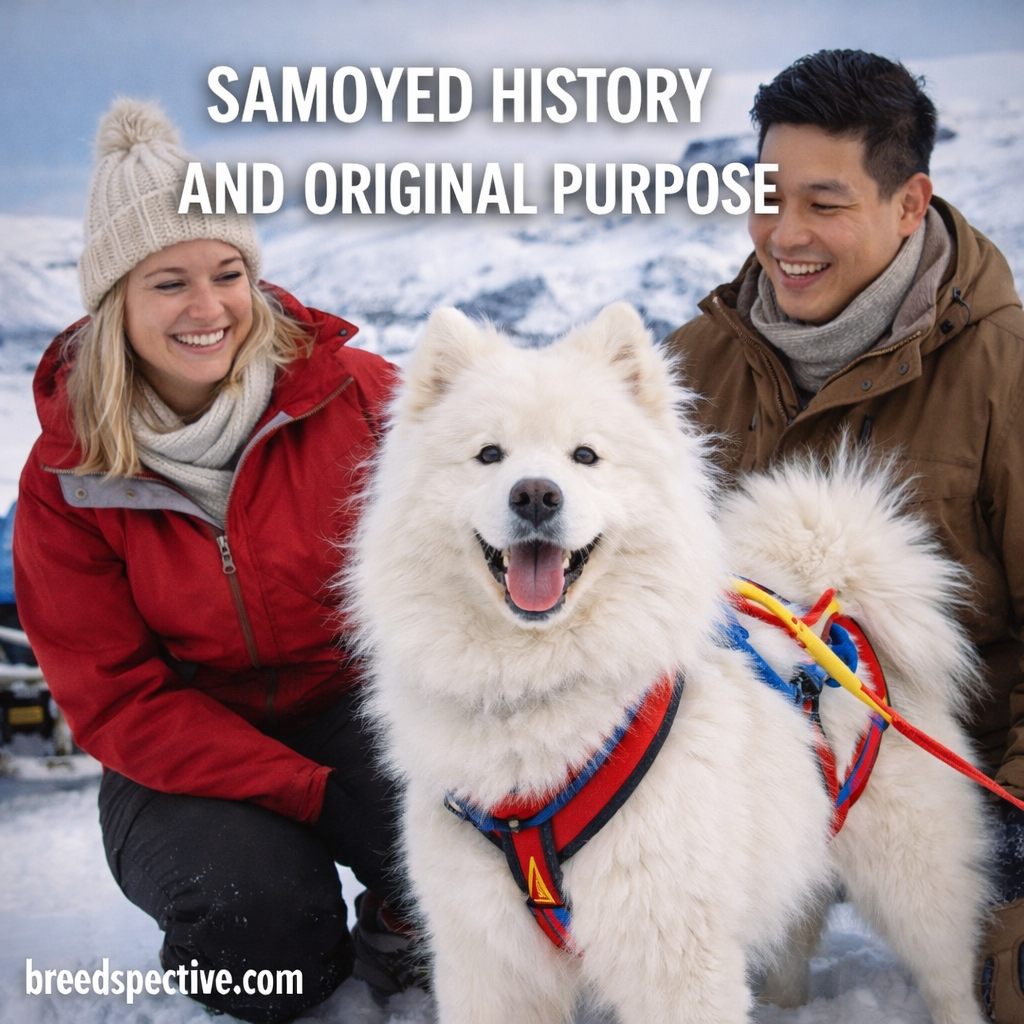
The Samoyed is one of the most visually striking dog breeds, instantly recognized for its thick white coat and friendly “Sammy smile.” While today the Samoyed is often admired as a loving family companion, its origins are deeply rooted in hard work, endurance, and survival in some of the harshest climates on Earth.
Understanding the Samoyed’s history and original purpose explains many of the breed’s modern traits, including its high energy level, sociable nature, and strong bond with humans.
Origins of the Samoyed Breed
The Samoyed takes its name from the Samoyedic peoples of Siberia, a group of nomadic tribes who relied heavily on dogs for survival. These dogs were not just tools—they were integral members of daily life.
Key points about the Samoyed’s origins include:
- Developed in Siberia thousands of years ago
- Bred by nomadic reindeer-herding tribes
- Lived closely with humans in extreme cold
- Selected for endurance, strength, and temperament
Unlike many breeds developed for a single task, the Samoyed was valued for versatility and companionship.
Original Purpose: Working Dog of the Arctic
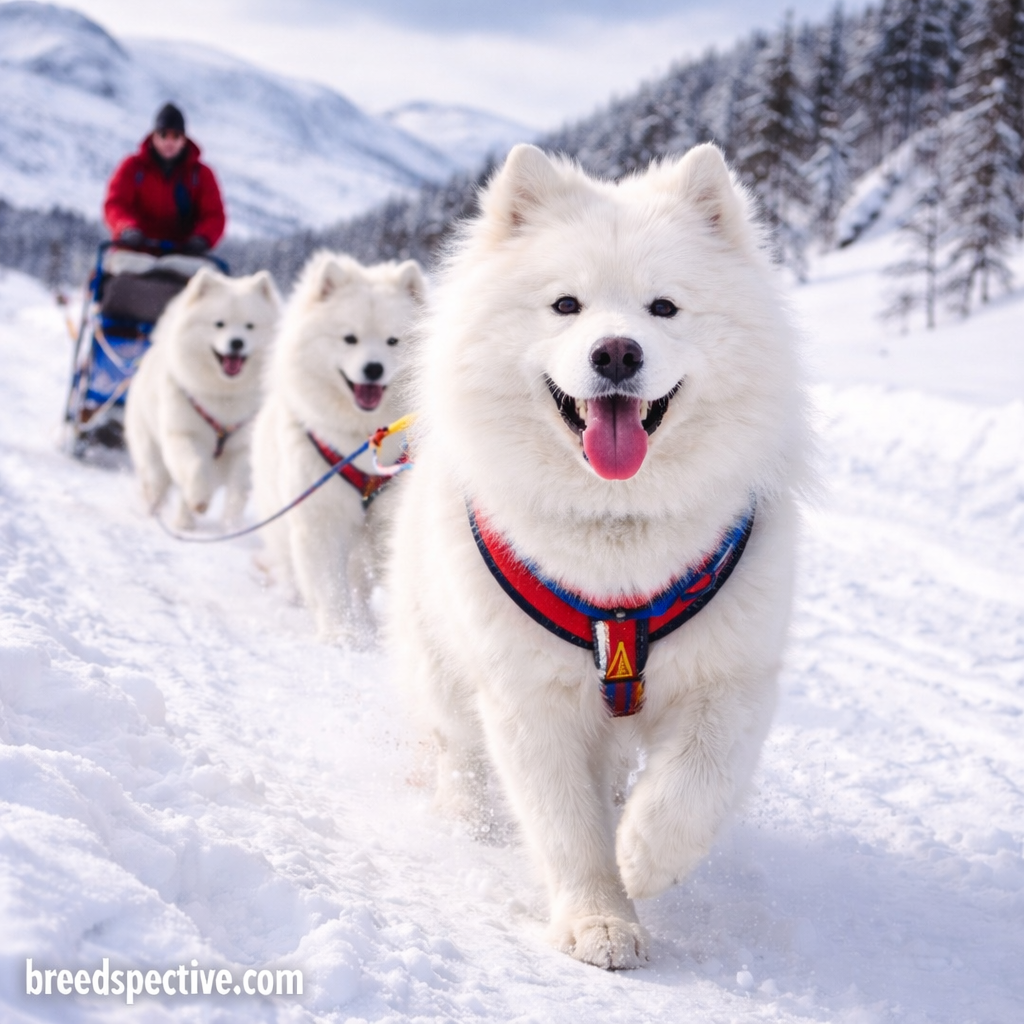
Samoyeds were bred to perform multiple demanding jobs in freezing environments. Their original purpose extended far beyond simple companionship.
Primary working roles included:
- Herding and guarding reindeer
- Pulling sleds across snow and ice
- Hunting and tracking game
- Providing warmth by sleeping alongside people
Their thick double coat insulated them against subzero temperatures, while their strength and stamina allowed them to work long hours without fatigue.
Physical Traits Shaped by Purpose
Every defining feature of the Samoyed can be traced back to its working heritage.
Purpose-driven traits include:
- Dense double coat for insulation and weather protection
- Curled tail to cover the nose while sleeping in snow
- Strong, muscular build for pulling and endurance
- Upright ears to reduce frostbite risk
- A smiling expression that helps prevent drool freezing
These physical characteristics made Samoyeds uniquely suited to Arctic survival.
Relationship With Humans
One of the most defining aspects of Samoyed history is how closely the breed lived with people. Unlike many working dogs kept outdoors, Samoyeds often shared sleeping spaces with families.
This close bond led to:
- Exceptionally people-friendly temperaments
- Strong desire for companionship
- Low tolerance for isolation
- High emotional sensitivity
The Samoyed’s affectionate nature today is a direct result of generations of close human interaction.
Spread Beyond Siberia
In the late 19th and early 20th centuries, Samoyeds were introduced to Europe and other parts of the world. Arctic explorers played a key role in bringing the breed to wider attention.
Important historical milestones include:
- Use in polar expeditions for sled pulling
- Introduction to England in the late 1800s
- Recognition by kennel clubs in the early 20th century
- Transition from working dog to show and companion breed
Despite these changes, responsible breeders worked to preserve the Samoyed’s working traits and temperament.
Transition From Working Dog to Companion
As modern transportation replaced sled dogs, the Samoyed’s role shifted. While still capable of work, the breed increasingly became a companion animal.
However, many original instincts remain:
- High energy and stamina
- Love of outdoor activity
- Strong social needs
- Vocal communication
These traits often surprise owners who expect a purely decorative breed.
How History Influences Modern Samoyed Behavior
Modern Samoyeds still reflect their working ancestry in daily behavior.
Owners often notice:
- Need for regular physical activity
- Desire to be involved in family life
- Strong pulling instincts
- Playfulness combined with endurance
Understanding this history helps owners meet the breed’s needs rather than misinterpreting natural behaviors as problems.
Legacy of the Samoyed
The Samoyed’s legacy is one of resilience, partnership, and trust. Bred to survive alongside humans in extreme conditions, the breed developed both physical toughness and emotional warmth.
Today’s Samoyed may no longer herd reindeer or pull sleds across Siberia, but its history remains deeply embedded in its personality and lifestyle needs.
Final Thoughts on Samoyed History
The Samoyed is far more than a beautiful white dog. It is a breed shaped by centuries of hard work, close human bonds, and survival in unforgiving environments.
Understanding the Samoyed’s history and original purpose provides valuable insight into its temperament, energy level, and lifestyle requirements—making it easier to appreciate and care for this remarkable breed in the modern world.