Basset Hounds are known for their gentle nature, soulful expressions, and relaxed personalities. However, like all breeds, they come with specific behavioral challenges shaped by their history as scent-tracking dogs. Understanding these common issues helps owners set realistic expectations and build a happier, more balanced relationship with their Basset Hound.
This guide breaks down the most frequent behavioral challenges seen in Basset Hound dogs, why they happen, and how owners can manage them effectively.
Stubbornness and Selective Listening
One of the most talked-about Basset Hound behaviors is stubbornness. While this can feel frustrating, it is closely tied to the breed’s intelligence and independence.
Why it happens:
- Basset Hounds were bred to work independently while tracking scent
- They are problem-solvers, not obedience-driven
- Strong smells easily override commands
What owners often experience:
- Ignoring commands when distracted
- Slow or inconsistent responses
- Choosing scent exploration over recall
Consistent routines, short training sessions, and high-value rewards tend to work best with this breed.
Strong Scent Fixation

Basset Hounds have one of the strongest noses in the dog world. This incredible scent ability is impressive, but it can also create behavioral challenges in everyday life.
Common scent-related issues include:
- Pulling hard on the leash during walks
- Wandering off when off-leash
- Becoming difficult to redirect once focused on a smell
Because scent-following is instinctual, it’s important to use secure leashes, fenced areas, and scent-friendly activities rather than trying to suppress this behavior entirely.
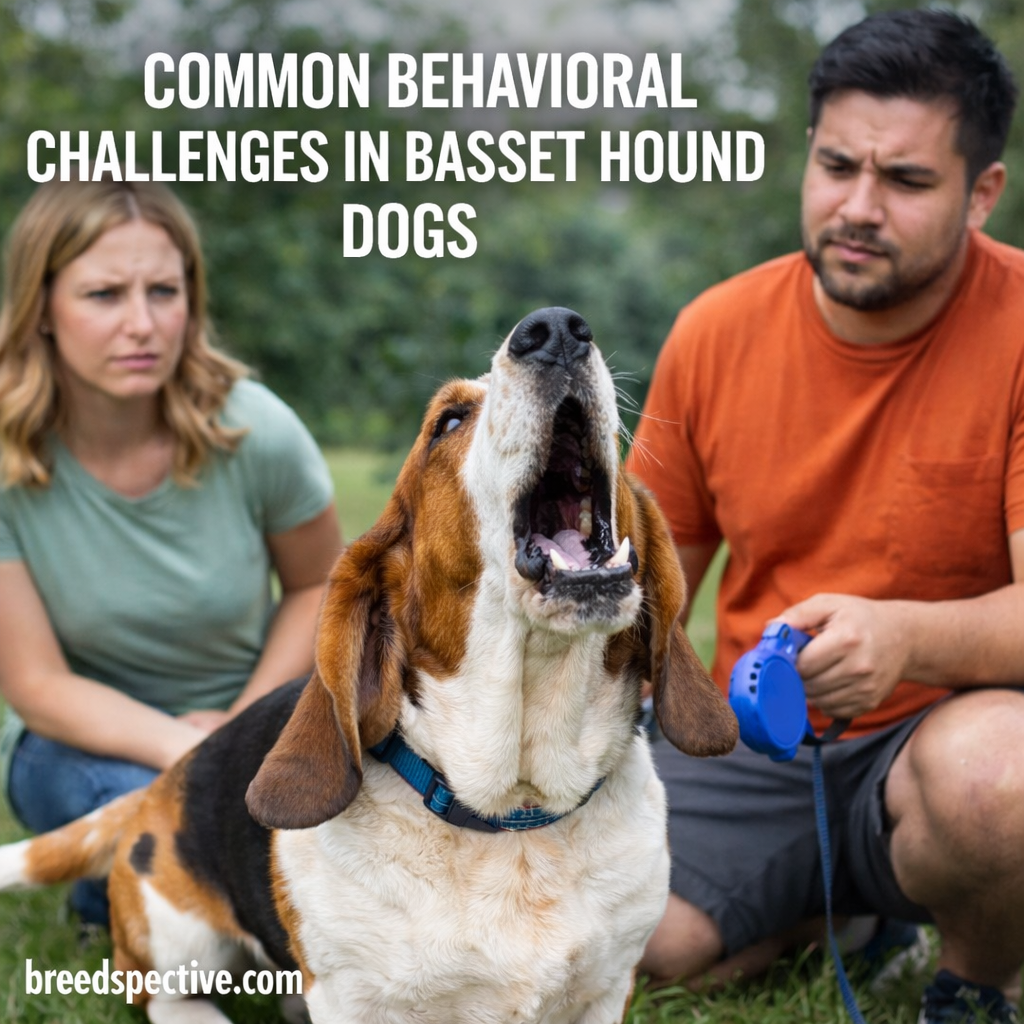
Excessive Vocalization and Howling
Basset Hounds are vocal dogs and are known for their deep baying howl. While this trait was useful for hunters, it can become problematic in modern homes.
Triggers for excessive vocalization include:
- Boredom or lack of stimulation
- Loneliness or separation anxiety
- Hearing unfamiliar noises
- Wanting attention or food
Providing mental enrichment and avoiding long periods of isolation can significantly reduce unnecessary howling.
Separation Anxiety
Basset Hounds are highly social and form strong bonds with their people. This makes them prone to separation anxiety if left alone too often or for long periods.
Signs of separation anxiety may include:
- Howling or barking when alone
- Destructive chewing
- Pacing or restlessness
- Accidents indoors despite being house-trained
Gradual alone-time training, consistent routines, and companionship from another pet can help ease anxiety.
Food Obsession and Begging Behavior
Basset Hounds are extremely food-motivated, which makes them easier to train but also more likely to develop begging or food-related behavior issues.
Common food-related challenges include:
- Persistent begging at meals
- Stealing food from counters or tables
- Eating too quickly
- Weight gain due to overfeeding
Structured feeding schedules and strict boundaries around food are essential for maintaining both behavior and health.
House Training Difficulties
House training can take longer with Basset Hounds compared to some other breeds. This is usually due to their independent nature rather than a lack of intelligence.
Common house-training challenges:
- Inconsistent signaling when needing to go outside
- Slow learning of routines
- Accidents if schedules are not maintained
Patience, routine, and positive reinforcement are far more effective than punishment for this breed.
Leash Manners and Pulling
Because Basset Hounds naturally follow scent trails with determination, leash pulling is a frequent complaint among owners.
Typical leash-related issues include:
- Pulling toward interesting smells
- Stopping abruptly to sniff
- Ignoring handler direction during walks
Using harnesses designed to reduce pulling and allowing controlled sniffing time can improve walk behavior without frustration.
Low Motivation for Repetitive Tasks
Basset Hounds often lose interest in repetitive training or activities. Once they understand a command, they may see no reason to repeat it unless properly motivated.
This can appear as:
- Refusing to repeat commands
- Walking away during training
- Responding only when rewards are present
Keeping training sessions short, varied, and engaging helps maintain their attention.
How to Successfully Manage Basset Hound Behavior
Most behavioral challenges in Basset Hounds stem from instinct, not defiance. Owners who understand the breed’s background tend to have the most success.
Helpful strategies include:
- Using positive reinforcement consistently
- Providing scent-based mental stimulation
- Maintaining predictable daily routines
- Avoiding harsh corrections
- Meeting social and companionship needs
When these needs are met, Basset Hounds are generally calm, affectionate, and well-mannered dogs.
Final Thoughts on Basset Hound Behavioral Challenges
Basset Hounds are not difficult dogs, but they are unique. Their behavior reflects centuries of breeding for scent work, independence, and endurance. What some see as stubbornness is often intelligence paired with instinct.
With patience, structure, and understanding, most behavioral challenges in Basset Hound dogs can be managed successfully, allowing their loving and loyal nature to truly shine.