
The Bloodhound is one of the oldest purpose-bred scent hounds in the world, renowned for its unmatched tracking ability and methodical working style. Unlike many breeds that evolved for speed or guarding, the Bloodhound was developed almost exclusively for scent discrimination and long-distance trailing.
Understanding the Bloodhound’s history explains why the breed is so independent, persistent, and singularly focused on scent today.
Ancient Origins of the Bloodhound
The Bloodhound’s roots trace back over a thousand years to medieval Europe.
Early development
- Descended from early scent hounds in Western Europe
- Refined by monks in monasteries
- Bred for tracking humans and game
- Selected for nose accuracy rather than speed
Early Bloodhound-type dogs were carefully bred in monasteries in what is now Belgium and France. These monks prioritized precision and reliability, keeping detailed breeding records and selecting dogs that could follow faint scent trails over long distances.
The St. Hubert Hound Connection
The modern Bloodhound is closely linked to the St. Hubert Hound.
Role of the St. Hubert Hound
- Developed by monks of Saint Hubert
- Known for exceptional scenting ability
- Used to track deer and wild boar
- Foundation stock for modern Bloodhounds
These dogs were so valued that they were often gifted to royalty and nobility. Over time, the breed spread throughout Europe, particularly into England, where the Bloodhound name became associated with pure, carefully maintained bloodlines.
Meaning Behind the Name “Bloodhound”
The name “Bloodhound” does not refer to aggression or bloodlust.
What the name truly means
- “Blooded” meaning well-bred or noble lineage
- Emphasis on purity of breeding
- Recognition of elite tracking ability
This misunderstanding persists today, but historically, Bloodhounds were prized for calm temperaments and reliability, not ferocity.
Original Purpose: Mantrailing and Tracking
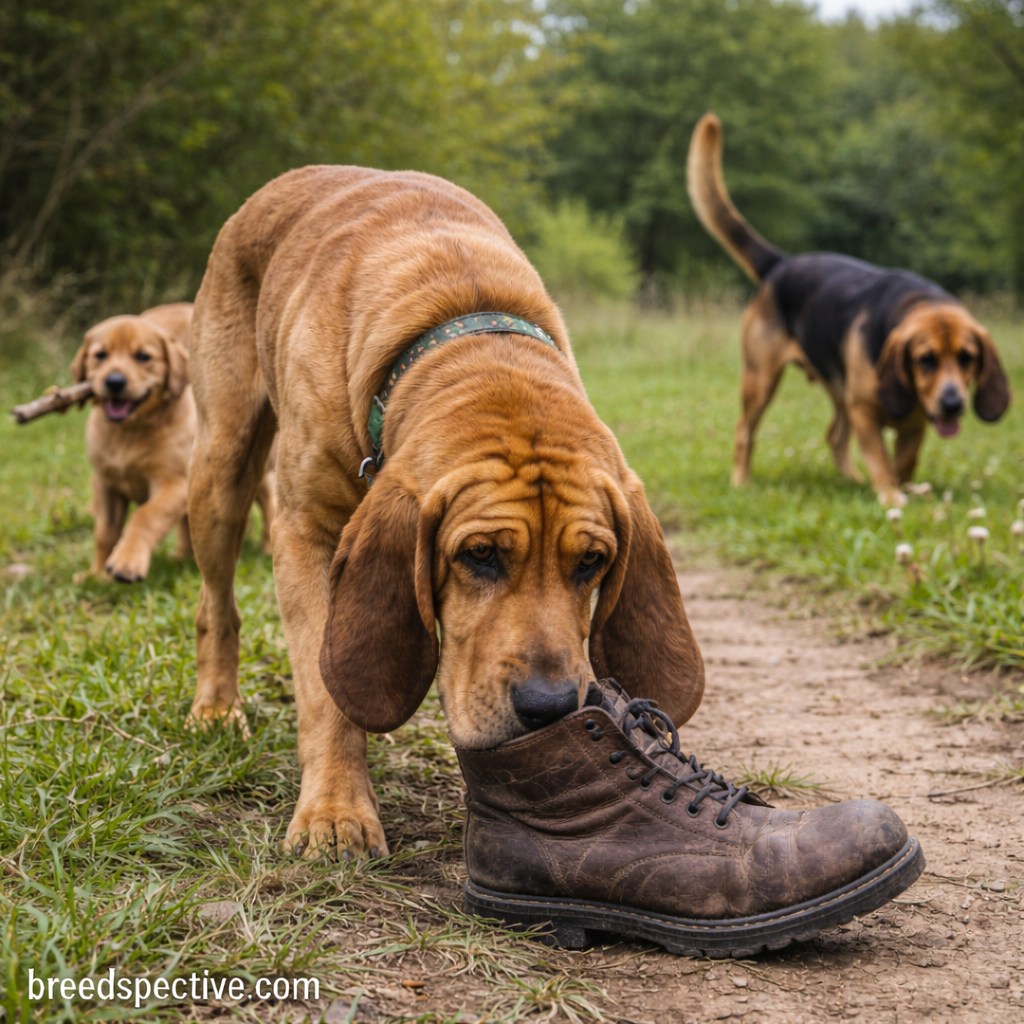
The Bloodhound’s primary role was tracking scent over long distances.
What Bloodhounds were bred to do
- Follow human scent trails
- Track wounded game animals
- Work slowly and methodically
- Ignore distractions while trailing
Unlike faster hunting hounds that chased prey by sight, Bloodhounds worked with their noses close to the ground. They were expected to trail a scent that could be hours or even days old.
This ability made them invaluable for locating lost people, criminals, and escaped prisoners.
Development of Physical Traits for Scent Work
Every physical feature of the Bloodhound serves a functional purpose.
Function-driven characteristics
- Long ears that trap scent near the nose
- Loose facial skin that channels odor particles
- Large nasal cavity for scent processing
- Strong, durable body for endurance
These traits were not aesthetic choices. They were refined through generations of working success, ensuring the dog could perform under difficult conditions.
Use in Law Enforcement and Search Work
Bloodhounds became widely used in tracking humans.
Expansion into official roles
- Tracking criminals and fugitives
- Locating missing persons
- Supporting law enforcement investigations
- Search-and-rescue operations
By the 19th century, Bloodhounds were used extensively in England and later in the United States. Their scent-tracking evidence was even accepted in some courts due to the breed’s reliability.
Spread to the United States
Bloodhounds arrived in North America during the colonial period.
Growth in popularity
- Used for frontier tracking
- Employed in rural law enforcement
- Valued for locating missing livestock and people
- Gradually recognized by kennel clubs
American breeders continued prioritizing working ability, ensuring the breed remained functional rather than ornamental.
Preservation of Working Instincts
Despite changes in modern society, Bloodhounds retain their original instincts.
Traits preserved today
- Strong, unwavering scent drive
- Independent decision-making
- Calm demeanor during long tasks
- Persistence despite fatigue or obstacles
Even Bloodhounds kept as companions often display strong tracking behaviors, such as following scent trails during walks or becoming absorbed in smells.
Transition Into Companion Roles
While still used in working roles, many Bloodhounds now live as pets.
Modern roles
- Search-and-rescue dogs
- Police and volunteer tracking dogs
- Family companions for experienced owners
- Demonstration dogs for scent work
However, their historical purpose still heavily influences daily behavior and training needs.
Why History Matters for Owners
The Bloodhound’s history shapes everything about the breed today.
Key takeaways
- Independence is intentional, not stubbornness
- Scent drive will always dominate behavior
- Obedience is secondary to tracking instincts
- Lifestyle fit is critical for success
Owners who understand the breed’s past are far more likely to appreciate its unique strengths and challenges.
Final Thoughts
The Bloodhound is a living example of function-first breeding. Its legendary nose, calm persistence, and independent nature are the result of centuries of selective breeding focused on one goal: following scent with unmatched accuracy.
This is not a breed shaped for speed, guarding, or obedience competitions. It exists to track—and it does so better than any other dog. Respecting that original purpose is the key to understanding and successfully living with a Bloodhound.