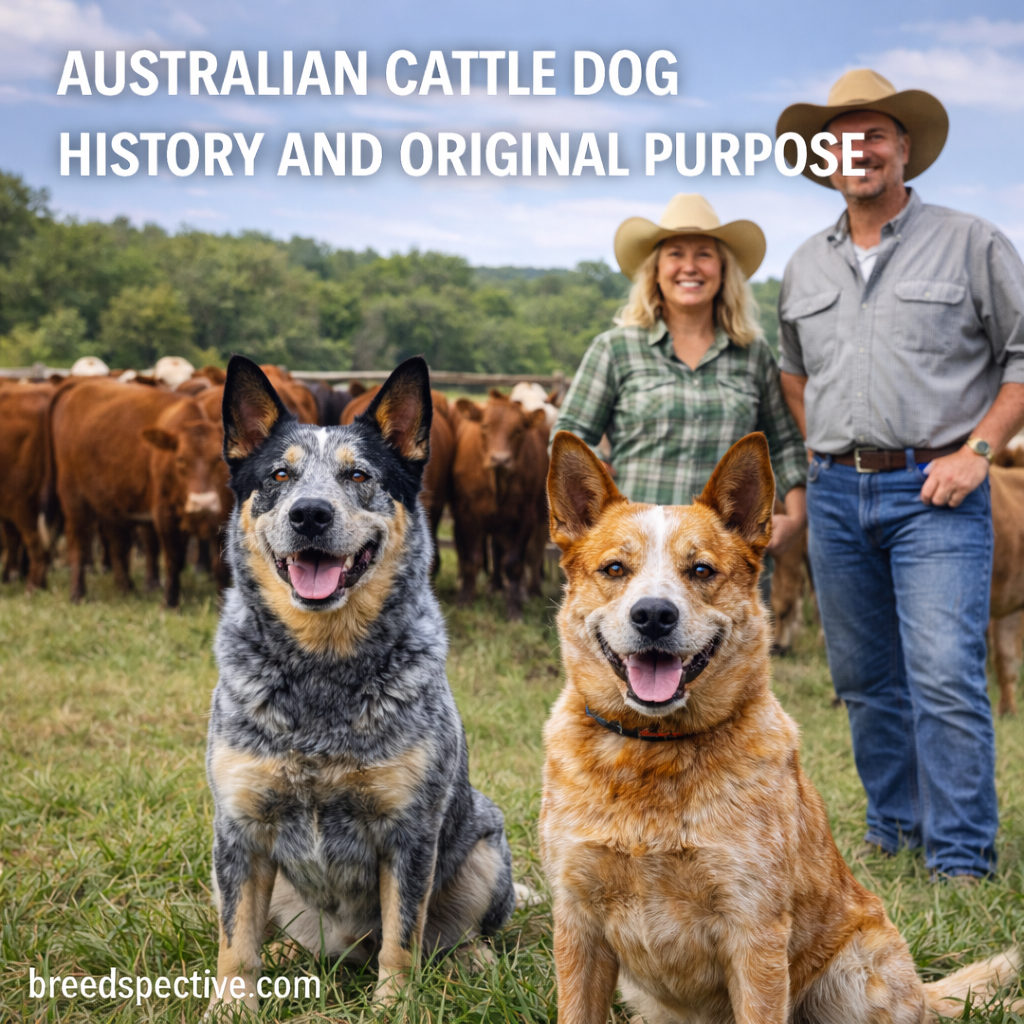
The Australian Cattle Dog is a purpose-built working breed developed to solve a very specific problem: moving cattle across vast, harsh terrain with minimal human oversight. Every aspect of the breed’s structure, temperament, and intelligence traces back to its original job. This is not a breed shaped by appearance or companionship trends, but by real-world necessity.
Understanding the Australian Cattle Dog’s history explains why the breed is so intense, driven, and loyal today.
Origins in Colonial Australia
The Australian Cattle Dog was developed in the early to mid-1800s during the expansion of cattle ranching in Australia.
The problem ranchers faced
- European herding dogs struggled in extreme heat
- Long distances exhausted traditional sheepdogs
- Cattle were aggressive and semi-wild
- Ranchers needed dogs that could work independently
Early settlers found that British herding breeds lacked the stamina, toughness, and adaptability required for Australian conditions. This led to deliberate crossbreeding efforts to create a more resilient working dog.
The Role of the Dingo
One of the most important influences in the breed’s development was the Australian dingo.
Why dingoes were used
- Exceptional endurance in hot climates
- Quiet, efficient movement
- Natural independence and problem-solving
- Resistance to harsh environmental conditions
Crossing dingoes with herding dogs produced offspring that were tougher, more alert, and better suited for long-distance cattle work. These dogs became known for their ability to control livestock without constant direction.
Key Breed Influences
Several breeds contributed to the final Australian Cattle Dog type.
Influential breeds
- Dingoes – endurance, resilience, independence
- Smooth-coated Collies – herding instinct and structure
- Dalmatians – loyalty to horses and handlers
- Australian Kelpies – agility and work ethic
Each cross was intentional, aiming to refine specific traits rather than appearance. Dogs that failed to perform were removed from breeding programs, ensuring only the most effective workers passed on their genetics.
Original Purpose: Droving Cattle
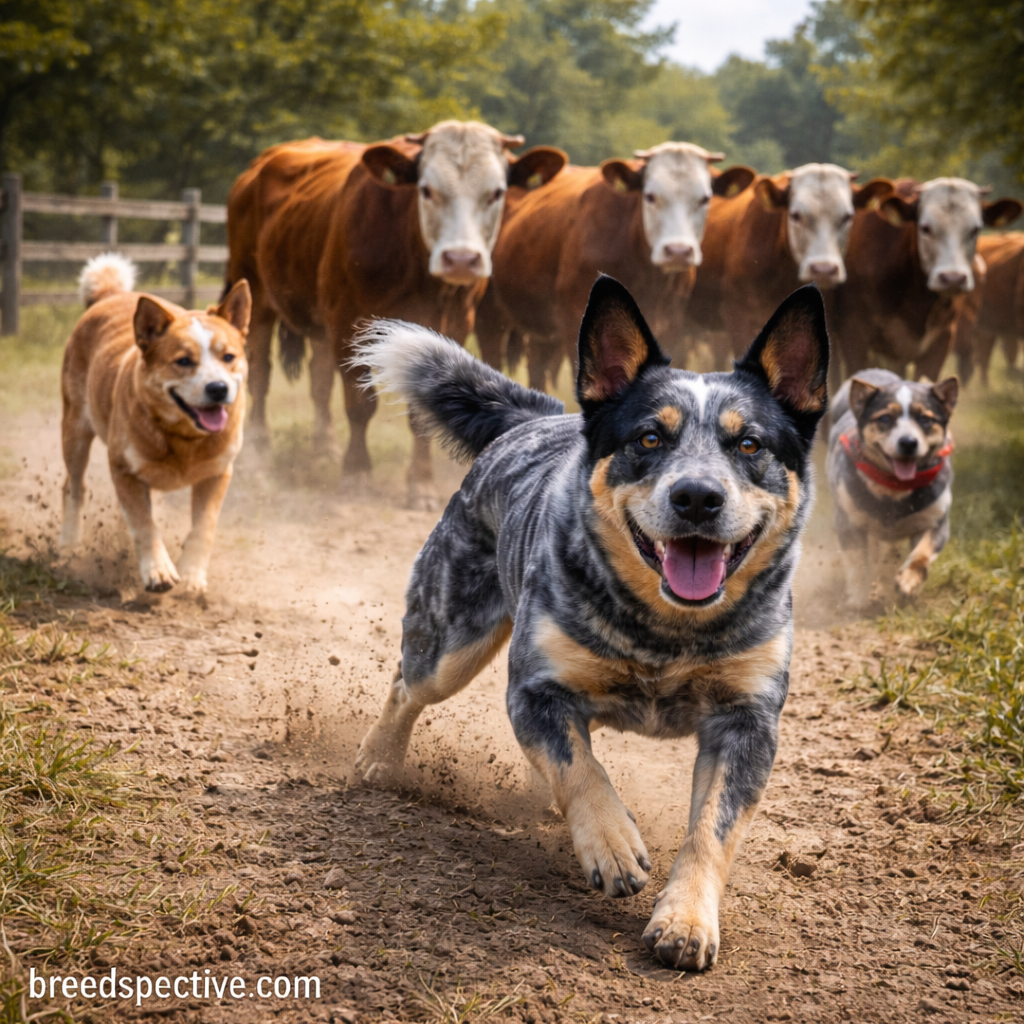
The Australian Cattle Dog was created to move cattle across large distances, often hundreds of miles.
How they worked
- Drove cattle rather than herding closely
- Used heel-nipping to control stubborn animals
- Worked far ahead or behind livestock
- Operated independently from handlers
Unlike sheepdogs that rely on eye contact and direction, Australian Cattle Dogs were expected to make decisions on their own. Their job required toughness, confidence, and the ability to withstand kicks from cattle.
This working style explains the breed’s nickname: “Heeler.”
Development of the Breed Standard
By the late 1800s, a consistent type began to emerge.
Breed standard milestones
- First written standard developed in the 1890s
- Blue and red coat patterns became established
- Emphasis placed on working ability over looks
- Recognition expanded gradually beyond Australia
The breed was officially recognized in Australia before gaining international attention. Exportation increased in the 20th century as ranchers worldwide recognized the dog’s effectiveness.
Expansion Beyond Australia
The Australian Cattle Dog gained popularity outside Australia primarily through its working reputation.
Global adoption
- Used on ranches in the United States
- Valued for predator awareness and stamina
- Adopted by farmers with large properties
- Recognized by major kennel organizations
Even as the breed entered show rings, responsible breeders continued prioritizing working traits to preserve the dog’s original function.
Traits Preserved From Working Roots
Modern Australian Cattle Dogs still display behaviors shaped by their history.
Lasting historical traits
- Exceptional endurance and energy
- Strong loyalty to handlers
- Independent decision-making
- Natural suspicion of strangers
- Intense focus and drive
These traits remain deeply ingrained, which is why the breed can be challenging for owners unfamiliar with working dogs.
Transition Into Companion Roles
While many Australian Cattle Dogs still work livestock, others now live as companions.
Modern roles
- Working ranch dogs
- Performance sport competitors
- Active family companions
- Service and detection work
Even in non-working homes, the breed often seeks tasks and structure, reflecting its historical purpose.
Why History Matters for Owners
Understanding the Australian Cattle Dog’s history helps set realistic expectations.
Key takeaways
- This breed was built for hard work, not inactivity
- Independence is a feature, not a flaw
- Mental stimulation is as important as exercise
- Lifestyle fit determines long-term success
Many behavior challenges stem from ignoring the breed’s working origins.
Final Thoughts
The Australian Cattle Dog is a product of necessity, shaped by climate, cattle, and the demands of frontier life. Its intelligence, toughness, and drive are not accidental—they are the result of deliberate, performance-based breeding.
Anyone considering this breed should see it not just as a pet, but as a working dog with a powerful legacy. Respecting that history is the key to a successful and fulfilling partnership.