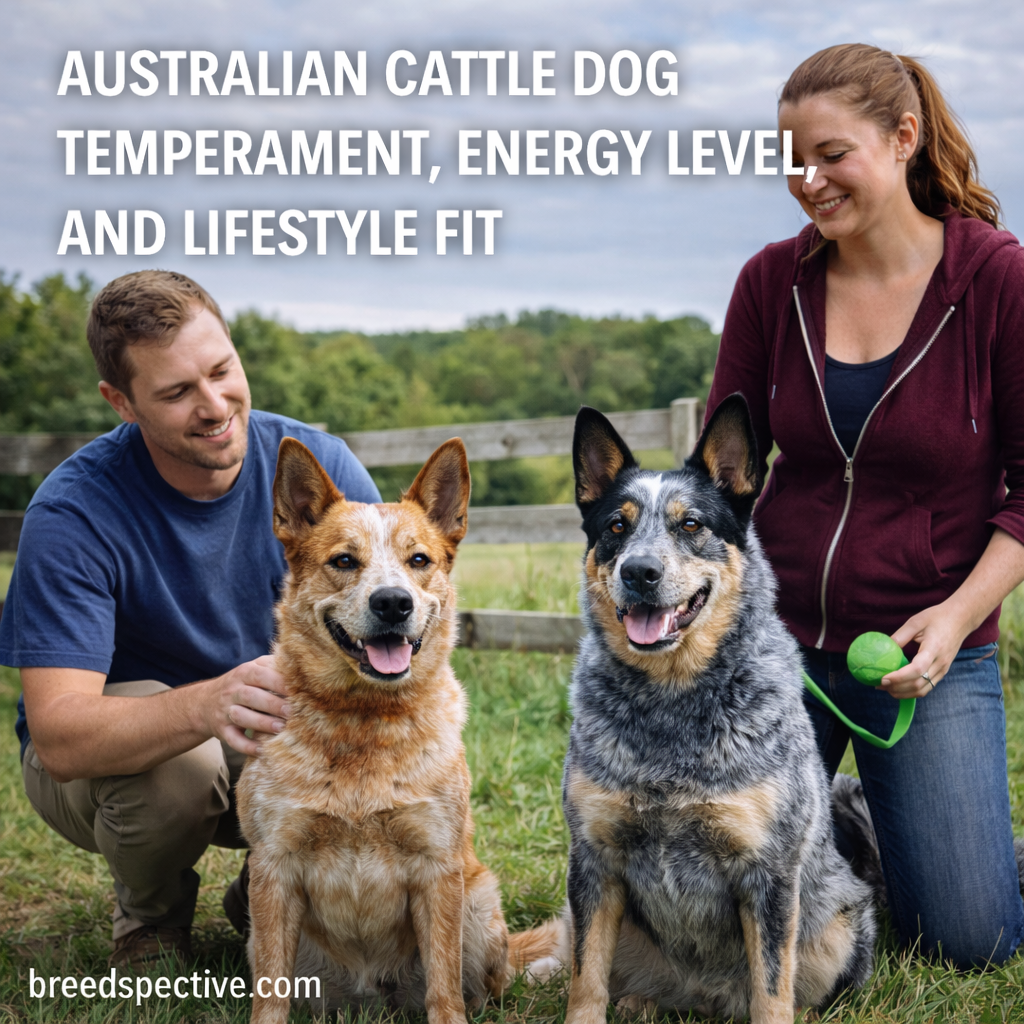
The Australian Cattle Dog is a highly driven, intelligent working breed developed for demanding physical labor and independent problem-solving. Known for stamina, focus, and loyalty, this breed excels when given structure and purpose—but can be challenging in the wrong environment.
Understanding the Australian Cattle Dog’s temperament, energy level, and lifestyle needs is essential before deciding if this breed is a good fit for your home.
Australian Cattle Dog Temperament
Australian Cattle Dogs are confident, alert, and intensely focused dogs with a strong work ethic.
Core temperament traits
- Extremely intelligent and quick-learning
- Loyal and deeply bonded to their owners
- Naturally alert and watchful
- Independent yet responsive to experienced handlers
- Reserved or cautious with strangers
- Strong protective instincts
This breed forms close attachments to its family, often bonding strongly with one primary person. While affectionate, Australian Cattle Dogs are not overly needy and prefer interaction with purpose rather than constant attention.
They are known for being serious-minded and task-oriented, especially compared to more easygoing companion breeds.
Intelligence and Mental Drive
The Australian Cattle Dog ranks among the most intelligent dog breeds, but this intelligence requires management.
How intelligence shows up
- Rapid learning of commands and routines
- Strong problem-solving abilities
- Ability to anticipate human behavior
- Quick boredom when understimulated
Without consistent mental engagement, this breed may invent its own “jobs,” which can lead to undesirable behaviors such as herding children, chasing vehicles, or destructive chewing.
Mental stimulation is just as important as physical exercise for maintaining a balanced temperament.
Energy Level and Exercise Needs
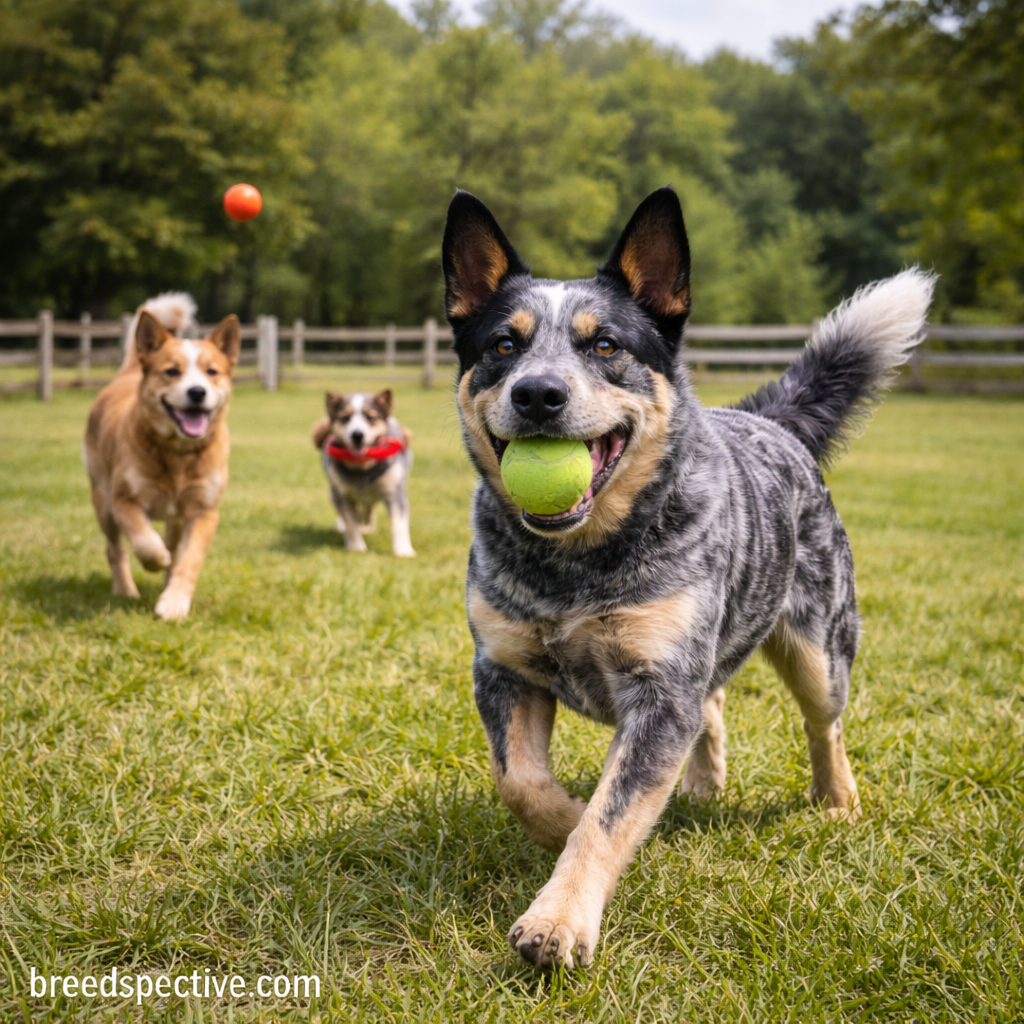
This is a very high-energy breed built for endurance rather than short bursts alone.
Daily activity expectations
- 90–120 minutes of physical activity per day
- Combination of structured exercise and free movement
- Activities that involve thinking and direction
- Consistency throughout the week
Australian Cattle Dogs were bred to work long hours in harsh conditions. Short walks are rarely sufficient. They thrive with activities like running, hiking, agility, obedience work, or farm-style tasks.
Insufficient exercise often leads to restlessness, hyperactivity, and behavioral issues.
Herding Instincts and Behavior
Herding is deeply ingrained in the breed.
Common herding-related behaviors
- Nipping at heels
- Chasing moving objects
- Attempting to control people or animals
- Sensitivity to fast movement
While these behaviors are natural, they require early training and redirection. Without guidance, herding instincts can become problematic in family or urban environments.
Experienced handling and structured outlets help channel these instincts appropriately.
Social Behavior and Interactions
Australian Cattle Dogs are selective socializers.
Social tendencies
- Loyal and protective with family
- Neutral to aloof with strangers
- Can be dominant with unfamiliar dogs
- Prefer predictable social environments
Early and consistent socialization is essential to prevent reactivity or excessive suspicion. This breed does best with calm, confident introductions rather than chaotic social settings like busy dog parks.
They often coexist best with dogs that respect boundaries.
Training and Structure Needs
Training is not optional for this breed.
Training characteristics
- Responds well to clear rules and consistency
- Learns quickly but challenges unclear leadership
- Thrives with structured routines
- Performs best with positive, firm guidance
Australian Cattle Dogs respect confident leadership. Inconsistent training or permissive handling often leads to stubbornness or pushy behavior.
This breed excels in advanced training environments where learning never stops.
Space and Living Environment
The Australian Cattle Dog is not a low-space breed.
Ideal living conditions
- Homes with yards or access to open space
- Rural or active suburban environments
- Owners with time for daily engagement
- Not ideal for apartment living without intensive activity
While they can adapt to smaller spaces, success depends entirely on how much structured activity and stimulation the dog receives daily.
A bored Australian Cattle Dog in a confined space is likely to develop behavioral problems.
Family Compatibility
This breed can be an excellent family dog in the right household.
Best fit households
- Active individuals or families
- Experienced dog owners
- Homes with older children
- Owners who enjoy training and activity
Australian Cattle Dogs may be too intense for very young children without careful supervision and training. Their herding instincts and energy level require boundaries and guidance.
They are best suited for families who want an engaged, involved companion rather than a low-maintenance pet.
Common Lifestyle Mismatches
Many challenges arise when expectations do not match reality.
Poor lifestyle matches include
- Sedentary households
- First-time dog owners
- Homes without daily structure
- Owners seeking a laid-back companion
This breed thrives on challenge and responsibility. Without it, frustration builds quickly—for both dog and owner.
Is the Australian Cattle Dog Right for You?
The Australian Cattle Dog is a remarkable breed for the right person. Its intelligence, loyalty, and drive make it an outstanding working partner and active companion.
However, this is not a casual or low-effort dog. Success requires time, consistency, and commitment to both physical and mental engagement.
If you enjoy an active lifestyle, structured training, and a dog that thrives on purpose, the Australian Cattle Dog can be an incredibly rewarding fit.