
Saint Bernard History Overview
The Saint Bernard is one of the most iconic working dogs in history, renowned for its heroic rescue work in the snowy Alps. Originating in the mountainous regions between Switzerland and Italy, this breed was developed for endurance, strength, and lifesaving instincts rather than speed or aggression.
Every defining trait of the Saint Bernard—its size, calm demeanor, and resilience—was shaped by centuries of work in harsh alpine conditions where human survival often depended on canine assistance.
Origins in the Swiss Alps
The Saint Bernard traces its roots to the Great St. Bernard Pass, a treacherous mountain route connecting Switzerland and Italy. This pass was notorious for extreme weather, deep snow, avalanches, and limited visibility.
Key environmental factors that shaped the breed included:
- Harsh alpine winters
- Deep snow and steep terrain
- Isolated travel routes
- High risk of travelers becoming lost or injured
Dogs capable of navigating these conditions became essential companions to monks and travelers.
The Hospice of the Great St. Bernard
The breed is closely associated with the Hospice of the Great St. Bernard, a monastery founded in the 11th century by Bernard of Menthon. Monks at the hospice provided shelter to travelers crossing the pass and relied on dogs to assist with rescue efforts.
At the hospice, these dogs were valued for:
- Their keen sense of smell
- Ability to locate people buried under snow
- Calm behavior in emergencies
- Physical strength to move through deep drifts
The dogs often worked in pairs, increasing their effectiveness during search and rescue missions.
Early Ancestry and Breed Development
Saint Bernards are believed to descend from large mastiff-type dogs brought to the Alps by Roman armies. Over generations, these dogs were selectively bred by monks to enhance traits necessary for survival and rescue work.
Selective breeding emphasized:
- Large size and muscular build
- Thick, insulating coats
- Calm, steady temperament
- Strong orientation toward humans
This careful development produced a dog uniquely suited to alpine rescue.
Original Purpose as Rescue Dogs
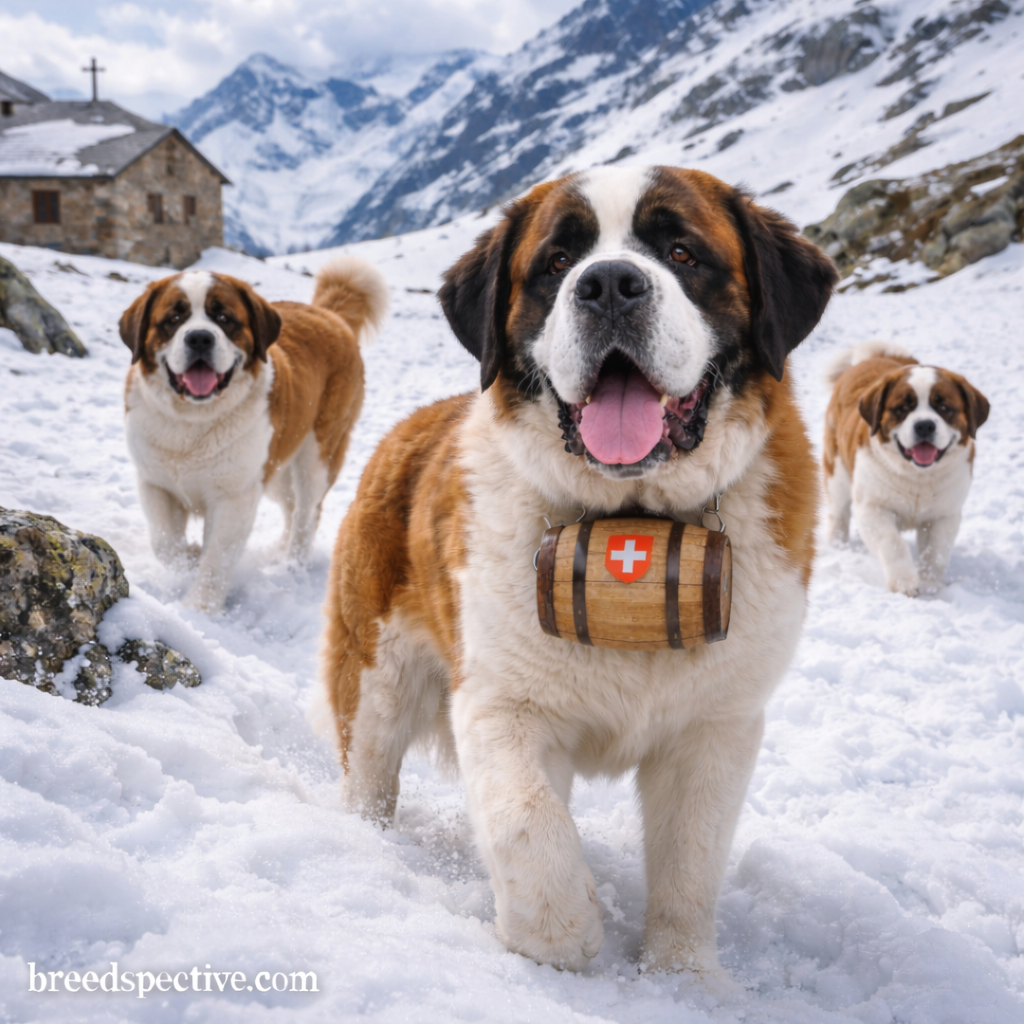
The Saint Bernard’s primary role was search and rescue. These dogs were trained to locate travelers lost in snowstorms or trapped by avalanches.
Their rescue work included:
- Tracking human scent beneath snow
- Alerting monks to trapped individuals
- Providing warmth by lying beside victims
- Guiding rescuers to the location
Their calm presence often helped stabilize injured or hypothermic travelers until help arrived.
The Myth of the Brandy Barrel
One of the most enduring legends surrounding the Saint Bernard is the image of a dog carrying a small barrel of brandy around its neck. While this image became popular in art and folklore, there is no historical evidence that Saint Bernards actually carried brandy during rescues.
The myth originated from 19th-century paintings and later became a symbolic representation of the breed’s lifesaving role rather than a real practice.
Transition From Working Dog to Recognized Breed
By the 19th century, advancements in travel and rescue technology reduced the need for dogs in alpine rescue. At the same time, interest in the Saint Bernard as a distinct breed grew.
During this period:
- The breed was standardized
- Physical size increased through selective breeding
- Temperament became a focus alongside appearance
Saint Bernards began appearing in dog shows and were exported beyond Switzerland.
Spread Beyond the Alps
As Saint Bernards gained popularity, they spread across Europe and later to North America. Their impressive size and gentle nature made them appealing not only as working dogs but also as companions.
With this expansion:
- Rescue work became ceremonial rather than practical
- The breed transitioned into family and companion roles
- Gentle temperament was preserved
Despite this shift, the breed’s heritage remained central to its identity.
How History Shapes the Modern Saint Bernard
The Saint Bernard’s history explains many of its modern traits:
- Calm demeanor from rescue work requiring steadiness
- Strong attachment to humans from lifesaving roles
- Low reactivity due to emergency-focused breeding
- Physical power paired with gentleness
These dogs were bred to save lives, not guard property or herd livestock.
Saint Bernard Legacy in Modern Times
Today, Saint Bernards are rarely used in real-world mountain rescues, but they remain powerful symbols of courage, compassion, and loyalty.
Modern roles include:
- Family companionship
- Therapy and emotional support work
- Educational demonstrations
- Cultural and historical symbolism
Their reputation as gentle giants continues to endure worldwide.
Final Thoughts on Saint Bernard History and Purpose
The Saint Bernard is a breed shaped by necessity, service, and empathy. Developed to locate and protect lost travelers in some of the world’s harshest conditions, it evolved into a dog known for patience, strength, and emotional warmth.
Understanding the Saint Bernard’s original purpose provides valuable insight into its calm temperament and deep devotion today, honoring a legacy built on saving lives and serving humanity.