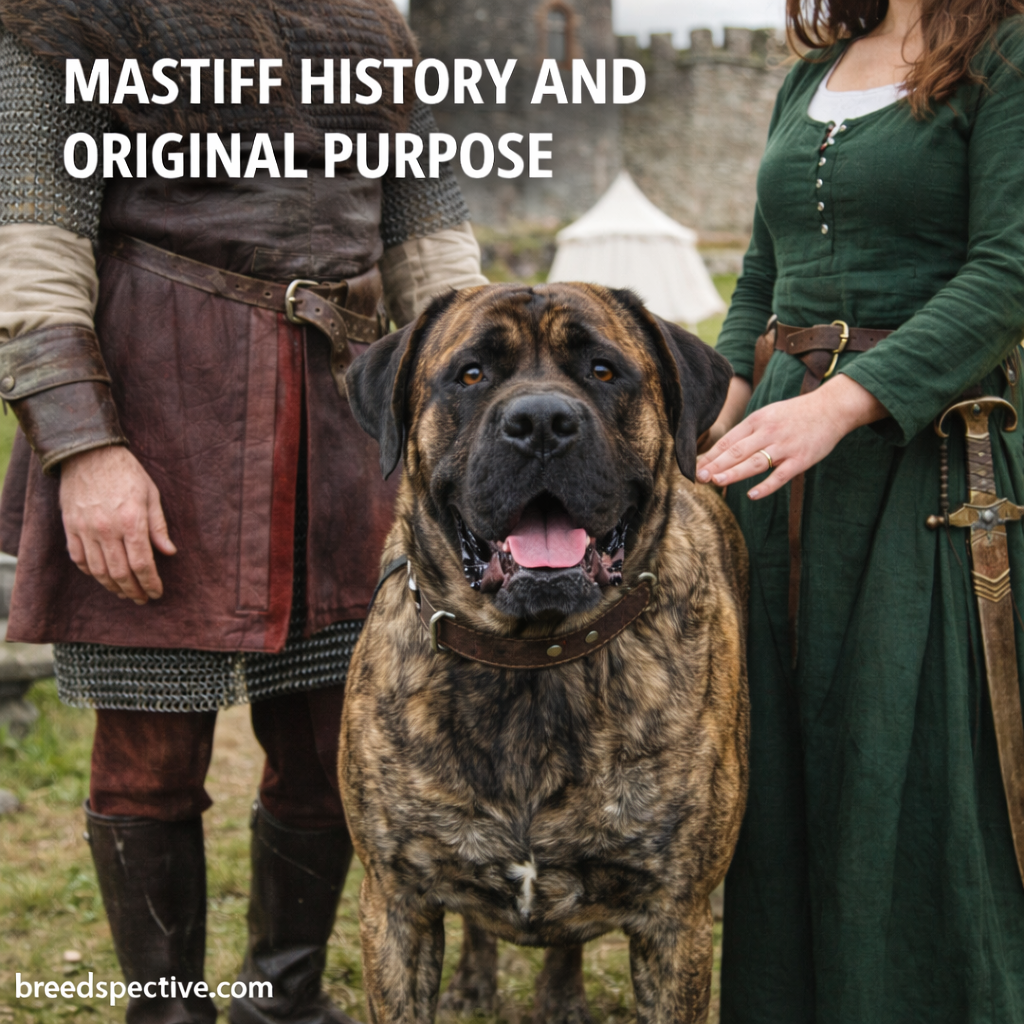
The Mastiff is one of the oldest and most historically significant dog breeds in the world. Known for immense size, strength, and quiet authority, Mastiffs were never bred for speed or herding—they were created for protection, guardianship, and presence. For thousands of years, humans relied on Mastiffs to defend property, livestock, and people, shaping the calm yet powerful temperament the breed is known for today.
This article explores the Mastiff’s ancient origins, original purpose, and how its history continues to influence the modern breed.
Ancient Origins of the Mastiff
The Mastiff’s lineage stretches back more than 5,000 years, making it one of the earliest documented large dog types.
Key historical roots include:
- Large guarding dogs depicted in ancient Babylonian art
- War and guard dogs used by early civilizations
- Dogs valued for strength, size, and intimidation
Archaeological evidence shows massive dogs resembling Mastiffs guarding settlements and accompanying armies across the ancient world.
Mastiffs in Ancient Civilizations
Mesopotamia and Babylon
Some of the earliest Mastiff-like dogs were recorded in Mesopotamia.
They were used to:
- Guard city gates and estates
- Protect livestock from predators
- Serve as symbols of power and status
Stone carvings from Babylon show large dogs restrained by handlers, emphasizing their strength and importance.
Ancient Egypt and Persia
Mastiff-type dogs also appeared in ancient Egypt and Persia.
They were often:
- Used to guard royal compounds
- Depicted in art alongside nobility
- Associated with strength and protection
These dogs were valued not just for utility, but also for prestige.
Mastiffs as War and Guardian Dogs
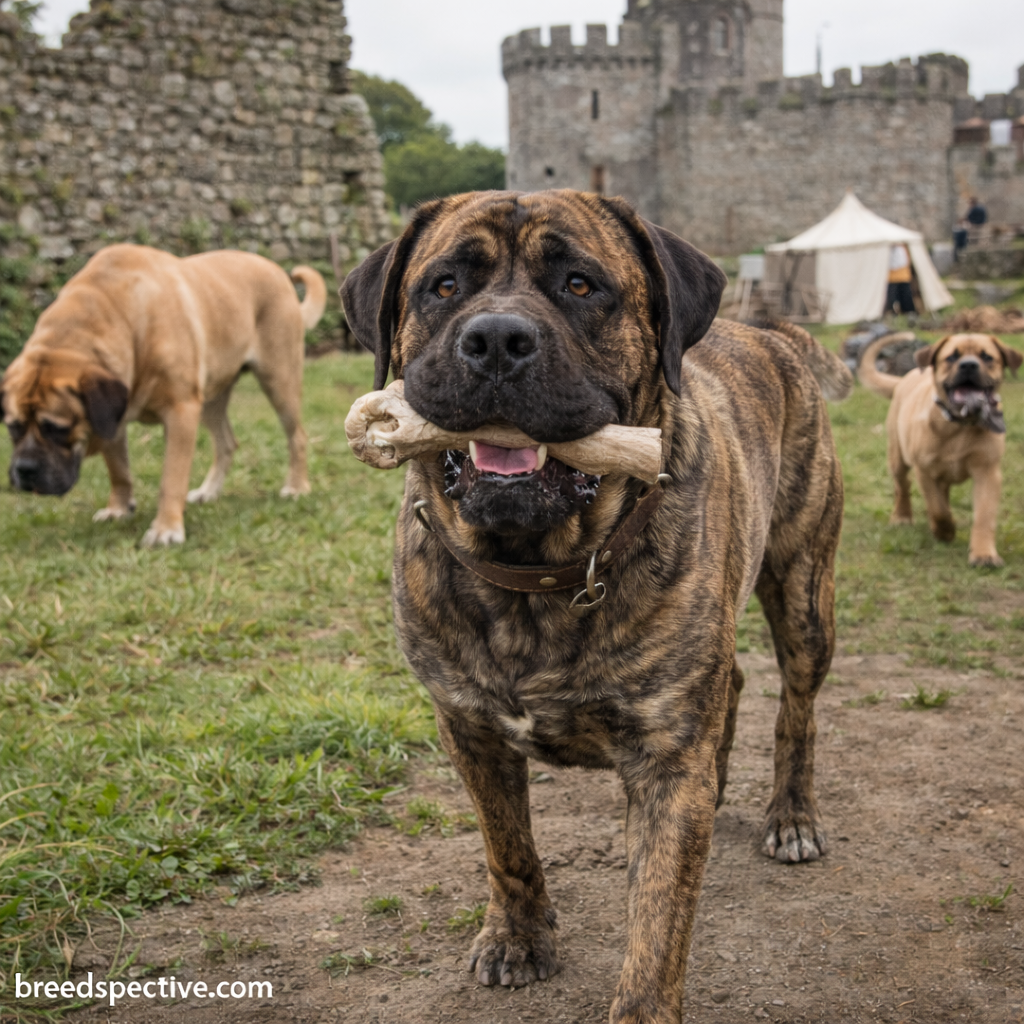
Throughout history, Mastiffs were used in warfare and defense.
Military Roles
Mastiffs were historically employed to:
- Guard military camps
- Protect soldiers and supplies
- Intimidate enemy forces
Their size and courage made them formidable deterrents, even without direct combat.
Estate and Property Guardians
Outside of war, Mastiffs were primarily used as guardians.
Their responsibilities included:
- Protecting homes and castles
- Guarding farmland and livestock
- Deterring intruders through presence alone
They were bred to remain calm, observant, and decisive rather than reactive.
Arrival and Development in Britain
The Mastiff became especially prominent in Britain, where the modern English Mastiff was refined.
Important developments include:
- Use as estate guardians for nobility
- Protection of rural properties
- Breeding focused on size, strength, and temperament
British breeders emphasized stability and loyalty over aggression, shaping the gentle giant reputation.
Mastiffs in Medieval Europe
During medieval times, Mastiffs were highly valued.
They were used for:
- Guarding castles and manors
- Protecting livestock from wolves
- Serving as symbols of wealth and authority
Only landowners and nobility typically owned Mastiffs due to the cost of care and feeding.
Original Purpose of the Mastiff
The Mastiff was bred with a clear and consistent purpose.
Its original role included:
- Guarding people and property
- Providing physical deterrence
- Remaining calm under pressure
- Acting independently when needed
Unlike herding or hunting breeds, Mastiffs were expected to think carefully and respond only when necessary.
Temperament Shaped by Purpose
The Mastiff’s historical role directly influenced its personality.
Centuries of selective breeding produced traits such as:
- Calm confidence
- Strong loyalty to family
- Low reactivity
- High tolerance and patience
These traits allowed Mastiffs to guard effectively without constant aggression.
Decline and Preservation of the Breed
Like many large breeds, Mastiffs faced near-extinction during times of war and hardship.
Key challenges included:
- Food shortages during world wars
- High cost of maintaining large dogs
- Decline of large estate living
Dedicated breeders worked to preserve the Mastiff, carefully rebuilding the population.
Modern Recognition and Role
Today, Mastiffs are recognized primarily as companion-guardians.
Modern roles include:
- Family companions
- Property guardians
- Emotional support through calm presence
While no longer used for war or heavy guarding, their protective instincts remain intact.
Original Purpose vs. Modern Life
Though lifestyles have changed, the Mastiff’s role remains surprisingly similar.
Then and now, Mastiffs are meant to:
- Stay close to their people
- Watch quietly rather than react impulsively
- Provide reassurance through presence
- Protect when truly necessary
Few breeds have maintained such continuity between past and present.
How History Influences the Modern Mastiff
Understanding the Mastiff’s history explains why the breed today is:
- Calm rather than hyperactive
- Protective without aggression
- Emotionally steady
- Deeply bonded to family
These traits are not accidental—they are the result of thousands of years of purposeful breeding.
Final Thoughts
The Mastiff’s history is a story of strength, loyalty, and guardianship. From ancient civilizations to medieval castles and modern homes, the breed has always served as a protector—quiet, powerful, and deeply devoted.
Understanding the Mastiff’s original purpose helps modern owners appreciate why this gentle giant thrives in calm, structured homes where its presence alone is valued.