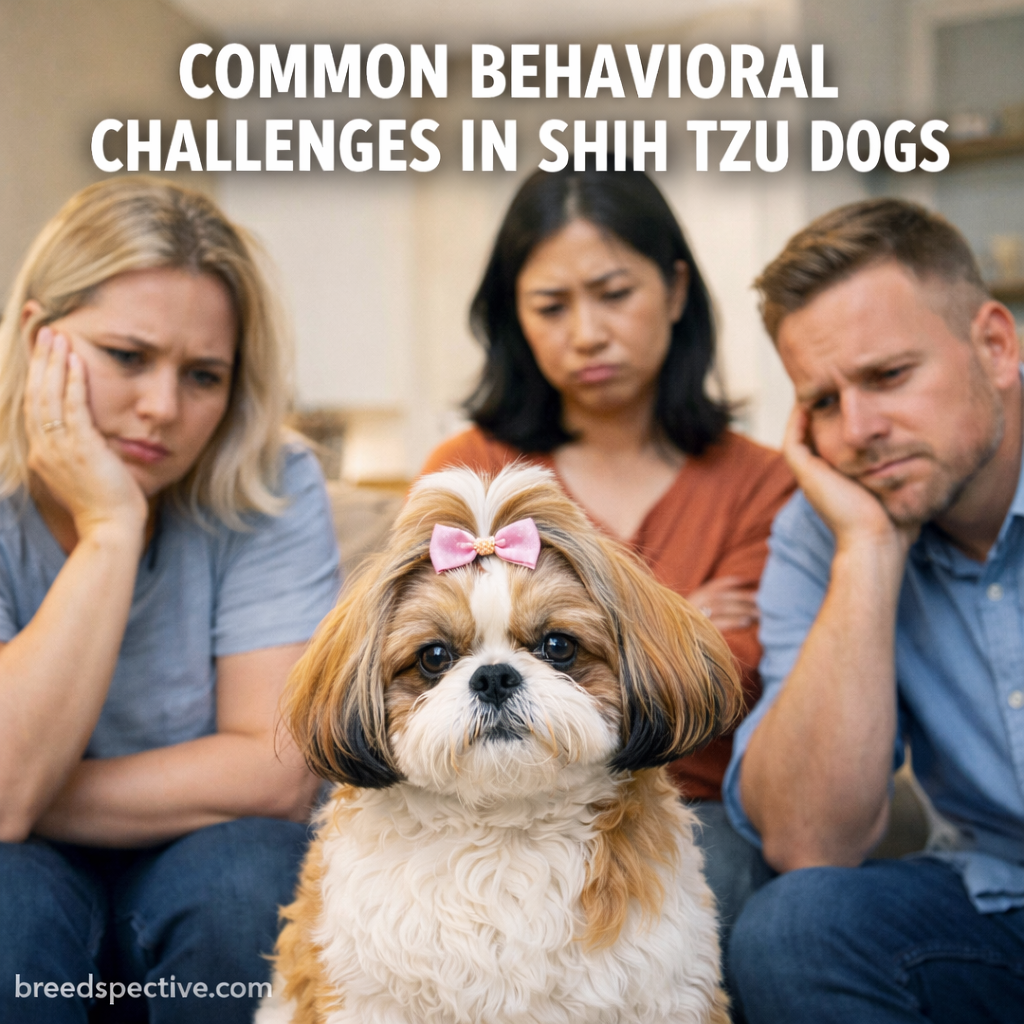
Shih Tzus are affectionate, people-oriented companions, but like all breeds, they can develop behavioral challenges if their needs aren’t fully understood. Many of the issues seen in Shih Tzus are not signs of aggression or disobedience—instead, they stem from the breed’s deep attachment to humans, sensitivity, and history as a companion dog rather than a working breed.
This guide covers the most common behavioral challenges in Shih Tzu dogs, why they occur, and how to manage them effectively.
Separation Anxiety

One of the most common behavioral challenges in Shih Tzus is separation anxiety.
Why It Happens
Shih Tzus were bred to stay close to people for centuries. As a result, they often struggle when left alone for long periods.
Common triggers include:
- Sudden changes in routine
- Owners returning to work after extended time at home
- Lack of independence training as puppies
Signs of Separation Anxiety
- Excessive barking or whining when alone
- Destructive chewing
- Pacing or restlessness
- Bathroom accidents despite being house-trained
How to Manage It
- Gradually increase alone time
- Create a predictable routine
- Use calming toys or puzzle feeders
- Avoid dramatic departures and arrivals
Early training and confidence-building are key to preventing long-term anxiety.
Stubbornness During Training
Shih Tzus are intelligent, but they are also independent thinkers.
Why Shih Tzus Can Seem Stubborn
Unlike working breeds bred to follow commands, Shih Tzus were bred for companionship. This means:
- They may question commands rather than obey instantly
- Motivation matters more than repetition
- Harsh methods reduce cooperation
Common Training Challenges
- Selective listening
- Slow response to commands
- Testing boundaries
Effective Training Strategies
- Use positive reinforcement only
- Keep sessions short and engaging
- Reward consistency, not perfection
- Be patient and calm
With the right approach, Shih Tzus can learn well—but they require encouragement, not force.
House Training Difficulties
House training is another frequent challenge reported by Shih Tzu owners.
Why House Training Takes Longer
- Small bladders
- Sensitivity to cold or rain
- Preference for comfort and routine
Shih Tzus may avoid going outside if conditions are unpleasant.
Common Issues
- Accidents inside the home
- Inconsistent bathroom habits
- Regression after progress
Tips for Success
- Stick to a strict bathroom schedule
- Use praise immediately after success
- Avoid punishment for accidents
- Consider indoor potty options if needed
Consistency is more important than speed when house training a Shih Tzu.
Excessive Barking
While not the loudest breed, Shih Tzus can become vocal under certain conditions.
Why Shih Tzus Bark
- Seeking attention
- Boredom
- Alerting to sounds or visitors
- Anxiety or frustration
When Barking Becomes a Problem
- Barking when left alone
- Barking at every noise
- Demand barking for attention
How to Reduce Barking
- Address the root cause (boredom, anxiety, attention-seeking)
- Provide mental stimulation
- Ignore demand barking
- Reward calm behavior
Teaching quiet behavior early helps prevent long-term barking habits.
Attention-Seeking Behaviors
Shih Tzus thrive on interaction and may act out when they feel ignored.
Common Attention-Seeking Actions
- Pawing at owners
- Jumping onto laps uninvited
- Barking or whining
- Interrupting activities
Why It Happens
- Over-dependence on owners
- Lack of mental stimulation
- Inconsistent boundaries
Managing Attention-Seeking
- Set clear interaction routines
- Ignore unwanted behaviors
- Reward calm independence
- Teach “settle” or “place” commands
Balancing affection with structure helps reduce clingy behavior.
Resource Guarding (Less Common but Possible)
Shih Tzus are generally gentle, but some may guard food, toys, or resting spots.
Signs of Resource Guarding
- Growling when approached
- Stiff body language
- Snapping near valued items
Why It Occurs
- Insecurity
- Poor early socialization
- Previous negative experiences
Prevention and Management
- Practice positive item exchanges
- Avoid taking items abruptly
- Teach trust-building exercises
- Seek professional help if aggression escalates
Early intervention prevents escalation.
Sensitivity to Harsh Correction
Shih Tzus are emotionally sensitive dogs.
Behavioral Impact of Harsh Training
- Shutdown behavior
- Fear responses
- Avoidance of owners
- Loss of trust
Best Training Environment
- Calm tone of voice
- Gentle correction
- Clear expectations
- Positive reinforcement
Shih Tzus respond best when they feel safe and understood.
Socialization Challenges
Shih Tzus are friendly by nature, but lack of exposure can cause issues.
Signs of Poor Socialization
- Fear of strangers
- Nervousness around other dogs
- Avoidance behaviors
How to Improve Social Confidence
- Gradual exposure to new environments
- Positive introductions to people and pets
- Controlled, calm social settings
Early and ongoing socialization builds confidence.
How to Prevent Behavioral Issues in Shih Tzus
Many behavioral challenges are preventable with the right approach.
Prevention Tips
- Start training early
- Maintain routines
- Encourage independence
- Provide daily mental stimulation
- Avoid over-spoiling
Consistency and understanding go a long way with this breed.
When to Seek Professional Help
If behaviors become severe or worsen over time, professional support may be needed.
Consider help if you notice:
- Aggression
- Severe anxiety
- Ongoing house training failure
- Self-injuring behaviors
A qualified trainer or behaviorist can provide personalized guidance.
Final Thoughts
Shih Tzu behavioral challenges are rarely about dominance or disobedience. Most issues stem from emotional sensitivity, strong attachment to people, and misunderstanding the breed’s needs.
With patience, consistency, and positive reinforcement, Shih Tzus can become well-adjusted, confident companions. Understanding their behavior is the key to building a calm and rewarding relationship.