

Sheepadoodles are known for their lovable personalities, intelligence, and strong family bonds—but as a mixed breed, their behavior reflects a blend of traits from both the Old English Sheepdog and the Poodle. While many Sheepadoodle behaviors are highly desirable, understanding their full behavioral profile is essential for setting realistic expectations.
This guide explores the most common behavior traits in Sheepadoodle dogs and explains why they act the way they do.
Friendly and People-Oriented Nature
Sheepadoodles are typically very social dogs that enjoy being around people. They thrive on interaction and often want to be part of whatever their family is doing.
Common social behaviors include:
- Greeting family members enthusiastically
- Seeking attention and affection
- Following owners from room to room
- Enjoying group activities
Because of this people-focused nature, Sheepadoodles can struggle in homes where they are left alone for long periods.
High Intelligence and Mental Awareness
Thanks to their Poodle lineage, Sheepadoodles are highly intelligent and mentally engaged dogs.
Intelligence-related behaviors include:
- Learning commands quickly
- Anticipating routines
- Problem-solving abilities
- Getting bored with repetition
Their intelligence makes them highly trainable, but it also means they require mental stimulation to stay balanced.
Playfulness and Youthful Energy
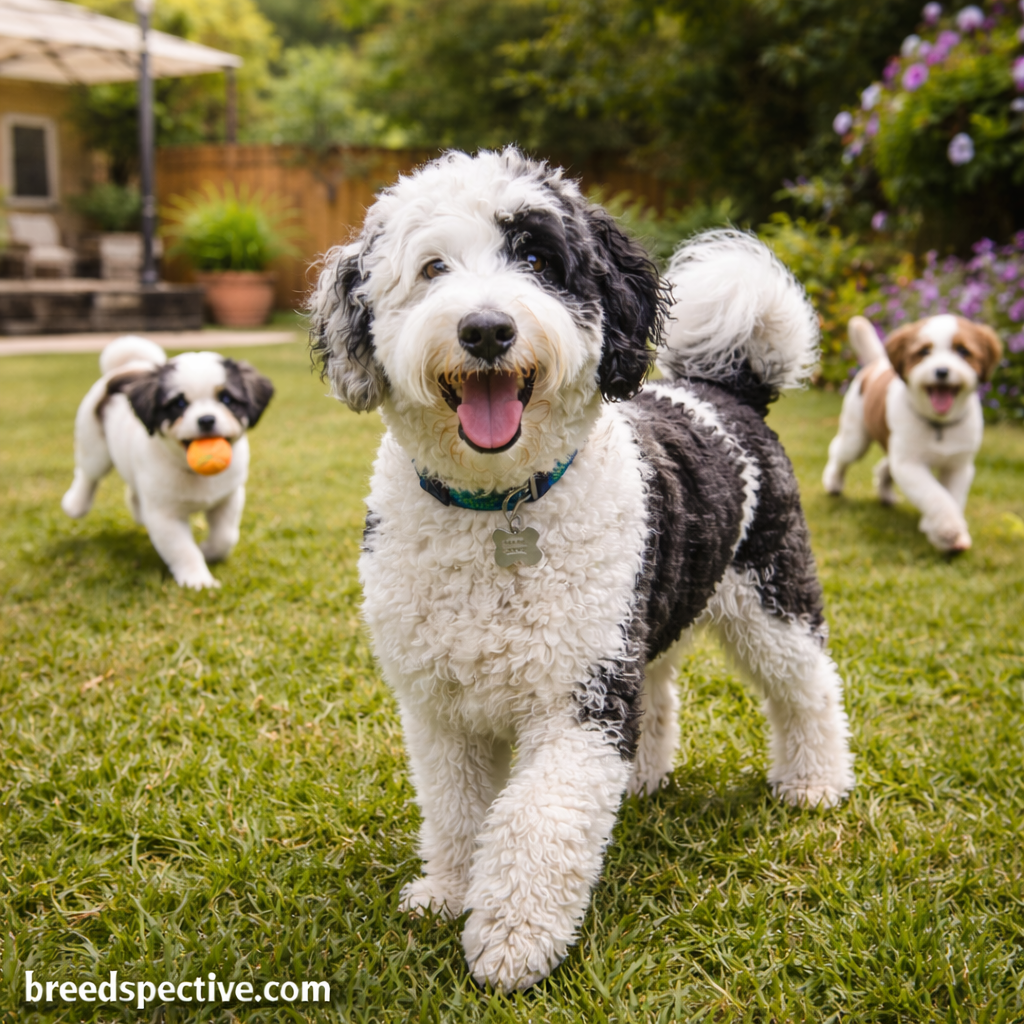
Sheepadoodles tend to retain a playful, puppy-like demeanor well into adulthood.
Typical play behaviors include:
- Enjoying interactive games
- Initiating play with people or other dogs
- Bursts of excitement followed by calm periods
Without proper outlets, playful energy can turn into jumping, mouthing, or hyperactivity.
Emotional Sensitivity
Sheepadoodles are emotionally perceptive and sensitive to their environment.
Common emotional traits:
- Reacting strongly to tone of voice
- Becoming stressed by household tension
- Seeking reassurance when owners are upset
Harsh corrections or inconsistent handling can negatively affect their confidence.
Strong Attachment and Separation Sensitivity
Many Sheepadoodles form deep emotional bonds with their families.
Attachment-related behaviors include:
- Staying close to owners
- Becoming anxious when routines change
- Struggling with long periods of isolation
Some Sheepadoodles are prone to separation anxiety if independence is not gradually taught.
Moderate to High Energy Levels
Sheepadoodles generally have moderate to high energy, especially during their younger years.
Energy-related behaviors include:
- Need for daily walks and play
- Restlessness when under-exercised
- Calm behavior indoors when needs are met
They are not couch-potato dogs and require daily activity to remain well-behaved.
Herding and Nipping Tendencies
Due to Old English Sheepdog ancestry, some Sheepadoodles display mild herding behaviors.
These may include:
- Nipping at heels during play
- Circling children or other pets
- Attempting to control movement
Early training and redirection help prevent these behaviors from becoming problematic.
Social Behavior With Other Dogs
Sheepadoodles are usually friendly with other dogs, especially when socialized early.
Typical dog-to-dog behaviors:
- Enjoying group play
- Adapting well to dog parks
- Displaying excitement rather than dominance
Overexcitement, rather than aggression, is the more common issue.
Alertness and Mild Watchdog Behavior
While not guard dogs, Sheepadoodles are alert and may bark when something unusual happens.
Watchful behaviors include:
- Barking at unfamiliar sounds
- Watching doors and windows
- Alerting owners to visitors
Proper training helps prevent nuisance barking.
Attention-Seeking Behavior
Sheepadoodles enjoy interaction and may develop attention-seeking habits.
These can include:
- Jumping up
- Pawing for attention
- Vocalizing when ignored
Consistency and clear boundaries help channel attention-seeking into appropriate behavior.
Behavioral Challenges Linked to Boredom
When under-stimulated, Sheepadoodles may develop unwanted behaviors.
Common boredom-related issues:
- Chewing household items
- Digging
- Excessive barking
These behaviors usually signal unmet physical or mental needs rather than disobedience.
Ideal Home Environment for Sheepadoodle Behavior
Sheepadoodles behave best in homes that provide structure, activity, and interaction.
Ideal environments include:
- Active families
- Owners who enjoy training and play
- Homes with predictable routines
They are less suited for low-interaction or highly chaotic households.
Behavior Traits Summary
Sheepadoodles are affectionate, intelligent, and playful dogs with strong emotional bonds.
Key behavioral traits include:
- High sociability
- Strong attachment to family
- Intelligence-driven curiosity
- Sensitivity to environment and tone
Final Thoughts
Behavior traits common in Sheepadoodle dogs reflect their working-dog intelligence and family-oriented nature. While they are generally friendly and adaptable, they require engagement, consistency, and patience to thrive.
For owners prepared to meet their emotional and activity needs, Sheepadoodles offer a joyful, loyal, and highly interactive companion experience.