
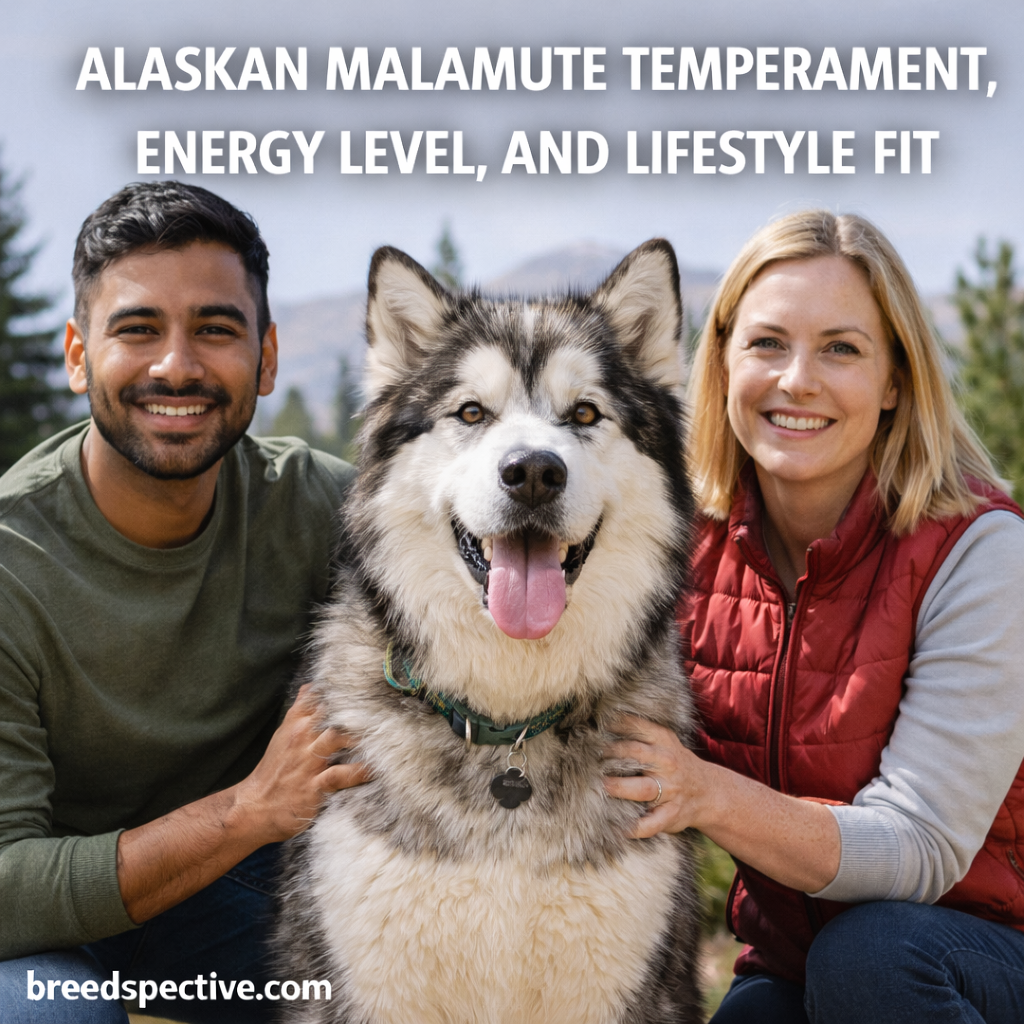
The Alaskan Malamute is a powerful, intelligent, and deeply social working dog bred for endurance rather than speed. Known for its wolf-like appearance and friendly demeanor, this breed is often misunderstood as aggressive or overly dominant. In reality, the Malamute’s temperament reflects its history as a cooperative sled dog that thrived on teamwork, structure, and purpose.
This guide breaks down Alaskan Malamute temperament, energy level, and lifestyle compatibility to help you determine whether this impressive breed fits your home and experience level.
Alaskan Malamute Temperament Overview
Alaskan Malamutes are affectionate, confident, and people-oriented dogs. Unlike many guardian breeds, they are typically friendly rather than protective.
Core temperament traits include:
- Social and family-focused
- Confident and strong-willed
- Playful and expressive
- Intelligent but independent
- Friendly with people, including strangers
Malamutes are not natural guard dogs. Their friendliness and curiosity often outweigh territorial instincts.
Intelligence and Independence
Malamutes are highly intelligent, but their intelligence is paired with independence. They were bred to think and make decisions in harsh environments rather than blindly follow commands.
What this means in daily life:
- Learns commands quickly
- May choose when to comply
- Tests boundaries if leadership is inconsistent
- Responds best to respectful, firm guidance
Training requires patience, consistency, and motivation-based methods rather than repetition or force.
Social Nature and Human Bonding
This breed thrives on companionship. Alaskan Malamutes were historically raised in close contact with people and other dogs.
Bonding traits include:
- Strong attachment to family
- Desire to be included in daily activities
- Discomfort when left alone for long periods
They are not well-suited to isolation and may develop behavioral issues if regularly left alone.
Energy Level and Exercise Needs
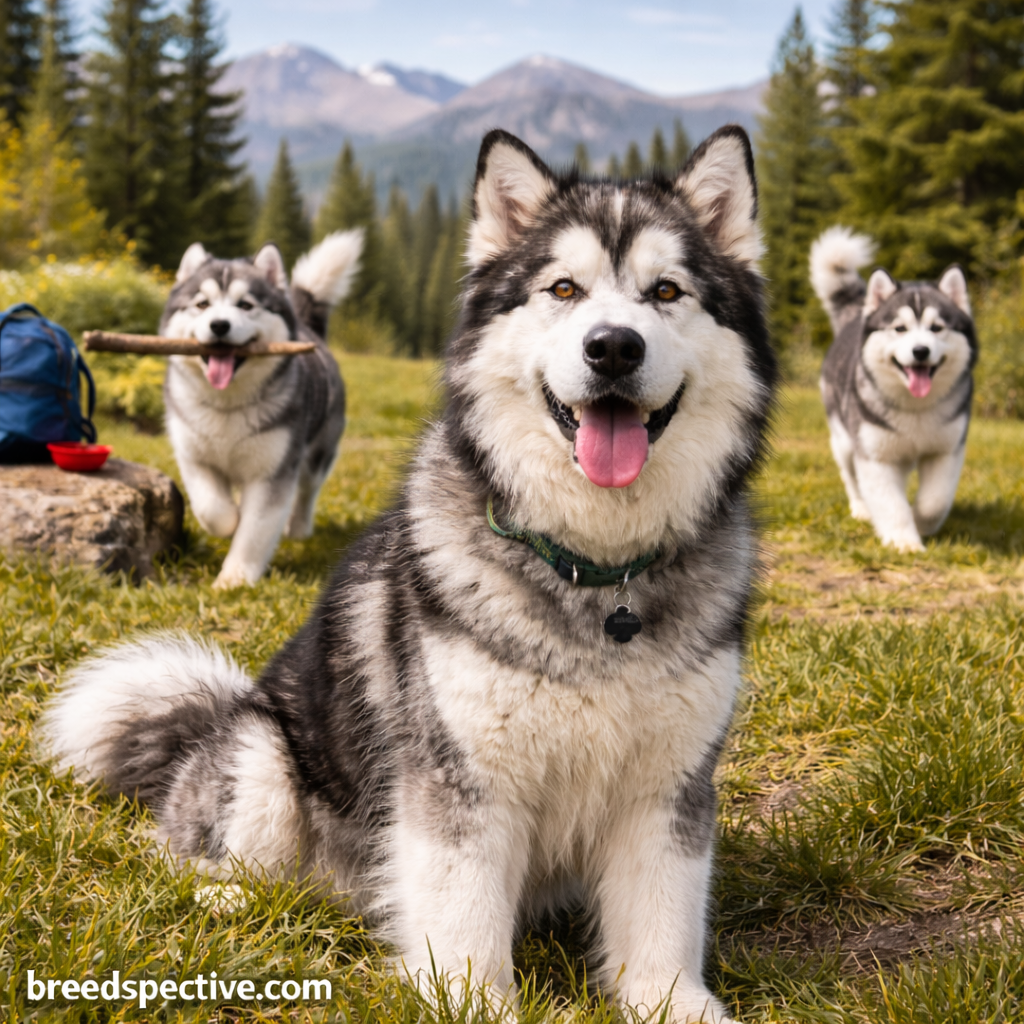
Alaskan Malamutes have a high energy level and exceptional stamina. While not hyperactive indoors, they require significant daily exercise.
Typical energy profile:
- High endurance rather than short bursts
- Calm indoors when properly exercised
- Restless or destructive when under-stimulated
Daily exercise needs include:
- Long walks or hikes
- Pulling activities like sledding or carting
- Structured play and training sessions
Mental stimulation is just as important as physical activity.
Play Style and Work Drive
Malamutes enjoy purposeful activity more than chaotic play.
Preferred activities include:
- Hiking and backpacking
- Weight pulling
- Interactive training
- Tug and structured games
They are less interested in repetitive fetch and more motivated by tasks that engage their strength and mind.
Behavior With Children
Alaskan Malamutes are typically gentle and tolerant with children, especially when raised together.
Key considerations:
- Their size can unintentionally knock over small children
- Supervision is essential during play
- Best suited for families who teach respectful interaction
Their affectionate nature makes them loving family companions, but structure is important.
Interaction With Other Dogs
Malamutes are pack-oriented dogs, but same-sex dominance can occur.
Common tendencies include:
- Enjoyment of canine companionship
- Potential dominance issues with other strong dogs
- Better compatibility with opposite-sex dogs
Early socialization and ongoing management are critical in multi-dog households.
Prey Drive and Small Animals
Alaskan Malamutes have a strong prey drive due to their working and survival background.
This can include:
- Chasing cats or small pets
- High interest in wildlife
- Difficulty with off-leash reliability
Homes with small animals require careful introductions and ongoing supervision.
Vocalization and Communication
Malamutes are known for being vocal—but not in the way most people expect.
Communication traits include:
- Howling rather than barking
- “Talking” through expressive sounds
- Vocal responses to people and situations
This makes them engaging companions but may not suit noise-sensitive environments.
Grooming and Climate Considerations
While not a temperament trait, grooming and climate tolerance impact lifestyle fit.
Important factors include:
- Thick double coat
- Heavy seasonal shedding
- Poor tolerance for hot climates
They thrive best in cooler environments and require diligent coat care.
Ideal Home Environment
Alaskan Malamutes need space, structure, and involvement.
Best-suited homes include:
- Active owners with time for exercise
- Homes with yards or access to outdoor activities
- People experienced with large or working breeds
They are not ideal for:
- Apartment living without significant daily exercise
- First-time dog owners
- Sedentary households
Common Behavioral Challenges
Without proper outlets, Malamutes may develop issues such as:
- Digging
- Escaping fenced yards
- Chewing from boredom
- Stubborn refusal to follow commands
Most challenges are preventable with structure, exercise, and engagement.
Alaskan Malamute Lifestyle Fit Summary
This breed excels in the right environment but struggles in the wrong one.
Best for:
- Active individuals or families
- Cold or temperate climates
- Owners seeking a social, engaging companion
Not ideal for:
- Low-activity households
- Long hours alone
- Those seeking an easy, low-maintenance dog
Final Thoughts
The Alaskan Malamute is a loyal, affectionate, and capable dog with a strong sense of identity. Its temperament reflects centuries of teamwork, endurance, and close human connection—not obedience for obedience’s sake.
For owners willing to invest time, structure, and physical activity, the Alaskan Malamute offers a rewarding and deeply bonded companionship unlike any other breed.