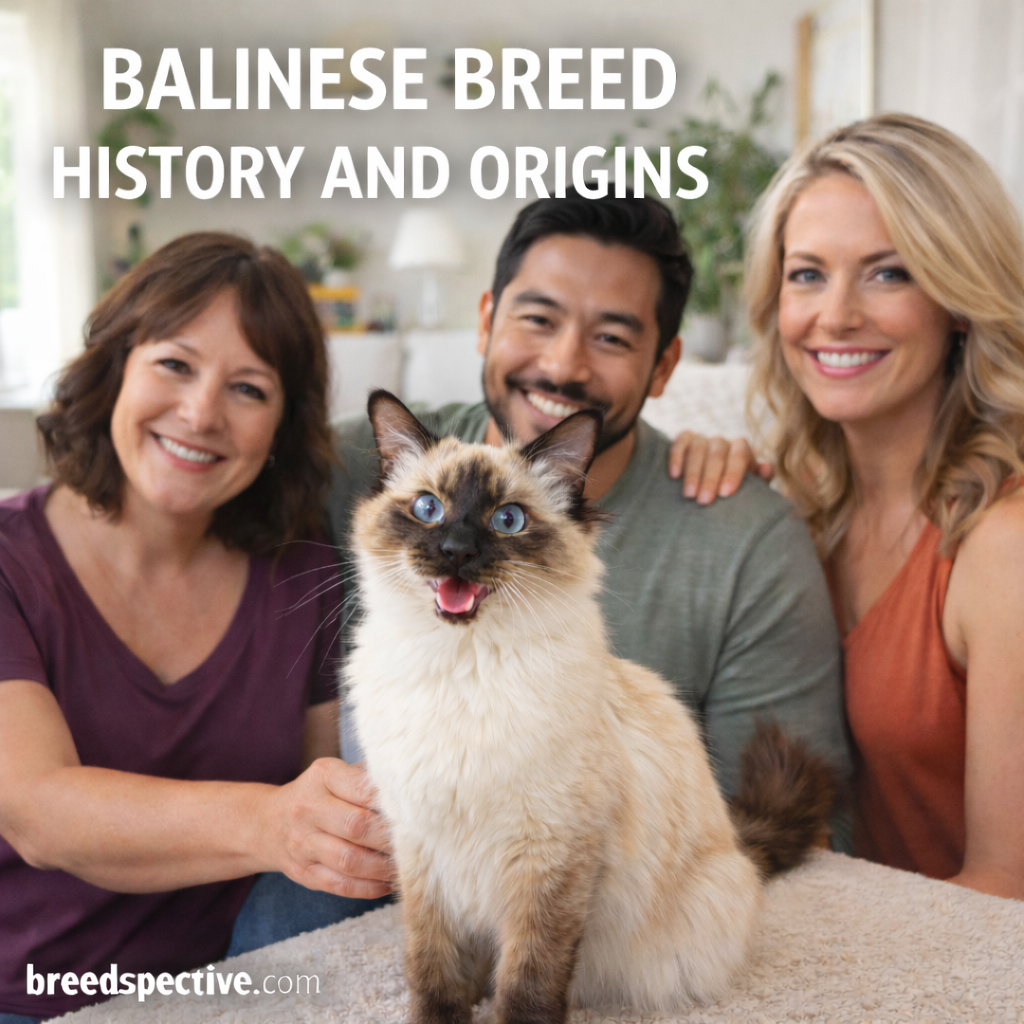
The Balinese cat is an elegant, intelligent breed often described as a long-haired version of the Siamese. While its appearance is striking, the Balinese has a fascinating history rooted in natural genetic variation rather than deliberate design. Understanding the breed’s history and origins helps explain its refined look, affectionate personality, and strong bond with humans.
Origins From Siamese Cats
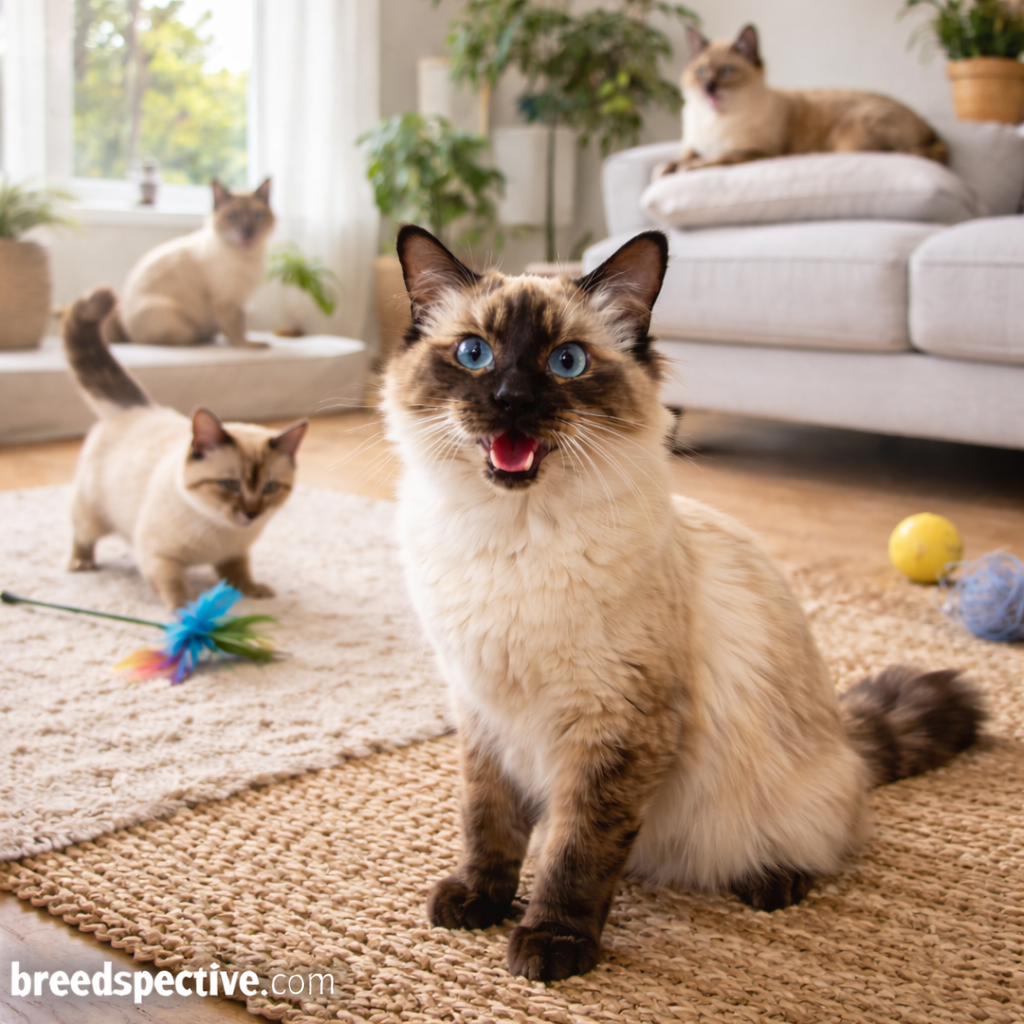
The Balinese breed originated from naturally occurring long-haired kittens born in Siamese litters. These kittens appeared as early as the late 19th and early 20th centuries.
Key points about these early origins include:
- Long-haired kittens emerged through a recessive gene
- Early breeders often excluded them from breeding programs
- The cats retained Siamese coloring and body type
- The variation was natural rather than engineered
Over time, breeders began to recognize the beauty and consistency of these long-haired Siamese cats.
Development as a Distinct Breed
In the mid-20th century, breeders in the United States began selectively breeding long-haired Siamese cats to establish a separate breed.
Important developments during this period included:
- Focus on preserving the Siamese’s slender body
- Emphasis on a silky, fine coat rather than a thick one
- Retention of blue eyes and pointed coloration
- Refinement of temperament and structure
These efforts led to the recognition of the Balinese as a distinct breed rather than a Siamese variant.
The Origin of the Name “Balinese”
Despite the breed’s name, the Balinese cat does not originate from Bali or Indonesia. The name was chosen for its association with grace and elegance.
The name reflects:
- The cat’s fluid movement
- Its refined, graceful appearance
- Artistic comparisons to Balinese dancers
This naming helped differentiate the breed while highlighting its aesthetic qualities.
Early Recognition and Breed Standards
By the 1950s and 1960s, major cat associations began to recognize the Balinese as a formal breed.
Recognition milestones included:
- Acceptance into cat registries
- Establishment of breed standards
- Inclusion in cat shows
- Growing popularity among enthusiasts
Breed standards focused on elegance, proportion, and coat texture rather than excessive length.
Relationship to Modern Siamese Lines
The Balinese shares a close genetic relationship with the Siamese, and in many registries, the two breeds are still considered closely linked.
Shared characteristics include:
- Similar body structure
- Identical point coloration patterns
- Vocal and social behavior
- High intelligence
The primary difference remains coat length and texture.
Expansion of Accepted Color Variations
As the breed gained popularity, additional color points beyond the original seal and blue were introduced.
Common accepted colors now include:
- Seal point
- Blue point
- Chocolate point
- Lilac point
These variations expanded the breed’s appeal while maintaining consistency.
Preservation and Responsible Breeding
Modern Balinese breeding emphasizes health, temperament, and adherence to breed standards.
Responsible breeding practices focus on:
- Maintaining genetic diversity
- Avoiding exaggerated physical traits
- Monitoring hereditary conditions
- Preserving sociable temperament
This careful approach ensures the Balinese remains a healthy and stable breed.
How History Shaped the Modern Balinese
The Balinese cat’s history has directly influenced its present-day characteristics.
Historical influence is seen in:
- Its sleek, athletic build
- Silky, low-maintenance coat
- Strong attachment to humans
- High intelligence and curiosity
The breed’s natural origins contributed to its balanced combination of beauty and behavior.
Conclusion
The Balinese breed emerged not from intentional crossbreeding but from a naturally occurring variation within Siamese lines. Through thoughtful selection and careful preservation, the Balinese has become a distinct breed admired for its elegance, intelligence, and affectionate nature. Its history reflects a blend of natural genetics and human appreciation for refined beauty.