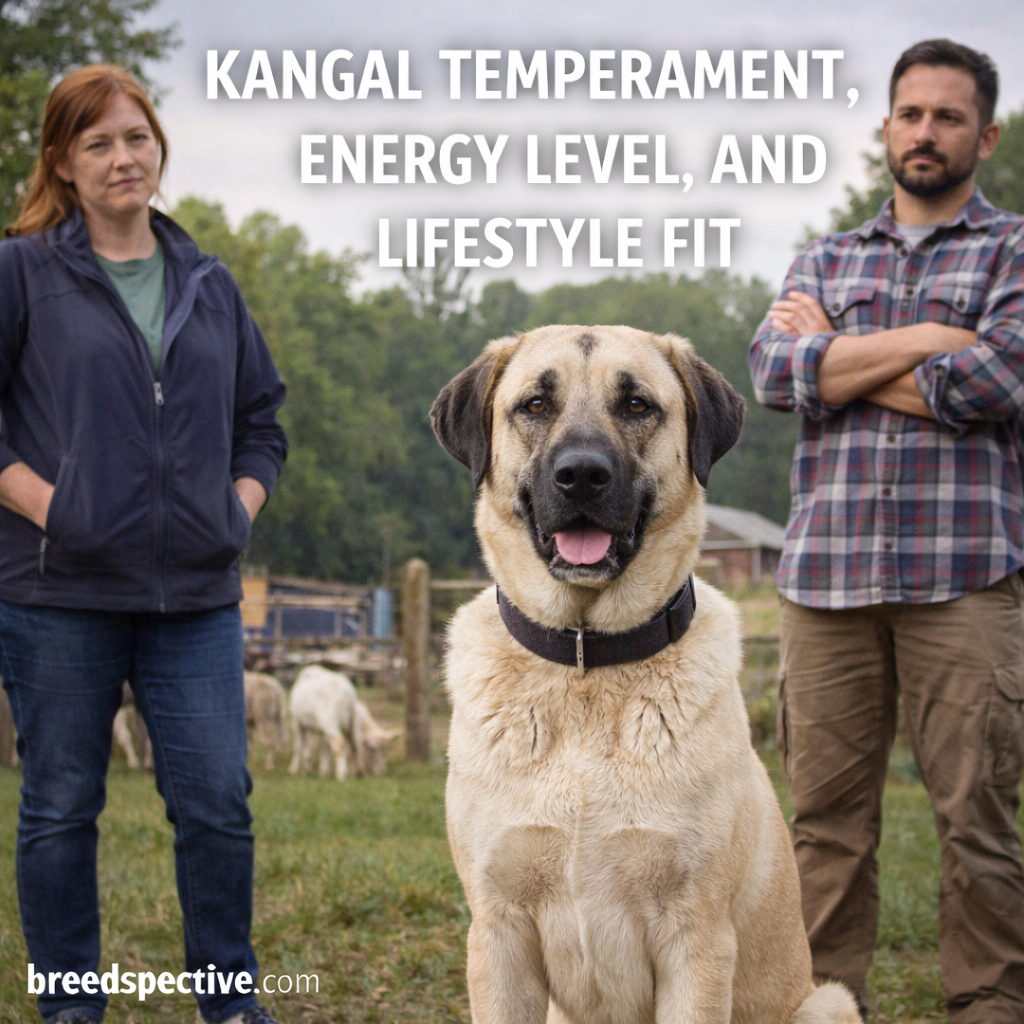
The Kangal is a powerful livestock guardian breed known for its calm confidence, independence, and intense protective instincts. Originally bred to guard flocks against large predators, the Kangal is not a typical companion dog. Understanding the Kangal’s temperament, energy level, and ideal lifestyle fit is essential before considering this breed for your home.
Kangal Temperament Overview
Kangals are naturally composed, observant, and self-assured. They are not reactive or hyper by nature, but they are always alert and aware of their surroundings.
Common temperament traits include:
- Calm and steady demeanor
- Strong protective instincts
- Independent decision-making ability
- Deep loyalty to family or livestock
- Reserved behavior with strangers
Unlike many guard dogs, Kangals rely more on presence and judgment than constant aggression.
Protective Instincts and Guardian Behavior
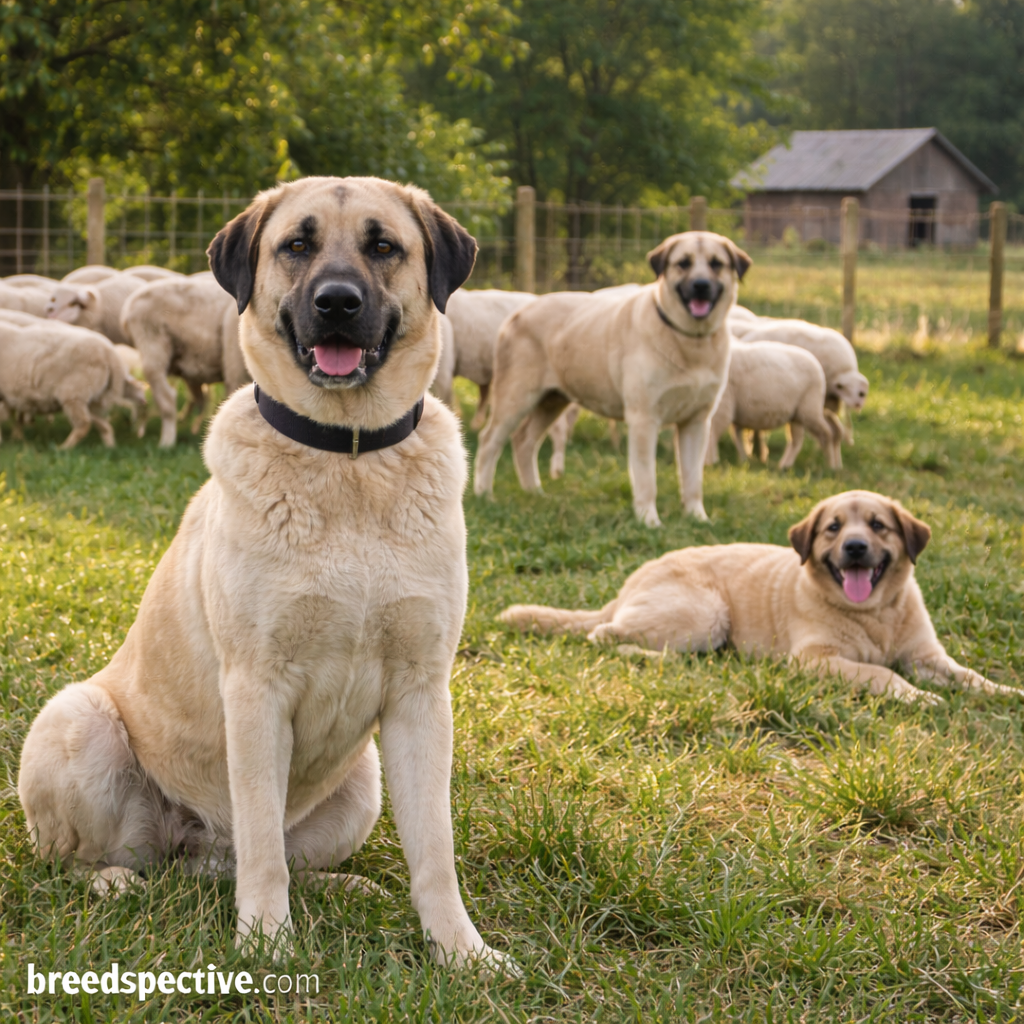
Protection is the defining trait of the Kangal. This breed was developed to deter predators such as wolves and bears, often without direct human guidance.
Guardian characteristics include:
- Natural territorial awareness
- Willingness to confront perceived threats
- Quiet monitoring rather than excessive barking
- Strong bond with those they protect
Because of this instinct, Kangals require careful management and are not suited to uncontrolled social environments.
Energy Level and Daily Activity Needs
Despite their size and working background, Kangals are not high-energy dogs in the traditional sense. Their energy is purposeful rather than playful.
Energy traits include:
- Moderate daily energy
- Preference for patrolling and observation
- Ability to remain calm for long periods
- Short bursts of intense action when needed
They benefit from space and freedom to move rather than repetitive exercise routines.
Independence and Trainability
Kangals are intelligent but highly independent. They were bred to make decisions without human input, which affects how they respond to training.
Training-related traits:
- Learn commands quickly but may choose not to obey
- Respond best to calm, confident leadership
- Poor response to harsh or repetitive training
- Strong sense of autonomy
This breed is not suited for owners seeking strict obedience or trick-focused training.
Social Behavior With People
Kangals are deeply loyal to their family but are naturally cautious around unfamiliar people.
Social tendencies include:
- Gentle and calm with trusted family members
- Protective around children they know
- Reserved or aloof with strangers
- Strong boundary-setting behavior
Early socialization is critical to prevent excessive suspicion or territorial behavior.
Interaction With Other Animals
Kangals typically coexist well with animals they are raised alongside, especially livestock.
Animal interaction traits:
- Strong bonding with animals under their protection
- Tolerance toward familiar dogs
- Dominant behavior toward unfamiliar animals
- Natural guarding rather than play-based interaction
They are not ideal candidates for dog parks or crowded multi-dog environments.
Ideal Living Environment
The Kangal requires a lifestyle that respects its working instincts and need for space.
Best-suited environments include:
- Rural or farm settings
- Large, securely fenced properties
- Homes with livestock or defined territory
- Owners experienced with guardian breeds
They are not suitable for:
- Apartments or urban living
- Frequent visitors or chaotic households
- First-time dog owners
- Owners seeking a highly social pet
Family Compatibility
While Kangals can be excellent family protectors, they are not universally family-friendly in the traditional sense.
They tend to:
- Bond closely with immediate household members
- Be calm and tolerant with respectful children
- Take responsibility for guarding the family
- Require supervision around visiting children or guests
Clear boundaries and structure are essential.
Is the Kangal Right for You?
The Kangal is a serious working dog, not a casual companion. This breed thrives when given purpose, space, and respect for its instincts.
A Kangal may be a good fit if you:
- Need a dedicated guardian
- Have space and secure land
- Understand independent dog behavior
- Can provide confident leadership
This breed is not ideal for owners seeking constant affection or obedience-focused companionship.
Conclusion
The Kangal is calm, powerful, and deeply devoted to its protective role. Its temperament reflects centuries of independent guardian work, making it one of the most capable livestock protection breeds in the world. With the right environment, leadership, and respect for its instincts, the Kangal can be a steady, reliable, and formidable protector—but it is not a breed for everyone.