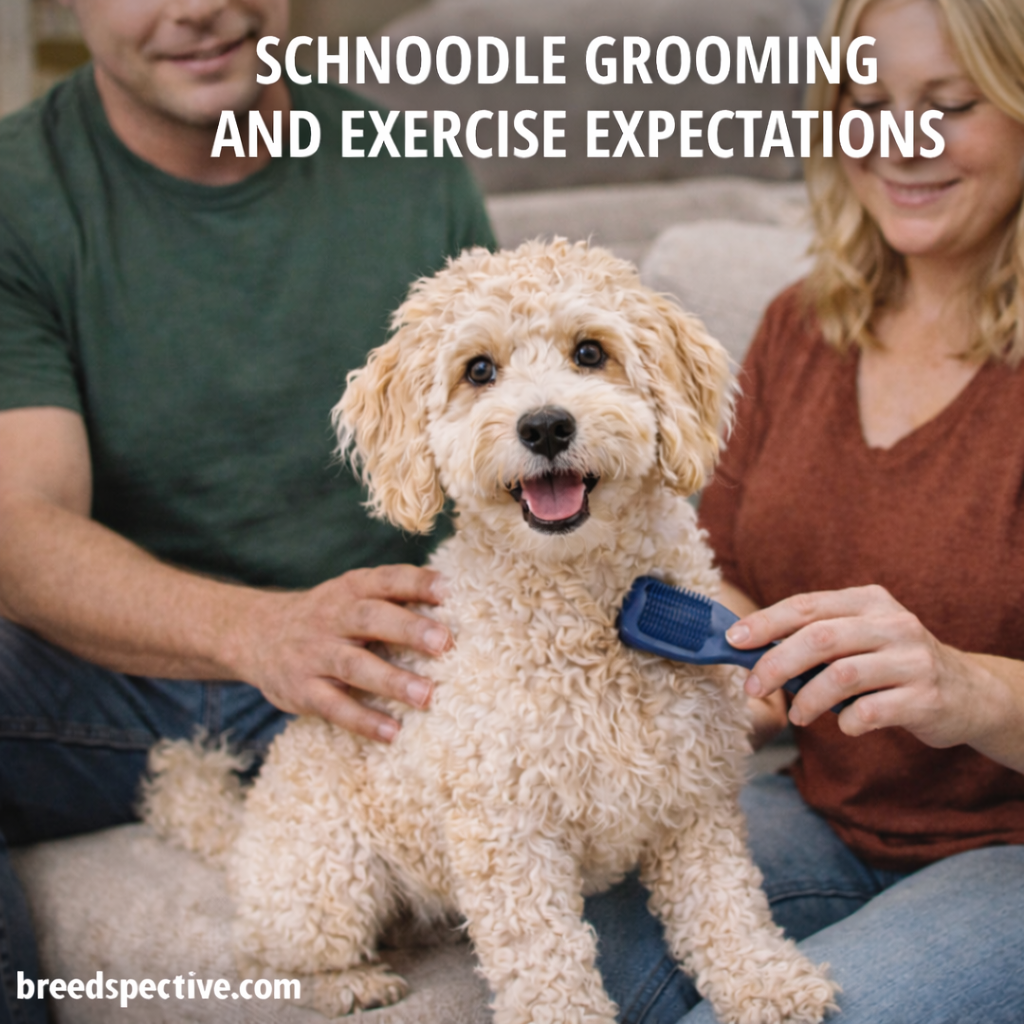
Schnoodles — a cross between a Schnauzer and a Poodle — are intelligent, active, and people-oriented dogs. While their friendly personalities make them wonderful companions, their grooming and exercise needs can vary widely depending on which parent traits are more dominant. Understanding what to expect helps owners provide proper care, prevent behavior issues, and keep their Schnoodle healthy and happy.
This guide covers Schnoodle grooming requirements, coat care, and daily exercise expectations.
Understanding the Schnoodle Coat
Schnoodle coats can differ significantly from one dog to another.
Common coat types include:
- Wavy or curly coats similar to a Poodle
- Wiry or coarse coats resembling a Schnauzer
- Soft, low-shedding coats
- Mixed-texture coats
Because coat type is unpredictable, grooming needs should be assessed individually.
How Often Schnoodles Need Grooming
Most Schnoodles require regular grooming to keep their coats comfortable and mat-free.
General grooming frequency:
- Brushing 3–4 times per week
- Professional grooming every 6–8 weeks
- More frequent grooming for curlier coats
Skipping grooming can lead to tangles, matting, and skin irritation.
Best Grooming Tools for Schnoodles
Using the right tools makes grooming easier and more effective.
Recommended tools:
- Slicker brush for removing tangles
- Metal comb for detangling near the skin
- Grooming scissors for light trimming
- De-shedding tools used cautiously
Avoid pulling through mats, which can cause discomfort.
Bathing and Coat Maintenance
Schnoodles do not need frequent baths, but regular coat care is important.
Bathing tips:
- Bathe every 4–6 weeks or as needed
- Use dog-specific, gentle shampoos
- Rinse thoroughly to prevent residue
- Dry completely to avoid skin issues
Over-bathing can dry out the skin and coat.
Managing Matting and Shedding
While many Schnoodles are low-shedding, matting can still be an issue.
To reduce matting:
- Brush consistently
- Focus on high-friction areas like legs and ears
- Schedule professional grooming regularly
Shedding levels vary depending on coat genetics.
Nail Trimming, Ear, and Dental Care
Routine hygiene is essential for overall health.
Care recommendations:
- Trim nails every 2–3 weeks
- Clean ears weekly to prevent infections
- Brush teeth several times per week
Regular care prevents discomfort and long-term health problems.
Schnoodle Exercise Needs Overview
Schnoodles are active dogs that require daily physical and mental exercise.
General exercise requirements:
- At least 45–60 minutes of activity per day
- Combination of physical exercise and mental stimulation
- More activity for larger or more energetic Schnoodles
Without proper exercise, behavior issues may develop.
Daily Physical Exercise Expectations
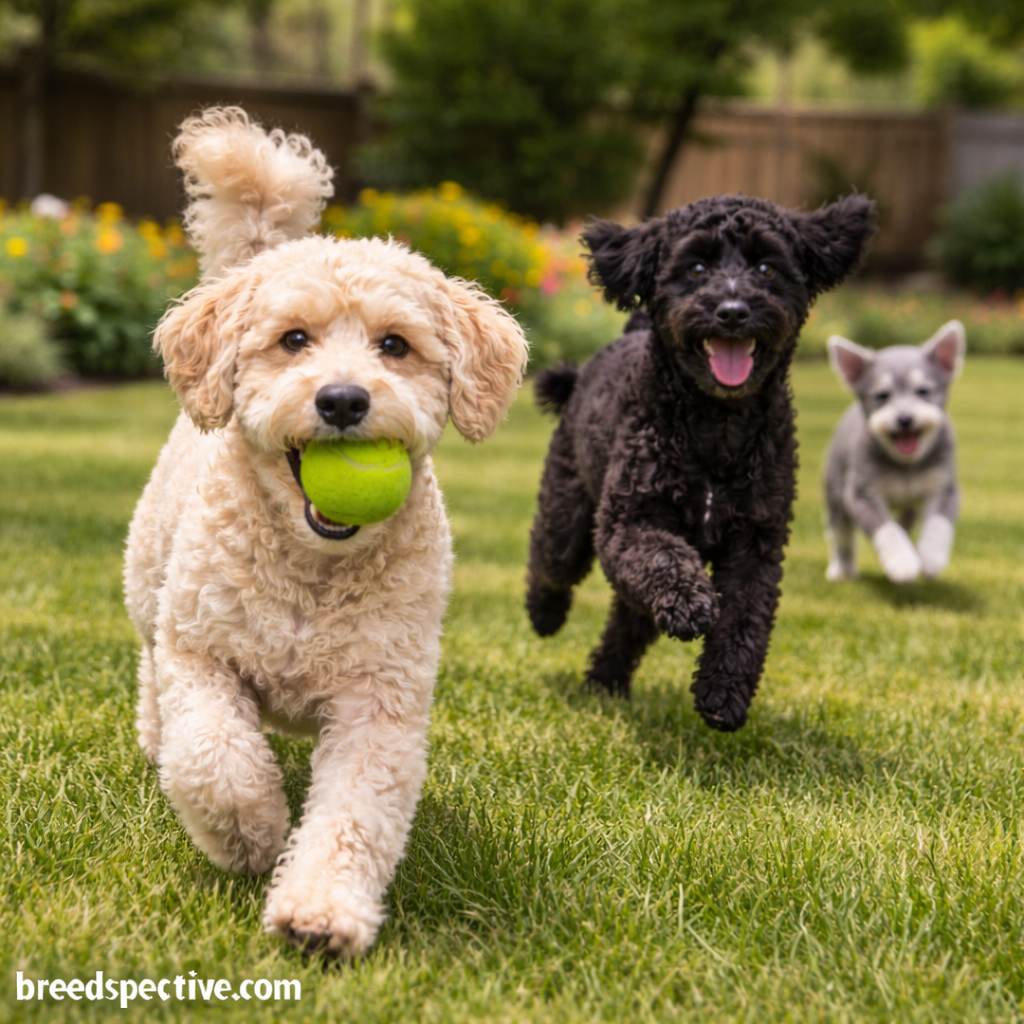
Schnoodles enjoy a variety of physical activities.
Recommended activities include:
- Daily walks
- Playtime in fenced areas
- Games like fetch or tug
- Light jogging for larger Schnoodles
Exercise should be adjusted based on age and size.
Mental Stimulation and Enrichment
Mental exercise is just as important as physical activity.
Enrichment ideas:
- Puzzle toys
- Obedience training
- Interactive games
- Learning new commands
Mental stimulation helps prevent boredom-related behaviors.
Apartment vs House Living Considerations
Schnoodles can adapt to many living environments.
Lifestyle considerations:
- Apartment living is possible with sufficient exercise
- Homes with yards provide extra stimulation
- Consistent routines matter more than space
Lack of exercise, not space, is the most common issue.
Signs a Schnoodle Needs More Grooming or Exercise
Watch for these warning signs:
- Tangled or matted fur
- Excessive chewing or barking
- Restlessness or pacing
- Skin irritation or odor
Addressing these signs early prevents larger problems.
Ideal Owner Commitment Level
Schnoodles do best with owners who can:
- Commit to regular grooming
- Provide daily exercise
- Engage in training and enrichment
- Maintain consistent routines
They are not ideal for hands-off owners.
Final Thoughts
Schnoodles are intelligent, active dogs that thrive when their grooming and exercise needs are met. With regular coat care, daily physical activity, and mental enrichment, they become well-behaved, affectionate companions.
Understanding their variable coat types and energy levels helps ensure your Schnoodle lives a comfortable, balanced, and happy life.